Understanding what makes high performance sportswear effective can help brands and consumers make more informed choices. Fabric technology, construction methods, and ergonomic design are what separates the ordinary athletic wear and gear that enhances comfort and movement. This guide will help you understand the construction and materials behind high-performance athletic wear, so that you can design products or identify quality gear.
Why material and construction quality matters
Every component of high-performance sportswear must be able to work together in order to provide the best support for athletes. Strong construction and quality materials prevent seams from failing when you are doing intense exercise. Poorly made sportswear may restrict movement, cause odors, or quickly wear out. Understanding what makes sportswear high-performance helps you distinguish between products designed for serious performance and those that just look athletic.
Core materials used in high-performance sportswear
Fabric technologies are the basis of high-performance athletic wear. Each one is designed to meet a particular performance requirement.
Moisture-Wicking Synthetic Fabrics
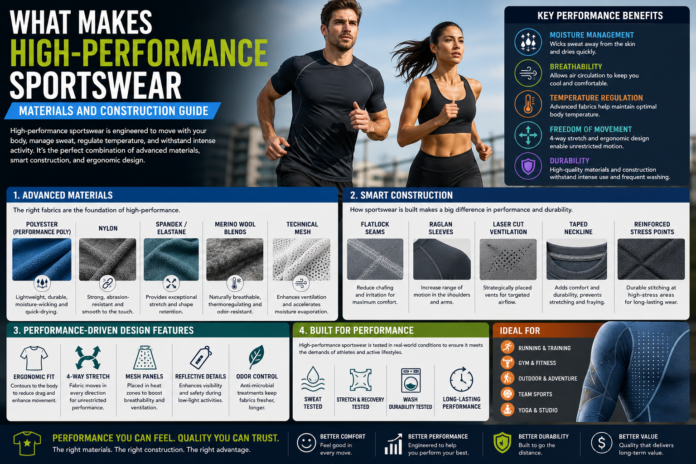
High-performance sportswear is dominated by polyester and nylon blends because they draw sweat away from your skin and spread it over the fabric surface to evaporate quickly. Many of these fabrics also feature microfiber constructions, which increase surface area and enhance moisture transport. Moisture-wicking fabrics help athletes stay drier and comfortable when they exert themselves for long periods of time.
Compression fabrics
Compression fabrics are made by combining spandex, elastane and polyester or nylon into a fabric which supports the muscles gently during movement. Compression sportswear is used by many athletes because it can help to reduce muscle fatigue during intense activity. The tight fit can also improve comfort when running, cycling or lifting weights.
Breathable Mesh Panels
Mesh panels allow air to flow through areas that generate heat, like the back, sides, and underarms. Strategic mesh placement is important because these zones produce significant heat when exercising. This helps regulate the body temperature without compromising garment structure. Many high-performance sportswear models incorporate mesh panels to provide targeted cooling.
Four-Way Stretch Fabrics
Fabrics with four-way stretch can move in many directions. This allows athletes to bend, twist and reach without feeling any fabric restrictions. This technology is especially useful in sports that require dynamic movements, like basketball, soccer or martial arts. Four-way stretch fabrics are known to recover their original shape quickly. This helps garments maintain their fit even after repeated wear.
Antimicrobial Treatments
The antimicrobial finish helps control bacteria that cause odors. This is especially important for sportswear used during high-intensity, sweaty activities. Many manufacturers reapply the antimicrobial treatments during fabric production, even though their effectiveness can be reduced slightly by repeated washing. Sportswear treated with antimicrobial agents often remains fresher after multiple uses.
Sportswear Construction Techniques that Define High Performance
Construction methods have a significant impact on the performance of sportswear under real-life conditions.
Flatlock Seams
Flatlock seams are designed to reduce friction and bulk at the stitch points. This helps prevent chafing when performing repetitive movements. Flatlock seams are used in compression gear, running shirts and leggings because traditional seams rub against the skin when worn. This technique improves comfort for long-duration exercises.
Ergonomic Paneling
The ergonomic paneling follows the natural movement patterns of the body, instead of relying on the basic flat pattern. This construction method reduces fabric bunching, which improves range-of-motion, especially in the shoulders, knees and hips. Ergonomic paneling is a key factor in the comfort of sportswear during dynamic activities.
Reinforced Stress points
Sportswear designed for high performance often has reinforced stitching in areas of stress, such as the underarms and pockets. These areas are subjected to repeated tension when moving, so reinforcement is important in preventing premature tearing and seam failure. Checking for reinforced stress areas is a good indicator of the overall durability of a garment.
Bonded Seam Technology
Instead of using traditional stitching methods, bonded seams are made with heat or adhesives. This eliminates any needle holes which can allow moisture to enter or cause irritation. This method is ideal for base layers and compression wear that are designed to be next-to-skin comfortable. Bonded seams are more comfortable and smoother than other types of seams. They require special equipment to create.
High-Performance sportswear: What to look for?
Consider the following characteristics when determining whether or not a garment is high-performance sportswear:
- Moisture Management: Verify that the fabric is able to wick sweat and dries rapidly after exercise.
- Stretching and Recovery: Determine whether the fabric moves along with the body, and then returns to its original form.
- Seam Construction: Choose flatlock or bonded sews to minimize chafing when moving.
- Breathability Check for mesh or breathable fabric zones on high-heat parts of the body.
- Durability Check reinforced stress points on the garment to make sure it can withstand repeated and intense use.
- Odor Control: Check for antimicrobial treatment if you will wear the garment during frequent or long training sessions.
You can find sportswear with real performance benefits by comparing these features, rather than just relying solely on marketing claims.
Sportswear with High-Performance Materials
Understanding your category will help you choose the best materials. Brands developing Soccer apparel, for example, often use lightweight, breathable fabric with four-way stretching to allow constant movement in all directions. basketball clothing often incorporates moisture-wicking panels to control heat during fast-paced games.
American football apparel and Rugby apparel, which involve sports with repeated impacts, rely on durable fabric blends and reinforced stress points to resist physical contact. ice-hockey apparel is often made up of compression base layers and moisture-wicking fabrics to accommodate cold environments.
Combat sports brands that produce MMA clothing choose fabrics with four-way stretch and flatlock seams in order to support grappling movements. tennis clothing , badminton clothing, and basketball apparel also prioritize lightweight, breathable fabrics for quick lateral movements and directional changes. golf clothing is often made of moisture-wicking fabrics that are sun-protective and designed for long outdoor hours. baseball clothing, volleyball attire, balance durability with flexibility to accommodate sport-specific movements.
Specialized categories require unique solutions. Formula 1 Racing apparel demands fire-resistant fabrics combined with moisture wicking base layers to provide driver comfort in extreme conditions. The sportswear range showcases designs that are performance-driven for almost every sport.
Partner with a trusted manufacturer of high-performance sportswear
When developing a customized product line, it is important to understand what makes high performance sportswear effective. Working with an experienced manufacturer will ensure that your gear is built to meet real performance standards, rather than just looking good.
We help brands choose materials and construction methods that are aligned with their sport, athlete’s needs, and performance objectives. Contact our team to learn more about fabric options, production timelines, and construction details.
Conclusion
High-performance sportswear is made up of a combination of high-tech materials and well-thought out construction techniques. Flatlock seams and ergonomic panels, as well as moisture-wicking fabrics and compression technology that regulate temperature, ensure comfort and fit. Moreover, by matching these features with specific sports, the gear will perform as intended in real-world situations. Understanding these principles of materials and construction will help brands and athletes identify sportswear with real performance benefits.
FAQs
What is the most common fabric used for high-performance sportswear today?
High-performance sportswear is dominated by polyester and nylon blends because they dry quickly and wick away moisture. These fabrics often include spandex to provide added stretch and recovery.
Why is flatlock stitching important for sportswear?
Flatlock seams reduce friction and bulk at the stitch points to help prevent chafing when moving repetitively. This construction method is now standard for running shirts and leggings as well as compression gear.
Does compression sportswear improve performance?
Although individual results may vary, many athletes report less muscle fatigue and better circulation after wearing compression sportswear. Many athletes find that the tight fit reduces fabric movements, making them more comfortable when performing high-intensity activities.
How can I tell if my sportswear is breathable?
In areas where you sweat a lot, such as the back and underarms, look for mesh panels or zones of breathable fabric. Also, lighter, loosely-woven fabrics allow for better airflow as compared to dense, heavy materials.