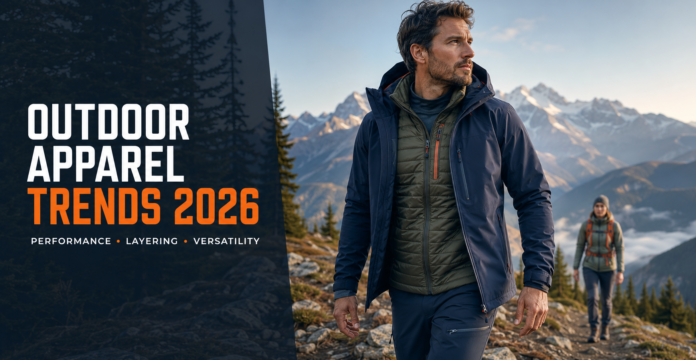
The outdoor apparel industry never stands still — and 2026 is proving that clearly. Consumer expectations are rising faster than ever across performance, sustainability, and design versatility simultaneously. Brands that understand where outdoor apparel trends are heading right now build collections that resonate with increasingly sophisticated outdoor consumers. Here’s a comprehensive look at the trends defining outdoor clothing in 2026 and what they mean for brands building collections this year.
Trend 1 — Recycled and Sustainable Performance Fabrics
Sustainability has moved from niche differentiator to mainstream expectation in outdoor apparel. In 2026, recycled polyester and recycled nylon are no longer premium additions that justify price premiums — they’re becoming baseline consumer expectations for brands claiming outdoor credentials seriously.
Recycled polyester from post-consumer PET plastic delivers identical performance to virgin alternatives — moisture wicking, quick-dry, UV resistance — while reducing environmental impact significantly. Brands that specify recycled content across their performance fabric range communicate environmental responsibility that outdoor consumers now actively seek and reward with purchasing decisions.
Beyond recycled synthetics, bio-based performance fabrics using plant-derived feedstocks are entering serious commercial consideration — offering petroleum-free synthetic alternatives that maintain the technical performance outdoor clothing demands while delivering substantially improved environmental profiles across the complete fabric lifecycle.
Trend 2 — Advanced Layering System Design
The three-layer outdoor clothing system isn’t new — but how brands design and market layering systems in 2026 has evolved significantly. Consumers increasingly understand layering principles and actively seek garments with system-design thinking — pieces engineered to work together rather than individual products assembled without compatibility consideration.
Brands winning in 2026 design their outer shell hem and pocket placement in deliberate compatibility with their mid-layer constructions. They ensure base layer collar heights integrate with mid-layer neck designs without uncomfortable bunching. They build consistent sizing logic across all three layers so customers who size correctly in one piece can trust the same sizing across the complete system.
This system-design approach creates stronger brand loyalty — customers who find a layering system that works together stay with the brand across multiple purchasing decisions rather than mixing and matching from multiple suppliers. For comprehensive understanding of how advanced thermal insulation integrates within these layering systems, this thermal coats guide provides detailed context on insulated layer performance across varied cold weather outdoor applications.
Trend 3 — Outdoor to Urban Versatility
The gorpcore aesthetic that began as a fashion moment has evolved into a genuine design trend with lasting commercial implications. Outdoor consumers in 2026 increasingly want clothing that performs on the trail and looks appropriate in urban contexts without requiring a complete outfit change between environments.
This outdoor-to-urban versatility trend drives design decisions across silhouette, colorway, and feature selection. Technical trail pants in clean colorways that work with casual footwear. Shell jackets with minimalist exterior aesthetics that don’t look conspicuously technical in café settings. Base layers that function as standalone tops during urban commutes as effectively as they perform beneath shell layers on the trail.
The commercial opportunity is significant — garments serving both outdoor performance and everyday lifestyle contexts achieve higher use frequency per customer than single-context alternatives — justifying higher retail prices through genuine versatility value that customers recognize immediately.
Trend 4 — Performance Fabric Technology Innovation
2026 is seeing meaningful advancement in performance fabric technology across several dimensions simultaneously — creating genuine differentiation opportunities for brands investing in next-generation fabric specifications rather than continuing with established standard constructions.
Glacier Dry and equivalent next-generation moisture management fabric technologies deliver faster wicking speeds and improved quick-dry performance compared to previous polyester fabric generations — as explored in this glacier dry fabric guide covering how advanced moisture management technologies improve on established performance fabric benchmarks across outdoor clothing applications.
Stretch membrane technologies are improving significantly — delivering waterproof breathable protection in fabric constructions with meaningful four-way stretch performance that previous rigid membrane alternatives couldn’t achieve. This development closes the performance gap between softshell and hardshell constructions that previously forced outdoor enthusiasts to choose between weather protection and movement freedom.
Trend 5 — Modular and Adaptive Clothing Systems
2026 sees growing consumer interest in modular outdoor clothing systems — garments with removable components, zip-off panels, and adaptive construction that transform between configurations as conditions change throughout the outdoor day.
Zip-off pants converting to shorts. Three-in-one jacket systems combining hardshell outer with removable insulated inner. Convertible mid-layers functioning as both standalone jackets and vest configurations depending on activity intensity and temperature demands. These modular approaches appeal strongly to weight-conscious outdoor enthusiasts seeking maximum functionality from minimum kit weight.
The commercial challenge is maintaining construction quality across multiple configurations — but brands that execute modular systems correctly create products with genuine versatility value that standard single-configuration alternatives cannot match for customers who prioritize adaptability across the varied conditions outdoor adventures regularly create.
Trend 6 — Gender-Neutral and Inclusive Sizing
2026 outdoor apparel collections are increasingly moving away from binary gender categorization toward inclusive sizing systems that serve a broader customer base without the limitations that traditional women’s and men’s specific pattern making imposed on customers whose body proportions didn’t match standard gender-specific sizing assumptions.
Gender-neutral trail pants, unisex base layers, and inclusive sizing ranges that extend meaningfully across size spectrums are becoming competitive differentiators rather than optional inclusive gestures. Outdoor brands that genuinely serve customers who were previously underserved by standard sizing are building loyalty in consumer segments that established brands consistently failed to serve adequately.
Trend 7 — Intelligent Feature Integration
Feature minimalism is gaining ground against the feature-maximalist approach that characterized outdoor clothing design through the early 2020s. Consumers in 2026 increasingly prefer fewer, more thoughtfully integrated features that serve genuine purpose over comprehensive feature lists that add weight and complexity without meaningful performance improvement.
This intelligent feature integration trend rewards outdoor brands that conduct genuine use-case research — understanding exactly which features their specific target customers actually use rather than adding every technically possible feature to justify premium pricing. The result is lighter, cleaner, more purposeful garments that serious outdoor enthusiasts immediately recognize as better designed than over-featured alternatives.
Our waterproof clothing range reflects this intelligent design philosophy — waterproof outer layer solutions built around genuine outdoor performance requirements rather than feature accumulation that adds specification complexity without proportional performance improvement.
For brands looking to develop complete outdoor apparel collections aligned with 2026 outdoor apparel trends, these waterproof pants demonstrate how current outdoor apparel design thinking translates into complete lower body products — combining sustainable fabric choices, performance construction, and purposeful feature integration in a single outdoor garment built for serious trail and mountain use.
Conclusion
The outdoor apparel trends defining 2026 — sustainable performance fabrics, advanced layering system design, outdoor-to-urban versatility, fabric technology innovation, modular adaptive systems, inclusive sizing, and intelligent feature integration — collectively point toward a more sophisticated, more purposeful outdoor apparel market. Brands that understand these trends and build collections responding to them intelligently will capture the growing outdoor consumer segment that demands both genuine technical performance and thoughtful environmental and design responsibility from every product they invest in.
FAQs
What is the most commercially significant outdoor apparel trend in 2026?
Sustainable performance fabrics represent the most commercially significant trend — because recycled and bio-based fabric expectations have shifted from premium differentiator to baseline consumer requirement across the mainstream outdoor market, affecting purchasing decisions across every price tier.
Is the gorpcore outdoor-to-urban trend sustainable long-term?
The design principles underlying outdoor-to-urban versatility — clean aesthetics, technical performance, and multi-context wearability — reflect genuine consumer lifestyle changes rather than purely aesthetic trend cycles. These principles are likely to influence outdoor apparel design durably beyond any single seasonal trend.
How important is modular clothing design for outdoor brand collections in 2026?
Modular design suits premium and specialist outdoor markets where weight optimization and versatility justify the construction complexity these systems require. For mass-market outdoor collections, modular systems add cost and complexity that standard constructions don’t require to serve the majority of recreational outdoor consumers effectively.
Can outdoor apparel aligned with 2026 trends be produced under a private label?
Yes. Professional outdoor apparel manufacturers offer complete private label production incorporating recycled fabric options, advanced performance fabric technologies, modular construction, and inclusive sizing — giving outdoor brands full technical and commercial control over trend-aligned collections.