
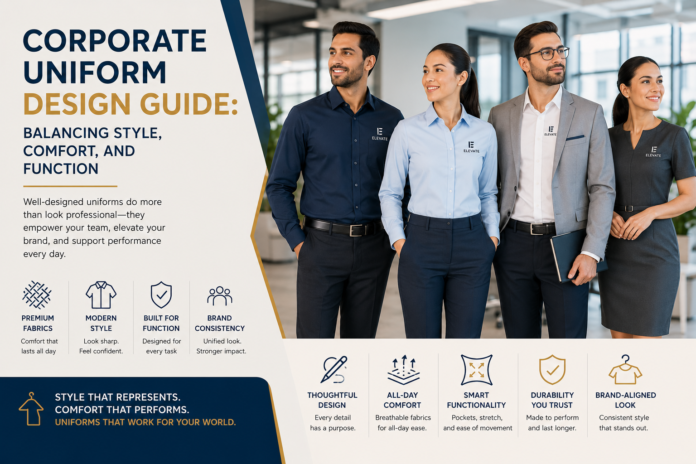
A good corporate uniform is more than matching clothes for employees. It helps a company look organized, serious, and easy to trust. It also helps workers feel ready for the day because they do not have to think too much about what to wear. When a business plans corporate uniform design, it should think about the people who will wear the uniform first. They may sit at a desk, welcome customers, move around a store, visit clients, work in a clinic, or handle office tasks for long hours. Their clothing must support that work. A uniform should not feel too tight, too hot, too heavy, or too hard to care for. It should look neat and still feel simple to wear. The best corporate uniform design makes employees look professional while keeping them comfortable enough to focus on their job. When style, comfort, and function work together, the uniform becomes useful workwear, not just a rule.
Corporate Uniform Design: The Main Balance
Corporate uniform design means planning staff clothing that fits the company image and also works well in daily life. The most important word here is balance. A uniform can look beautiful in a photo but still fail if workers feel uncomfortable in it. A uniform can also feel soft and relaxed but still fail if it looks untidy in front of customers. A smart corporate uniform design plan brings three things together. Style gives the team a clean and branded look. Comfort helps employees wear the clothing for many hours without stress. Function makes the uniform useful for the real tasks of the job. A receptionist may need a sharp and polished look. A sales team may need clothing that feels easy during movement. A medical or support team may need clean fabric and practical details. When a company chooses only one side, the uniform becomes weak. When all sides are planned together, the final design feels professional, wearable, and trusted.
Start with the Work Environment and Job Role
The first step in corporate uniform design is to understand where the uniform will be used. Office workers, clinic staff, hotel teams, retail employees, delivery staff, and factory supervisors do not all need the same clothing. A worker who sits at a desk may need a clean shirt, trouser, or blazer style. A worker who walks all day may need breathable fabric, stronger seams, and better movement. A team that meets customers face-to-face may need a more polished look than a back-office team. Before choosing color, logo, or trims, the company should write down what each job role does during a normal day. Eco Jersey’s corporate uniforms range can support teams that need professional work clothing for office, service, and customer-facing roles. This is why corporate uniform design should begin with the work environment, not only with a fashion idea.
Choose Fabrics That Feel Comfortable All Day
Fabric is one of the most important parts of corporate uniform design because it touches the skin for many hours. A good fabric should feel smooth, allow air to pass, and stay neat after washing. Cotton blends can feel soft and natural. Polyester blends can resist wrinkles and dry faster. Stretch blends can help workers bend, sit, walk, and reach without feeling blocked. The right choice depends on the job and climate. In warm places, breathable and lighter fabrics can help reduce sweat and discomfort. In cooler offices, a slightly heavier fabric can give a smarter shape and warmer feel. The fabric should also handle regular washing because uniforms are used again and again. If the fabric fades, shrinks, pills, or loses shape quickly, the uniform will not look professional for long. Good corporate uniform design always checks fabric comfort, fabric strength, and fabric care before making the final order.
Match Style with Brand Identity
A uniform should show the company’s brand without looking too loud or confusing. Corporate uniform design works best when the colors, shapes, and small details match the company’s personality. A law office may choose formal shirts, dark trousers, and blazers. A creative company may choose relaxed shirts, smart polos, or softer colors. A clinic may choose clean and simple clothing that shows hygiene and trust. A hotel or reception team may need a polished style that feels welcoming. For office teams that need a neat and easy formal look, button-down blouses can be a useful choice because they can look professional without feeling too heavy. The goal is not to make every uniform fancy. The goal is to make the team look clear, clean, and connected to the business. Strong corporate uniform design uses brand identity in a simple way, so employees look united but still feel comfortable.
Build Function into Every Detail
Function means the uniform helps employees do their work instead of making the work harder. In corporate uniform design, small details can make a big difference. Pockets should be placed where people can use them easily. Buttons should be strong enough for daily wear. Zippers should move smoothly and not catch the fabric. Sleeves should allow easy hand and arm movement. Waistbands should stay comfortable while sitting, standing, and walking. If employees carry pens, phones, badges, keys, or small tools, the uniform should support those needs. Function also includes easy care. A uniform that needs too much ironing, special washing, or careful handling can become a problem for workers. Good corporate uniform design should save time, not create extra work. When details are planned properly, the uniform feels natural during the day. Employees can focus on customers, tasks, and service instead of adjusting uncomfortable clothing again and again.
Fit, Size, and Movement Matter
Fit is not only about looking smart. It is also about respect, comfort, and movement. Corporate uniform design should include sizes that work for different body shapes, not only one standard body type. Shirts should not pull at the chest, back, or shoulders. Trousers should not feel tight when sitting. Blazers should allow employees to lift their arms and move naturally. Dresses and skirts should allow safe walking, sitting, and bending. For men’s office uniforms, simple pieces like chino pants for men can work well when the fit is clean, flexible, and easy for daily use. A company should test the uniform on real people before bulk production. This helps find problems early, such as tight sleeves, short lengths, or weak waist comfort. Better fit improves the full look of corporate uniform design because employees stand, move, and work with more confidence.
Use Color, Logo, and Trims Carefully
Color can make a uniform easy to recognize, but too much color can make it look busy. Corporate uniform design should use brand colors in a careful way. Many companies use a neutral main color like black, navy, grey, white, beige, or charcoal. Then they add the brand color through a logo, collar trim, small piping, scarf, tie, or badge area. This keeps the uniform professional while still making it branded. Logo size is also important. A logo should be clear enough to see but not so large that it takes over the full garment. Embroidery, heat transfer, woven patches, and printed logos can all work, but the best method depends on the fabric and washing needs. Trims should also be practical. Too many decorative details can make the uniform harder to produce, harder to repair, and harder to match later. Clean color planning makes corporate uniform design look more premium and more mature.
Key Uniform Features to Check
Before approving any corporate uniform design, a company should review one clear checklist so the final uniform works in real life.
• The fabric should feel comfortable for a full workday.
• The fit should allow sitting, walking, lifting, and reaching.
• The color should match the brand and still look professional.
• The logo should be clear but not too large.
• The seams should be strong enough for daily wear.
• The garment should be easy to wash, dry, and maintain.
• The style should suit the job role and customer setting.
• The uniform should be available in enough sizes for the full team.
• The design should still look neat after repeated use.
• The sample should be tested before bulk production starts.
This simple checklist helps corporate uniform design avoid common problems before money is spent on a large order. It also helps the company protect comfort, quality, and brand image together.
Mistakes to Avoid When Planning Uniforms
Many uniform problems happen because companies choose looks before testing comfort. One common mistake is picking a fabric only because it looks nice in photos. Another mistake is using one design for every department, even when the job roles are very different. Some companies add large logos, too many colors, or heavy trims that make the uniform look less professional. Other companies ignore employee feedback, which can lead to poor fit, discomfort, and low daily use. Corporate uniform design should not be rushed. A sample should be tested for movement, washing, ironing, shrinkage, and comfort before final approval. The company should also check how the uniform looks in real lighting, not only in a studio image. If a uniform looks good but feels bad, workers will notice it every day. Avoiding these mistakes makes corporate uniform design stronger, cleaner, and more useful for real work.
Conclusion
The best uniform is the one employees can wear with confidence and customers can recognize with trust. Strong corporate uniform design is not only about choosing a shirt, trouser, blazer, dress, or logo. It is about creating work clothing that matches the brand, supports the job, feels comfortable, and lasts through regular use. A good uniform should look clean in the morning and still feel comfortable near the end of the day. It should help workers move easily, represent the company well, and reduce daily clothing confusion. When style, comfort, and function are balanced, corporate uniform design becomes a smart business tool, not just a dress code. A well-planned uniform can improve team unity, customer trust, and daily work comfort. In the end, the right corporate uniform design helps a business look professional while helping employees feel ready to work.
FAQs
What is corporate uniform design?
Corporate uniform design is the process of planning staff clothing that matches a company’s brand and supports daily work. It includes fabric, fit, color, logo placement, comfort, durability, and function.
Why is comfort important in corporate uniforms?
Comfort is important because employees wear uniforms for many hours. If clothing is too tight, hot, rough, or hard to move in, it can affect focus, confidence, and performance.
How many colors should a corporate uniform use?
Most corporate uniforms look best with one or two main colors and one small accent color. This keeps the uniform clean, professional, and easy to recognize.
What should a company check before bulk uniform production?
A company should check fabric comfort, fit, stitching, logo quality, washing results, color accuracy, and movement before bulk production. Sample testing helps prevent costly mistakes.



