Home Blog Page 28

The Key Differences Between Leather Coat and a Leather Jacket

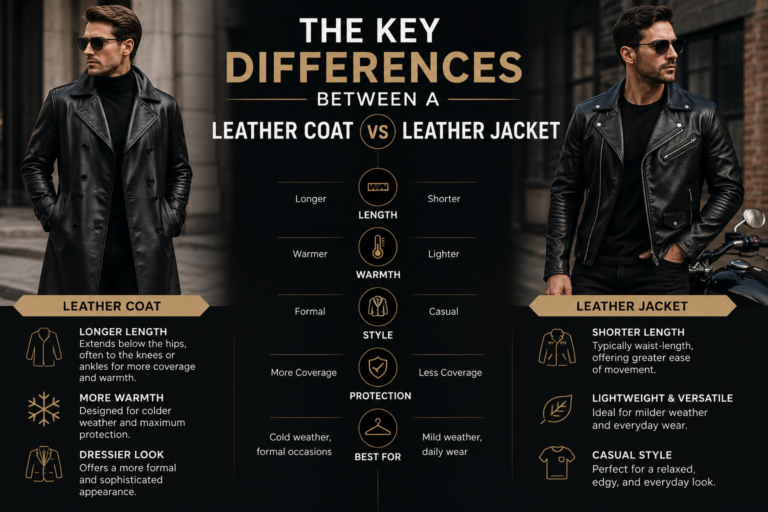
Most people use the terms interchangeably — leather coat, leather jacket, same thing, right? Actually, no. These are two distinct garments with different silhouettes, purposes, and styling rules. If you’re building a leather apparel brand or just trying to make the right purchase decision, understanding the differences between leather coat and leather jacket will save you from a lot of confusion. Let’s get into it — clearly and without the fluff. A good leather apparel manufacturer will always tell you upfront which category a garment falls into, because the construction, materials, and fit are handled very differently for each.

The Most Obvious Difference: Length
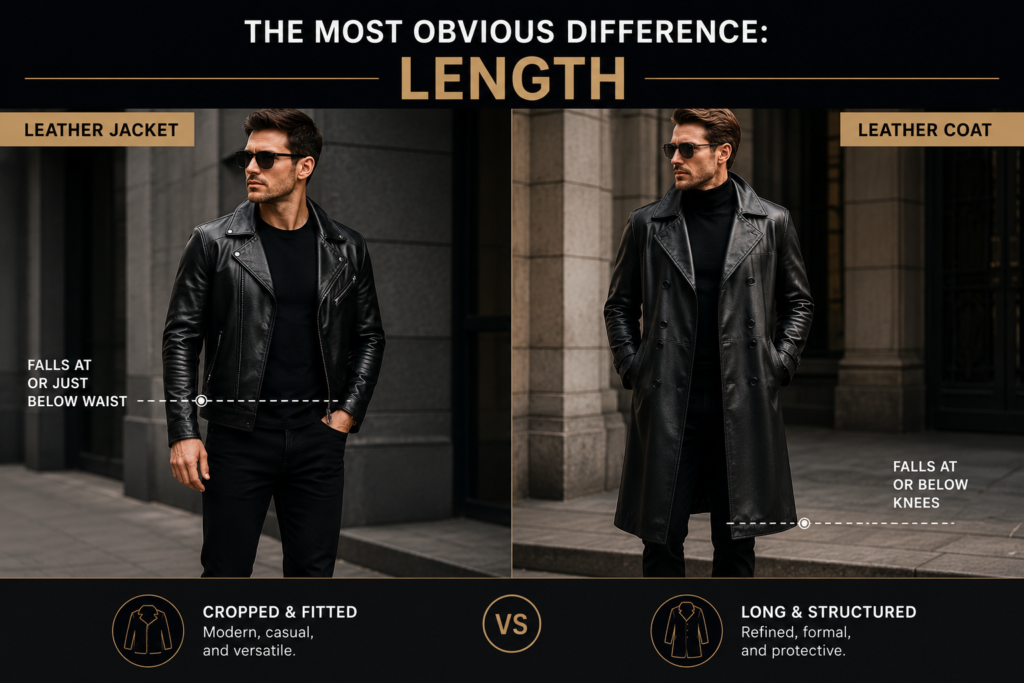
Comparison of waist-length leather jacket and knee-length leather coat worn by male fashion models in an urban setting.
Leather coats offer longer structured coverage, while leather jackets provide a shorter fitted silhouette.

The biggest difference you can see between a coat and a jacket is length. Leather jackets finish at the waist (below or just at) whereas coats fall even longer, below the waist, commonly hitting at or below the knees. This length difference alters how a piece moves, how you can style it, and what the occasion for wearing it is.If you’ve ever browsed a leather jackets manufacturer’s catalog next to a coats catalog, the length difference is immediately obvious. One is cropped and fitted; the other is long and structured.

Warmth and Weather Protection

With a longer length comes extra coverage and protection from the elements, and a coat will always have more insulation than a leather jacket. Coats cover more of the body and use thicker materials and linings which help with the winter months, plus they’re built for the elements. Leather jackets, on the other hand, are more for transitioning seasons like spring and fall, and are best layered. The differences in leather coats and leather jackets get practical with this. A leather coat is genuinely outerwear. A leather jacket is more of a layering piece that happens to be made from leather.

Structure and Construction
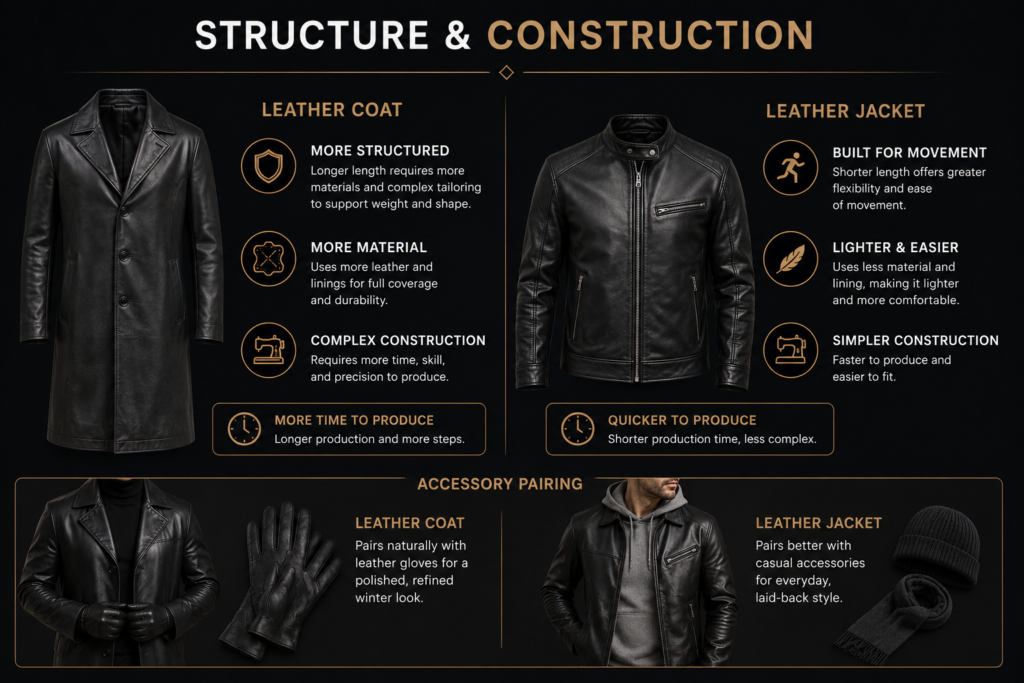
Structured leather coat and flexible leather jacket displayed with premium winter and casual styling accessories.
Leather coats require more structure and tailoring, while leather jackets focus on flexibility and everyday comfort.

Leather coats are naturally more structured. Because they are longer, they require more materials and more complex tailoring to help them hang and support the weight. Jackets are more casual, built for flexibility and movement as a shorter piece. For manufacturers, the differences are also relevant. Jackets are more quickly produced and easier to fit compared to coats, which require more leather and linings.You’ll also notice this in accessories — a leather coat pairs naturally with leather gloves for a polished winter look, while a jacket pairs better with more casual accessories.

Style and Occasions

Leather coats and jackets differ these most during everyday use. By their very nature, leather jackets are casual. They pair with jeans, shoes, and basic tees. They have a certain edginess and attitude that are a part of the fashion culture of the ages. Leather coats are more formal or at least smart-casual. A long leather coat with tailored trousers looks intentional and neat. It is appropriate in places where a leather jacket would be underdressed. If your brand is building a full leather range, this is also why pairing leather pants with a coat creates a very different look than pairing them with a jacket — the coat elevates the whole outfit.

Who Wears What — And Why It Matters for Brands

Every brand has different ideas and each idea has a different style that targets a different audience. The main distinction between leather jackets and coats helps you better understand your audience. By nature, leather jackets are casual. A more universal appeal, they sell better and have a wider age range and style preferences. Leather coats are for more specific customers, people looking to make a more serious style statement or need serious outerwear that looks good etc. If you are a brand struggling to figure out what to make, jackets are typically the safer starting point, because of more universal appeal, but coats offer better margins and attract your high-paying customers. Brands that eventually offer both — along with complementary pieces like leather vests and leather skirts — build a much more complete and compelling collection.

Leather Type and Weight

The Differences Between Leather Coat and Leather Jacket also extend to the type of leather typically used. Jackets are often made from lighter, more supple leather — lambskin, nappa, or light cowhide — because flexibility and comfort during movement matter more. Coats use heavier, more structured leather that holds its shape over a longer silhouette. The weight of the leather contributes to the coat’s drape and structure. This is why a good manufacturer will recommend different hides for each garment type. It also affects accessories in your line — the leather used for leather belts or leather bags is often chosen to complement the main garment rather than match it exactly.

Functional Details That Set Them Apart

Examine both types of outerwear and you’ll find plenty of functional differentiators as well. Leather jackets have zips that are usually asymmetrical. They have trendy hardware, many exterior pockets, and have ribbed cuffs, all of which show their rugged origin. Ribbed cuffs show their rugged origin. Leather coats line up straighter and have fewer design elements, as well as more conventional fastenings like button rows or belt rows. The precise differences visible in leather jackets and coats are high in contrast and include things like a coat having a button collar or a coat having a collar with a wide lapel. One style is rebellious while the other is refined. Even care items like leather aprons used during production tell you something — the cutting and sewing process for a long structured coat is genuinely more involved than for a cropped jacket.

Final Thoughts

The differences between leather coat and leather jacket come down to four core things: length, formality, warmth, and construction. Neither is better — they just serve different purposes and different customers. A well-made leather jacket is a wardrobe staple. A well-made leather coat is a statement piece. If you’re a brand owner deciding what to build, or a buyer deciding what to order, getting clear on these differences helps you make a smarter, more confident decision. And if you’re working with a quality leather apparel manufacturer, they’ll help you navigate these choices from the very first sample — because getting the garment right starts with knowing exactly what you’re making.

FAQs

What is the main difference between a leather coat and a leather jacket?

The main difference is length. A leather jacket ends at or just below the waist, while a leather coat falls below the hips — often reaching the knee or lower. This length difference affects warmth, styling, formality, and how each garment is constructed.

Is a leather coat warmer than a leather jacket?

Yes, generally. A leather coat covers more of your body and is designed as proper outerwear for colder months. A leather jacket is better suited to transitional weather or layering. If you need serious warmth, a coat is the better choice.

Can a leather jacket be worn in formal settings?

It depends on the style and how it’s worn, but leather jackets are generally considered casual. A leather coat leans more formal or smart-casual and works better in settings where a jacket might look underdressed.
How Clothing Businesses Convert Idea to Production Garments

Every clothing brand starts with an idea. It can be a simple sketch, a rough concept, or even inspiration from something you saw online or in real life. But turning that idea to production garments is not as easy as it sounds. There are many steps involved, and if anything goes wrong, it can affect the whole production. That is why understanding the idea to production garments process is very important for every clothing business.

We will explain this process in a very simple and practical way so you can clearly understand how ideas turn into finished clothing. For brands that need professional help, Eco Jersey provides expert Tech Packs Development services to convert ideas into proper production instructions.

Turning Ideas Into Simple Designs

Everything begins with creativity. Designers take a basic idea and turn it into a simple sketch. This sketch helps show the shape, style, and overall look of the garment. At this stage, the design is still basic. It is only meant to visualize the idea. But a sketch alone cannot be used for production.

Creating a Tech Pack

After the design is ready, the next step is very important — creating a tech pack. A tech pack is a complete instruction guide that tells the factory exactly how to make the garment.

It usually includes:

  • Design sketches
  • Fabric details
  • Size measurements
  • Stitching instructions
  • Color information
  • Label placement
  • Packaging details

When everything is clearly written, manufacturers can work without confusion.

Many brands also rely on EcoJersey’s Sampling & Pattern Making services to avoid mistakes before bulk production.

Choosing the Right Fabric

Once the tech pack is ready, the next step is fabric selection. Fabric plays a very important role in how the final product looks and feels. The wrong fabric can completely change the outcome.

At this stage, brands focus on:

  • Fabric type
  • Weight (GSM)
  • Color matching
  • Quality testing

To make this easier, EcoJersey offers Fabric Sourcing & Development services. You can also explore the to find suitable materials.

Pattern Making and Sampling

Now the idea to production garments starts becoming real. Pattern makers create templates based on the tech pack. These templates are used to produce the first sample garment. Sampling is very important because it shows how the final product will actually look and fit. If anything is wrong, it can be corrected before mass production starts. Eco Jersey also supports this stage through Development Size Grading services.

Production Planning and Bulk Manufacturing

After the sample is approved, full production begins. Factories carefully follow the tech pack to produce garments in bulk.

This process includes:

  • Cutting fabric
  • Stitching garments
  • Quality checking
  • Finishing garments
  • Packing products

EcoJersey helps brands manage this smoothly through its .

Quality Control

Before garments are shipped, they go through a strict quality check.

Factories check:

  • Stitching quality
  • Fabric defects
  • Size accuracy
  • Color consistency

Eco Jersey follows strong to ensure every product meets quality requirements.

Branding and Packaging

After production, garments are finished with branding and packaging.

This includes:

  • Labels
  • Tags
  • Folding
  • Packaging

    EcoJersey also provides to give garments a professional final look.

Why Tech Packs Matter

Without a tech pack, factories can misunderstand instructions and make mistakes.

But with a proper tech pack:

  • Communication becomes clear
  • Errors are reduced
  • Production becomes faster
  • Quality stays consistent

That is why tech packs are the most important part of the idea to production garments journey.

Conclusion

Turning idea to production garments takes time and planning. It involves design, documentation, sampling, and careful manufacturing. But when everything is properly organized, the process becomes smooth and stress-free. In simple words — clear planning leads to better results. With the right system, any clothing brand can successfully turn ideas into high-quality finished garments.

FAQs

What does “idea to production garments” mean?

It means the full process of turning a clothing idea or design into a finished, wearable garment through design, planning, sampling, and manufacturing.

Why are tech packs important in clothing production?

Tech packs give clear instructions to manufacturers. They reduce confusion, prevent mistakes, and ensure garments are made exactly as the brand designed them.

What are the main steps in garment production?

The main steps include design creation, tech pack development, fabric selection, sampling, bulk production, quality control, and final packaging.

How do clothing businesses avoid production errors?

They avoid errors by using detailed tech packs, proper communication with factories, correct fabric selection, and strict quality checks during production.

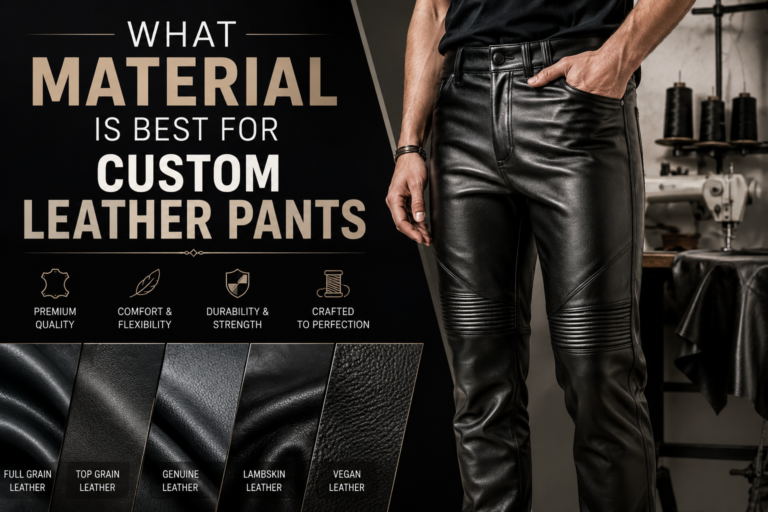
What Is The Best Material For Leather Pants and Why It Matters

When customers shop for leather pants, they notice the feel of the material first, not the stitching or the cut. Therefore, selecting the Best Material for Leather Pants can have a profound impact on the look, feel, performance, and sales of the product. For fashion brands developing custom leather apparel, this decision carries the greatest weight. After all, choosing the Best Material for Leather Pants ensures superior comfort, durability, and style—if you select the right material, the rest will follow.

Lambskin Leather — The Premium Choice

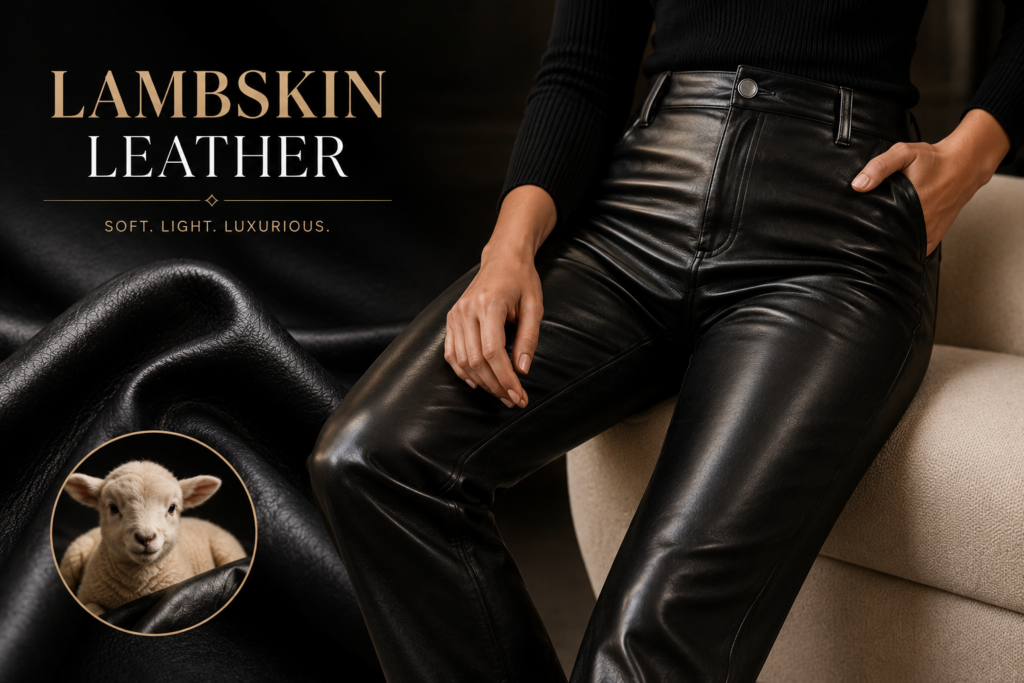
Luxury black lambskin leather pants with soft smooth texture displayed in a premium fashion studio environment.
Lambskin leather offers a soft, lightweight, and luxurious feel for premium leather pants.

Leather pants are known to be made out of many different types of leather, but lambskin leaps to the top of the competition. Lambskin leather pants have the reputation of being extremely soft, and lightweight but still smooth enough to have an elegant flow. Lambskin is a perfect candidate for slim-fit clothing because of how light and how flowy it is. Lambskin also fits the high-waisted style, allowing for a perfect combination of how the clothing feels and how the clothing looks.

Pants made out of lambskin also have the advantage of being comfortable because lambskin is leathery and smooth, but also soft at the same time. Lambskin is supple enough to allow you to move around without feeling restricted. Lambskin, however, is the most easily damaged type of leather.

For luxury fashion brands positioning their leather pants at a premium price point, lambskin is the material that justifies that price tag immediately.

Cowhide Leather — Durable and Dependable

Cowhide is the most common leather type used in clothing construction. Compared to lambskin, cowhide is much more durable (thicker, stiffer, etc.). Cowhide pants resist abrasion while keeping their shape.

Certain styles, including cargo pants, wide-leg cuts, and pants with bold, fashion-forward designs, use cowhide more appropriately. Cowhide naturally softens with use, which is appreciated with time.

Cowhide also works exceptionally well for brands building collections beyond pants. Manufacturers producing leather jackets and leather coats typically use cowhide for its consistent quality and wide availability across colors and finishes.

Faux Leather — Accessible and Ethical

PU leather and vegan leather are all terms used to describe a completely synthetic material that contains no animal by-products. Historically, this material used to be cheap looking and could hardly pass as a substitute to real leather. However, with new advances in crafting techniques and improved materials, modern faux leather can look and feel just as nice and elegant as real leather. Not to mention, it comes with a much lower price tag.

For companies trying to appeal to vegan and eco-friendly consumers, faux leather is a great alternative to real leather so you won’t lose your brand’s appeal. More importantly, you won’t compromise your product’s quality. Faux leather can help maintain a consistent texture and color amongst all products produced in one given production run.

Like anything else, faux leather comes in different grades, so the more you pay the more you can expect a better product. The downside to spending the least amount possible on faux leather means the product you sell may crack and peel, creating brand damage for you.

Stretch Leather — Comfort Meets Structure

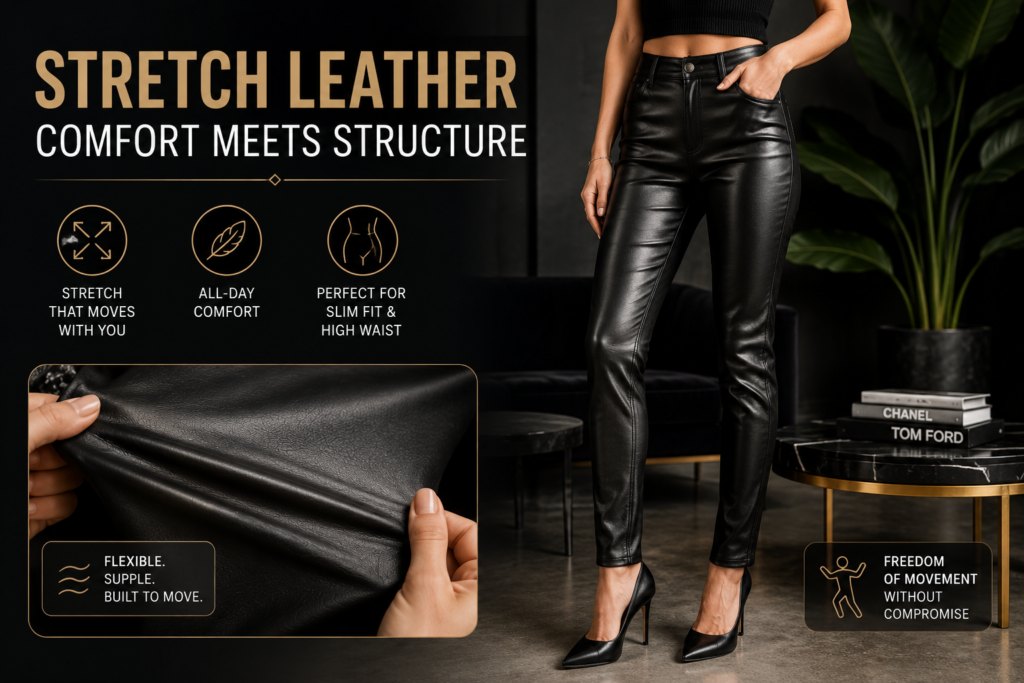
Slim-fit stretch leather pants demonstrating flexibility and comfort with stretchable leather fabric texture close-up
Stretch leather combines comfort, flexibility, and structure for modern slim-fit leather pants.

Stretch leather combines real or faux leather with elastane or spandex, resulting in a leather-like appearance and feel, and moves with the body. Stretch leather works well for slim fit and high waisted styles where comfort and freedom of movement is important.

Brands that want a leather appearance for their products without sacrificing comfort and flexibility are rapidly using this style. This feature is especially valued by leather pants customers who want to wear their leather pants throughout the day.

Why Material Choice Defines Your Brand

Every material decision communicates something about your brand. Lambskin says luxury. Cowhide says durability. Faux leather says accessibility and ethics. Stretch leather says modern comfort. Working with an experienced leather apparel manufacturer helps you match the right material to the right style and the right customer — so your collection feels intentional rather than accidental.

Brands building complete leather collections that include leather bags and leather belts benefit greatly from material consistency — creating a cohesive brand aesthetic that customers recognize and trust.

Conclusion

The ideal material for your leather pants hinges on your brand, intended audience, and pricing strategy. If you want to offer a luxurious option, lambskin is the way to go. Cowhide is the best avenue for durability. A happy medium is sheepskin. If you’re looking to not only be more affordable, but also more ethical, you should consider a faux leather. Stretch leather can provide the comfort and modernity your leather may be missing. Knowing the pros and cons of given leather, you can innovate your collection and make customers happy more effectively

FAQs

What material, if not any other, would be the most durable for making pants?

Cowhide. It naturally softens after a lot of use, and it resists being worn away. It’s the perfect material for making long lasting pants.

Is it acceptable to use faux leather instead of genuine leather?

It is acceptable. For a brand, faux leather is used for beefed up budget friendly pants. It also appeals to costumer who are vegan and conscious about their cruelty free lifestyle.

At what point does leather become comfortable for long term use?

Stretch leather blends and lambskin are probably the most comfortable. Cowhide just doesn’t offer the same flexibility and softness.

A Complete Guide to Different Types of Leather Pants for Every Style

Leather pants used to be under the category of a rock-and-roll statement, but that’s no longer the case. Leather pants can now be observed across luxury runways and everyday street style. Knowing the different types and styles of leather pants allows both the buyer and seller in the retail market to make an informed choice.

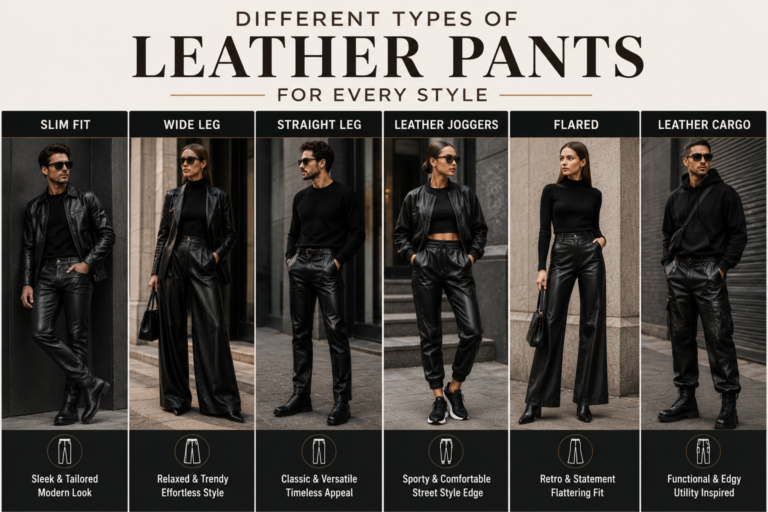
Slim Fit Leather Pants

Slim leather pants are a timeless option. They contour the entirety of the leg, hip to ankle. This design creates a clean silhouette. This style complements oversized tops, leather jackets, and ankle boot.

Slim fit styles appeal to customers who want a modern, chic, and edgy option. These items sell well, look timeless, and photograph beautifully. A professional leather pants manufacturer crafts slim fit cuts with precision — ensuring comfort without sacrificing that sleek structure.

Wide Leg Leather Pants

Right now, leather pants that have a wide leg cut are dominating the fashion scene. The loose, baggy cut makes a statement that works on all body types and for any place. For a look that is put together, pair wide leg leather pants with fitted and cropped tops and jackets.

This style very much appeals to the customer of today’s fashion who is a trend follower, but also values comfort as much as the next person.

Leather Jogger Pants

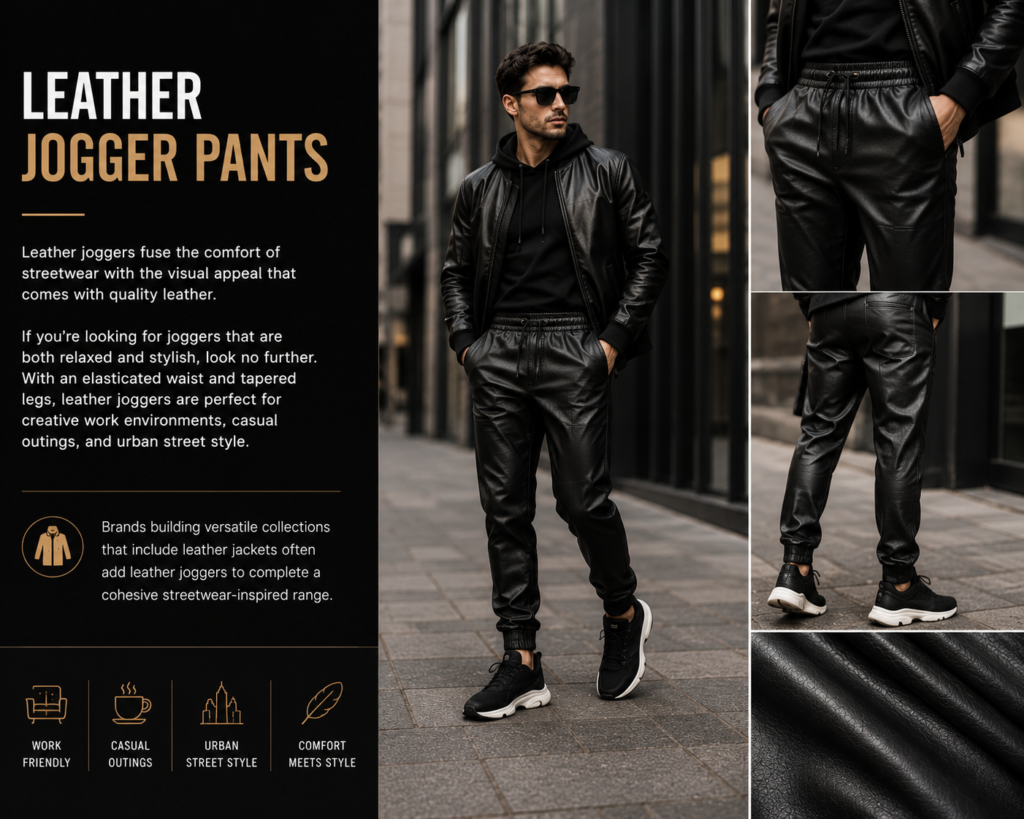
Male model wearing black leather jogger pants with hoodie and leather jacket in an urban streetwear setting.
Leather jogger pants combine streetwear comfort with a sleek modern leather aesthetic.

Leather joggers fuse the comfort of streetwear with the visual appeal that comes with quality leather. If you’re looking for joggers that are both relaxed and stylish, look no further. With an elasticated waist and tapered legs, leather joggers are perfect for creative work environments, casual outings, and urban street style.

Brands building versatile collections that include leather jackets often add leather joggers to complete a cohesive streetwear-inspired range.

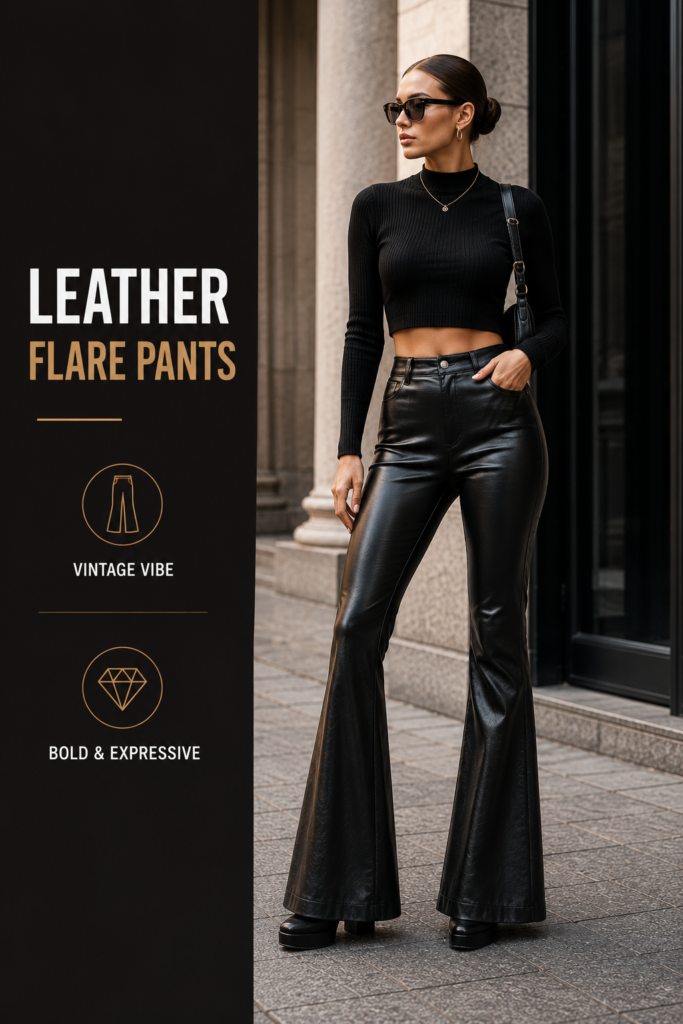
Female model wearing black leather flare pants styled with a fitted top in a modern fashion editorial scene.
Leather flare pants bring a bold vintage-inspired silhouette to contemporary fashion collections.

Leather Flare Pants

Flare leather pants add a vintage vibe to today’s clothing styles. Tight fitting at the thigh and dramatic below the knee, this leather pant shape builds a bold vintage style. This pant style suits fitted tops and platform shoes.

This vintage style caters to fashion houses that are modern and bold in a loud and expressive way.

Leather Cargo Pants

Leather cargo pants merge luxury with practicality. With a range of pockets, a loose silhouette, and formed leather, these pants create a striking balance between functional and fashionable. This look is developing rapidly in the streetwear and modern design industries.

Brands that carry leather vests and leather coats can build strong full-outfit looks around leather cargo pants — increasing collection depth and customer spend.

High-Waisted Leather Pants

High-waisted leather pants naturally define the waist and create an elongating effect on the silhouette. Practically anything slim, wide leg, or flared can be classified as high-waisted. They are a variation in cut, not a style. High waisted pants, accentuate the waist, go great with cropped tops and blouses that can be tucked in.

Fashion, for the purpose of e-commerce and social media photography, does not get better than high-waisted pants. It is easy to see why most brands do well with these pants. They are appealing to all body types.

Building a Leather Pants Collection That Sells

There are various styles of leather pants, with each catering to a particular need. Fashion brands that play it smart don’t corner themselves into a single style option. They curate collections that span classic, modern, and the latest trends, and in doing so, they give their customer base endless reasons to shop.

Working with a reliable leather apparel manufacturer ensures consistent quality, proper pattern making, and access to premium leather options across every style you develop. Complete your collection further with complementary pieces like leather skirts and leather belts to create full, shoppable outfit combinations.

Conclusion

Not everyone knows that leather pants have an extensive range of styles. Leather pant options can be traditional slim fits, flares, or even leather joggers. Being educated on the variety of leather pant styles will have your collection be more sophisticated, and your customer base wider, while also helping you establish your brand more. Prioritize variety and quality, and then your leather collection will have made the best statement.

FAQs

What are the most popular types of leather pants right now?

Currently very popular are wide leg and high-waisted. Slim fit pants remain a classic style and are likely to always be popular.

Which leather pants style suits all body types?

Leather wide leg and high waist pants are the most flattering of all styles and suit most bodies as they bring balance to different shapes.

What leather is suitable for producing different styles of pants?

A soft hide like lambskin is good for high waisted and slim styles. Cowhide is good for cargo and other structured styles as it is more durable.

How many styles of leather pants should a new fashion brand start with?

A new brand to the market should offer 2 to 3 styles. Typically these are slim fit and wide leg, plus an extra style of a currently popular design to maximize customer appeal.

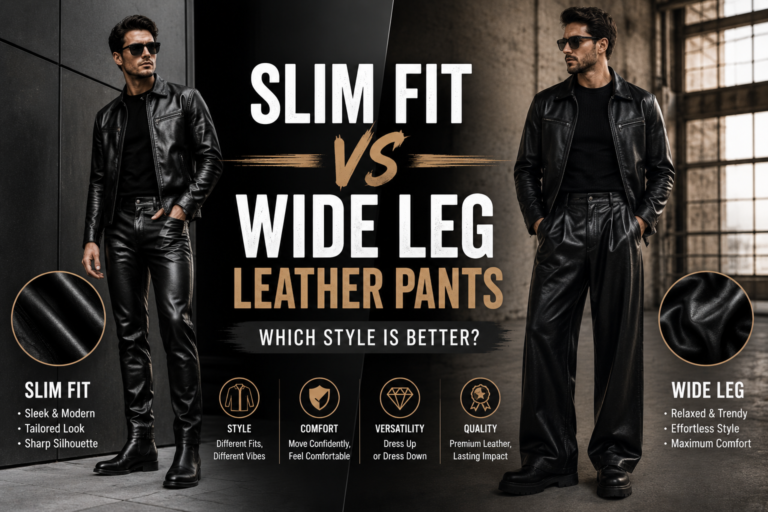
Slim Fit vs Wide Leg Leather Pants: Which Style is Better?

Leather trousers are returning and better than before. They are getting enormous attention from designers and us too. When comparing slim fit and wide leg styles, both are tough competitors. Each style has a unique pizazz and each style has die-hard followers. The better question is which style compliments your form, your event, and your personal style?

Slim Fit Leather Pants — Sharp, Sleek, and Powerful

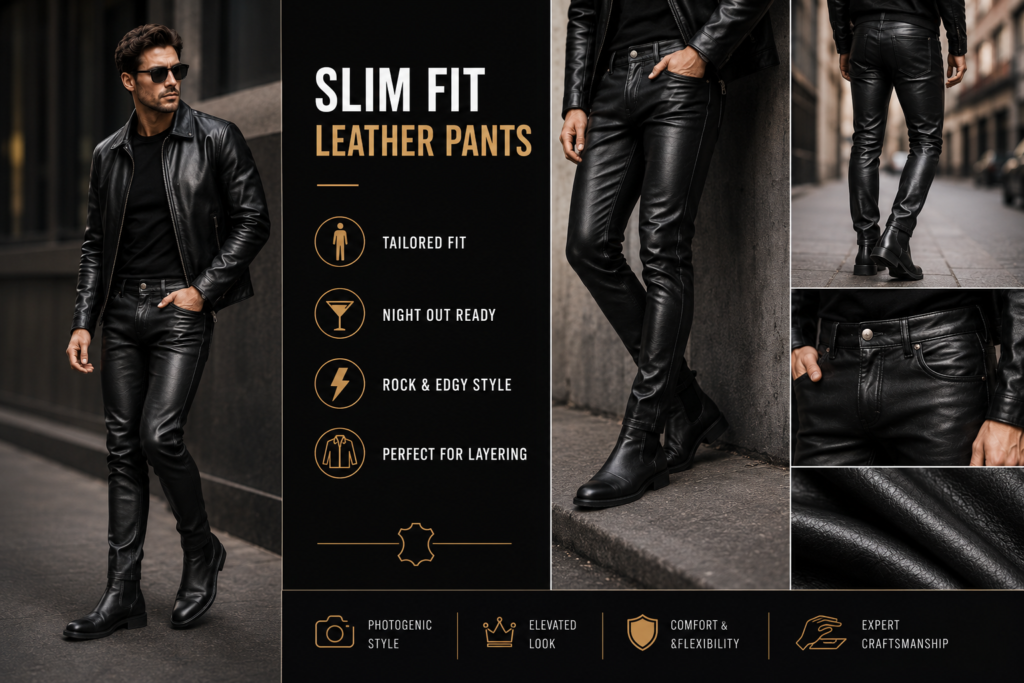
Male model wearing black slim fit leather pants with leather jacket and boots in an urban fashion setting.
Slim fit leather pants create a sleek, structured silhouette ideal for edgy and fashion-forward styling

Slim fit leather pants have a hug-a-child fit from waist to ankle. They create a streamlined body image which contributes to a minimalistic overall fit extending from body to foot. This pants can be worn from the fun casual setting of the evening to trend edgy. This kind of pants works with oversized jackets, and can fit with tops and boots.

Slim fit styles work best for:

  • Tall and lean body types
  • Nightout and event dressing
  • Rock and edgy fashion aesthetics
  • Layering under long coats or jackets

Slim leather pants have a chic, structured fit, and photograph beautifully, appealing to fashion brands catering toward customers active on social media.A skilled leather pants manufacturer crafts slim fit styles with precise cuts that flatter without restricting movement.

Wide Leg Leather Pants — Bold, Relaxed, and Effortlessly Cool

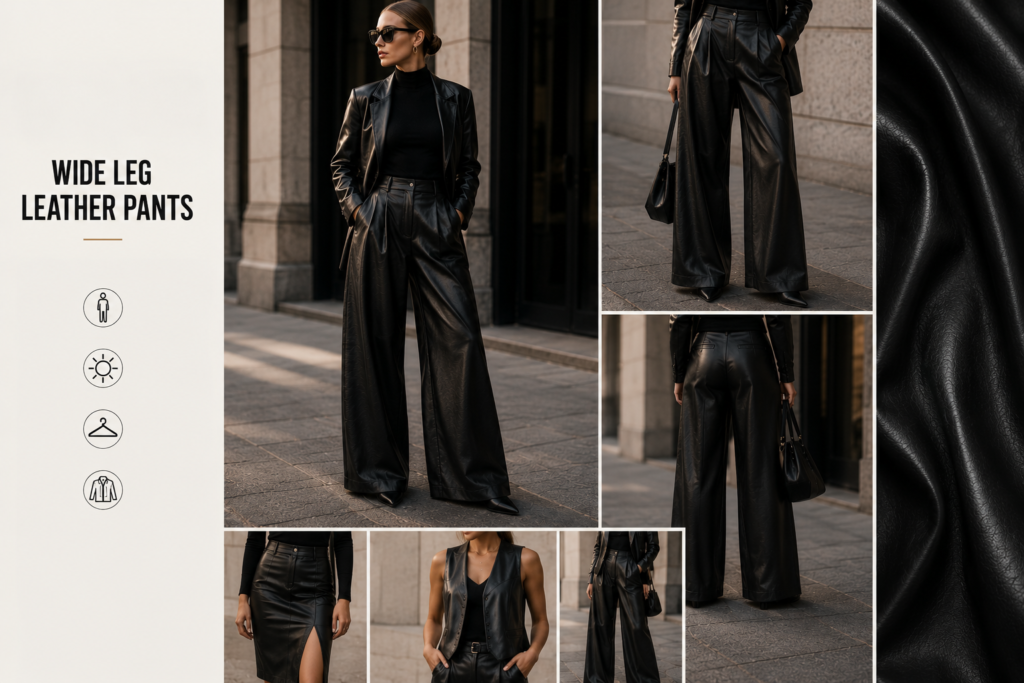
Female fashion model wearing black wide leg leather pants styled with a fitted top and leather blazer.
Wide leg leather pants combine comfort and contemporary fashion with a bold, relaxed silhouette.

Wide-leg leather pants are trending in fall and winter fashion this year. Their wide-leg style maintains a tailored, professional appearance while having a comfortable and relaxed structure. These wide cut pants marry both the structured and voluminous aspects of fashion.

Wide leg styles suit:

  • All body types — especially curvy and petite frames
  • Daytime and casual styling
  • Contemporary and minimalist fashion aesthetics
  • Pairing with fitted tops and cropped jackets

Wide leg pants pair really with other leather items. Brands offering leather skirts and leather vests in their collections naturally extend into wide leg pants to build cohesive, fashion-forward ranges.

Which Style Should Your Fashion Brand Offer?

If you’re putting together a leather apparel collection, the truth is, you should probably offer both. Slim fit appeals to your classic and more trend-resistant customer. Wide leg draws in your buyer who is fashion-forward and also more likely to follow trends.

Working with a professional leather apparel manufacturer gives you the flexibility to develop both styles with proper pattern making, quality leather sourcing, and consistent construction. Your collection becomes stronger when it serves multiple customer preferences instead of just one.

Brands that also carry leather jackets and leather coats can build complete head-to-toe leather looks — which significantly increases average order value and brand appeal.

Conclusion

There is no actual answer to the question of slim fit vs wide leg leather pants. Both options have their pros and cons. Slim fit leather pants have a classic stylish look and wide leg leather pants have a fun confidence. The best brands have all the options and let their customers choose. If you have quality leather pants with fitted styles pants and wide leg styles that have a relaxed fit, you will have a best-selling collection.

FAQs

Do wide leg leather pants work on petite body types?

They do. For petite body types, wide-leg leather pants work when high waisted pants are coupled with cropped tops to make the silhouette look taller.

What type of leather is best for slim fit pants?

Slim fit pants best utilize lambskin, stretch leather, and other supple leathers as they give the most range of comfort and movement.

Are leather pants only for dressy occasions?

Can they be casual? Both styles can be casual. Wide leg styles can be dressed down with an understated top stylized for daily wear. Slim fit styles work for attend for both casual and dressy occasions.

What are some ways to choose the right pants styles for a leather pant collection?

Start with the lifestyle and preferences of your target customer. Including slim styles and wide leg styles in your collection attracts a broader audience and a more considered collection overall.

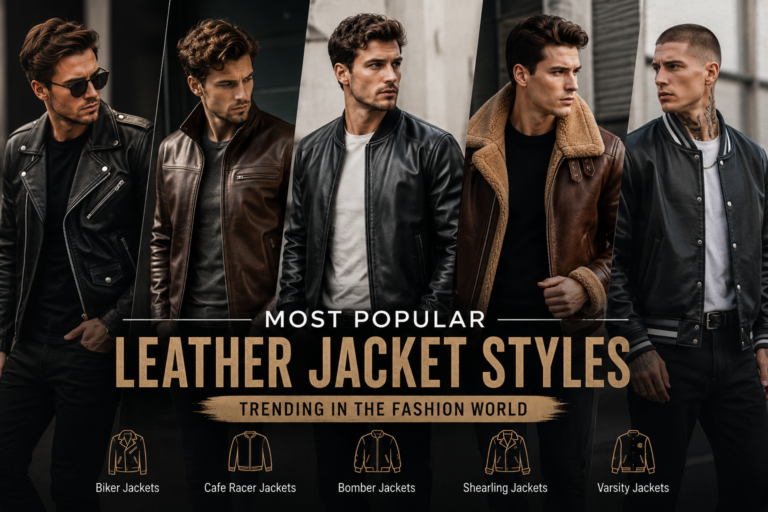
Most Popular Leather Jacket Styles Trending in the Fashion World

Leather jackets are one of the most iconic products in fashion. Leather jackets are still popular despite the fact that fashion trends continue changing. They combine style, durability and versatility.

Fashion brands today are focusing on modern designs to match the changing preferences of customers. Customers are looking for both stylish and comfortable products, from oversized streetwear jackets through to classic biker style.

Many fashion businesses work with professional Leather Jackets Manufacturer services to create trendy collections that meet current market demand while maintaining premium quality.

Understand popular leather jacket styles to stay competitive in a fast-moving industry.

Why Leather Jackets Continue to Trend

The Most Popular leather jacket styles Trending in the Fashion World has maintained enduring popularity across the global fashion industry. The core driver of this success is that it fits three distinct wear scenarios: casual, formal, and street-style outfits. It

is also durable and features a classic style, far outperforming fast fashion trends with short life cycles, and has become a long-enduring, indispensable fashion staple.

Many brands collaborate with experienced Leather Apparel Manufacturer services because strong production quality helps maintain a premium brand image in competitive markets.

Fashion trends may evolve, but consistently remain part of modern wardrobes.

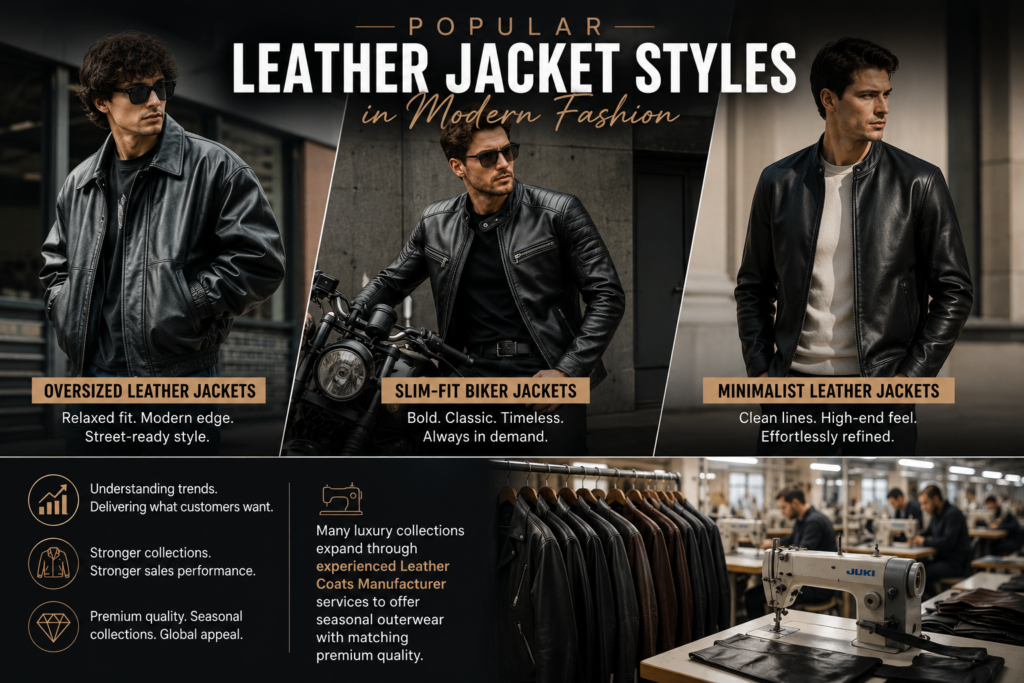
Popular Leather Jacket Styles in Modern Fashion

Modern oversized, biker, and minimalist leather jackets displayed by fashion models in a premium editorial layout.
Oversized, biker, and minimalist leather jackets remain among the most demanded styles in today’s fashion market.

In today’s fashion industry, three mainstream jacket styles dominate the market: oversized leather jackets have gained street popularity for their relaxed, modern appearance;

slim-fit biker jackets maintain steady sales thanks to their bold yet classic traits; minimalist leather jackets capture the consumer group that favors a clean, high-end aesthetic.

Brands that accurately grasp these trends often deliver stronger sales performance, as their offerings align with consumer needs.

Many luxury collections also expand through experienced Leather Coats Manufacturer services to offer seasonal outerwear with matching premium quality.

Popular Leather Jacket Styles Should Match Customer Lifestyle

When many fashion brands launch new jacket collections, they mistakenly assume that simply chasing trends is enough to achieve good results.

In reality, they must first clarify their customers’ lifestyle preferences: young customer groups favor oversized street-style jackets, while professional buyers choose sleek leather jackets.

Products must cover comfort, fit, and versatility, and strike a proper balance between modern fashion trends and everyday wearability.

Many businesses also build matching collections with products from professional Leather Pants Manufacturer services to create more complete leather fashion outfits.

Understanding customer lifestyle helps brands design more profitable collections.

Customization Makes Leather Jackets More Attractive

Today’s fashion industry has been widely influenced by a growing demand for customization. Consumers increasingly want to acquire unique, one-of-a-kind products that stand out from mass-produced items.

To meet this growing appetite for personalization, brands commonly adapt their offerings by introducing custom fittings, premium hardware, exclusive stitching, and private label branding.

Customization can include:

  • Unique zipper styles
  • Custom color combinations
  • Personalized labels
  • Premium stitching details

Design features help strengthen product identity and allow for better customer recognition.

Many brands also expand their accessory collections through professional Leather Belts Manufacturer services to maintain consistent fashion styling.

Fashion Brands Are Expanding Beyond Jackets

Instead of just focusing on jackets, a lot of brands make popular leather jacket styles fashion collections nowadays. They offer a variety of products. This attracts more customers and builds more brand recognition.

For example, some fashion businesses introduce products from experienced Leather Bags Manufacturer services to build luxury lifestyle collections.

Others expand into fashion-focused products through professional Leather Skirts Manufacturer services.

Certain brands enhance their seasonal lines by partnering with established Leather Gloves Manufacturer and Leather Vests Manufacturer services.

Diversifying across categories fuels more robust growth.

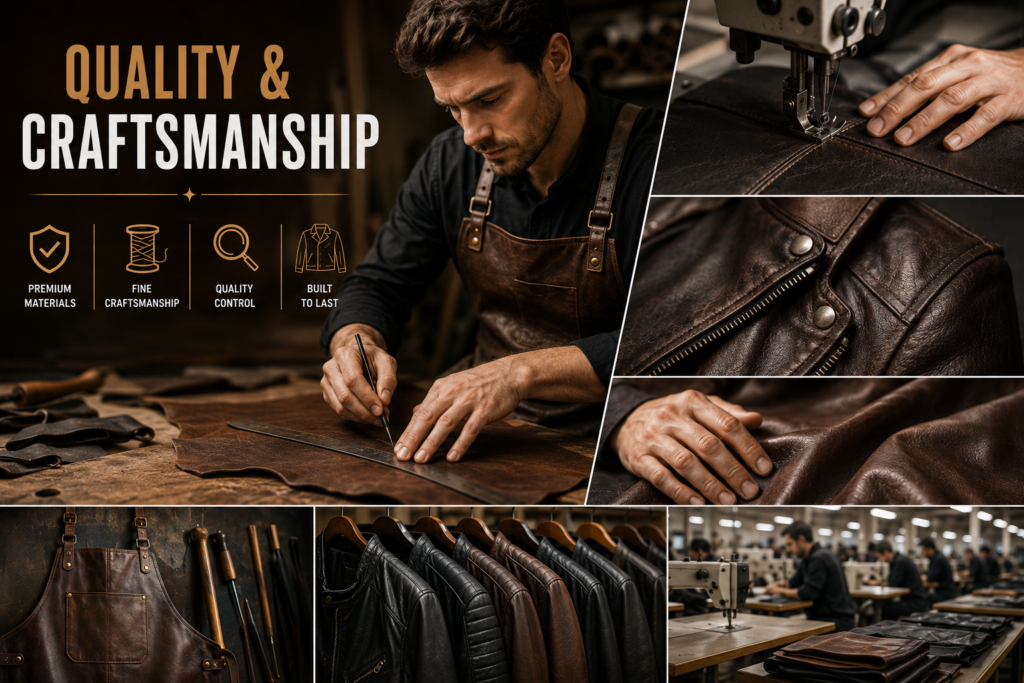
Quality and Craftsmanship Still Matter Most

Leather craftsman cutting and stitching premium leather jackets in a professional manufacturing workshop.
High-quality craftsmanship and durable materials help leather apparel brands build long-term customer trust.

Though moods for styles and fashions tend to fluctuate more than the stock market, quality is a consistent pillar of customer satisfaction. Many customers want popular leather jacket styles that look and feel good for a long time, as well as being reliable and long-lasting.

Customers appreciate your brand’s trustworthiness if you exhibit strong craftsmanship and a commitment to high quality materials. Additionally, a long-term relationship with your customer base is not impossible.

Many fashion businesses also expand into utility products through professional Leather Aprons Manufacturer services to create more versatile leather collections.

Production centered around quality helps businesses to compete in the new fashion market.

Conclusion

As the years go by, popular leather jacket styles tend to evolve with the season. In today’s fashion world, oversized, minimalist, and biker style jackets are trending.

However, what many renowned brands do is more than just fit into the current style. They give lifestyle, comfort, and personalization the attention that they deserve.

Paired with reliable and experienced manufacturing partners, and having an understanding of what drives today’s market, popular leather blouson jacket styles are bound to stay fashionable, as well as create stronger customer bonds, and grow the business. Read more: College Style Jacket

FAQs

Why are leather jackets always popular in fashion?

Leather jackets combine timeless style, durability, and versatility for different fashion trends.

What leather jacket styles are trending today?

Oversized jackets, biker styles, and minimalist leather jackets are highly popular today.

Why is customization important in leather fashion?

Customization helps brands create unique products and stronger brand identity.

Can leather brands expand beyond jackets?

Yes, many brands also offer leather pants, bags, skirts, gloves, and belts.

Why does quality matter in leather apparel?

High-quality craftsmanship improves durability, comfort, and long-term customer satisfaction.

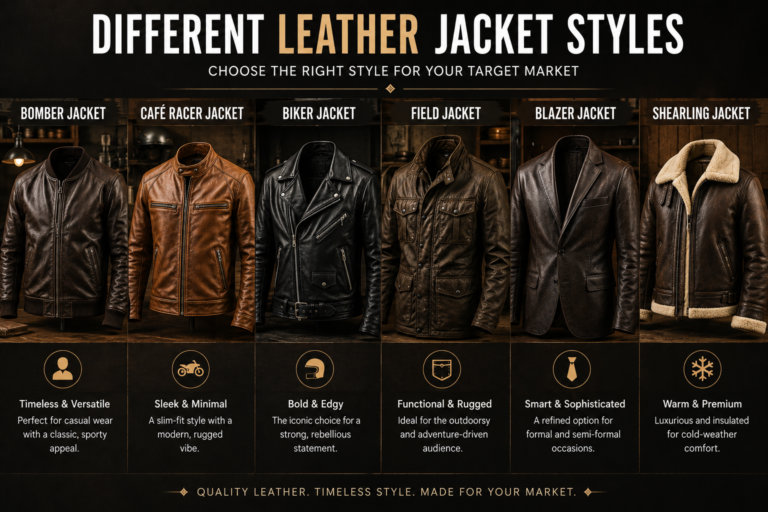
How to Choose the Best Leather Jacket Style for Your Target Market

Selecting the appropriate style of leather jackets is undoubtedly critical for any fashion business. Every customer has a distinct preference in terms of leather jacket design. Some may consider the latest fashion trends, while others may think about comfort, best leather jacket style, or other seasonal factors. Therefore, a fashion business must have an insight into the customer’s preferences before commencing actual production.
An elegant collection of best leather jacket style designed with customer preference in mind will assist a business in widening its customer base and creating a unique and identifiable brand. Today, many growing fashion businesses work with professional Leather Jackets Manufacturer services to create stylish and high-quality leather collections for different markets.

Understanding customer preferences helps brands choose the right styles while improving long-term sales performance.

Understanding Your Target Market

It is essential for brands to identify their target market before deciding on a best leather jacket style. Some consumers are prepared to pay a premium for luxury leather, while some prefer casual and street or biker fashion.

Younger consumers purchase according to the latest trends, often opting for a slim fit. On the other hand, luxury consumers tend to prefer classic styles, such as a best leather jacket style, which can stand the test of time.

Many fashion businesses partner with experienced Leather Apparel Manufacturer services because professional manufacturers help brands develop collections that match specific customer preferences.

By knowing who your audience is, businesses can develop fashion collections that are more focused and more profitable.

Best Leather Jacket Style Depends on Fashion Trends

The demand for best leather jacket style is dependent on fashion trends. Styles can vary with changing seasons, celebrity outfits, streetwear, and customer lifestyles.

Oversized jackets, cropped styles, and best leather jacket style with a minimalist aesthetic have taken over modern fashion, while classic biker jackets are timeless.

To remain relevant, a brand’s design team should take note of modern styles. It will ensure that the company is competitive and that it captures the imagination of customers.

Many fashion brands also expand seasonal collections through professional Leather Coats Manufacturer services to offer more variety during colder seasons.

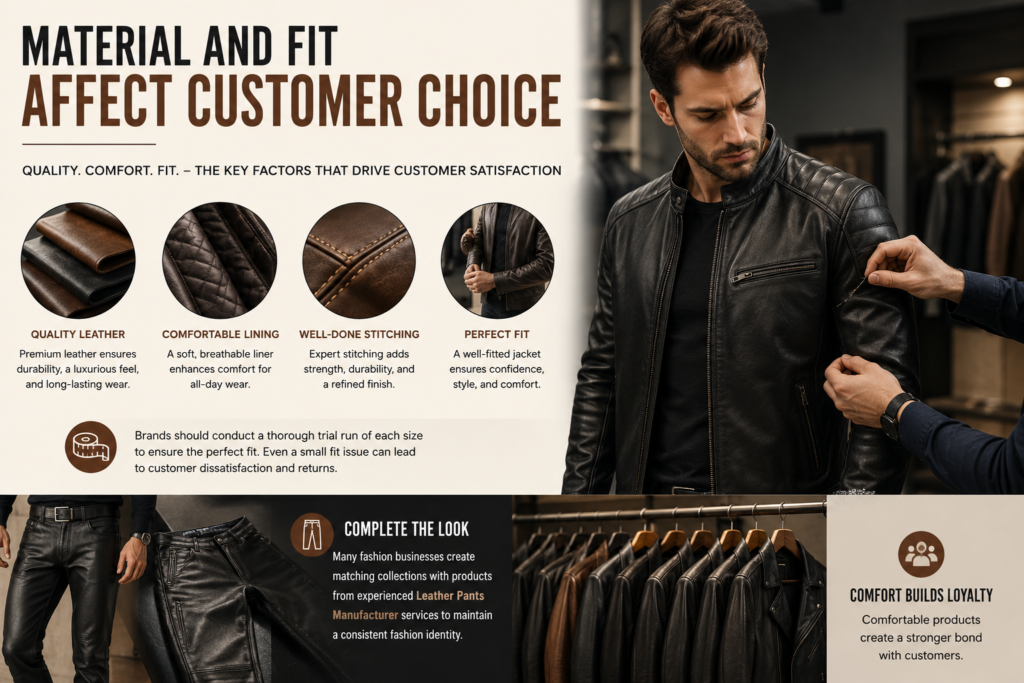
Material and Fit Affect Customer Choice

Fashion designer checking the fit and material quality of a premium leather jacket with close-up details of stitching, lining, and leather craftsmanship.
Material quality, comfort, stitching, and fit play a major role in customer satisfaction and leather jacket buying decisions.

When buying a leather jacket, there is more to consider than just a cool look. Comfort and fit, as well as the quality of the leather, are big deciding factors.

Quality leather combined with a comfortable and soft liner and well-done stitching ensures a good wearing experience. A good best leather jacket style really should look fashionable but be comfortable enough for daily use.

To ensure a jacket’s fit, brands should conduct a thorough trial run of each size rather than only a few to the sample sizes. If customers notice even a small fit issue, they will not be happy with the product and are more likely to return it.

Many fashion businesses also create matching collections with products from experienced Leather Pants Manufacturer services to maintain a consistent fashion identity.

Comfortable products create a stronger bond with customers.

Best Leather Jacket Style Should Match Brand Identity

Every fashion label has an identity as well as a target client group. Because of that, when it comes to your brand, you should choose best leather jacket style that match your brand’s image.

For instance, in high end leather jacket brands, the focus will be on really lovely details and leather jackets that will stand the test of time while in streetwear, you are likely to find leather jackets with interesting cuts and styles that are more current and perhaps a bit edgy.

When you have defined your style and design for your leather jackets, it will be easy for your clients to recognize your brand.

Brands often strengthen their collections by adding complementary fashion items from professional Leather Vests Manufacturer services to create more versatile product lines.

Consistent branding helps in developing a long-term customer retention and identification scheme.

Customization Helps Products Stand Out

Personalization is crucial in today’s fashion market. The modern consumer values specialty products over general, mass-produced options.

Custom pieces built from a brand’s core offerings enhance their collections. Examples include personalization via custom colors, stitching, or branded hardware, and private label designs.

Customization options may include:

  • Custom zipper styles
  • Unique color combinations
  • Personalized branding labels
  • Different leather textures

It helps brands generate more exclusive products and fine-tunes their place in the marketplace.

Many businesses also expand into accessories through experienced Leather Belts Manufacturer services to create complete leather fashion collections.

Product Variety Creates More Opportunities

Successful fashion brands almost always diversify. By adding leather product ranges, brands appeal to larger customers.

For example, some brands add products from professional Leather Bags Manufacturer services to create more complete lifestyle collections.

Others expand into fashion-focused products through experienced Leather Skirts Manufacturer services.

Some brands make utility and seasonal collections with the help of specialist Leather Gloves Manufacturers and Leather Aprons Manufacturers.

A range of products nurtures better longterm business relationships.

Conclusion

Leather jacket production demands a solid awareness of the market, superior quality manufacturing, and textbook brand clarity. To ensure jacket success, factors like emerging trends, comfort, and other elements of customer preference need to be incorporated.

Brands that have a strong understanding of their market and an adept manufacturing partner construct a well-rounded leather jacket line with longevity.

With true long-term competitiveness, quality and consistency aid perceptions to be of the utmost importance; this helps transcend expectations in the market. Read more:College Style Jacket

FAQs

Why is choosing the right leather jacket style important?

The right style helps brands attract their target audience and improve sales performance.

What affects customer preference in leather jackets?

Fashion trends, comfort, fitting, and material quality strongly affect customer choices.

Why is customization important in leather jackets?

Customization helps brands create unique products and stronger brand identity.

Can brands expand beyond leather jackets?

Yes, many brands also sell leather pants, coats, bags, belts, and gloves.

Why does product quality matter in leather fashion?

High-quality products improve customer trust, satisfaction, and long-term brand growth.

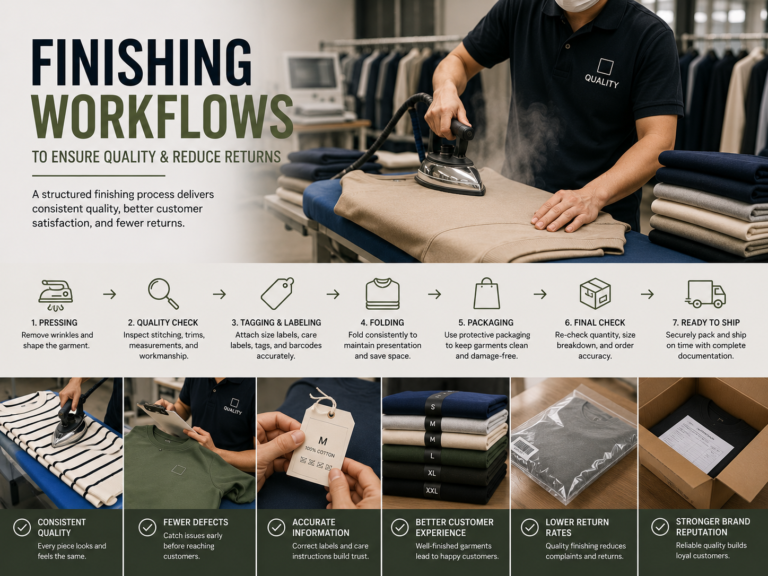
Finishing Workflows to Ensure Quality & Reduce Returns

In today’s competitive apparel industry, delivering high-quality garments consistently is essential for maintaining customer trust and reducing returns. Whether you are a startup or an established brand, a well-structured finishing workflow can make all the difference in ensuring your products leave your production line ready to impress.

Why Finishing Workflows Matter

Contrary to popular belief, finishing workflows are not simply about putting the last touches on the garments; they are about putting a system in place that ensures a level of quality for each and every garment. Poor finishing can leave stitches imperfect, hems uneven and patterns miscommunicated to consumers. This not only ultimately will leave the customer dissatisfied and more likely to return the product, but also increases the return rate of the product dramatically. Adopting standardized workflows can significantly increase the accuracy of the product finishing workflows and the satisfaction level of the customers.

Investing in professional finishing services also helps brands maintain consistency across different production batches. For example, Eco Jersey’s Garment Finishing & Packaging service ensures every piece meets exacting standards, reducing the likelihood of defects reaching the customer.

Key Steps in an Effective Finishing Workflow

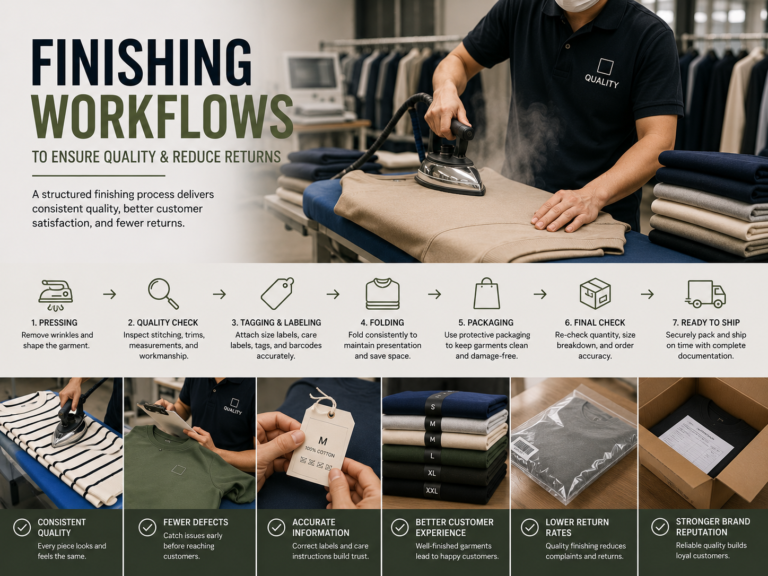
  1. Inspection and Quality Check – Start with a thorough review of garments before the final finishing stage. Checking for stitching accuracy, fabric defects, and proper sizing can catch issues early. Referencing QC Standards provides a reliable benchmark for inspections.
  2. Proper Pressing and Folding – Garments should be pressed and folded according to product type. This step enhances appearance and prepares the apparel for efficient packaging and shipping.
  3. Labeling and Branding – Accurate labeling and branding are crucial. Services like Custom Labeling and Branding ensure your logos, tags, and care instructions are correctly applied, reinforcing brand identity.
  4. Packaging and Shipping Prep – Elegant packaging not only protects clothing during shipping but also enhances the customer experience. Streamlining packaging can minimize damage during shipping and errors in fulfillment.

How to Reduce Returns Through Finishing

Returns often happen due to inconsistent sizing, poor construction, or visible defects. By integrating a complete workflow from inspection to packaging, brands can drastically reduce return rates. For example, Sampling & Pattern Making early in production ensures sizing and fit are consistent across batches, lowering the risk of dissatisfied customers.

Additionally, businesses that adopt Cut-and-Sew Manufacturing with precise finishing checks can maintain higher quality standards, creating garments that meet expectations every time.

Benefits of Optimized Finishing Workflows

  • Consistency Across Products – Customers receive the same high quality items every time.
  • Reduced Returns – Finishing products correctly means products are less likely to be returned.
  • Improved Brand Reputation – Shopping with confidence leads to brand loyalty.
  • Operational Efficiency – Easier to follow processes lead to less time and effort wasted.

Improving workflows to eliminate errors also improves your brand value. Customers appreciate not only high quality products, but also an elegant presentation. Finishing polishing work for each delivery enhances your brand value.

Final Thoughts

A strong finishing workflow is essential for any apparel business that wants to maintain quality and minimize returns. By incorporating inspection, pressing, labeling, and packaging into a systematic process—and leveraging services like Garment Finishing & Packaging, Custom Labeling, and Sampling & Pattern Making—brands can consistently deliver garments that satisfy customers, build trust, and reduce costly returns.

For businesses looking to elevate their production process, focusing on finishing workflows is not optional—it’s a key component of long-term success.

FAQs

What are finishing workflows in apparel manufacturing?

Finishing workflows are systematic processes that ensure garments meet quality standards through inspection, pressing, labeling, and packaging.

How do finishing workflows reduce returns?

By catching defects early, ensuring consistent sizing, and using professional packaging, finishing workflows prevent errors that lead to customer returns.

Why are finishing workflows important for brand reputation?

High-quality finishing ensures customers receive well-made, professional products, which builds trust and encourages repeat purchases.

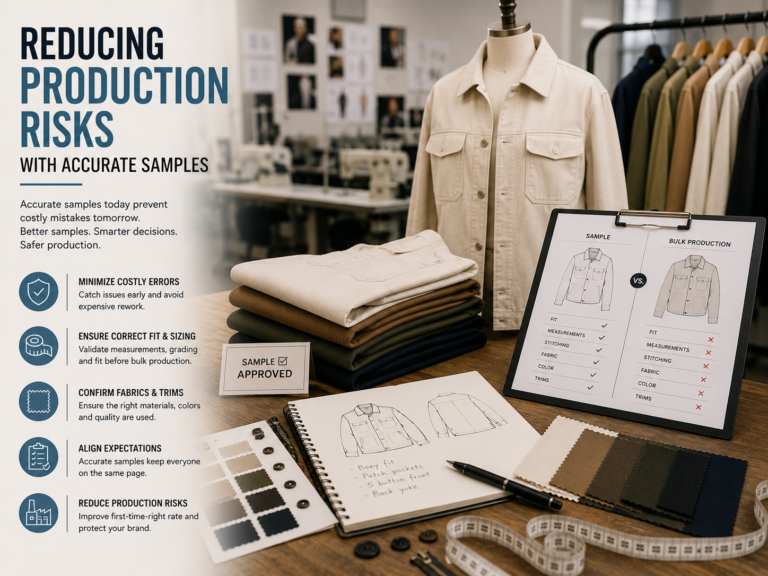
Reducing Production Risks with Accurate Samples

In today’s fast-moving fashion and apparel world, getting things right from the start is crucial. Teams and industries rely on samples to make sure the final product matches expectations. Accurate samples don’t just save time—they prevent costly mistakes, reduce stress, and keep production on track. By testing and refining products early, brands can guarantee quality, consistency, and happier customers.

Why Accurate Samples Matter

Think of accurate samples as your roadmap for production. They help teams:

  • Spot design issues early – Finding mistakes in the sample stage avoids repeating them in bulk production.
  • Ensure fabrics and colors match perfectly – Samples show the exact material and Pantone shades for the final product.
  • Check fit and functionality – This is especially important for performance wear or activewear, where comfort and movement are key.
  • Keep everyone aligned – Designers, manufacturers, and quality teams all stay on the same page.

At EcoJersey, our Sampling & Pattern Making services help brands create accurate prototypes before moving to full production, reducing errors and surprises.

How Teams Reduce Production Risks

Cutting down reducing production risks is all about combining precise samples with structured processes:

  • Start with prototypes – Teams make initial samples to test designs before committing to mass production.
  • Check quality at every stage – Samples go through careful inspection to ensure stitching, seams, and hems meet the highest standards. Our Garment Finishing & Packaging services help brands present professional, retail-ready products.
  • Refine through feedback – Designers, merchandisers, and clients provide input to improve the sample until it perfectly matches the vision.
  • Use the right tools – Tools like size chart generators and fabric development systems make sure measurements and materials are spot on. Try our Size Chart Generator for precise sizing.

Following these steps significantly reduces errors, delays, and costly reworks.

Benefits of Accurate Sampling for the Industry Accurate samples don’t just help one brand—they make a difference across the industry:

  • Faster time-to-market – Products go from concept to retail faster when samples are accurate from the start.
  • Save money – Avoid mistakes that waste materials or labor.
  • Build a strong reputation – Consistently delivering quality products earns customer trust.
  • Support sustainability – Fewer errors mean less waste, which is great for the environment. Eco Jersey helps with this through ourSustainable Apparel Manufacturer solutions.

Useful EcoJersey Service

To make sampling and production even easier, check out these services:

Conclusion

Accurate samples are the foundation of smooth, safe, and high-quality production. By focusing on prototypes, thorough inspections, and collaborative feedback, teams and industries can avoid mistakes, save money, and deliver excellent products. Partnering with Eco Jersey ensures your brand stays efficient and consistent.

FAQs

What is an accurate sample in apparel production?

An accurate sample is a prototype garment that perfectly matches the final design, fit, color, and material.

How do samples reduce production risks?

Samples show design, material, or sizing issues early, preventing costly mistakes later.

Can small brands benefit from professional sampling services?

Yes! Services like Sampling & Pattern Making help startups achieve high-quality products like big brands.

Are there environmental benefits to accurate sampling?

Yes. Reducing production errors lowers material waste and supports sustainable manufacturing practices.

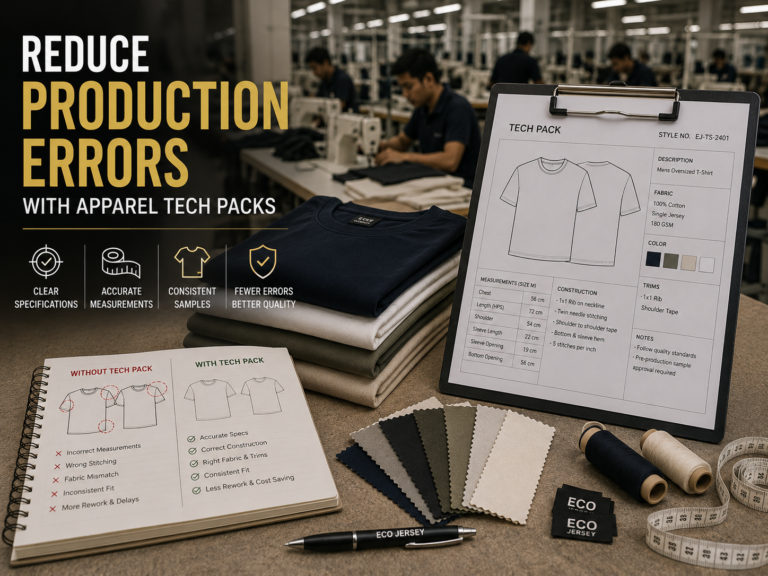
Reduce Production Errors With Apparel Tech Packs

In the clothing industry, even a small mistake can turn into a big loss. Wrong measurements, incorrect fabric choices, or unclear instructions often lead to production delays and wasted money. That’s why successful fashion brands always focus on reduce production errors from the very beginning. One of the most effective ways to achieve this is by using apparel tech packs. These documents act as a complete guide for manufacturers and help avoid confusion during production. When everything is clearly documented, factories can work faster, smarter, and with fewer mistakes.

If you want professional support in creating accurate production documents, EcoJersey offers expert Tech Packs Development services to help brands reduce production issues from the start.

What Is an Apparel Tech Pack?

An apparel tech pack is a detailed document that explains how a garment should be made. Think of it like a blueprint. It tells the manufacturer everything needed to produce a garment correctly without guesswork.

A standard tech pack includes:

  • Technical sketches
  • Fabric details
  • Color specifications
  • Size measurements
  • Stitching instructions
  • Label and branding details
  • Packaging instructions

Because everything is clearly written, manufacturers can easily understand the design and avoid production mistakes. Many brands also combine tech packs with professional Sampling & Pattern Making services to ensure accuracy before bulk production.

Why Production Errors Happen in Manufacturing

Before understanding the solution, it is important to know the problem. Most production errors happen because of:

  • Missing technical details
  • Poor communication with factories
  • Unclear measurements
  • No proper documentation
  • Wrong fabric selection
  • Lack of sample approval process

When brands skip proper planning, factories are left to guess details. This often leads to costly mistakes. That is exactly where apparel tech packs make a big difference.

How Apparel Tech Packs Help Reduce Production Errors

They Remove Guesswork

Without a tech pack, manufacturers may interpret designs differently. This leads to errors. But with a proper tech pack, everything is clearly defined. As a result, factories do not need to guess anything.

They Improve Communication

Most clothing brands work with local or international factories. Communication gaps can easily create misunderstandings. Tech packs solve this problem by providing clear written and visual instructions. This becomes even more effective when paired with reliable Cut and Sew Manufacturing Capability services.

They Speed Up Production

When factories receive complete information, they don’t waste time asking questions. Instead, they directly start sourcing materials and producing samples. This speeds up the entire workflow. A smooth process also improves the overall Manufacturing Process.

They Ensure Accurate Sizing

  • Sizing mistakes are very common in clothing production.
  • Tech packs include detailed measurement charts that help manufacturers create consistent sizing across all garments.
  • For better accuracy, brands often rely on Development & Size Grading services.

They Reduce Sampling Errors

  • Sampling is one of the most important stages in clothing production.
  • If samples are wrong, production becomes expensive and time-consuming.
  • Tech packs reduce these errors by giving clear instructions from the beginning.

Key Elements of a Perfect Tech Pack

To reduce production errors, a tech pack must include all important details.

Technical Sketches

These help factories visualize the final product clearly.

Fabric Information

Includes fabric type, GSM, texture, and color details.

For better sourcing, brands can use Fabric Sourcing & Development services.

Stitching Instructions

These explain how the garment should be constructed.

Branding Details

Logo placement, labels, tags, and packaging instructions.

Benefits of Using Apparel Tech Packs

When brands use professional tech packs, they experience:

  • Fewer production mistakes
  • Faster manufacturing process
  • Lower production costs
  • Better communication with factories
  • Higher product quality
  • Reduced material waste

Brands using Private Label Manufacturing especially benefit from accurate tech packs because consistency is critical.

Helpful EcoJersey Resources

To further improve production accuracy, EcoJersey provides useful tools:

  • Free Tech Pack Downloads
  • Size Chart Generator
  • Manufacturing Checklists
  • Pantone Color Library
  • Cost Estimator
  • MOQ Calculator

These resources help brands plan production more effectively and avoid common mistakes.

Why Startups Should Focus on Tech Packs

For clothing startups, mistakes can be very expensive. That’s why tech packs are not optional—they are essential.

They help startups:

  • Communicate clearly with factories
  • Avoid costly production errors
  • Save time during sampling
  • Build professional manufacturing systems

If startups want long-term success, using proper tech packs is the first step toward professional production.

Conclusion

Reducing production errors is a critical goal in clothing manufacturing, and apparel tech packs are essential for achieving this. They offer clear instructions, enhance communication, accelerate production, and guarantee consistent quality. Essentially, well-developed tech packs translate to fewer mistakes, superior garments, and smoother manufacturing processes. For any clothing brand or startup, investing in proper tech pack development is a wise and necessary decision for long-term success.

Apparel tech packs make this possible.

They provide clear instructions, improve communication, speed up production, and ensure consistent quality.

In simple words, better tech packs = fewer mistakes + better garments + smoother manufacturing.


FAQs

What is an apparel tech pack?

An apparel tech pack is a detailed document that includes all the information needed to manufacture a garment, such as sketches, fabric details, measurements, stitching instructions, and branding specifications.

How do apparel tech packs reduce production errors?

Tech packs reduce production errors by giving clear and complete instructions to manufacturers. This removes guesswork and ensures garments are made exactly as the brand intended.

Why are tech packs important for clothing startups?

Tech packs help startups communicate clearly with factories, avoid costly mistakes, improve product quality, and ensure smooth production from sampling to bulk manufacturing.

What should be included in a professional tech pack?

A professional tech pack should include technical sketches, fabric information, size measurements, stitching details, trims, labels, and packaging instructions.