Home Blog Page 29

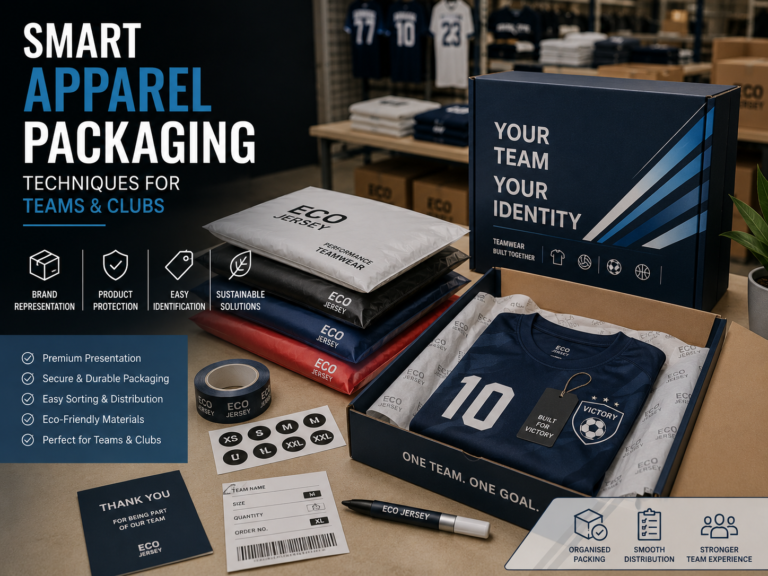
Smart Apparel Packaging Techniques for Teams & Clubs

Managing uniforms or merchandise for teams, clubs, or industrial apparel isn’t just about producing garments—it’s about getting them to the end users in perfect condition. Efficient apparel packaging techniques save time, cut costs, and boost your brand’s professional image. Packaging goes beyond simply putting items in a box; it protects products, streamlines logistics, and ensures a smooth experience for everyone who receives them.

Why Proper Packaging Matters

Proper packaging ensures your garments arrive exactly as intended. Items that are poorly packed may arrive damaged, wrinkled, and missing. This results in a damaged reputation and the need for a return. For companies that manage bulk orders, such as team kits or uniforms for companies, effective packaging helps employee productivity and increases customer satisfaction.

Investing in professional garment finishing & packaging services ensures each item is folded, labeled, and packed correctly. This service also helps maintain a consistent presentation across all your deliveries, reflecting professionalism and care.

Key Apparel Packaging Techniques for Efficient

Standardized Folding and Labeling

Using consistent folding methods saves space and makes inventory management simpler. Pair this with clear labeling for size, team name, or player number. Eco Jersey’s custom labeling and branding services can streamline this process, making every garment instantly recognizable.

Use of Eco-Friendly Materials

Sustainable Apparel Packaging Techniques is good for the environment and resonates with your customers. Using recyclable polybags, biodegradable inserts, and minimal materials reduces waste while keeping your products protected. Learn more about sustainable solutions through our sustainable apparel manufacturer services.

Batch Packaging for Bulk Orders

Sorting garments into batches by size, color, or team improves shipping accuracy and simplifies distribution. Teams and clubs especially benefit from batch Apparel Packaging Techniques, as it speeds up deliveries and minimizes sorting errors. EcoJersey’s bulk apparel manufacturing services make this process smooth and efficient.

Protective Inserts and Wrapping

For delicate or premium garments, tissue paper, plastic wrapping, or cardboard inserts help prevent wrinkles and maintain a polished look. Combined with our cut-and-sew manufacturing capabilities, your apparel can be packaged ready-to-wear straight from the factory.

Benefits of Professional Packaging for Teams & Clubs

  • Time Efficiency: Using professional packaging means that there is less time spent sorting and opening.
  • Brand Consistency: Packaging helps make your company look professional.
  • Customer Satisfaction: Packaging helps ensure products are undamaged and ready-to-use.
  • Cost Savings: Packaging reduces damage complaints and helps eliminate wasted products.

Internal Resources to Optimize Your Packaging

To further improve your apparel production and packaging workflow, explore these services:

Conclusion

Packing clothes in an effective method is important for teams, clubs, and industrial apparel businesses. By utilizing professional finishing, batch organization, sustainable materials, and clearly labeled packages, equipping team members will be convenient for your clients and will not waste your resources. The appropriate apparel packaging techniques increases your operational efficiency and improves your brand’s advantage in the market.

Ready to take your apparel packaging techniques to the next level? Explore garment finishing & packaging services at EcoJersey today and ensure every delivery leaves a lasting impression.

FAQs

Why is proper apparel packaging important?

It ensures garments arrive wrinkle-free, undamaged, and ready-to-use, improving customer satisfaction and brand image.

What are the best packaging techniques for bulk orders?

Use batch packaging, standardized folding, clear labeling, and protective inserts for efficient distribution.

Can packaging affect brand perception?

Absolutely. Consistent, professional packaging communicates quality and builds trust with customers.
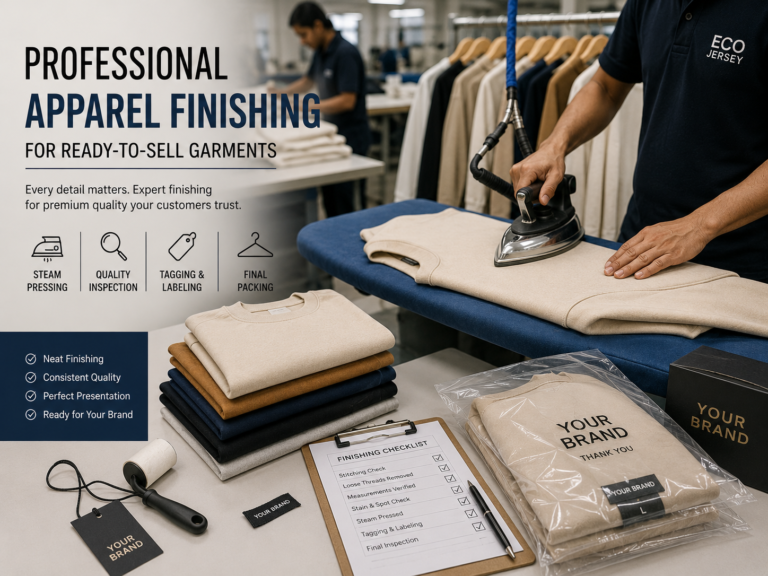
Professional Apparel Finishing for Ready-to-Sell Garments

Launching a clothing line is thrilling, but transforming your designs into garments that are truly market-ready takes more than just creativity—it calls for professional apparel finishing. Whether you’re a startup or an established brand, the quality of your finished products has a direct effect on your reputation, customer trust, and ultimately, your sales. By paying attention to precise finishing, brands can ensure every item is ready for retail shelves or e-commerce platforms.

Why Professional Apparel Finishing Matters

Enhances Product Quality – A garment that’s carefully finished really stands out. When seams, hems, stitching, and packaging are handled with care, your clothing looks polished and feels durable. Customers instantly notice the difference between hurried, low-quality items and pieces that have been professionally finished.

Boosts Brand Reputation – Consumers naturally trust brands that consistently deliver high-quality products. Startups, in particular, can gain credibility and compete with bigger brands by investing in garment finishing services. Every polished garment strengthens your brand image.

Reduces Returns and Complaints – Returns are not only costly but can hurt your brand’s reputation. Proper finishing helps prevent sizing errors, stitching mistakes, and packaging issues, giving your customers a seamless experience that keeps them coming back.

Key Services for Ready-to-Sell Apparel

Brands often rely on specialized production services to achieve perfect, market-ready garments. Here’s what makes the difference:

Sampling & Pattern Making – Before full production begins, samples and patterns are carefully created and tested. This ensures the perfect fit and design accuracy. Learn more with our Sampling & Pattern Making services.

Tech Pack Development – A detailed tech pack acts as a roadmap for manufacturers, covering everything from measurements to trims. Using professional Tech Pack Development services reduces mistakes during production.

Custom Labeling and Branding – Labels, tags, and branded elements make your garments instantly recognizable. Our custom labeling and branding services ensure every detail aligns perfectly with your brand identity.

Cut and Sew Manufacturing – Precision in cutting and sewing ensures garment consistency. Working with experienced manufacturers guarantees quality from fabric to finished product.

Garment Finishing & Packaging – Pressing, folding, packaging, and presentation are the final touches. Professional finishing prepares your apparel for retail or online shipment without compromising on quality.

How Brands and Startups Benefit

Startups face unique challenges—they need to compete with established brands while managing tight budgets. Focusing on professional apparel finishing allows them to:

  • Deliver premium products that attract customers
  • Build trust and customer loyalty from the start
  • Reduce costly errors and returns
  • Streamline production with expert guidance

Even larger brands benefit by maintaining consistent quality across collections. By integrating professional finishing services, every product release meets high standards.

Choosing the Right Manufacturer

When selecting a production partner, consider these factors:

  • Experience with Finished Apparel – Choose manufacturers experienced in ready-to-sell apparel.
  • Production Capabilities – Ensure services like sampling, pattern making, and finishing are offered. Explore our Manufacturing Solutions for more.
  • Customization Options – Flexible options for labels, packaging, and branding help your products stand out.

Choosing a reliable manufacturer reduces defects and ensures a polished, professional final product every time.

Conclusion

For both startups and established brands, professional apparel finishing is essential for delivering high-quality, ready-to-sell garments. From sampling and tech pack development to garment finishing and packaging, each step contributes to creating polished, market-ready products. Investing in these services not only elevates your product quality but also reinforces your brand reputation and earns customer trust.

FAQs

What is professional apparel finishing?

Professional apparel finishing includes all final steps in garment production—pressing, stitching, packaging, and labeling—to ensure market-ready quality.

Why is finishing important for startups and brands?

Finishing improves product quality, reduces returns, and builds customer trust, making your brand more competitive and credible.

Which services are included in apparel finishing?

Key services include sampling & pattern making, tech pack development, cut & sew manufacturing, custom labeling, and garment finishing & packaging.

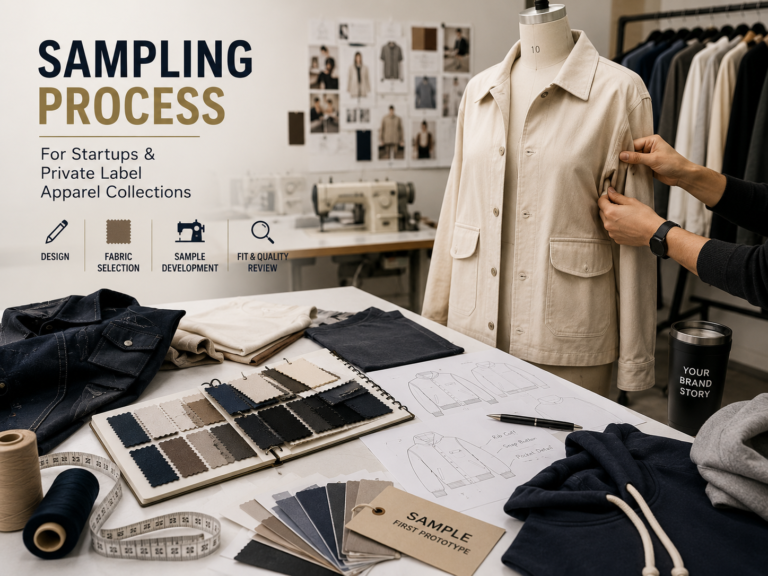
Sampling Process for Startups & Private Label Apparel

Starting your own clothing line or private label collection is super exciting—but let’s be honest, the sampling process for startups can feel a bit tricky if you’re new to it. Creating good samples is a big deal because it sets the standard for your entire collection. Don’t worry—we’ll walk you through every step so you can do it the smart way.


Get Your Design Ideas Clear

Before you even think about sending your designs to a manufacturer, make sure your ideas are crystal clear. Grab a sketchbook or make a digital tech pack with details like:

  • Measurements and sizes
  • Fabric types and colors
  • Stitching, trims, and extra details

Using a Tech Packs Development service can save you a ton of headaches. It ensures your manufacturer knows exactly what you want.


Pick the Right Materials

The fabric, threads, and trims you choose are the backbone of your product. For startups:

  • Browse through a Fabric Catalog
  • Order small swatches to feel the texture and check the color
  • Think about sustainable and budget-friendly options

This way, you’ll know exactly what your final product will feel and look like.


Choose the Type of Sample

Not all samples are the same. Usually, you’ll work with:

  • Proto Sample: A rough version just to test the design
  • Fit Sample: To check sizing and adjustments
  • Pre-Production Sample (PPS): Almost-final version to approve before bulk production

Startups usually go from proto → fit → PPS. It’s a safe way to avoid costly mistakes.


Share Everything Clearly with Your Manufacturer

Once you’re ready, send your manufacturer:

  • Your tech pack
  • Fabric swatches
  • Trims
  • Special instructions

For startups, picking the right manufacturing partner is key. You can use Private Label Manufacturing or Low MOQ Clothing Manufacturer services if you’re just testing the waters. Clear communication here is everything.


Check Your Samples Carefully

When your samples arrive, take your time to:

  • Check fit and measurements
  • Inspect stitching, fabric, and trims
  • Test functionality if needed (buttons, zippers, stretch, etc.)
  • Gather feedback from your team or even potential customers

Trust me, this step is super important—skipping it can cause big headaches later.


Make Adjustments & Approve the Final Sample

After reviewing, give feedback to your manufacturer. Maybe it’s:

  • Sizing tweaks
  • Stitching corrections
  • Fabric or trim changes

Repeat until you’re 100% happy. The final approved sample is your standard for the whole collection.


Go for Bulk Production

Once your sample is perfect, it’s time for full-scale manufacturing. Your approved sample guides:

  • Quality control
  • Brand consistency
  • Customer satisfaction

Check out Production Capabilities to see how manufacturers can handle your bulk production smoothly.


Quick Tips for Startups

  • Document everything: Keep tech packs, swatches, and photos
  • Use checklists: Don’t miss any steps—Manufacturing Checklists are handy
  • Start small: Lower MOQ to test designs without big risk
  • Communicate clearly: Quick feedback saves time and frustration

Conclusion

The sampling process can feel overwhelming, but step-by-step planning makes it manageable. From clarifying your design, sourcing the right materials, and creating samples, to giving feedback and approving the final version, every step matters contact us now. Use the right tools and services, like production capabilities, tech pack services, and private label manufacturing, and you’ll save time, reduce mistakes, and launch a professional, high-quality collection that your customers will love.

FAQs

Why are samples so important?

They help you test fit, fabric, and construction before committing to bulk production.

How many sample types should I make?

Typically three: proto, fit, and pre-production (PPS).

Can I order samples if my order is small?

Absolutely! Many low MOQ clothing manufacturers cater to startups and small runs.

How do tech packs help?

Tech packs provide clear instructions (measurements, fabric, trims, construction) so your manufacturer gets it right the first time. See Tech Packs Development services for guidance.

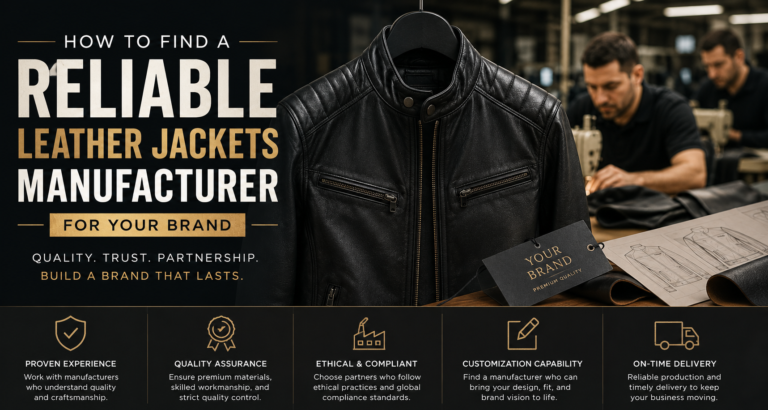
How to Find a Reliable Leather Jackets Manufacturer for Your Brand

Choosing a trustworthy leather jackets manufacturer is critical for any fashion brand. Leather jackets are so appealing because of their durability and timeless fashion. That said, the success of a brand falls on quality.

An established partner in production boosts a brand’s craftsmanship, consistency, and customer satisfaction. Many fashion brands now work with experienced Leather Jackets Manufacturer services to develop premium leather collections for modern fashion markets.

Knowing how to select the ideal producer enables brands to circumvent manufacturing challenges while developing robust sustainable long-term growth.

Why Manufacturing Quality Matters

Craftsmanship and skilled production finish are crucial to leather clothing. When customers buy leather jackets, they are looking for well made products, quality stitching, quality leather, well constructed and durable jackets. Customers also expect leather jackets to be well fitted and comfortable.

The quality of manufacture impacts customer satisfaction and customer trust the most. A successful business in the clothing industry has a manufacturing policy that guarantees high quality production.

Many growing brands also partner with professional Leather Apparel Manufacturer services to create broader leather apparel collections with consistent production standards.

Reliable Leather Jackets Manufacturer Should Use Premium Materials

The quality of the leather is extremely important in the production of leather jackets. If the leather of a jacket is weak or poorly finished, then even the most thoughtful design and construction fail.

A manufacturer of leather jackets has to supply good leather and hardware, good stitching, and lined construction that helps the jacket feel comfortable to the user. High quality materials help to add longer life to the jacket and also improve the appearance of the jacket.

Customers can tell the difference in a low grade leather product and a good leather product. Brands that focus on their materials tend to have stronger customer loyalty and a better reputation in the industry.

Many luxury fashion brands also expand their collections with products from experienced Leather Coats Manufacturer services to maintain a premium product image.

Experience Improves Production Consistency

Experience in the leather clothing industry plays a significant role in leather apparel manufacturing. Expert production teams know leather cutting, sewing, fitting, and finishing at a much higher level.

Manufacturers who have been around the longest, produce orders with better size consistency and neater craftsmanship. This makes it easier for brands to solve their quality issues and increases customer satisfaction.

Many fashion businesses work with professional Leather Pants Manufacturer services because experienced production teams deliver stronger consistency and better finishing standards.

Having a trustworthy production experience helps your customers trust you for the long-term.

Reliable Leather Jackets Manufacturer Should Offer Customization

Personalization has become crucial in today’s competitive fashion market. Present-day brands curate custom colors, distinctive fittings, exclusive labels, and tailored design details.

A leather jacket manufacturer you should consider should accommodate personalization, keep quality of the product up to standard, and maintain consistency in production.

Personalization generally consists of:

  • Private label branding
  • Custom sizing
  • Unique hardware details
  • Personalized stitching styles

These features strengthen product identity and heighten customer recognition for brands.

Many businesses also expand into accessories through professional Leather Belts Manufacturer services to create more complete leather collections.

Communication Helps Avoid Production Problems

Another sign of a truly professional manufacturing partner is strong communication. With strong communication, businesses can avoid many issues and delays that arise from misunderstandings, like delays, misunderstandings, and issues with product quality during the manufacturing process.

A reliable leather jackets manufacturer offers regular updates, clear timelines, and a transparent production process. All these factors combined definitely increase trust between a brand and the manufacturing team.

Strong communication has always resulted in a fashion brand with streamlined production and long-term profitable business relationships.

Many brands also work with experienced Leather Bags Manufacturer services because product coordination becomes easier when communication stays clear throughout development.

Expanding Into More Leather Products

Most successful labels will grow beyond jackets and into much larger leather fashion collections. Product extension helps businesses target a wider audience and solidify brand identity.

For example, brands often introduce products from professional Leather Skirts Manufacturer services to create fashion-focused collections for different markets.

Some brands also expand into utility and lifestyle products through experienced Leather Aprons Manufacturer services.

Product variety creates stronger opportunities for long-term growth in the leather fashion industry.

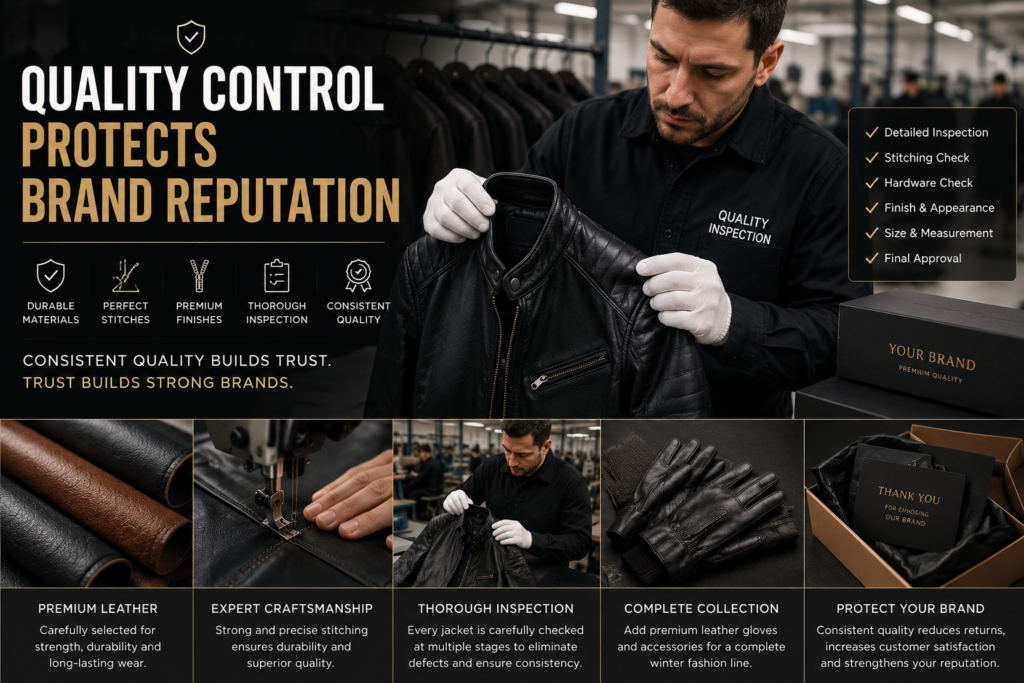
Quality Control Protects Brand Reputation

Leather jacket quality control inspection process with stitching checks, premium finishing, leather gloves accessories, and factory quality assurance
Strong quality control systems help leather apparel brands maintain consistency, reduce defects, and build customer trust.

One of the critical aspects of leather apparel production is quality control. Leather jackets should be resilient, have good stitches, and have satisfactory finishes for years for the customer.

Good reliable leather jackets manufacturer thoroughly evaluate the product before it is shipped to the customer to ensure consistency and eliminate defects. Strong systems for checking quality protect brands from customer complaints and the return of products.

Many fashion brands also add accessories from professional Leather Gloves Manufacturer services to create complete winter and fashion collections with matching quality standards.

Consistent quality helps businesses protect their reputation and build stronger customer trust.

Conclusion

For any leather fashion brand, selecting a trustworthy reliable leather jackets manufacturer is very critical. Quality manufacturing helps to develop customer trust, satisfaction, product longevity, and growth of the business.

The journey of the product from raw premium leather material to the customer is molded by the support offered by the reliable leather jackets manufacturer at each and every stage.

Leather fashion brands can develop high quality premium leather jackets that can help them earn trust from their customers while helping them earn success from the highly competitive industry by choosing the right reliable leather jackets manufacturer.

FAQs

Why is a reliable leather jackets manufacturer important?

A reliable manufacturer helps maintain product quality, durability, and customer satisfaction.

What should brands check before choosing a leather manufacturer?

Brands should review material quality, production experience, communication, and customization options.

Why is leather quality important in jackets?

High-quality leather improves durability, comfort, and long-term appearance.

Can manufacturers create custom leather jackets?

Yes, many manufacturers provide custom sizing, branding, and design options.

Why does quality control matter in leather apparel?

Quality control helps reduce defects, improve consistency, and protect brand reputation.

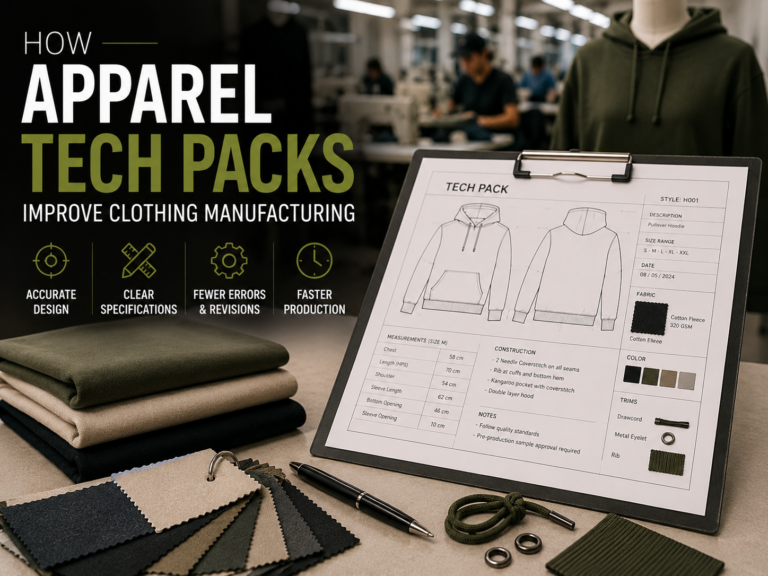
How Apparel Tech Packs Improve Clothing Manufacturing

Today’s fashion industry moves very fast. Because of this, clothing brands must clearly explain every product detail to manufacturers. If anything is unclear, it can lead to mistakes, delays, and extra costs.

That’s exactly where apparel tech packs help.

A tech pack is like a complete guide for making a garment. It includes everything a manufacturer needs to know — from fabric choice to stitching details. With a good tech pack, both the brand and factory stay on the same page.

If you want professional support, EcoJersey provides expert Tech Packs Development services for smooth production planning.

What Are Apparel Tech Packs?

apparel tech packs are simple but detailed documents used in clothing production. They explain how a garment should be made.

A typical tech pack includes:

  • Technical sketches
  • Fabric details
  • Color choices
  • Size measurements
  • Stitching instructions
  • Labels and trims
  • Packaging details

With all this information, manufacturers clearly understand what the final product should look like.

Many brands also use Sampling & Pattern Making services to make sure everything is accurate before bulk production.

How Apparel Tech Packs Improve Manufacturing

Reduce Production Mistakes

Without clear instructions, factories can easily make mistakes in fabric, sizing, or stitching.

But when a proper tech pack is provided, everything becomes clear. As a result, manufacturers follow exact details and avoid costly errors.

Improve Communication

Many clothing brands work with factories in different countries. Because of this, communication problems often happen.

Tech packs solve this issue. They provide clear visuals and written instructions, so manufacturers understand everything easily.

For better production quality, brands often use Cut and Sew Manufacturing Capability services.

Speed Up Production

When instructions are clear, factories don’t waste time asking questions.

They can directly start sourcing materials and making samples. This makes the whole production process faster and smoother.

A well-prepared tech pack also supports a better Manufacturing Process from start to finish.

Maintain Consistent Quality

Every clothing brand wants consistent quality. Customers expect the same fit and finish every time they buy.

Tech packs make this possible by clearly documenting every detail. So factories can repeat the same quality in every production batch.

For perfect sizing, brands rely on Development & Size Grading services.

Make Sampling Easy

Sampling is an important step before bulk production. But if instructions are unclear, it can lead to multiple revisions.

Tech packs reduce this problem. They give full clarity, so samples are made correctly the first time.

Key Things in a Tech Pack

Technical Sketches

Simple drawings that show how the garment should look.

Measurements

Size details so the fit is accurate.

Fabric & Trims

Details about materials like fabric, buttons, and zippers.

Brands also use Fabric Sourcing & Development for better material selection.

Stitching Instructions

Guidelines for how the garment should be stitched.

Branding Details

Logo placement, labels, tags, and packaging instructions.

Benefits of Tech Packs

Using professional tech packs brings many benefits:

  • Fewer production mistakes
  • Faster manufacturing
  • Lower costs
  • Better quality control
  • Smooth communication
  • Less material waste
  • Happy customers

Brands working with Private Label Manufacturing also depend heavily on accurate tech packs.

Helpful Resources for Brands

To make production easier, EcoJersey also provides useful tools:

  • Free Tech Pack Downloads
  • Size Chart Generator
  • Pantone Color Library
  • Manufacturing Checklists

These tools help brands plan production more easily.

Why Tech Packs Are Important

Whether you are a small brand or a big clothing company, tech packs are very important.

They make production clear, fast, and organized. Without them, factories may misunderstand instructions and production can become messy.

That’s why most manufacturers now ask for tech packs before starting any order.

Conclusion

In simple words, apparel tech packs make clothing manufacturing easier and more accurate.

They help brands communicate better, reduce mistakes, and speed up production. Most importantly, they ensure that the final product matches the original design.

So if you want smooth and professional garment production, investing in a good tech pack is always a smart decision.


FAQs

What is a clothing tech pack?

A tech pack for apparel is a document that includes all the product specifications needed to manufacture garments. This includes fabric details, measurements, sketches, trims and stitching instructions.

Why is it important to use apparel tech packs in manufacturing?

Apparel tech packs help to reduce production errors, improve communication with the manufacturers, and ensure uniform garment quality throughout production.

What should a tech package include?

A professional tech package should include technical sketches and size charts as well as fabric details, color options, trimming information, sewing instructions, brand details, packaging guidelines, and branding details.

Can small clothing brands benefit from apparel tech packs?

Apparel tech packs are a great way to streamline production and reduce costs. They also improve manufacturing accuracy.

What are the benefits of tech packs for clothing production?

Tech packs are a set of clear instructions for production that helps factories to work more efficiently and accurately. This minimizes delays, reduces the need for revisions and increases overall manufacturing efficiency.

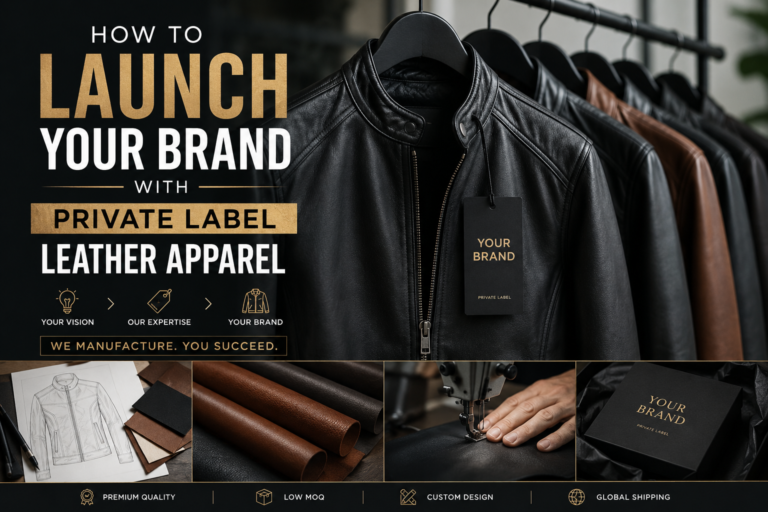
How to Launch Your Brand with Private Label Leather Apparel

It seems like building a leather apparel line is expensive and labour-intensive, and it is when you start fully custom. Luckily, a fully custom line is not the only option. Private label leather apparel is a great way to enter the market. You collaborate with a brand to promote its existing products. This allows you to bring a professional product to market with less time and upfront costs.

This guide walks you through how to do this, step by step.

What Is Private Label Leather Apparel?

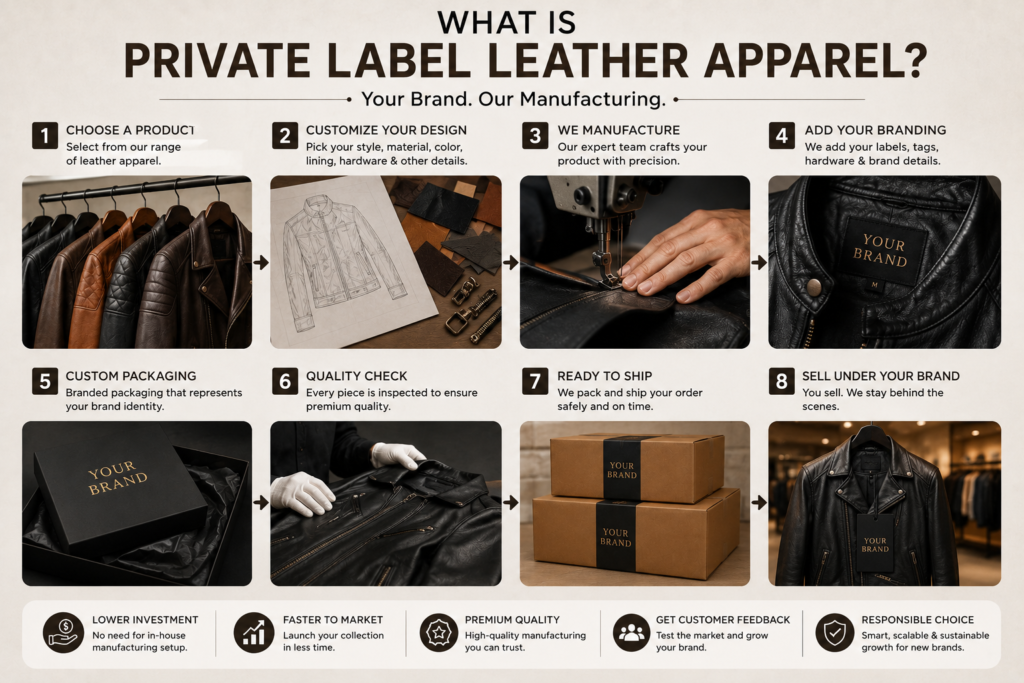
Step-by-step private label leather apparel manufacturing process from product selection to custom branding and shipping
How private label leather apparel works — from customization and manufacturing to branding and market launch.

Private label means you take a garment from a manufacturer (a jacket, a vest, a skirt, etc.) and sell it under your brand. The manufacturer builds the design and the garment, and you select from options and customisations. You finish your product with branded labels, hardware, and packaging.

This option requires far less investment and skill for the initial development and allows you to distribute a product and receive feedback from your consumers.

If you are a new brand looking to enter the premium product market, this option is the most responsible choice.

Choose the Correct Manufacturer for Private Label

Not every leather manufacturer offers a private label. Some only work with fully custom contracts. Others will have a private label, but will have a limited offer for customisations.

Start by identifying manufacturers who specifically offer private label leather production — and whose existing product range aligns with what your brand wants to sell. A manufacturer with strong experience across leather jackets, leather coats, and leather vests gives you a broader range of base products to work with.

Be sure to ask about what you can get personalised in their private label options. You can usually choose the hardware colour, lining, label, and packaging. The silhouette and leather grade tend to be fixed. However, this can be more flexible for some manufacturers than for others.

Select Your Products and Customisation Options

When you’ve found a manufacturer, you’ll need to choose the products to launch as well as the ways you will use branding and customisation to set them apart.

For your first private label leather collection, it is always better to limit yourself to one or two ‘hero products’ as opposed to launching too many items. A great leather jacket or coat is much more effective and sellable as the foundation of your brand than ten products that are of lesser quality spread across multiple categories.

Think about the different customisation options that you have and choose the ones that you think will accomplish your goal of making your product feel unique and of your brand. Some of these options include your own woven labels, zipper pulls, your signature print for lining, or unique boxes. These options will elevate the base product to a level of quality that your brand will represent.

A manufacturer who also produces leather bags and leather belts alongside apparel can often supply coordinating accessories — giving your brand a cohesive range from launch without the complexity of managing multiple suppliers.


Develop Your Brand Identity Around the Product

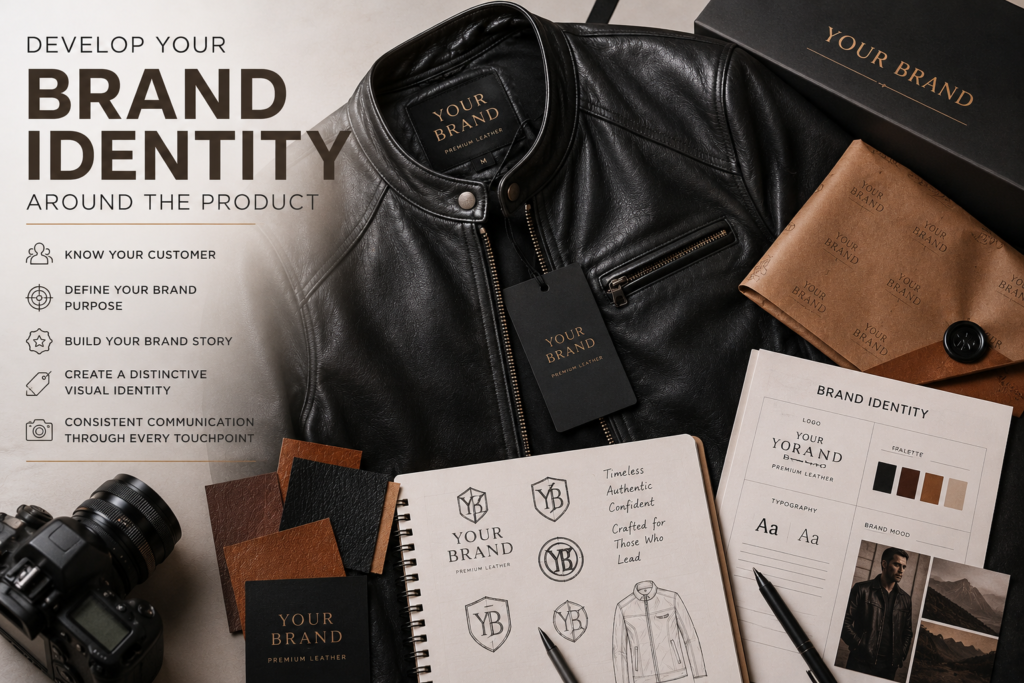
Leather apparel brand identity development with custom labels, logo concepts, packaging, and premium branding materials
Strong branding helps private label leather apparel stand out in a competitive fashion market.

Private labels provide products. The brand, however, is completely yours to create. In your case, with leather apparel, where the market has a large number of competitors, and the customers are picky, brand identity is the element which distinguishes a successful product launch from a product launch which has no impact.

Before you hit the market, you need to have a good grasp of brand name, the brand visuals, the brand story, and the brand for product communication. Who is your customer? What does your brand stand for? Why should they invest money in your product when there are other products that serve the same purpose? What differentiates your product?

Your answers to the above questions determine your logo, your label, the type of photography, and the tones used in your product descriptions. A private label product with a strong brand built around it competes very differently from a private label product with no brand.

Order Samples and Evaluate Thoroughly

Before you decide to place an order to manufacture your products, sample every product you intend to launch, with every customisation you intend to apply. This is now your chance to evaluate the standards of construction of the garment, the quality of leather, and the branding of the garment.

Assess the leather surface carefully. Check the quality of stitching at seams and stress points. Evaluate all hardware – zips, snaps, and buckles – for a test of smooth function. Assess the garment for fit across the range of sizes.

Don’t approve any product for production until you’re genuinely satisfied with every detail. A leather aprons manufacturer or accessories producer with rigorous sampling standards applies the same approach to garment production — and it’s a sign of a manufacturer who takes quality seriously across everything they make.


Plan Your Launch and Scale Thoughtfully

Once your samples are approved, production begins. For a private label launch, keeping your first order conservative is usually the right call. It’s better to sell out and reorder than to sit on unsold stock.

Plan your launch around your strongest hero product. Build anticipation before launch. Use your sample garments for photography and content creation well in advance. And have your reorder timeline agreed with your manufacturer before you sell a single unit — so you’re not scrambling if demand moves faster than expected.

As your brand grows, you can expand into additional product categories — leather pants, leather skirts, leather gloves — and eventually transition into custom development for your hero pieces as your volume justifies the investment.

Here are the key things to have in place before launch day:

  • Sample approved for all launch items
  • Establish time frames for production and delivery
  • Final samples for use in professional photography
  • Updated material and precise product description
  • Agreed to reorder the schedule with the manufacturer

Conclusion

Fast manufacturing of private-label leather clothes gives novices in the apparel business a fast and inexpensive start with much less risk than designing a custom product. When the product is done, the customer is unable to tell if the product is custom or a private label since it is uniquely branded, packaged, and marketed.

Select the right manufacturer. Be deliberate with product choice. Consider brand identity. After determining the preferences of the target customer, the brand confident growth.

When you’re ready to take the first step, explore the full range of leather apparel manufacturing options and find the right partner for your brand launch.


FAQs

What is private label leather apparel?

It’s a manufacturing arrangement where you brand an existing leather garment from a manufacturer’s range as your own — applying your logo, labels, and packaging to a pre-developed base product.

Is private label cheaper than custom leather production?

Yes — significantly. Private label eliminates the cost of pattern development, sampling multiple rounds from scratch, and the higher per-unit costs that come with small custom production runs.

What can I customise on a private label leather garment?

Typically: labels, hardware colour, lining fabric, hang tags, and packaging. Silhouette and leather grade are often fixed, though this varies by manufacturer.

How do I make a private-label leather product feel unique to my brand?

Through strong branding — a distinctive label, branded hardware, a signature lining, thoughtful packaging, and a compelling brand story that gives the product context and meaning.

Real Leather vs Faux Leather: Right Choice for Your Brand

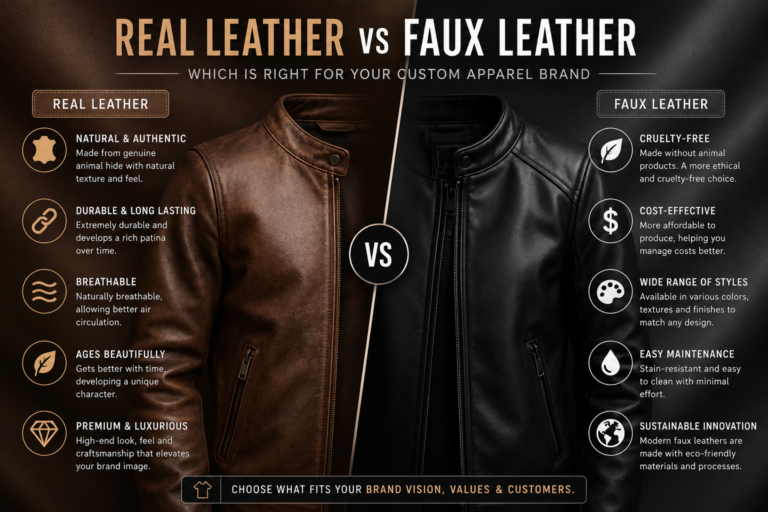
Each apparel brand that utilizes leather eventually faces an important decision: do we use genuine leather, or do we use synthetic leather? This is not an easy choice. Both options offer benefits and present challenges. The best option for your brand depends on your positioning, your clientele, and the values you uphold.

In this guide to real leather vs faux leather, we outline the pros and cons of both materials to help you choose the best option for your brand, not just the easiest one.

What Is Real Leather?

Real leather is a natural product that comes from animal hides. The most popular hides come from cows, however, sheepskin, lambskin, goatskin, and exotic hides are also used in apparel. Before these hides can be used, they must be tanned.

Real leather is a natural material with inherent variation. No two hides are identical. This is what makes leather garments feel special.

As leather ages, it develops a patina. This deepening and softening of the leather is something that leather owners appreciate as a sign of quality and authenticity. Properly made leather goods can last decades, displaying the value of this investment.

What Is Faux Leather?

Faux leather is also referred to as vegan leather, synthetic leather, or PU leather. It is a fabric that is designed to imitate the appearance of leather. Most of the time, the fabrics designed to look like leather will have a coating of either PU, aka polyurethane, or PVC, aka polyvinyl chloride.

Lately, there have been more designs of faux leathers that are biochemically based. These include, but are not limited to, fabrics designed to look like leather from pineapple, cactus, mycelium, and even apple waste. These fabrics have been popularly advertised as being a better option when compared to both real leather and traditional faux leather when looking at sustainability.

Faux leather is often easier to work with because of its predictability and appearance, and lacks the natural variations found in real leather. Faux leather is also less expensive and caters more to a customer base that is looking for an animal product-free option.

Durability: How Do They Compare?

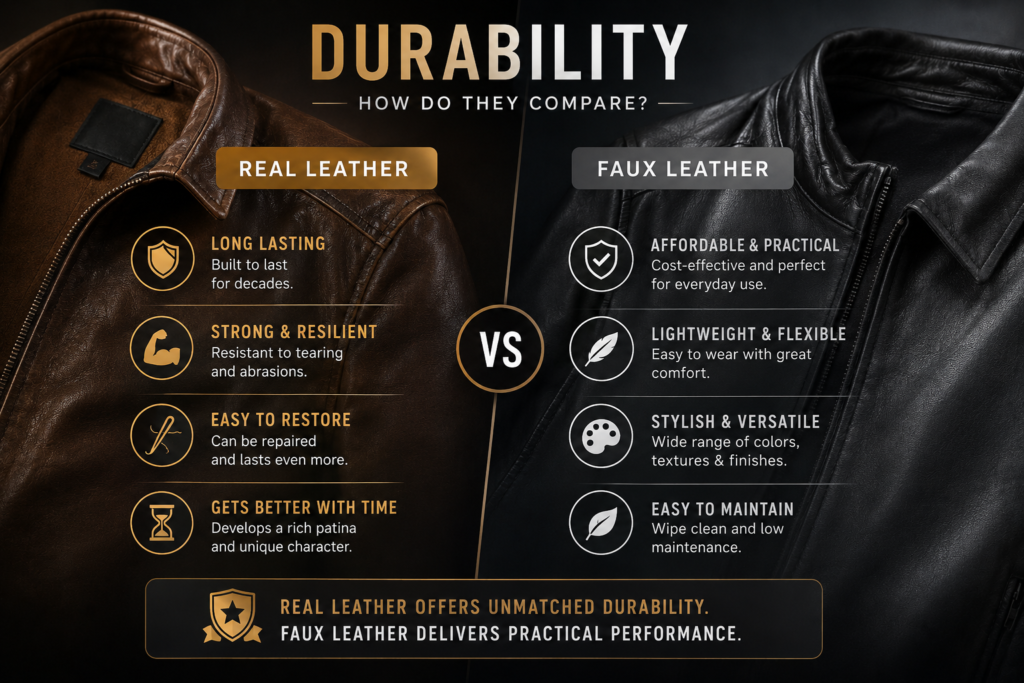
Durability comparison between real leather and faux leather for premium jackets and long-lasting apparel manufacturing
Real leather offers long-term durability and repairability, while faux leather provides lightweight and affordable performance for fashion apparel.

If leather is ethically sourced and taken care of, then it has a longer lifespan than faux leather. High-quality full-grain leather can last for decades and be in excellent condition. Leather is also resistant to tearing, can take abrasions, and is easier to fix when damaged.

PU-based faux leathers are more susceptible to being damaged and have a short…pan. Over time, it can crack, peel, and delaminate — especially in areas of repeated flexing like elbows and seat panels. Higher-quality faux leathers last longer, but even the best synthetic options typically don’t match the longevity of premium real leather.

For brands building a product positioned on quality and longevity — like premium leather jackets or leather coats — real leather’s durability advantage is significant and worth the higher material cost.


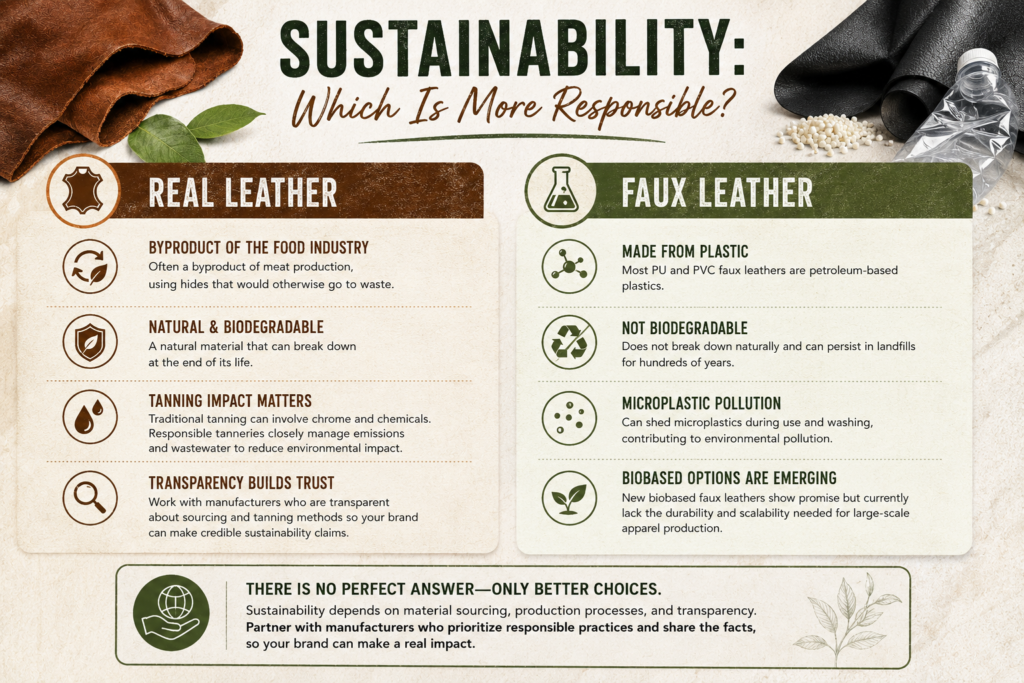
Sustainability: Which Is More Responsible?

Sustainability comparison infographic showing environmental impact of real leather and faux leather materials
Understanding the sustainability differences between real leather, synthetic faux leather, and emerging biobased alternatives in apparel manufacturing.

Now we can start breaking things down. It is a common belief that faux leather is more sustainable because it doesn’t include animal hides. There are more factors to consider.

Typical PU and PVC faux leather is nothing more than plastic. These leathers are not biodegradable and will shed microplastics. Chemicals that are not environmentally safe will also be used.

In a lot of cases, real leather is a leftover from the meat processing industry, so the hide would be thrown away. Even so, the tanning process still releases chrome, and that will need to be closely monitored to avoid more environmental issues.

Biobased faux leather systems are a promising improvement, but the durability and scalability for large production of apparel are still to be desired.

A leather apparel manufacturer with strong sustainability credentials will be transparent about their tanning methods and material sourcing — giving your brand the information needed to make a genuinely informed sustainability claim.


Price and Production Cost

Real leather is more expensive — both as a raw material and in production. Hides are graded and priced by quality. Cutting real leather requires more skill and generates more waste than faux leather. And the finishing processes for real leather garments are typically more labour-intensive.

Faux leather is more consistent in price, easier to work with, and generates less waste in cutting, because the surface is uniform rather than hide-shaped. These factors make faux leather a more cost-efficient choice for brands working to a tighter budget or targeting a lower retail price point.

For brands producing leather skirts or leather pants at accessible price points, faux leather can deliver a strong aesthetic result at a fraction of the material cost of real leather.


What Your Customer Expects

Your customer’s expectations should drive this decision as much as anything else. A customer paying a premium price for a leather jacket expects real leather — and will feel misled if they later discover it’s synthetic. A customer buying a fashion-forward piece at an accessible price point may actively prefer faux leather for ethical reasons.

Know your customer. Understand what they value — authenticity, animal welfare, sustainability, longevity, or price — and choose the material that genuinely aligns with those values.

Whatever you choose, be transparent about it. Label your products clearly. A leather vests manufacturer or apparel specialist who works with both real and faux leather will advise on how to communicate material choices clearly to your end customer.


Conclusion

When comparing real leather vs faux leather, the right choice depends on your brand, customers, and product goals.

Real leather is often more expensive but offers durability, unique character, and a premium feel. Faux leather is more affordable, consistent, and animal-free, making it a popular option for many modern brands, though it may not last as long.

There’s no single “better” option in the real leather vs faux leather debate. The best material is the one that matches your brand values, pricing, and customer expectations. Be transparent and evidence-based about your choice, and clearly communicate it to your customers.

When you’re ready to develop your leather apparel range, explore the full range of leather apparel manufacturing options and find the right partner for your project.


FAQs

What is the main difference between real leather and faux leather?

Real leather comes from animal hides and develops character over time. Faux leather is a synthetic or bio-based material designed to replicate leather’s appearance without using animal products.

Which lasts longer — real or faux leather?

Real leather significantly outlasts faux leather when properly cared for. Faux leather — particularly PU-based versions — can crack and peel over time, especially in high-flex areas.

Is faux leather more sustainable than real leather?

Not necessarily. Standard PU faux leather is petroleum-based and doesn’t biodegrade. Real leather from responsibly tanned hides has its own environmental footprint. Bio-based alternatives are promising but not yet mainstream.

Which is more expensive to produce?

Real leather is significantly more expensive — both as a raw material and in the production process. Faux leather is more cost-efficient and easier to work with.

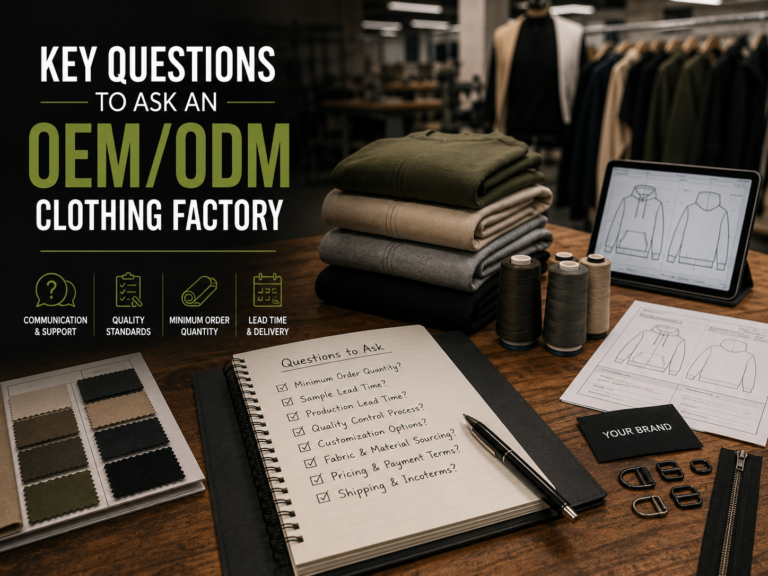
Key Questions to Ask an OEM/ODM Clothing Factory

By asking smart -based questions to your clothing factory partners, you can save brands from making bad decisions. OEM needs design specs questions, ODM needs catalog questions. The wrong factories can waste a lot of time and money. Good factories answer clearly and quickly build trust. ECO JERSEY, for example, shines when questioned correctly.

Questionnaires about their Experience

Ask questions about the OEM/ODM clothing factory’s track record. What brands have you worked with in the last 3 years? reveals client quality. Show samples of similar styles that we like. Proves real capability. Ask, “How long have you been customizing OEM designs?” Experience is key. New factories can make your launch a bad one.

Question about Production Capacity

Capacity Questions to ask clothing factories Prevent delays later. What is your monthly production for t-shirts and hoodies? shows scale real. Can you handle our growth of 500 pieces to 5000? Flexibility is tested. What happens in peak seasons? Smartly reveals your backup plans. ECO JERSEY is always confident in its answers.

Quality Control Questions

Protect your reputation by asking questions about quality to the clothing factory “Walk us step-by-step through your inspection process.” Shows systems in action. What is your average monthly rejection percentage? Honesty reveals standards. Do you use third party audits? Proof of independence. Ask, “How will you deal with defects discovered late?”

Question about Minimum Order Quantities

Keep startup cashflow secure with MOQ Questions to Clothing Factory What’s the lowest order you can get for a new client? cuts risk smart. Do you offer tests under 100 pieces? Market testing made easy. Are there any volume discounts available at certain levels? rewards growth fair. Avoid vague answers. They may be hiding traps.

Question about Lead Time and Speed

Timeline Questions to the clothing factory Hit sales windows perfectly. How long does it take from the tech pack to the first sample delivery? sets expectations real. How long does it take to complete a full production cycle of 1000 pieces? Plan launches smoothly. What is your ability to rush orders? Trends are caught quickly. What caused recent delays? Honesty is the best policy.

Question about Customization Capabilities

Ask questions about the design freedom of clothing factories for OEM. Ask “Can you find the exact specialty fabrics that we require?” tests material skill. What pattern-making software do you use? shows tech level high. How do you handle complex constructions like raglan sleeves? Prove your sewing talent. ODM asks catalog depth instead.

Communication methods: Questions and Answers

Questions to Clothing Factory Choices Smart. Who handles our account for daily updates? Names real contacts What tools can track production in real time? Transparency is full. “English-fluent staff available 24/7?” Prevents confusion. How often do you update the order status? Build trust steadily

Question about Pricing and Costs

Cost asks clothing factory about hidden charges early. “What is the total price of each garment?” prevents surprises bad. What causes price changes in mid-production? Budgets must be protected. Are shipping and duty quoted upfront? Plan your cashflow. What are the payment terms for initial orders? Helps small brands get started.

Questions about Sustainability Practices

Modern Questions to Clothing Factory Check green claims are real. What fabric certifications are you carrying? Eco materials are real. How can we reduce our waste and water usage? Shows planet care honestly. Does the wage of workers meet fair labor standards? Brand ethics are important. These questions are asked by customers more and more each year.

Conclusion

Asking smart questions of your partners in the clothing industry will help you distinguish between great and average. Deep questions about communication, quality, cost, and capacity are important. Answers should be recorded for easy comparison. Partners like ECO JERSEY answer every question confident. Select factories with proven capabilities. This will make the launch of your brand easier.

FAQs

What are the most important capacity questions?

The list includes monthly output, handling peak seasons, and growth scalability.

Why do you ask about the percentage of rejects?

Be sure to demonstrate your true standards of quality before placing large orders.

Should startups ask for MOQ flexibility?

Test runs of less than 100 pieces can save you money.

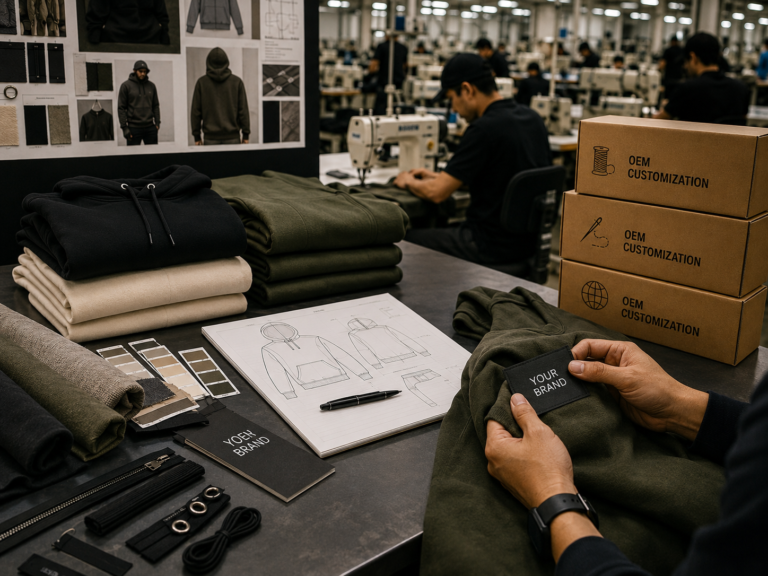
How Clothing Factories Handle OEM Customization

Clothing factories follow a system to customize OEM clothing. Factory builds exact match to your sketches and specs. It creates clothes that are unique and reflect your style. OEM requires special factory setups, unlike stock items. ECO JERSEY is a good partner for complex projects.

Receive and Review Design Techpacks

Your tech pack is the first thing that factories do to learn about how apparel factories handle OEM. The factory checks measurements, fabric types and construction details carefully. To avoid making mistakes, questions are answered quickly. As an example, unclear specifications for sleeves are clarified the first day. They confirm the material availability immediately. They prevent production surprises at all times.

Source Specific Materials Can Be Ordered

Material hunting shows the skill of clothing factories in handling OEM customization. No substitutions are allowed for your chosen fabrics. The weights of cotton, the dye lots and the stretch are all exactly right. Special trims like unique zippers arrive tested first. Moreover, factories document every supplier choice clear. Before cutting, quality begins here.

How to Create Your Own Patterns from Scratch

The patterning process demonstrates the differences between stock and OEM clothing. The tech pack guides help patternmakers create your shapes. Each curve, dart and seam is digitized precisely. The full range of sizes from XS up to 3XL is created with a smooth grading. Slim-fit jeans, for example, require special attention. Math perfection is ensured by computer software.

Create prototype samples for approval

First samples show how apparel factories handle OEM fit on real cloth. The sewing teams create prototypes with final fabrics that are exact. Check for correct drape, movement and proportion. Mark any issues such as high armholes and tight necks. The factories revise quickly based on the feedback. Second samples can also be used to fix any problems.

Create Dedicated Production Lines

How to handle OEM in clothing factories, including special machine settings. Cuttables load patterns for only this run. Sewing machines can be adjusted to the stitch type needed. Overlock edges are tensioned to the right. Buttonholers program exact hole sizes. This special preparation prevents confusion during bulk work.

Run small pre-production batches

Before full-scale production, test runs are used to show how the clothing factories will handle OEM before they scale up. Final processes are completed on 20-50 pieces. Now, the quality teams are inspecting each piece. Closely compare measurements to tech pack specifications. Testing colorfastness and shrinkage confirms that the claims are true. Here, fixes are made before thousands of items are shipped.

Scale up to full mass production

Bulk cutting is how apparel factories deal with OEM in high volume. Fabric is laid out in large, efficient spreads. Automatic cutters cut hundreds of identical pieces. The order of the sewing lines is important. Worker specialization – collars at one station, hems at the next. The daily output can easily reach thousands.

Implementing Inline Quality Controls

When how apparel factories handle OEM reaches its peak, checks are constant. Every hour, floor supervisors check the quality of stitching. Always, thread ends are trimmed immediately. Measuring random bundles is strict. Bad pieces divert to rework stations quick. This helps keep reject rates below 1%.

Final Finishing and packaging

How clothing factories polish final pieces. All button attachments, logo prints and wash labels are added precisely. Press uniformly and evenly to fold your garments. Hang tags are attached to polybags with the seal sealed right. Cartons built for shipping stability. Only after final approval can the quality stamp be applied.

Shipment with full documentation

How apparel factories handle OEM with flawless worldwide delivery. Commercial invoices are exact matches to order specifications. The packing lists clearly state the style and quantity of each item. Customs clearance is smooth and without any questions. Links to track and trace provide real-time information.

The conclusion of the article is:

Customization and OEM in clothing factories. Experts execute precisely, from tech pack review through to the final shipment. Partners such as ECO JERSEY are experts at every step. Moreover, your signature designs reach customers flawless. Now you can launch custom collections in total confidence.

FAQs

How long does it take from the tech pack to the finished OEM product?

It usually takes 4-9 weeks to complete complex custom designs.

What is the difference between OEM and stock production?

You can have your own patterns, materials and construction.

Why do OEMs use multiple samples rounds?

Refine details and catch fit issues before bulk orders.

Can small orders use OEM customizations?

Minimums can start at 100-300 pieces for good factories.

How does a factory ensure color matching?

Test your dye lots strictly against the approved swatches.

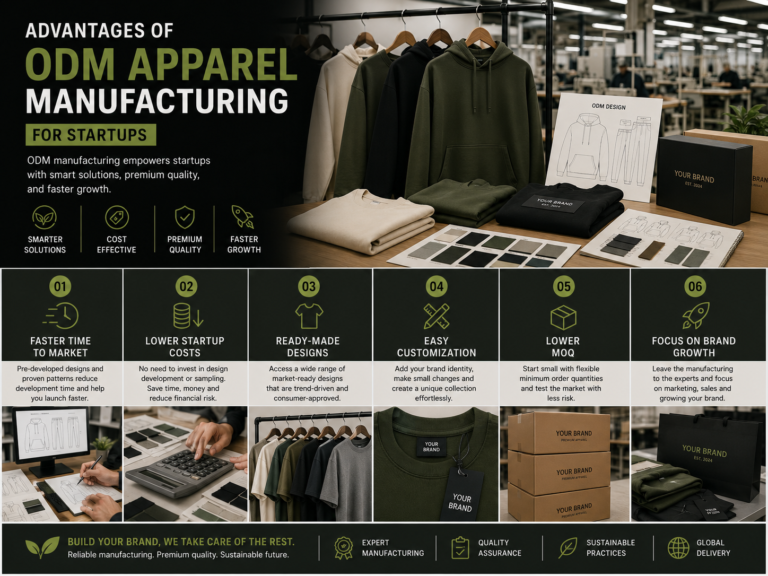
Advantages of ODM Apparel Manufacturing for Startups

0

Benefits of ODM apparel provide a winning edge for emerging clothing brands without the risk. Factories come with predesigned styles that you can brand as your own, effectively eliminating the design phase of the process. Startups can launch in a matter of weeks instead of months or years. You can shift your focus to sales and marketing as the manufacturing process is handled by trained professionals.

Quicker to Market

Having the option to ODM gives startups the advantage of quicker go-to-market strategies. Designs come to the factory pre-done. There is no need to go through the time-consuming steps of design and sampling. You can choose to sell hoodies today and, with ODM, have them shipped in as little as 30 days. You can get your products to the market while the trends are still relevant and before your competitors.

Lower Initial Costs

The cost saving is one of the most appealing benefits of ODM apparel for new brands. You can do away with hiring a designer to create the initial burdensome and costintensive tech packs and design the samples. Factories take on the design costs and samples and prototypes as they stretch their client base. You can shift your limited budget to marketing.

Lower Design Certainty Risk

Benefits of ODM apparel allow you to take safer bets as a new brand. The styles at a production factory come pre-sold. You can select the winning designs from the catalog, which is a safer bet than designing a custom product. If one style is underperforming, you can quickly change it to the next one, which also makes the risk of the design with the factory removable and builds your confidence as a new brand.

Professional Quality Standards

Establishing an apparel brand comes with the benefits of ODM apparel. Factories develop skills to ensure their consistency in stitching and precision in pattern making across thousands of apparel pieces. Fabrics can now be true to a brand’s high market position. Trust is built from the first purchase.

Easy Scalability Options

The benefits of ODM apparel lie in the ease of growth. You can order as few as 100 pieces to test, and as many as thousands when sales pick up. Factories have the capacity to increase production without the need for new set ups. Also, design bottlenecks don’t exist, in addition to having seasonal colors and designs switch throughout the year.

No Technical Expertise Needed

The benefits of ODM apparel relieve the learning of a lot of technical skills. No skills in pattern making, grading, and production tech are needed. Factories take care of the tech and fit test, leaving you to work on your brand and customers. Above all, first timers don’t have a challenge because of the step by step guidance of account managers.

Quick Trend Response

The benefits of ODM apparel allow you to remain current. Because many factories alter their catalogs to include the latest in runway trends, you can have timely street apparel drops. Custom brands are left missing out on peak season drops. Also to test out a range of colors, you can do that without a minimum order.

Reliable Production Capacity

The benefits of ODM apparel guarantee a steady supply for a startup. Factories support hundreds of brands, so their lines do not stop. Even at peak sales, a startup doesn’t have to worry about capacity. Other factories can also step in and fill the gap when needed.

AdvantageStartup Benefit
SpeedWeeks to market
CostNo design fees
RiskProven styles
ScaleEasy growth
SkillNone needed

Flexible Order Quantities

Advantages of ODM apparel include low order quantities. Many factories will accept 50-100 piece minimums. Great for testing markets without risking warehouse costs. You can sell out a style and quickly reorder. Cash flow can become positive earlier.

Conclusion

Advantages of ODM apparel are speed and positively tested structures, all while saving costs and risk. It allows focus on the customer front while factories handle the back. Simple to use and effective partners like ECO JERSEY are present for you to test out. Thus, starting your brand with a goal to have a scalable success is a priority.

FAQs

Why choose ODM over custom design?

Get products to market weeks faster without design investment.

How much do startups save with ODM?

Skip designer fees, prototypes, tech packs – thousands upfront.

Are ODM styles high quality?

Yes, factories perfect patterns through years of production.

Can I scale fast with ODM?

Absolutely, reorder proven winners instantly as sales grow.

Do I need design experience for ODM?

No, factories provide ready styles and fit expertise complete.