Home Blog Page 15

Puff Print vs Screen Print Sweatshirts for Fashion Brands

Fashion brands need innovative strategies to make their clothing appealing in a potentially oversaturated market. One such strategy is deciding between Puff Print vs Screen Print Sweatshirts. Modern clothing companies can take advantage of both printing methods to create a unique design, brand appeal, and eye-catching advertising.

Many growing apparel labels work with professional partners like Eco Jersey Fashionwear Manufacturer to create premium-quality sweatshirts and fashion collections that match current streetwear trends.

Understanding Puff Print vs Screen Print Sweatshirts

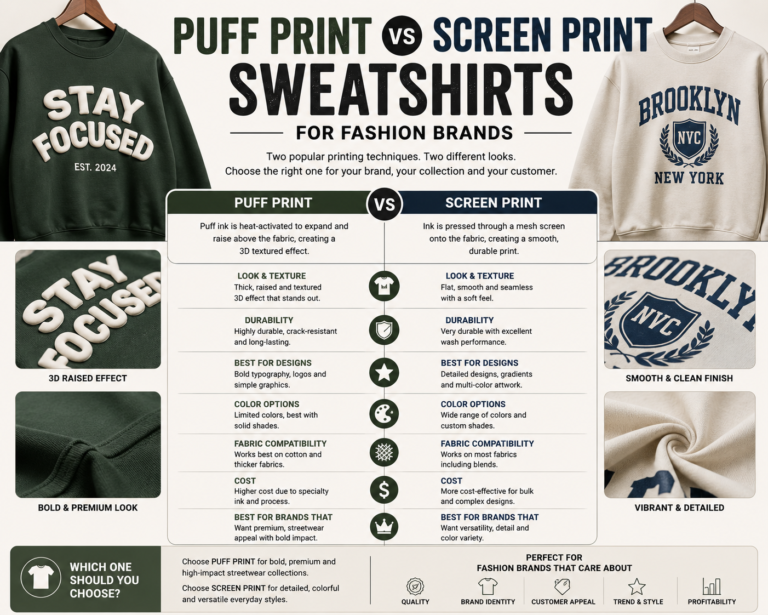
Puff Print vs Screen Print Sweatshirts differ mainly in embellishment and style. Puff Print design gives a sweatshirt a raised three-dimensional impression and a larger look, whereas screen printing adds flat, smooth, and easily replicated artwork.

Streetwear labels often combine these printing techniques with premium apparel from Streetwear Clothing Manufacturer to create eye-catching collections that attract younger audiences.

Why Fashion Brands Prefer Puff Print

Fashion companies are always interested in Puff Print vs Screen Print Sweatshirts, and the reasons are clear. Puff printing gives designs a unique style and dimension, helping logos and graphics pop, which assists companies in shaping their visual identities.

Modern casual brands also pair puff print designs with stylish essentials from Casual Wear Manufacturer to create trendy collections for daily fashion consumers.

Screen Print for Clean and Classic Designs

In the Puff Print vs Screen Print Sweatshirts debate, screen printing remains a favorite for clear graphics and visually precise designs. This style also works exceptionally for simple logos and is preferred for bulk production runs.

Many modest fashion brands use screen printing on products from Islamic Fashionwear Manufacturer because it provides smooth finishing and long-lasting print quality.

Puff Print vs Screen Print Sweatshirts in Streetwear Fashion

Streetwear has contributed to the trend of Puff Print vs Screen Print Sweatshirts. Puff Print is frequently found in oversized, bold, graphic hoodies and sweatshirts. Customers nowadays look for designer brands with unique and premium grade aesthetics.

Fashion startups often expand their collections with products from Hoodies Manufacturer and Sweatshirts Manufacturer to create coordinated streetwear collections.

Choosing the Right Printing Style

Understanding the difference between Puff Print vs Screen Print Sweatshirts is crucial for you to understand as a brand owner. The style Puff Print is great for big branding and trendy street apparel focuses on aesthetics whereas screen printing is more appropriate for small details and printing in bulk at a lower cost.

Many activewear brands also match printed sweatshirts with products from Joggers Manufacturer and Tracksuits Manufacturer for complete fashion sets.

Fabric and Printing Compatibility

Puff Print vs Screen Print Sweatshirts also rely on the printing technique you choose on the fabric. Puff Print can work best if you have heavy cotton and fleece materials. But if you choose Screen Printing, you have a wide range of materials to work with.

Many fashion labels use premium flannel and outerwear collections from Flannel Shirt Manufacturer and Fashion Jacket Manufacturer to complement their printed sweatshirt collections.

Puff Print vs Screen Print Sweatshirts for Modern Brands

Although styles keep changing, Puff Print vs Screen Print Sweatshirts are still important for any branding and to engage your audience. The print that generally creates a more high end street apparel look is Puff Print, while Screen Print gives the user a wide range of use and is a less costly option.

Many brands also complete their seasonal collections with products from Cargo Pants Manufacturer, Co-Ord Set Manufacturer, T-Shirts Manufacturer, and Knitwear Manufacturer for a stronger product lineup.

Conclusion

The analysis of Puff Print vs Screen Print Sweatshirts should depend on the target market, the audience, and the production fulfillment requirement of your brand. Puff Print can give you a more stylish and fashionable look, while Screen Printing is a great option to consider for cost effectiveness and clean finishing. In a competitive market, these two serve as great additions for branding and creating fashionable high-end sweat apparel at affordable price range.

FAQs

Which is better: puff print or screen print sweatshirts?

Both are excellent options. Puff print gives a raised 3D look, while screen print provides a smooth and classic finish.

Are puff print sweatshirts durable?

Yes, high-quality puff print sweatshirts are durable when proper printing techniques and premium fabrics are used.

Why do streetwear brands prefer puff print?

Streetwear brands prefer puff print because it creates bold textures and premium visual effects.
Cargo Joggers vs Classic Joggers: Key Differences for Fashion Brands

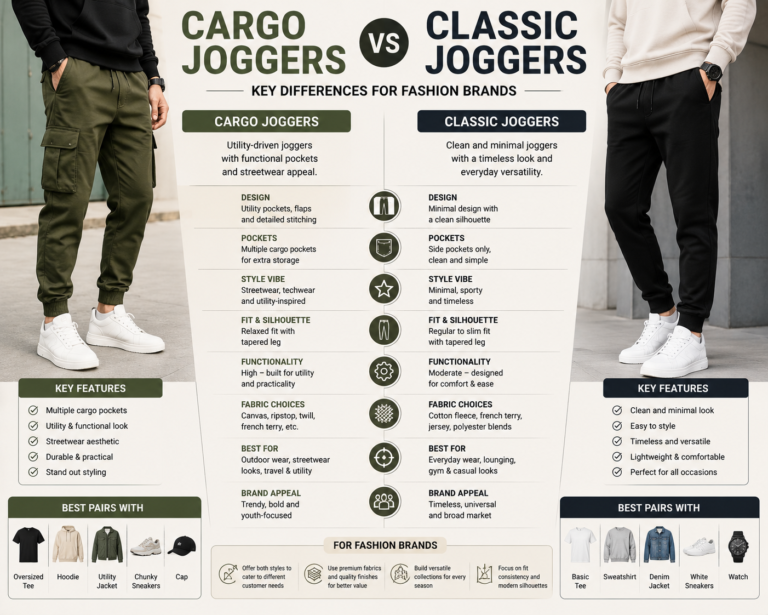
Right now, there are two styles of joggers racing for consumer loyalty. The classic jogger is historically well-designed with a level of comfort and style that appeals to a broad audience. Attention is being drawn to cargo joggers for their utility. They bring a style and sophistication with a streetwear edge that is hard to ignore. For fashion brands allocating budget to product development, creating cargo AND classic joggers makes the difference of a collection that is sure to appeal to the target market and one that will for sure miss the mark.

Here is a straightforward, objective analysis of both joggers and what sets them apart.

What Defines a Classic Jogger?

Classic joggers are the elite of simplicity. From elastic waistbands to ribbed ankle cuffs, they are clean, simple, and fully functional for your everyday needs. Their designs don’t draw attention. However, they are undeniably comfortable and a must-have.

The reason for the popularity of classic joggers is their simplicity. They can be worn by anyone, anywhere, and at any time, making them the perfect, fuss-free addition to your wardrobe. Great joggers lead to happy customers, and therefore, high customer retention.

Classic joggers suit:

  • Everyday casualwear and loungewear collections
  • Co-ord set pairings with matching hoodies or sweatshirts
  • Athletic crossover and activewear-adjacent markets
  • Brands targeting broad demographic appeal across multiple age groups

A reliable joggers manufacturer produces classic styles with consistent waistband quality, accurate cuff sizing, and fabric weights that hold shape through repeated washing — the construction details that determine whether customers keep wearing or stop buying.

What Defines a Cargo Jogger?

Cargo joggers are an extension of standard joggers and utilize an added layer of design for utility. They have multiple pockets on the sides with a flap closure or zipper pocket, D-ring hardware, and adjustable straps. They may have contrast paneling as well. They are distinct, complex, and have real streetwear credentials.

The cargo design has roots in military wear and workwear styles, meaning that the design has a history and it isn’t a passing trend. For the customers buying cargo joggers, they, in fact, possess the utility, complexity, and streetwear identity that the details communicate.

Cargo joggers perform strongest for:

  • Streetwear brands targeting urban and youth markets
  • Brands building around utility and workwear-inspired aesthetics
  • Collections targeting customers who follow fashion closely
  • Brands where social media content and outfit photography drive sales

Brands already producing cargo pants find cargo joggers a natural collection extension — serving the same customer with a more comfortable, casual silhouette that maintains the utility aesthetic they already love.

Key Differences: Construction and Materials

The two styles differ significantly in the complexity of their construction. This causes differences in manufacturing costs, the time spent producing the garments, and retail prices.

Classic joggers have simple construction. They usually have two or three pockets and a few simple seam lines which keep production efficient enough to sell the joggers at a lower price point. Mid-weight cotton fleece and cotton-polyester blends between 280 and 350gsm can be used in the majority of styles of classic joggers without any issues.

The construction of cargo joggers is more complex. Because they have more pockets, additional hardware, and flap and strap detailing, the time and cost to produce the joggers is higher. Mid-weight cotton-polyester blends offer fabrication durability to the cargo construction elements while keeping the overall weight of the garment in check.

Cargo Joggers vs Classic Joggers: Side-by-Side

FeatureClassic JoggersCargo Joggers
SilhouetteClean and taperedRelaxed with added volume
Pocket ConstructionSimple side or kangaroo pocketsMultiple utility pockets with hardware
Construction ComplexityLow to moderateModerate to high
Target MarketBroad — all demographicsStreetwear and urban fashion focused
Customization PotentialGoodVery high
Retail Price PointMid rangeMid to premium
Current Trend StrengthConsistently strongGrowing strongly in streetwear
Best PairingHoodies and sweatshirtsGraphic tees and statement jackets

Which Style Builds Stronger Brand Identity?

Classic joggers build broad customer bases. Cargo joggers build passionate brand communities. That distinction matters enormously for how you position and market your collection.

A brand selling classic joggers attracts a wide range of customers who want comfortable, reliable casualwear. A brand selling well-executed cargo joggers attracts fashion-conscious customers who actively identify with the brand’s aesthetic and return specifically for new drops and seasonal updates.

Streetwear brands building community-driven audiences generally benefit more from cargo jogger investment because those customers share content, recommend brands actively, and build the organic marketing momentum that grows fashion labels faster than any paid advertising campaign.

Casual wear brands targeting broader markets benefit from classic joggers as their foundation reliable, consistent sellers that generate steady revenue across every season without depending on trend cycles for demand.

Building Both Styles Into Your Collection

The strongest fashion brands don’t choose between classic and cargo — they build both into their collections strategically. Classic joggers anchor the range with broad appeal and consistent sales. Cargo joggers add fashion credibility, higher price points, and the kind of visual interest that drives strong content performance on social media.

Working with a professional fashionwear manufacturer who handles both construction types ensures consistent quality standards across your entire jogger range. Brands expanding their collections into tracksuits and co-ord sets benefit from that same manufacturing consistency — building collections that feel cohesive and intentional rather than assembled from multiple disconnected production sources.

Conclusion

Cargo joggers vs classic joggers serve different customers, build different brand relationships, and deliver different commercial results. Classic joggers deliver broad market coverage and consistent revenue. Cargo joggers deliver streetwear credibility, passionate community engagement, and stronger brand identity among fashion-forward customers. Understanding these differences clearly allows your brand to make deliberate, confident collection decisions — building a jogger range that serves your specific market powerfully rather than trying to be everything to everyone.

FAQs

Can cargo and classic joggers be produced in the same fabric colorways?

Yes. Running both styles in consistent colorways creates strong collection cohesion — allowing customers to mix and match pieces across your range while reinforcing your brand’s visual identity.

Are cargo joggers more expensive to manufacture than classic joggers?

Yes — typically 15% to 30% more due to additional pocket construction, hardware application, and production complexity. This cost difference supports higher retail pricing and stronger margins.

What hardware finishes work best for cargo joggers?

Matte black, brushed silver, and antique brass finishes suit most cargo jogger aesthetics — choose hardware that aligns with your brand’s overall color palette and visual identity for maximum cohesion.

Which jogger style photographs better for social media content?

Cargo joggers generally perform better in outfit photography — their visual complexity, pocket details, and hardware create more interesting images that drive stronger engagement on social media platforms.

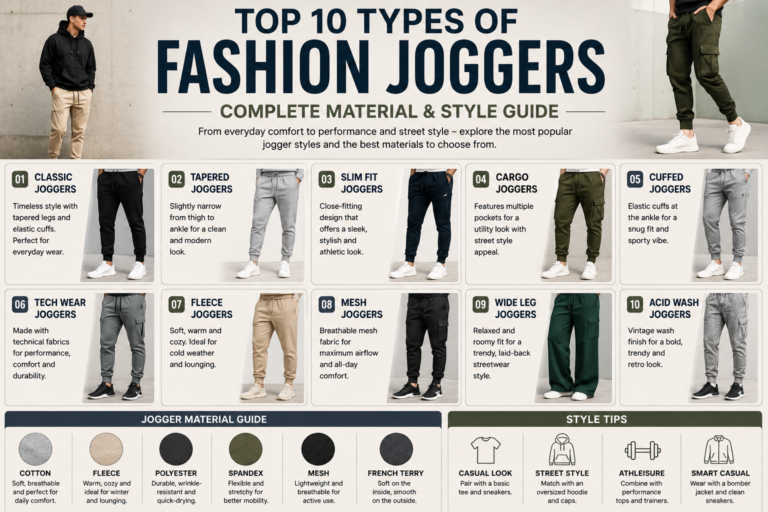
Top 10 Types of Fashion Joggers: Complete Material & Style Guide

Joggers have permanently outgrown their gym-only reputation. Today they sit confidently across streetwear, luxury casualwear, co-ord collections, and everyday fashion — selling consistently across every season and demographic. But knowing the top 10 types of fashion joggers and understanding the materials behind each style is what helps brands build collections with genuine commercial strength. Here’s your complete guide.

Classic Fleece Joggers — The Evergreen Seller

Classic fleece joggers are the foundation of every jogger collection. Soft waistband, tapered leg, ribbed cuffs simple, comfortable, and universally appealing. Cotton fleece between 280 and 350gsm delivers the warmth, comfort, and durability customers expect from this style.

Every serious joggers manufacturer produces this style and for brands just launching, classic fleece joggers provide the most reliable sales foundation available in the casualwear market.

Slim Fit Joggers — Sharp and Streamlined

Slim fit joggers follow the leg more closely than classic styles — creating a cleaner, more tailored silhouette without sacrificing the comfort elasticated waistbands and cuffed hems provide. They suit customers who want casual comfort without the relaxed, baggy aesthetic.

Cotton-elastane blends — typically 95% cotton with 5% spandex — work best for slim fit styles, providing enough stretch to accommodate movement comfortably without the fabric pulling or restricting through the thigh and knee.

Oversized Joggers — Streetwear Staple

Oversized joggers feature a wide, relaxed fit through the seat and thigh that tapers toward a cuffed ankle. That combination of volume and taper creates the distinctive streetwear silhouette that drives strong demand across youth and urban fashion markets globally.

Heavyweight fleece between 350 and 420gsm gives oversized joggers the structure and drape needed to hold the silhouette properly. Brands building streetwear collections anchor their bottoms range around oversized joggers pairing them with graphic tees, hoodies, and statement jackets for complete, shoppable outfit combinations.

Cargo Joggers — Utility Meets Comfort

Cargo joggers combine the comfort of elasticated waistbands and tapered legs with the functional utility of multiple side pockets, D-rings, and adjustable straps. The result is a style that carries strong streetwear credentials while delivering genuine practicality that customers actually use.

Mid-weight cotton-polyester blends work well for cargo jogger construction — providing durability for the additional hardware and pocket construction without making the garment unnecessarily heavy for everyday wear.

Brands already producing cargo pants find cargo joggers a natural extension — serving customers who want utility aesthetics in a more comfortable, casual silhouette.

Tech Joggers — Performance Fabric Fashion

Tech joggers use performance fabrics moisture-wicking polyester blends, four-way stretch materials, or lightweight shell fabrics to create joggers that perform athletically while looking fashion-forward. Functional details like zippered pockets, reflective trim, and articulated knee panels add genuine utility alongside strong visual appeal.

This style bridges casualwear and activewear markets effectively — targeting the growing customer segment that demands performance functionality from every garment including their everyday fashion pieces.

Linen Joggers — Breathable Summer Essential

Linen joggers bring natural breathability to the jogger category — making them the strongest warm-weather option available. Pure linen or linen-cotton blends create a lightweight, airy garment that keeps customers comfortable in summer heat while maintaining a relaxed, fashion-conscious aesthetic.

This style suits casual wear brands targeting resort, holiday, and warm-climate markets — customers who want the jogger silhouette and comfort without the heaviness of traditional fleece constructions.

Velvet Joggers — Luxury Texture Appeal

Velvet joggers bring rich texture and premium visual appeal to the casualwear category. The distinctive pile surface catches light beautifully communicating luxury and intentionality that plain fabric joggers cannot replicate. Velvet joggers perform strongly in women’s fashion, holiday collections, and lifestyle brands positioning at premium price points.

Stretch velvet — blending velvet pile with elastane backing — works best for jogger construction, providing the comfort and movement freedom customers need while maintaining the fabric’s distinctive surface appearance through regular wear and washing.

Jogger Co-ord Sets — The Complete Outfit Solution

Jogger co-ord sets pair matching joggers and tops — hoodies, sweatshirts, or crop tops — in the same fabric and colorway. The matching set offers customers a complete, effortless outfit in one purchase driving higher average order values and genuinely stronger customer satisfaction.

Brands producing co-ord sets find jogger co-ords among their strongest performing products — because customers actively seek complete looks that remove the styling effort from getting dressed every day.

Woven Joggers — Tailored Casual Crossover

Woven joggers use structured woven fabrics lightweight twill, nylon ripstop, or cotton canvas instead of knit fleece constructions. The result is a jogger that sits confidently between casual and smart-casual dressing suitable for creative workplaces, daytime social occasions, and elevated casualwear markets.

This style suits brands targeting customers who want jogger comfort in a garment that looks polished enough to wear beyond purely casual contexts. Pairing woven joggers with fashion jackets creates strong smart-casual outfit combinations that expand your brand’s styling reach significantly.

Printed Joggers — Bold Brand Expression

Printed joggers carry all-over prints, graphic panels, or placement prints directly on the fabric making them one of the most visually distinctive products in any jogger collection. Bold patterns, brand motifs, abstract designs, and seasonal prints all perform well depending on brand aesthetic and target market.

All-over printing works best on polyester blends that hold color vibrancy and print sharpness through repeated washing. A skilled fashionwear manufacturer guides you through print technique selection — ensuring your printed joggers look as sharp after fifty washes as they do on day one.

Choosing the Right Material for Your Jogger Collection

Across all ten styles, material choice defines performance, feel, and market positioning:

  • Cotton fleece comfort and warmth, suits classic and oversized styles
  • Cotton-elastane blend stretch and fit retention, suits slim and fitted styles
  • Polyester blend durability and print quality, suits tech and printed styles
  • Linen or linen-cotton breathability, suits summer and resort styles
  • Velvet with elastane luxury texture, suits premium and women’s collections
  • Woven fabrics structure and polish, suits smart-casual crossover styles

Working with a reliable fashionwear manufacturer ensures the right fabric is matched to the right style — so every jogger in your collection performs exactly as your customers expect from first wear through hundreds of washes.


Conclusion

Understanding the top 10 types of fashion joggers and the materials behind each style gives your brand the foundation to build collections that genuinely serve different customers across multiple markets and occasions. Classic fleece anchors the range. Oversized drives streetwear demand. Tech bridges performance markets. Co-ords increase order values. Printed styles build brand identity. Cover the right combination for your specific customer — and your jogger collection becomes one of the most consistent, reliable revenue drivers your brand produces every single season.

FAQs

Which jogger style sells most consistently across all markets?

Classic fleece and oversized joggers consistently outperform other styles globally — their broad demographic appeal and styling versatility drive reliable year-round sales for virtually every fashion brand.

What fabric weight works best for everyday fashion joggers?

280 to 350gsm cotton fleece or cotton-polyester blend suits most everyday jogger styles — providing the comfort, durability, and premium hand-feel customers expect across mid to premium price points.

Can all 10 jogger styles be produced under a private label?

Yes. All styles support full private label customization including custom fabrics, colors, prints, hardware, labels, and packaging — giving your brand complete creative control over every piece in your collection.

How many jogger styles should a new fashion brand launch with?

Start with two to three core styles — typically classic fleece, oversized, and one trend-relevant style suited to your specific market. This covers your broadest customer base without overextending your initial investment.

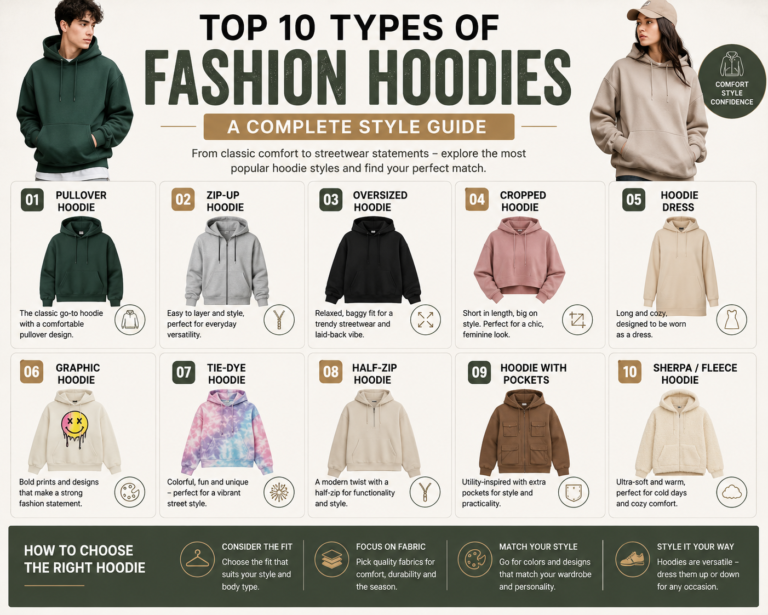
Top 10 Types of Fashion Hoodies: A Complete Style Guide

Hoodies have evolved far beyond basic casualwear. Today they anchor streetwear collections, lead fashion campaigns, and sit confidently across luxury, lifestyle, and athletic markets simultaneously. But knowing the top 10 types of fashion hoodies and understanding what makes each one sell is what separates brands that build strong collections from brands that guess and hope. Here’s your complete style guide.

Pullover Hoodie — The Timeless Foundation

The pullover hoodie is the starting point for every serious hoodie collection. No zipper, no buttons — just clean lines, a kangaroo pocket, and a drawstring hood. Its simplicity is its strength. It works across every demographic, every season, and every styling approach — making it the highest-volume seller in almost every casualwear brand’s range.

Every brand working with a professional hoodies manufacturer starts here — and for very good reason.

Zip-Up Hoodie — Versatile and Practical

Zip-up hoodies add a full-length front zipper — transforming the garment into a layering piece that customers wear open over tees or fully zipped against cooler temperatures. That versatility makes zip-ups consistent sellers across casualwear and streetwear collections year-round.

Half-zip variations — stopping midway up the chest — carry strong athletic and preppy crossover appeal, particularly in premium casualwear and collegiate-inspired collections.

Oversized Hoodie — The Streetwear Essential

Oversized hoodies feature deliberately extended body length, dropped shoulders, and wide sleeves — creating that relaxed, confident silhouette streetwear culture has made iconic. Heavyweight fleece between 350 and 450gsm gives oversized styles the structure and premium hand-feel that justify their price point in customers’ hands.

This style consistently drives the strongest social media engagement for fashion brands — because it photographs powerfully and styles effortlessly across multiple outfit combinations.

Cropped Hoodie — Fashion-Forward and Versatile

Cropped hoodies hit above the natural waist — pairing perfectly with high-waisted bottoms and co-ord sets for defined, fashion-forward looks. Lighter fabric weights — 250 to 300gsm — work best for cropped styles, allowing the shortened hemline to sit cleanly without unwanted bulk.

This style performs strongest in women’s fashion, lifestyle, and athleisure crossover collections targeting younger, trend-conscious demographics.

Graphic Hoodie — Brand Expression at Its Strongest

Graphic hoodies carry bold printed artwork, typography, or brand imagery across the chest, back, or sleeves. They are one of the most powerful brand-building tools available in casualwear — because the graphic itself communicates brand identity instantly without requiring any additional context.

Screen printing, embroidery, heat transfer, and puff print techniques each deliver different aesthetic results. The right technique depends on your graphic complexity, fabric weight, and target price point.

Sleeveless Hoodie — Activewear Crossover Appeal

Sleeveless hoodies — sometimes called hoodie vests — remove the sleeves entirely while retaining the hood and kangaroo pocket. They bridge casualwear and activewear markets effectively — working as gym layers, festival pieces, and urban streetwear simultaneously.

Brands building collections that cross between casual wear and performance markets find sleeveless hoodies deliver strong sales precisely because they serve customers in multiple contexts rather than just one.

Sherpa-Lined Hoodie — Premium Warmth and Texture

Sherpa-lined hoodies feature a soft, fleece-like lining inside the hood and sometimes throughout the body — adding serious warmth alongside a distinctive textural contrast. The sherpa detail elevates the perceived value of the hoodie significantly, supporting higher retail price points and stronger margins.

This style sells powerfully during autumn and winter seasons and performs particularly well for brands positioning at premium casualwear and lifestyle price points.

Hoodie Co-ord Set — The Complete Look

Hoodie co-ord sets pair matching hoodies and bottoms — joggers, shorts, or sweatpants — in the same fabric and colorway. The matching set offers customers a complete, effortless outfit in one purchase — which drives higher average order values and stronger customer satisfaction simultaneously.

Brands already producing joggers and sweatshirts can expand into co-ord sets with minimal additional development investment — maximizing return from existing manufacturing relationships.

Tech Hoodie — Performance Meets Fashion

Tech hoodies use performance fabrics — moisture-wicking blends, four-way stretch materials, or lightweight shell fabrics — to create a hoodie that performs athletically while looking fashion-forward. Functional details like hidden pockets, earphone cable ports, and reflective prints add genuine utility alongside strong aesthetic appeal.

This style targets the growing market of customers who demand performance functionality from every garment they wear — including their everyday casualwear and streetwear pieces.

Longline Hoodie — Dramatic Silhouette, Strong Statement

Longline hoodies extend significantly below the hip — sometimes reaching mid-thigh — creating a dramatic silhouette that carries strong fashion-forward energy. They layer powerfully over tracksuits and suit streetwear brands targeting customers who build deliberately layered, high-impact outfits.

Longline styles work best in mid to heavyweight fabrics that provide enough structure to hold the extended length cleanly without collapsing or distorting through daily wear.

Building Your Hoodie Collection Strategically

The top 10 types of fashion hoodies each serve a specific customer need and market segment. Smart brands don’t launch all ten simultaneously — they identify their core customer, select three to five styles that serve that customer most directly, and expand from there as revenue and brand understanding grow.

Working with a trusted fashionwear manufacturer ensures consistent fabric quality, construction standards, and customization capabilities across every hoodie style in your collection — so each product reflects the same brand quality your customers expect every time they shop.

Conclusion

Understanding the top 10 types of fashion hoodies gives your brand the knowledge to build collections with genuine commercial intention behind every style choice. Each hoodie type serves real customers with real preferences — and covering the right combination for your specific market turns your hoodie range into one of the most reliable, consistently performing product categories your brand produces.

FAQs

Which hoodie type sells most consistently across all markets?

Pullover and oversized hoodies consistently outperform other styles globally — their broad demographic appeal and styling versatility make them reliable year-round sellers for virtually every fashion brand.

What fabric works best across most hoodie styles?

320 to 380gsm cotton fleece or cotton-polyester blend suits most hoodie styles well — providing comfort, durability, print quality, and the premium hand-feel customers expect at mid to premium price points.

Can all 10 hoodie types be produced under a private label?

Yes. All styles support full private label customization including custom fabrics, colors, graphics, hardware, labels, and packaging — giving your brand complete creative and commercial control over every piece.

How many hoodie styles should a new fashion brand launch with?

Start with two to three styles — typically a pullover, an oversized, and one trend-driven style relevant to your specific market. This covers your core customer base without overextending your initial production investment.

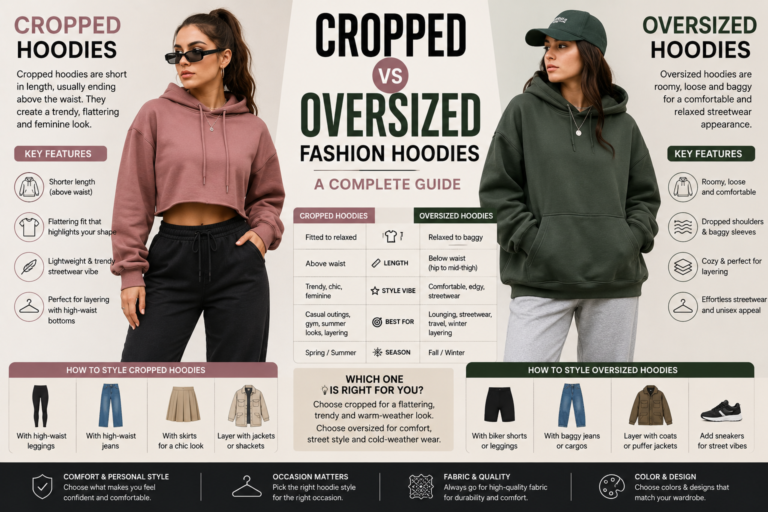
Cropped vs Oversized Fashion Hoodies: A Complete Guide

Two hoodie silhouettes are dominating fashion right now — and both are selling hard. Cropped hoodies bring sharp, fashion-forward energy. Oversized hoodies deliver that relaxed, cozy confidence streetwear customers love. But when it comes to cropped vs oversized fashion hoodies, the real question for brands isn’t which one looks better — it’s which one serves your customer better. This guide breaks both styles down completely so you can build smarter, more targeted collections.

Cropped Hoodies — Short in Length, Big in Impact

Cropped hoodies hit above the natural waist — typically ending between the ribcage and the hip. That shorter length creates a defined silhouette that balances proportions powerfully when paired with high-waisted bottoms, wide leg pants, or skirts.

The cropped silhouette carries strong feminine and fashion-forward energy — though unisex and menswear brands are increasingly adopting cropped styles as streetwear culture continues blurring traditional gender boundaries in clothing.

Cropped hoodies work best for:

  • Women’s streetwear and casual fashion collections
  • Festival and lifestyle wear brands
  • Athleisure and activewear crossover collections
  • Brands targeting fashion-conscious younger demographics
  • Co-ord set collections paired with matching bottoms

A well-executed cropped hoodie pairs naturally with co-ord sets — creating matching two-piece looks that photograph brilliantly and drive strong social media engagement for fashion brands building their audiences online.

Oversized Hoodies — The Streetwear Non-Negotiable

Oversized hoodies are arguably the single most important garment in contemporary streetwear. The deliberately large silhouette — dropping shoulders, extended body length, wide sleeves — communicates relaxed confidence in a way no fitted garment can replicate.

Oversized styles dominate because they work across genders, body types, and styling approaches simultaneously. Layer them over tracksuits, pair them with cargo pants, or wear them as standalone statement pieces — oversized hoodies adapt to every customer’s personal style instinctively.

Oversized hoodies perform strongest for:

  • Streetwear brands targeting broad demographic appeal
  • Unisex and gender-neutral collections
  • Premium casualwear labels positioning at higher price points
  • Brands building around heavyweight fleece and luxury fabric offerings
  • Lifestyle brands where comfort and style carry equal weight

Cropped vs Oversized: Head-to-Head Comparison

FeatureCropped HoodieOversized Hoodie
SilhouetteShort, defined, fashion-forwardRelaxed, voluminous, effortless
Gender AppealPrimarily women’s, growing unisexStrongly unisex and universal
Styling VersatilityHigh with high-waisted bottomsExtremely high across all outfits
Fabric WeightLight to mid-weight works wellMid to heavyweight performs best
Target MarketFashion-forward, younger demographicsBroad streetwear and casualwear market
Current Trend StrengthStrong in women’s and co-ord marketsDominant across all streetwear globally
Price Point PotentialMid to premiumMid to premium

Fabric Considerations for Each Style

Fabric choice impacts both silhouettes differently — and getting this right separates quality products from disappointing ones.

Cropped hoodies work well in lighter fabric weights — 250 to 300gsm French terry or cotton blends. Lighter fabrics allow the cropped cut to sit cleanly without adding unwanted bulk around the shortened hemline.

Oversized hoodies demand heavier fabrics to justify the silhouette properly. 350 to 450gsm heavyweight fleece gives oversized styles the structure, drape, and premium hand-feel that customers expect when they pay for a quality oversized garment. Lightweight fabric in an oversized cut simply looks cheap — and customers notice immediately.

A skilled hoodies manufacturer guides you through fabric selection for each silhouette — ensuring the final product looks and feels exactly as your brand intends at every price point.

Which Style Should Your Brand Offer?

If your brand targets women’s fashion, lifestyle, or co-ord collections — cropped hoodies are essential. If you’re building a streetwear, casualwear, or unisex collection — oversized is non-negotiable.

The strongest brands offer both. Cropped hoodies serve your fashion-forward female customer. Oversized styles serve your broader streetwear audience. Together they create a hoodie range that covers significantly more of your potential market without requiring vastly different manufacturing capabilities.

Working with a reliable fashionwear manufacturer who produces across both silhouettes ensures consistent quality, fabric sourcing, and brand standards across your complete hoodie offering. Brands expanding further into sweatshirts and joggers benefit from that same manufacturing consistency — building collections that feel cohesive and intentional rather than assembled from multiple disconnected suppliers.

Conclusion

Cropped vs oversized fashion hoodies don’t compete — they complement. Cropped delivers sharp, fashion-forward style for customers who want defined silhouettes and co-ord versatility. Oversized delivers the relaxed, confident energy that drives streetwear culture globally. Build both into your collection with the right fabrics, the right construction, and the right manufacturing partner — and your hoodie range becomes one of the strongest, most reliable performers your brand produces every single season.

FAQs

What fabric weight works best for oversized hoodies?

350 to 450gsm heavyweight fleece works best for oversized styles — providing the structure, drape, and premium feel that justifies both the silhouette and the price point.

Can cropped and oversized hoodies be produced in the same collection?

Absolutely. Most professional manufacturers produce both silhouettes with consistent fabric sourcing and quality standards — making collection cohesion straightforward to maintain.

Are oversized hoodies suitable for women’s fashion collections?

Yes. Oversized hoodies perform strongly across women’s streetwear, casual, and lifestyle collections — their universal appeal makes them reliable sellers regardless of the primary gender focus of your brand.

How do I decide the crop length for a cropped hoodie collection?

Most cropped hoodies sit 2 to 4 inches above the natural waist. Work with your manufacturer during sampling to test multiple crop lengths on fit models before finalizing — small length differences significantly affect how the garment styles and sells.

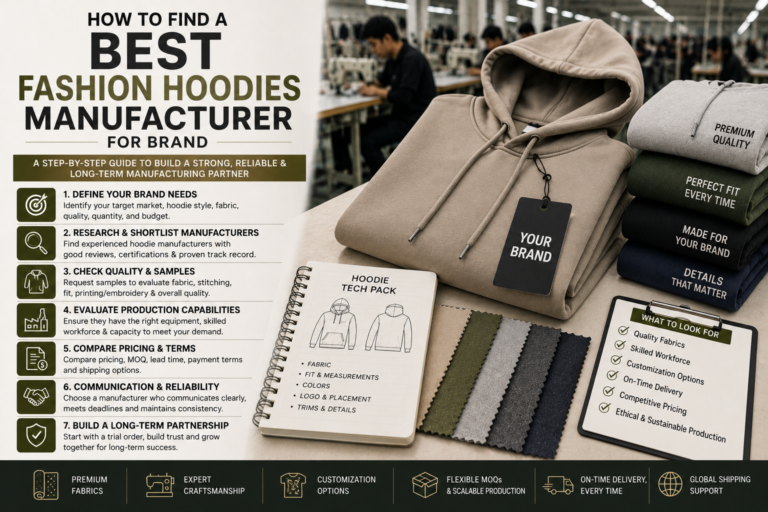
How to Find the Best Fashion Hoodies Manufacturer for Your Brand

One of the most convenient and most popular pieces of clothing to design and sell is the hoodie. No matter the brand — streetwear, lounge, or athleisure — they all have a hoodie. However, developing a line of quality hoodies and discovering the best hoodie manufacturer is more than simply finding the cheapest supplier and perusing directories. A hoodie manufacturer will impact the quality of your products, your brand’s reputation, and your business’s growth. Here’s a guide on what to look for when searching for a manufacturer.

Know What Your Brand Needs Before You Search

Before you reach out to manufacturers, know what you want.

Be specific about:

  • Fabric type (heavyweight fleece vs. French terry vs. cotton vs. tech fab.)
  • Styles (pullover, zip-up, oversized, cropped, etc.)
  • Customization (embroidery, screen printing, custom hardware, woven labels, etc.)
  • Desired price point and where you want to position retail.
  • How often you plan to order and in what quantities.

When you know what you want, you can be unbiased and clear when you talk to manufacturers, and won’t be fascinated by factories that look good on the outside but don’t meet your brand’s needs.

Prioritize Fabric and Construction Quality

Quality begins with the fabric. Your hoodie manufacturer needs to have fabrics that align with your branding, whether that is premium 400gsm heavyweight fleece for a luxury streetwear brand, or French terry for a drop for an everyday collection.

Quality construction is just as important. A quality hoodie has reinforced seam stitching, ribbing at the cuffs and bottom that has been ribbed and is not twisted, and drawstrings and pockets that are quality and will not lose shape after many washes. Test the construction and fabrics of a manufacturer with a sample before you sell a bulk order.

A reliable hoodies manufacturer maintains consistent fabric sourcing and construction standards across every bulk order — not just impressive samples designed to win your business.

Evaluate Customization Capabilities Thoroughly

Your hoodie should feel genuinely like your brand, not an easily resold generic blank. The best fashion hoodies manufacturers allow for customizations on every detail.

Pay attention to customizations such as:

  • Custom fabric weights and compositions
  • Color matching on fabric and hardware
  • Embroidery, screen printing, and puff printing
  • Custom labels, care tags, and hang tag production
  • Different pocket styles, zipper types, and drawstring hardware options

Brands building complete streetwear collections rely heavily on these customization capabilities — because streetwear customers actively seek distinctive details that separate quality brands from generic alternatives.

Check Their Full Product Range

The best manufacturing partners grow with your brand. Today you need hoodies. Tomorrow you’ll expand into sweatshirts, joggers, and tracksuits. Working with a manufacturer who covers your full casualwear range saves significant time, cost, and quality management complexity as your collection grows.

A manufacturer producing co-ord sets and cargo pants alongside hoodies signals genuine casualwear manufacturing depth — the kind of breadth that supports serious brand scaling rather than just fulfilling single product orders.

Understand MOQ and Pricing Structure Honestly

MOQ discussions can give insight into the type of brands a manufacturer wants to work with. If a manufacturer sets a high MOQ, them means they want to push brands to order large volumes. Better MOQs are flexible — between 50 and 150 units per style. These allow new brands to justify demand before ordering large quantities.

Pricing also needs to be clear. Understand what costs you are meant to pay. Are you responsible for sampling? Revisions? Labels? Packaging? If there are any costs not clear that pop up during sampling, that’s a major red flag for any type of business interaction with the manufacturer.

Test Communication Before Committing

Communication quality during the sampling stage predicts exactly how a manufacturer will behave during bulk production. Test it deliberately — ask detailed questions, request timeline updates, and observe how quickly and thoroughly they respond.

A fashionwear manufacturer who communicates proactively, flags potential issues early, and provides clear production timelines without chasing is worth paying a slight premium for — because reliable communication prevents the costly production disasters that vague, unresponsive manufacturers consistently cause.

Conclusion

Assessing quality, customization flexibility, product range, minimum order quantity (MOQ) flexibility, pricing clarity, and communication standards at once is essential for locating the best fashion hoodies manufacturer. Each criterion prevents costly brand errors and helps to craft the foundational manufacture on which your collection evolves. Be thorough – ask the appropriate questions, seek samples, and select the manufacturer that is focused on your brand and invested in your future, and not just the next order.

FAQs

What is the best fabric weight you would recommend to use if I want to make a fashion hoodie?

It fully depends on how you want to position your brand. If hoodies are part of a premium streetwear collection or a collection aimed at colder weather, 300-400gsm fleece would be best. However, if your collection is aimed at the casual everyday market, 250-300gsm would be perfect.

How long does it take to sample a hoodie?

The average professional manufacturer is able to provide a first sample within 10 to 14 business days. This lead time can go up to 3 weeks if there are any customizations or if the manufacturer is using a fabric that is not in the standard catalog.

Is it possible to get hoodies that are fully custom and branded while also being of low MOQ?

Absolutely. These days, a lot of manufacturers often provide full private label customizations, starting from as low as 50 to 100 pieces per style, which gives smaller and emerging brands the opportunity to enter the market with custom pieces.

Is it better to go to a specialist hoodie manufacturer or a general apparel factory?

Interesting enough, a specialist casualwear manufacturer is often better than another manufacturer, who is specified in all other types of apparel. This is largely due to the fact that specialized casualwear manufacturers are often able to show a higher level of knowledge and sophistication in the areas of fabric

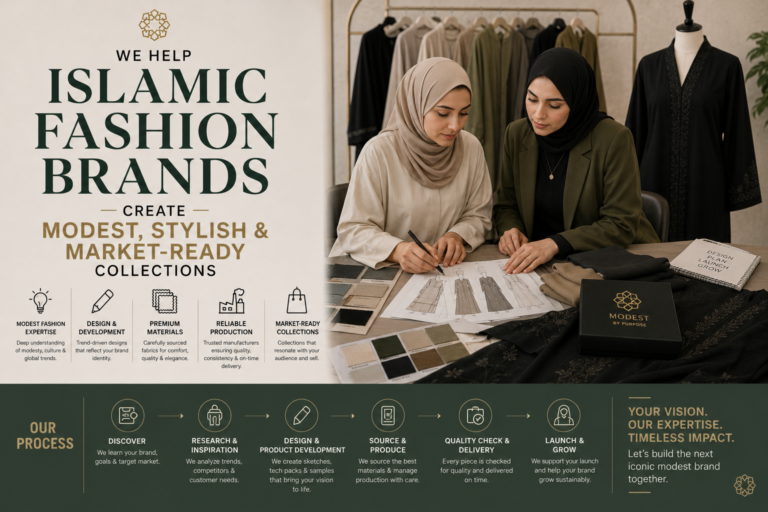
We Help Islamic Fashion Brands Create Modest, Stylish & Market-Ready Collections

The global Islamic fashion market is growing at a pace that mainstream fashion is finally starting to take seriously. Modest dressing is no longer a niche — it’s a multi-billion dollar industry serving hundreds of millions of consumers who want clothing that honors their values without sacrificing style, quality, or contemporary design. Building successful Islamic fashion collections requires a manufacturing partner who genuinely understands modest fashion requirements — not one who simply adjusts existing patterns and calls it done.

Understanding What Islamic Fashion Actually Requires

Modest fashion isn’t just about longer hemlines and looser fits. It’s a complete design philosophy that considers coverage, fabric opacity, silhouette, movement, and cultural appropriateness simultaneously — without producing garments that look frumpy, outdated, or poorly proportioned.

Successful Islamic fashion collections balance several non-negotiable requirements:

  • Full coverage — appropriate necklines, sleeve lengths, and hemlines that meet modest dressing standards
  • Fabric opacity — materials that don’t become sheer under light or when stretched
  • Comfortable modest movement — garments that maintain coverage during everyday activity
  • Contemporary design — styles that reflect current fashion trends within modest parameters
  • Cultural sensitivity — awareness of regional preferences across diverse Muslim consumer markets globally

Every manufacturing decision — from fabric selection through pattern making and final construction — must serve all five requirements simultaneously. That’s where genuine expertise separates quality modest fashion manufacturers from general apparel factories attempting to enter this specialized market.

Fabric Selection for Modest Fashion Collections

Fabric choice is particularly critical in Islamic fashion manufacturing. The wrong fabric undermines modesty requirements regardless of how well the garment is designed. We guide brands through fabric selection with modesty performance as the primary criteria.

Fabrics that work consistently well for modest fashion include:

  • Ponte knit — opaque, structured, and comfortable for wide-leg trousers, modest dresses, and coordinated sets
  • Viscose and modal blends — soft, flowing drape for abayas, maxi dresses, and layering pieces
  • Cotton interlock — breathable opacity for everyday modest casualwear and co-ord sets
  • Chiffon with lining — elegant opacity for occasion wear and formal modest collections
  • French terry and fleece — comfortable coverage for modest hoodies and casualwear pieces

Every fabric we recommend for modest fashion collections goes through opacity testing — ensuring coverage is maintained across all lighting conditions and wearing situations before bulk production begins.

Design Capabilities for Islamic Fashion Brands

Our design and production capabilities cover the full spectrum of Islamic fashion categories that today’s modest fashion consumers actively seek:

  • Modest casualwear — casual wear collections designed with full coverage and contemporary styling
  • Modest streetwear — urban-inspired pieces that meet modest requirements without losing streetwear credibility
  • Abayas and modest dresses — fluid, elegant silhouettes in premium draping fabrics
  • Wide-leg modest trousers and coordinated sets — structured, opaque bottom pieces that work across multiple styling combinations
  • Modest activewear — performance pieces that maintain full coverage during movement and exercise
  • Modest occasionwear — formal and semi-formal pieces for events, celebrations, and professional environments

The Islamic fashionwear manufacturer capabilities we bring to every project reflect deep understanding of what modest fashion consumers actually want — not generic apparel production with longer hemlines applied as an afterthought.

Private Label Manufacturing for Islamic Fashion Brands

Building a recognizable Islamic fashion brand requires private label production — exclusive designs, custom fabrics, and brand-specific details that differentiate your collection from the growing number of modest fashion competitors entering the market.

We produce complete private label Islamic fashion collections with full customization across fabric, silhouette, color palette, print design, hardware, labels, and packaging. Your collection is built entirely around your brand vision and your target customer — not adapted from existing templates that limit your creative expression.

Brands expanding their modest fashion ranges into complementary categories — tracksuits, knitwear, and fashion jackets — benefit from working with a single manufacturing partner who maintains consistent modest design standards across every product category rather than managing multiple suppliers with varying understanding of Islamic fashion requirements.

Serving Islamic Fashion Brands Globally

The Islamic fashion consumer market spans every continent — from Southeast Asia and the Middle East to Europe, North America, and beyond. Each regional market carries specific preferences around silhouette, fabric, color, and cultural nuance that successful brands understand and serve thoughtfully.

We work with Islamic fashion brands targeting diverse global markets — helping them navigate regional preferences while maintaining the consistent brand identity and quality standards that build long-term customer loyalty across every market they serve.

A fashionwear manufacturer with genuine global production experience understands these regional nuances — and builds them into collection development conversations from the very beginning rather than treating all modest fashion consumers as a single homogeneous market.

Conclusion

Building successful Islamic fashion collections requires more than standard apparel manufacturing with modest adjustments. It requires genuine understanding of modest design principles, careful fabric selection, culturally informed design capabilities, and the manufacturing expertise to execute every detail at the quality level today’s sophisticated modest fashion consumers expect and deserve. We bring all of that to every brand partnership — helping Islamic fashion labels create collections that are authentically modest, genuinely stylish, and completely ready for the markets they serve.

FAQs

Do you have experience manufacturing specifically for modest fashion requirements?

Yes. We have extensive experience producing Islamic fashion collections — with full understanding of coverage requirements, fabric opacity standards, and modest silhouette construction across multiple garment categories.

Can modest fashion collections be fully customized under a private label?

Absolutely. We produce complete private label modest fashion collections with full customization across fabric, silhouette, color, print, labels, and packaging — built entirely around your brand vision.

What is the minimum order quantity for Islamic fashion collection production?

MOQs vary by product category and customization complexity. We work with emerging modest fashion brands at flexible entry MOQs — typically starting from 50 to 100 pieces per style.

Do you serve Islamic fashion brands targeting multiple global markets?

Yes. We work with modest fashion brands targeting diverse global markets — helping navigate regional preferences while maintaining consistent brand quality standards across every market they serve.

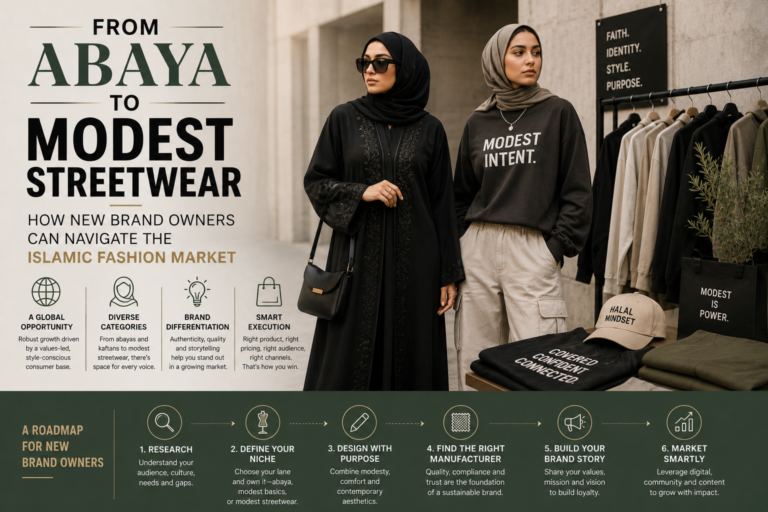
From Abaya to Modest Streetwear — How New Brand Owners Can Navigate the Islamic Fashion Market

The Islamic fashion market has never been more commercially exciting — or more competitive. From classic abayas to contemporary modest streetwear, today’s Muslim fashion consumer demands clothing that honors religious values while reflecting genuine style sophistication. For new brand owners entering this space, the opportunity is enormous. But navigating the market successfully requires understanding both the cultural depth and the commercial dynamics that make Islamic fashion genuinely different from mainstream apparel markets.

Understanding the Islamic Fashion Consumer

Before building a single product, understand who you’re building for. The Islamic fashion consumer is not a monolith. She spans continents, cultures, age groups, and lifestyle segments each with distinct preferences around silhouette, fabric, color, and occasion.

A teenager in London wants modest streetwear that lets her express her identity through contemporary fashion. A professional in Dubai wants polished, structured modest workwear. A mother in Jakarta wants comfortable, affordable modest casualwear for daily life. A bride in Istanbul wants stunning modest occasionwear that honors tradition while feeling modern.

Each segment represents a real commercial opportunity and the brands that succeed choose one segment clearly, serve it deeply, and expand from there rather than trying to serve everyone from day one.

The Spectrum From Abaya to Modest Streetwear

The abaya to modest streetwear spectrum represents the full range of Islamic fashion — from the most traditional to the most contemporary end of modest dressing. Understanding where your brand sits on that spectrum shapes every product and marketing decision you make.

Traditional Abayas and Modest Dresses Abayas remain the cornerstone of Islamic fashion across many markets — particularly the Middle East and parts of Southeast Asia. Contemporary abaya design has evolved significantly — incorporating embroidery, statement sleeves, structured cuts, and premium fabric choices that transform the traditional garment into a genuine fashion statement.

Viscose, modal, and premium crepe fabrics drape beautifully for abaya construction — providing the fluid, elegant silhouette that abaya customers expect while maintaining full coverage standards comfortably.

Modest Casualwear Modest casualwear serves the everyday dressing needs of Muslim women who want comfortable, covered clothing for daily life. Wide-leg trousers, long tunics, layered co-ord sets, and modest casual wear pieces all serve this segment — prioritizing fabric opacity, comfortable coverage, and contemporary design simultaneously.

Modest Streetwear Modest streetwear is the fastest growing segment in Islamic fashion right now. It combines the visual language of contemporary streetwear — oversized silhouettes, graphic elements, bold color blocking — with full modest coverage requirements. Modest hoodies, wide-leg joggers, longline fashion jackets, and layered outfit combinations all serve this rapidly expanding market segment.

Working with a specialist Islamic fashionwear manufacturer ensures your modest streetwear pieces maintain genuine coverage standards while delivering the contemporary aesthetic that this fashion-forward customer actively seeks.

Choosing Your Market Entry Point

Start focused. Two to four hero pieces that define your brand aesthetic clearly outperform broad collections that try to cover too much territory too soon.

A modest streetwear brand might launch with an oversized longline hoodie, wide-leg joggers, and a modest co-ord set — three products that tell a clear, coherent brand story and serve the same customer across multiple occasions.

A modest casualwear brand might launch with wide-leg trousers, a long modest tunic, and a layered modest knitwear piece — again, a focused collection with clear brand identity rather than a scattered range that confuses rather than attracts.

Every piece must pass the modesty performance test — appropriate coverage, fabric opacity under all lighting conditions, maintained modesty through full range of movement, and cultural appropriateness for your target market.

Working With the Right Manufacturing Partner

Islamic fashion manufacturing requires specific expertise that general apparel factories often lack. Fabric opacity testing, modest silhouette pattern making, coverage-conscious construction, and cultural awareness in design development are all specialized skills that directly impact your product quality and brand credibility.

A professional fashionwear manufacturer with genuine Islamic fashion experience guides you through every production decision — from fabric selection and silhouette development through sampling, quality control, and bulk delivery — ensuring your finished products genuinely serve your modest fashion customer rather than simply approximating what she needs.

Brands expanding across the modest fashion spectrum into tracksuits and streetwear collections benefit enormously from maintaining that single manufacturing relationship — consistent modest design standards across every product category without the complexity of managing multiple suppliers with varying levels of Islamic fashion expertise.

Conclusion

Navigating the Islamic fashion market from abaya to modest streetwear successfully requires genuine cultural understanding, clear market positioning, focused product development, and the right manufacturing partnership. The brands winning in this space aren’t just making longer, looser garments — they’re building authentic, culturally resonant collections that serve Muslim fashion consumers with the same sophistication and intentionality that the world’s best fashion brands bring to every market they enter. Start focused, stay authentic, choose expertise over convenience — and build a modest fashion brand your customers are genuinely proud to wear.

FAQs

What is the fastest growing segment in Islamic fashion right now?

Modest streetwear is currently the fastest growing segment — particularly among younger Muslim consumers in Western markets who want contemporary style that fully honors their modest dressing values.

Which fabrics work best for modest fashion across different garment types?

Viscose and modal suit abayas and dresses for elegant drape. Ponte knit and cotton interlock work well for modest trousers and casualwear. Heavyweight fleece suits modest streetwear and hoodie collections effectively.

How do I ensure my modest fashion collection genuinely meets coverage requirements?

Work with a manufacturer experienced in Islamic fashion who conducts fabric opacity testing, tests garments through full range of movement, and understands regional coverage standards across your target markets.

Should a new Islamic fashion brand launch globally or focus on one market first?

Focus on one market first. Deep cultural understanding of a single market builds stronger brand credibility and more loyal customers than broad global launches that lack the cultural nuance each market requires.

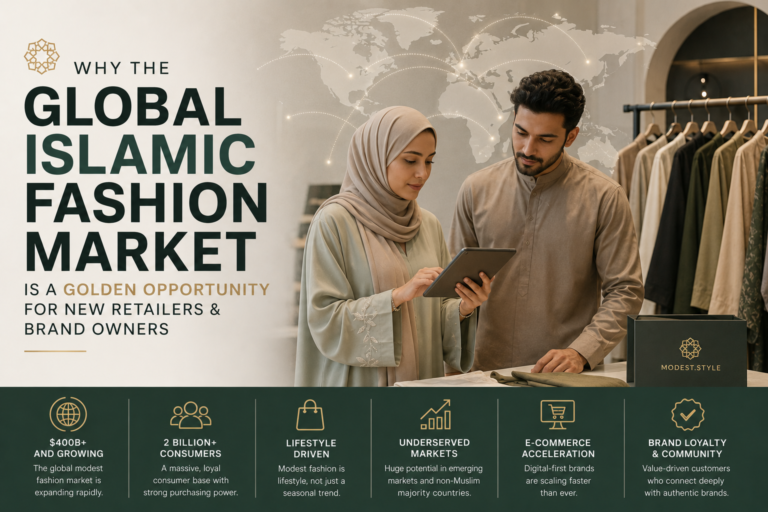
Why the Global Islamic Fashion Market Is a Golden Opportunity for New Retailers & Brand Owners

Some market opportunities come around once in a generation. The global Islamic fashion market is one of them. With hundreds of millions of Muslim consumers worldwide actively seeking stylish, high-quality modest clothing — and mainstream fashion consistently failing to serve them adequately — the gap between demand and supply represents one of the most significant commercial opportunities available to new retailers and brand owners today.

The Numbers Behind the Opportunity

The global Islamic fashion market generates hundreds of billions of dollars annually — and it continues growing faster than most mainstream fashion segments. The global Muslim population exceeds 1.8 billion people. A significant proportion of that population actively purchases modest clothing across casualwear, occasionwear, streetwear, activewear, and professional wear categories simultaneously.

These consumers are young, digitally connected, fashion-conscious, and chronically underserved by mainstream fashion brands that treat modest dressing as an afterthought rather than a genuine market priority. That underservice is precisely where commercial opportunity lives for new brand owners willing to enter with authentic commitment and genuine product quality.

Why Mainstream Fashion Keeps Failing This Market

Despite the market size, mainstream fashion brands consistently fall short in Islamic fashion. The reasons are revealing and they highlight exactly where new brands can win.

Generic modest adaptations feel inauthentic. When mainstream brands simply add sleeves to existing designs or drop hemlines without rethinking silhouette and construction, Muslim consumers recognize the lack of genuine commitment immediately and respond by supporting brands that actually understand their needs.

Regional and cultural nuance gets ignored. The global Islamic fashion market spans dozens of cultures, geographies, and interpretive traditions each with distinct preferences around silhouette, color, occasion, and coverage standards. Brands that treat all Muslim consumers identically consistently miss the mark across every market they attempt to serve.

Quality and modesty standards conflict. Many mainstream manufacturers lack the specific expertise needed to produce garments that are simultaneously modest, contemporary, and genuinely well-made. Fabric opacity testing, coverage-conscious pattern making, and modest movement testing require specialized knowledge that general apparel factories don’t automatically possess.

The Segments Driving Strongest Growth

New retailers entering this market find commercial opportunity across multiple product segments — each serving a distinct Muslim consumer need.

Modest Streetwear The fastest-growing Islamic fashion segment globally. Young Muslim consumers in Western markets — UK, USA, Europe, Australia are building personal style identities that combine contemporary streetwear aesthetics with full modest coverage. Longline hoodies, wide-leg joggers, and modest co-ord sets all perform strongly in this segment.

Modest Casualwear Daily modest dressing represents the highest volume purchase frequency in Islamic fashion. Muslim consumers buy modest casualwear constantly for work, family life, social occasions, and everyday movement. A reliable casual wear range built around genuine modest standards serves this consistent, repeatable demand effectively.

Modest Occasionwear Eid, weddings, religious celebrations, and formal social events create strong seasonal demand spikes for modest occasionwear. Brands that serve this segment well build intensely loyal customer bases because finding genuinely beautiful, appropriately modest occasion pieces remains genuinely difficult for most Muslim consumers in most markets.

Modest Activewear Muslim women who exercise, practice sports, or maintain active lifestyles need performance clothing that maintains full coverage during movement. This segment is significantly underserved representing a genuine white space opportunity for brands willing to develop technically sound modest activewear with proper coverage performance testing.

How to Enter This Market Successfully

Entering the global Islamic fashion market successfully requires more than good intentions and modest-length garments. It requires genuine commitment across product development, cultural understanding, and manufacturing expertise.

Choose one segment and serve it deeply. New brands that try to cover the full spectrum from abayas to modest activewear simultaneously typically serve no segment particularly well. Pick one consumer need, understand it thoroughly, and build products that genuinely solve it better than existing options.

Work with specialist manufacturing partners. General apparel factories without Islamic fashion expertise produce technically modest garments that still fail Muslim consumers — through inadequate fabric opacity, poor coverage during movement, or culturally inappropriate design choices. A dedicated Islamic fashionwear manufacturer brings the specific expertise this market requires.

Build with cultural authenticity. Muslim consumers recognize and reward brands that approach their market with genuine respect and cultural understanding — and they quickly identify and reject brands that treat Islamic fashion as a trend opportunity rather than a genuine service commitment.

Expand strategically as you grow. Once your initial segment gains traction, expand naturally into complementary categories. A modest streetwear brand adds tracksuits and fashion jackets. A modest casualwear brand expands into knitwear and coordinated sets. Each expansion deepens your customer relationship and increases lifetime customer value across your growing brand.

Working with a trusted fashionwear manufacturer who understands both modest fashion requirements and global production standards makes every stage of that expansion faster, more reliable, and more commercially successful.

Conclusion

The global Islamic fashion market represents a genuine golden opportunity — not because it’s fashionable to say so, but because the commercial fundamentals are undeniably strong. Massive consumer population. Strong purchasing power. Chronic underservice from mainstream fashion. Growing digital commerce infrastructure. Increasing consumer sophistication and demand for quality. New retailers and brand owners who enter this market with authentic commitment, genuine product quality, and the right manufacturing expertise don’t just find customers — they build loyal brand communities that sustain commercial success across years and decades rather than just seasonal trend cycles.

FAQs

How large is the global Islamic fashion market currently?

The global Islamic fashion market generates hundreds of billions of dollars annually and continues growing faster than most mainstream fashion segments — driven by a young, digitally connected, and chronically underserved Muslim consumer population worldwide.

Which geographic markets offer the strongest opportunity for new Islamic fashion brands?

Which geographic markets offer the strongest opportunity for new Islamic fashion brands?

Do I need specific manufacturing expertise to produce Islamic fashion collections?

Yes. Fabric opacity testing, coverage-conscious pattern making, and modest movement performance testing require specialized manufacturing knowledge that general apparel factories typically lack — making specialist modest fashion manufacturing partnerships essential for product quality and brand credibility.

Is modest streetwear a sustainable long-term market or just a passing trend?

Modest streetwear reflects a deep identity-driven consumer movement among young Muslim consumers globally — not a passing fashion trend. Its growth is sustained by cultural identity, community values, and genuine consumer demand rather than seasonal fashion

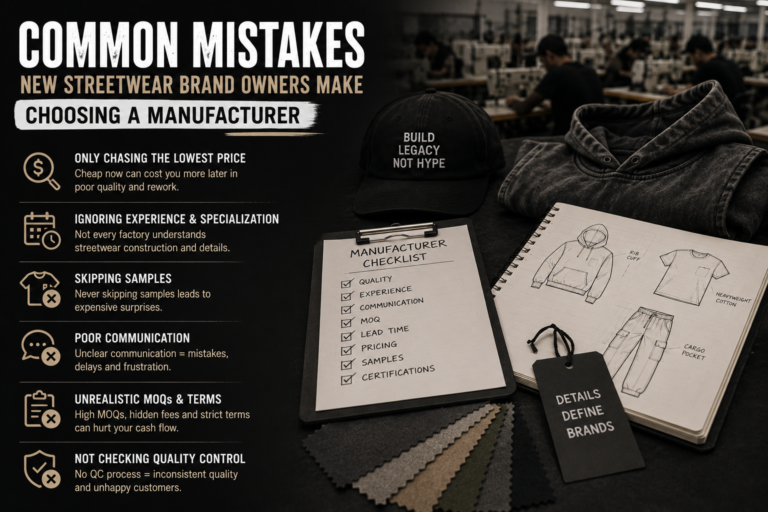
Common Mistakes New Streetwear Brand Owners Make – Choosing a Manufacturer

One major reason why a lot of new businesses in the streetwear market fail is that they struggle with their manufacturing partners. While streetwear markets are competent, the success of a brand is dependent on the right choice of manufacturing partners who can balance all three standards of quality, consistency, and manufacturing capacity.

When streetwear brand make mistakes choosing manufacturer, it is usually because new streetwear brand owners are solely focused on price and not on the other three factors of quality, communication, and production capacity. This results in multiple challenges for the new brand including delays, unsatisfactory standards in products, and poor brand values. Many businesses explore structured production systems through Fashionwear Manufacturer to understand how professional apparel development actually works.

Why Choosing the Right Manufacturer Matters

Choosing a good manufacturer is essential for success at any streetwear brand. Bad manufacturing decisions lead to inconsistent sizing, weak stitching, and poor fabric quality.

These issues remove customer confidence and stifle brand growth. That is why many successful businesses rely on experienced suppliers such as Streetwear Manufacturer to maintain quality and production stability across all orders.

Common Streetwear Brand Make Mistakes choosing manufacturer

Focusing Only on Low Price

Picking a manufacturer based on low cost is a big mistake new brands make. Buyers do need to be cost conscious. However, looking for a cheaper option almost always backfires. When a manufacturer is that cheap, they cut costs on quality of fabric and stitching. A brand will be better off spending a little more, saving their stitching and fabric quality. Without that, their reputation will be impacted.

Ignoring Sample Testing

A mistake that many new brands make is forgoing samples, which is something that should never be done. If brands do not sample, fabrics can be structurally weak, fit can be completely off and stitching can be horrible before mass production.

Poor Communication with Manufacturers

Communication is of utmost importance in production. Startups tend to offer vague tech packs. Many incorporate little to no measurements or design specifications. In providing little to no detail, errors become inevitable.

How to Avoid Streetwear Brand Make Mistakes choosing manufacturer

Work with Experienced Production Partners

Choosing experienced manufacturers helps reduce risk and improve product consistency. Many brands prefer working with Fashion Jacket Manufacturer for structured production and reliable quality control.

Always Approve Samples Before Bulk Orders

Sampling confirms that the finished product meets your requirements. It allows companies to assess quality, sizing, and fabric performance without committing to bulk production.

  • Working with a verified manufacturer and following a proper sampling process helps brands avoid costly production errors and ensures long-term product consistency.

Plan Your Budget and Production Strategy

A budget helps keep costs in check. Brands with early budget planning scale faster and control quality and pricing better.

Expanding Beyond Basic Manufacturing Choices

Successful streetwear brands do not depend on a limited selection of products. To establish a dominant position in the market, they cover the spectrum from hoodies, to tees, to joggers, to entire collections.

Many businesses scale production through Hoodies Manufacturer to create winter collections, while others use T-Shirts Manufacturer to build everyday essentials.

Conclusion

The streetwear brand make mistakes choosing manufacturer process makes clear that design and manufacturing go hand in hand. Pick a bad supplier and you end up with a failed product.

Brands that emphasize communication, sampling, and worked manufacturing partners create scalable, successful, and profitable streetwear businesses.

FAQs

What is the worst thing you can do when picking a manufacturer?

Prioritizing the lowest price over quality and their ability to produce.

What is the sampling process in manufacturing?

It allows for the testing of the fabric, stitching, and overall fit before the main production run begins.

What should I pay attention to when selecting a streetwear manufacturer?

You should take into account their level of experience, their consistency of quality, their ability to communicate, and their capacity of production.

Are smaller brands allowed to collaborate with licensed professionals, such as manufacturers, who can produce mass production?

There are many manufacturers that help to accommodate small brands in the beginning with flexible scaling of production.