Home Blog Page 14

10 Most Popular T-Shirt Styles for Men, Women & Kids

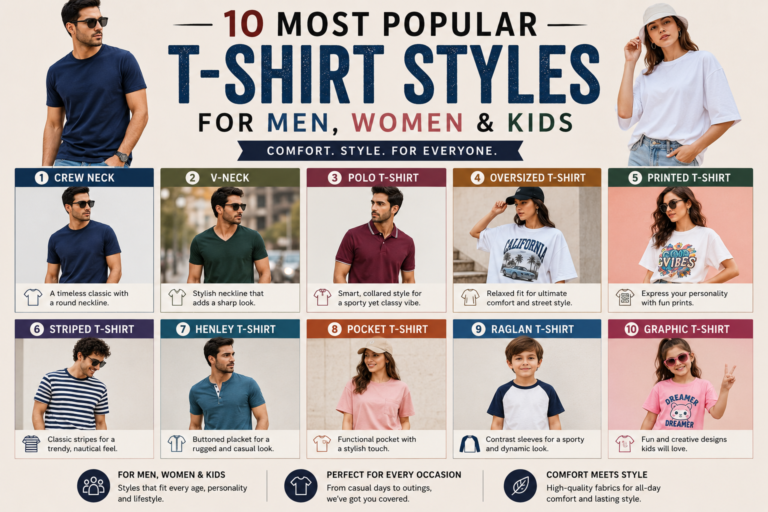
T-shirts are the backbone of almost every clothing brand. They sell consistently, serve every demographic, and work across casual, streetwear, and lifestyle markets simultaneously. But not every t-shirt style performs equally and knowing the 10 most popular t-shirt styles across men, women, and kids helps brands build collections with genuine commercial intention behind every product decision. Here’s your complete guide.

Classic Crew Neck T-Shirt

The crew neck is the most universally purchased t-shirt style across all demographics globally. Clean round neckline, short sleeves, and a simple silhouette its timeless simplicity is precisely what drives consistent, year-round demand. Every serious fashion brand needs a crew neck t-shirt as the foundation of their range.

Mid-weight cotton between 180 and 220gsm suits classic crew necks well comfortable enough for all-day wear while providing enough body to hold a clean shape consistently through repeated washing.

Oversized Graphic T-Shirt

Oversized graphic tees are the dominant force in contemporary streetwear and youth fashion. Bold artwork, typography, and brand imagery printed across a heavyweight oversized canvas create powerful visual statements that drive strong social media engagement and brand recognition simultaneously.

This style anchors streetwear collections globally — and for brands building community-driven fashion audiences, the graphic tee is often the single most important product in the entire range.

V-Neck T-Shirt

V-neck t-shirts elongate the neckline and create a slightly more dressed-up appearance than crew necks making them popular across smart-casual and lifestyle fashion markets. They suit men’s and women’s collections equally and perform strongly as layering pieces under fashion jackets and knitwear.

Lightweight to mid-weight cotton between 150 and 190gsm works best for v-necks — allowing the neckline to lie flat and maintain its shape without heavy fabric pulling the v-opening out of position.

Longline T-Shirt

Longline t-shirts extend significantly below the hip sometimes reaching mid-thigh creating a layered, fashion-forward silhouette that suits streetwear and contemporary casual wear markets powerfully. They pair naturally with slim joggers and fitted bottoms creating balanced proportions that photograph well and style effortlessly.

The extended length makes longline tees particularly popular in modest fashion markets providing additional coverage that works beautifully within Islamic fashion collections without sacrificing contemporary aesthetic appeal.

Polo T-Shirt

Polo t-shirts occupy the smart-casual space between formal shirts and casual tees making them genuinely versatile sellers across multiple market segments. Collar construction, button placket, and slightly structured body create a polished appearance that works for professional casual environments, lifestyle branding, and premium basics collections equally well.

Pique cotton fabric with its distinctive textured weave is the traditional choice for polo production, providing breathability, structure, and a premium appearance that plain jersey cotton cannot replicate.

Crop Top T-Shirt

Crop tops hit above the natural waist creating a fashion-forward silhouette that drives strong sales across women’s streetwear, athleisure, and lifestyle collections. They pair beautifully with high-waisted bottoms and co-ord sets creating complete outfit combinations that photograph powerfully and convert strongly in e-commerce environments.

This style performs particularly well for brands targeting younger female demographics who actively follow fashion trends and build outfit-focused wardrobes around versatile pieces they can style multiple ways.

Henley T-Shirt

Henley t-shirts feature a collarless neckline with a short button placket creating a distinctive, slightly elevated appearance that sits between a crew neck and a polo. They carry strong heritage and lifestyle appeal resonating powerfully with premium casualwear customers who want something more interesting than a plain crew neck without the formality of a full collar.

Henley styles work consistently across men’s collections and they pair particularly well with tracksuits and casualwear ranges targeting lifestyle-driven male customers.

Ringer T-Shirt

Ringer t-shirts feature contrasting color bands at the collar and sleeve hems creating a retro-inspired aesthetic that resonates strongly with vintage, streetwear, and youth fashion markets. The color contrast detail adds visual interest without requiring print or embroidery making ringers a cost-effective way to create distinctive, eye-catching products within a t-shirt collection.

This style suits brands building around 90s and Y2K aesthetic references a trend that continues driving strong commercial performance across youth and streetwear fashion segments in 2025.

Kids Graphic T-Shirt

Kids graphic t-shirts are among the highest-volume selling products in children’s fashion globally. Parents buy them constantly — for school, play, and casual occasions — and children actively express preferences for designs they connect with personally. Bold colors, fun characters, and playful typography all perform strongly across different age ranges within the kids market.

A professional t-shirts manufacturer produces kids graphic tees with child-safe inks, soft pre-shrunk fabrics, and durable print techniques that maintain vibrancy through the repeated washing children’s clothing demands.

Performance T-Shirt

Performance t-shirts use moisture-wicking, quick-drying synthetic fabrics typically polyester or polyester-elastane blends to serve customers who want athletic functionality from their everyday casual clothing. They bridge the activewear and casual fashion markets — attracting customers who maintain active lifestyles and refuse to compromise on performance even in their non-gym wardrobes.

This style suits brands targeting health-conscious, active lifestyle customers and pairs naturally with joggers and hoodies to create complete active lifestyle collections that serve the customer across every part of their daily routine.

Building Your T-Shirt Collection Strategically

The 10 most popular t-shirt styles each serve distinct customers across men’s, women’s, and kids markets. Smart brands don’t launch all ten simultaneously — they identify their core customer, select four to six styles that serve that customer most directly, and expand from there as revenue and market understanding grow.

Working with a reliable fashionwear manufacturer ensures consistent fabric quality, accurate pattern making, and strong construction standards across every t-shirt style in your collection — so each product reflects the same brand quality your customers experience every time they shop.

Conclusion

Understanding the 10 most popular t-shirt styles for men, women, and kids gives your brand the foundation to build collections with genuine commercial confidence. Each style serves a real customer need across specific markets and demographics — and covering the right combination for your brand’s positioning creates a t-shirt range that sells consistently, builds brand recognition, and gives every customer who discovers your brand a compelling reason to keep coming back season after season.

FAQS

Which t-shirt style sells most consistently across all demographics?

The classic crew neck t-shirt consistently outperforms all other styles globally — its universal appeal across genders, ages, and markets makes it the most reliable year-round seller in virtually every fashion brand’s range.

What fabric works best across most t-shirt styles?

100% cotton or cotton-polyester blends between 160 and 220gsm suit most t-shirt styles well — providing comfort, durability, print quality, and the consistent hand-feel customers expect across casual and streetwear price points.

Can all 10 t-shirt styles be produced under a private label?

Yes. All styles support full private label customization including custom fabrics, colors, graphics, labels, and packaging — giving your brand complete creative and commercial control over every piece in your collection.

How many t-shirt styles should a new fashion brand launch with initially?

Start with three to four styles — typically a crew neck, an oversized graphic, and one or two styles relevant to your specific market segment. This covers your broadest customer base without overextending your initial production investment.
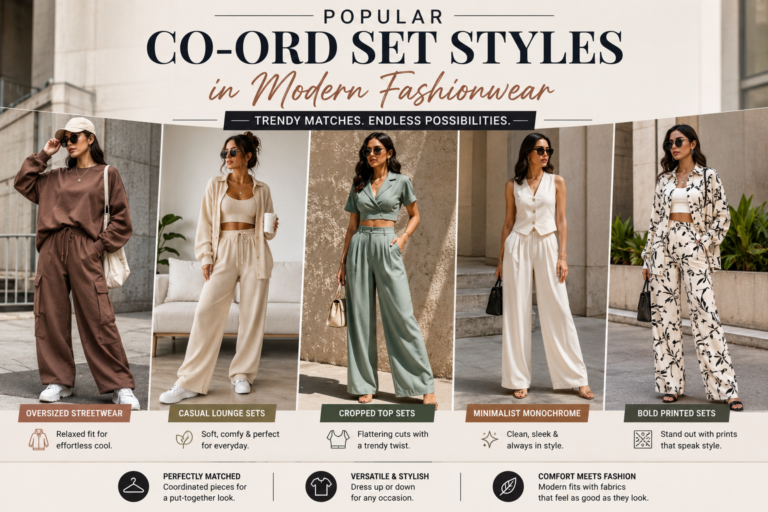
Popular Co-Ord Set Styles in Modern Fashionwear

Few product categories have grown as fast or as consistently as co-ord sets in modern fashion. Matching two-piece outfits — coordinated in fabric, color, and design — solve a genuine daily problem for customers who want to look intentionally styled without spending significant time or effort figuring out what goes together. Understanding the most popular co-ord set styles helps fashion brands build collections that serve this growing demand with genuine commercial intelligence behind every product decision.

Why Co-Ord Sets Are Dominating Modern Fashion

Co-ord sets win commercially for a simple reason — they deliver immediate value to the customer. One purchase creates a complete, cohesive outfit. No styling uncertainty. No mismatched pieces. No decision fatigue. That convenience drives strong impulse purchasing, higher average order values, and genuinely better customer satisfaction scores than individual separates sold independently.

From a brand perspective, co-ords also create powerful visual marketing opportunities. A matching set photographs as a complete look — making social media content, e-commerce imagery, and influencer partnerships significantly more impactful than individual garment shots ever achieve alone.

Hoodie and Jogger Co-Ord Set

The hoodie and jogger co-ord is the most commercially powerful matching set in contemporary casualwear. Matching fabric, color, and design details across a pullover or zip-up hoodie and coordinating jogger bottoms creates an effortlessly complete casual outfit that sells powerfully across genders, demographics, and markets globally.

Heavyweight cotton fleece between 300 and 380gsm suits this style best — providing the comfort, structure, and premium feel that customers expect when they invest in a complete matching set. A reliable co-ord set manufacturer ensures fabric dye lots match precisely across both pieces — because even slight color variation between the hoodie and jogger undermines the entire matched aesthetic customers are paying for.

Brands producing hoodies and joggers individually find hoodie-jogger co-ords a natural, high-value extension — maximizing return from existing manufacturing relationships while delivering a significantly stronger product offering to their customer base.

Tracksuit Co-Ord Set

Tracksuit co-ords — matching zip-up jackets or bomber tops with coordinating track pants — carry strong athletic heritage and contemporary streetwear appeal simultaneously. They work across sport-inspired fashion, casual lifestyle branding, and premium loungewear markets with equal commercial strength.

Tricot, interlock, and French terry fabrics all perform well for tracksuit co-ords depending on target market and price positioning. Brands building tracksuits find that premium fabric choices — particularly velour, satin-finish tricot, and heavyweight French terry — elevate tracksuit co-ords into genuine luxury casualwear territory that commands significantly stronger retail prices.

Crop Top and Wide-Leg Trouser Co-Ord

The crop top and wide-leg trouser combination is one of the strongest performing women’s co-ord styles in contemporary fashion. The contrast between the abbreviated top and the voluminous wide-leg bottom creates a balanced, fashion-forward silhouette that photographs powerfully and suits multiple occasions from daytime casual to relaxed evening dressing.

Linen blends, satin fabrics, and lightweight cotton all suit this style depending on seasonal positioning. This co-ord works particularly well for brands targeting resort, summer, and occasion wear markets — where the polished matched aesthetic feels appropriate for social occasions without requiring formal dressing.Blazer and Trouser Co-Ord Set

Blazer and trouser co-ords bring tailored sophistication to the matching set category — creating smart-casual and semi-formal outfit solutions that serve professional, occasion, and elevated casual markets simultaneously. They perform strongly for brands targeting working women, occasion wear customers, and premium lifestyle markets where polish and professionalism matter alongside contemporary style.

Structured fabrics — ponte knit, tweed blends, and cotton canvas — work best for blazer co-ords, providing the body and structure needed to hold a tailored silhouette cleanly across both the jacket and trouser pieces.

Knit Co-Ord Set

Knit co-ord sets — matching knit tops and bottoms in coordinated yarn weights and stitch patterns — represent one of knitwear’s strongest commercial opportunities across autumn and winter seasons. Ribbed knit sets, cable knit combinations, and fine gauge co-ords each serve different market segments within the same broad knitwear category.

Brands building knitwear collections find knit co-ords among their highest-performing cold-weather products — because the matching set format drives higher spend per transaction than individual knitwear pieces sold separately.

Shorts Co-Ord Set

Shorts co-ord sets — matching tops with coordinating short bottoms — perform strongly across summer, resort, and warm-climate markets. T-shirt and shorts co-ords serve casual lifestyle markets. Bralette and shorts combinations target beach and resort wear. Oversized tee and matching shorts serve streetwear and youth fashion customers.

The versatility of the shorts co-ord format makes it one of the most accessible co-ord categories for new brands to enter — simpler construction than trouser styles and strong seasonal demand that creates reliable annual sell-through without heavy markdown pressure.

Modest Co-Ord Set

Modest co-ord sets serve the growing Islamic fashion market with full coverage matching pieces — long-sleeve tops with wide-leg trousers or skirts in coordinating fabrics and modest silhouettes. This style performs powerfully across Muslim consumer markets globally and increasingly attracts modest dressing customers beyond exclusively Islamic fashion audiences.

Opaque, fluid fabrics — ponte knit, modal blends, and structured viscose — work best for modest co-ords, providing coverage performance alongside the contemporary aesthetic that today’s modest fashion consumer actively seeks. Brands serving Islamic fashionwear markets find modest co-ord sets among their strongest performing products — because the complete outfit solution is particularly valued by customers who prioritize modest coverage across every piece they wear simultaneously.

Streetwear Co-Ord Set

Streetwear co-ords combine matching oversized tops — graphic tees, hoodies, or sweatshirts — with coordinating baggy bottoms in the same fabric treatment or colorway. Bold graphics, tonal colorways, and statement prints all work powerfully across this style — creating the kind of head-to-toe brand impact that streetwear customers actively seek and social media algorithms consistently reward.

Brands building streetwear collections find co-ord sets among their strongest drop release products — because the complete matching look creates immediate visual impact that drives rapid sell-through when launched through social media and influencer marketing channels.

Building Your Co-Ord Set Collection

The most successful co-ord set collections don’t launch all styles simultaneously. They identify two to three styles that serve their core customer most directly — then expand strategically as revenue and market understanding grow with each seasonal collection.

Working with a professional fashionwear manufacturer who understands co-ord production requirements — particularly precise fabric dye lot matching, consistent construction across both pieces, and accurate sizing that works correctly as a complete set — ensures your co-ord collection delivers the matched aesthetic your customers are specifically purchasing for.

Conclusion

The most popular co-ord set styles in modern fashion each solve the same fundamental customer problem — effortless, complete, intentionally styled outfits in one purchase. Hoodie-jogger sets anchor casual markets. Tracksuit co-ords serve athletic and streetwear audiences. Blazer sets elevate smart-casual occasions. Knit co-ords drive cold-weather revenue. Modest co-ords serve fast-growing Islamic fashion markets. Understanding which styles serve your specific customer best — and building them with the quality and fabric precision that matching sets demand — turns your co-ord collection into one of the most commercially reliable product categories your brand produces.

FAQs

What makes co-ord sets more commercially valuable than individual separates?

Co-ord sets deliver higher average order values, stronger customer satisfaction, and more powerful visual marketing impact than individual separates — because one purchase creates a complete, cohesive outfit that requires no additional styling effort from the customer.

How important is fabric dye lot matching in co-ord set production?

Critically important. Even slight color variation between co-ord pieces undermines the entire matched aesthetic customers are purchasing specifically for — making precise dye lot matching a non-negotiable quality requirement across every co-ord set production run.

Can co-ord sets be produced under a private label with full customization?

Absolutely. All co-ord styles support full private label customization including custom fabrics, colors, prints, hardware, labels, and packaging — giving your brand complete creative and commercial control over every set in your collection.

How many co-ord set styles should a new fashion brand launch with initially?

Start with two to three styles that serve your core customer most directly. This covers your broadest market without overextending initial investment — and gives you clear sales data to guide intelligent collection expansion with each subsequent season.

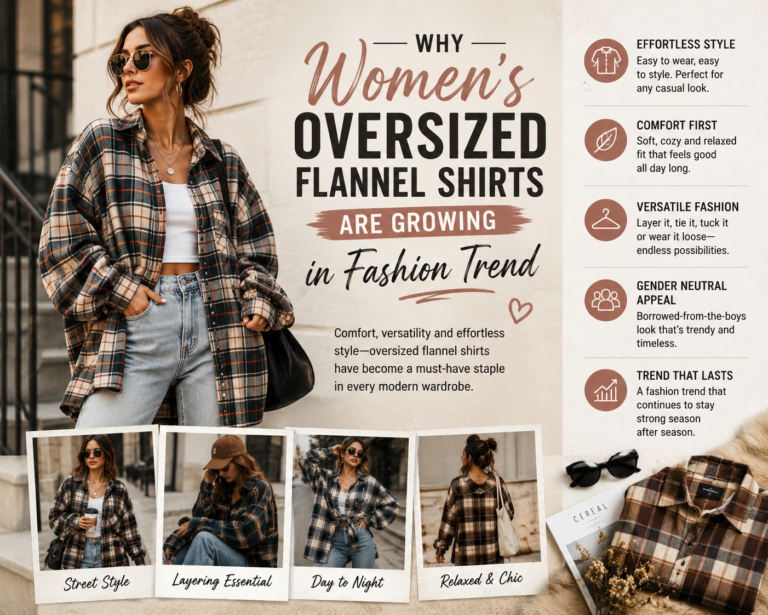
Why Women’s Oversized Flannel Shirts Growing & Fashion Trend

Trends in fashion can be seasonal, even annual. Some things get better with age. A prime example is nowadays, Oversized Flannel Shirts. Women are leaning into relaxed, flattering, and fashionable clothes that can easily be worn all day. This movement in fashion has led the growth of oversized clothes as the fastest growing phenomenon in the clothing industry.

Recently, comfort has eclipsed narrow-fitting aesthetics, and that’s obvious with the outdoor popularity of Oversized Flannel Shirts. Their widespread appearances from social media to street clothing and casual everyday dressing are all well-deserved. Their fit, soft fabric, and contemporary look, are well-suited to women of all ages.

Many apparel brands are now expanding their collections through services like Fashionwear Manufacturer because oversized fashion is attracting huge customer demand globally.

Comfort Changed Women’s Fashion

One major reason Oversized Flannel Shirts are popular is comfort. Busy women have no time to fuss with outfits; they want clothes that look stylish and are easy to wear. As fashion has started to embrace personal comfort, snug and restrictive clothing have started to fade from the scene. Oversized stylings have started to reign supreme in contemporary wardrobes.

Flannelt shirts are comfortable, adaptable, and warm. Women can wear these shirts and style them in various ways. Balance between style an comfort can be seen with the increase in popularity of oversized clothing.

Today, many streetwear brands are also using services like Streetwear Manufacturer to create relaxed fashion collections that match current market trends.

Social Media Made Oversized Fashion More Popular

Oversized Flannel Shirts have been really popularized with the booming social media presence. These shirts have been advertised and styled across various social media. Women especially have begun to embrace the oversized look.

Women adore oversized flannel shirts because of their versatility with several outfits. An example would be:

  • Women wear them with jeans and sneakers
  • Many style them over crop tops or hoodies
  • Some prefer pairing them with biker shorts

This flexibility allows women to combine inexpensive pieces into highly fashionable outfits. Also, oversized clothing trends photograph well, making them popular among younger audiences on social media.

Brands creating casual collections often combine oversized trends with services like Casual Wear Manufacturer to meet changing customer preferences.

Oversized Fashion Works in Every Season

Oversized Flannel Shirts are great for year-round use. Women use them in winter, spring, summer, and fall, and their versatility is evident. In winter, they be worn as layered shirts, and in spring and fall they can be used as light jackets.

This versatility increases their value in fashion collections. Customers prefer clothing items that can be styled multiple ways instead of pieces limited to one season only. As a result, oversized flannel shirts continue gaining attention in global fashion markets.

Many fashion labels now pair oversized flannel styles with collections developed through Hoodies Manufacturer because layered streetwear outfits remain highly popular.

Women Love Relaxed Streetwear Looks

Modern streetwear fashion focuses heavily on relaxed silhouettes. Because of this, Oversized Flannel Shirts fit perfectly into current trends. Women now prefer outfits that look effortless yet fashionable at the same time.

Oversized flannel shirts help create confident and modern streetwear looks. In addition, they work for different body types, which makes them even more popular among women.

Some of the most common streetwear combinations include:

  • Oversized flannel shirts with joggers
  • Loose flannel styling with cargo pants
  • Layered oversized outfits with t-shirts

Fashion businesses expanding their streetwear lines often work with Joggers Manufacturer and Cargo Pants Manufacturer to create complete matching collections.

Fashion Brands Are Investing More in Oversized Trends

Oversized Flannel Shirts are a growing customer preference each year. Because of this, fashion brands are putting more resources into oversized collections. Today, shoppers expect oversized items in all price tiers from elevated to accessible.

Additionally, oversized flannel shirts can be all sorts of customizations. Brands can play around with plaid patterns, brushed fabric, and oversized cuts, as well as contemporary color blends. Because of this, brands can create one of a kind products within competitive markets.

Eco Jersey is helping clothing brands design oversized collections that are comfortable, durable, and uphold contemporary style.

Oversized Flannel Shirts Support Modern Fashion Needs

Modern shoppers consider far more features than just looks when picking their apparel. Practicality, durability, and longevity of a garment are non-negotiable must-have features. This is one of the reasons Oversized Flannel Shirts are growing in popularity.

Women’s oversized flannel shirts can be worn for a variety of occasions. Flannel shirts can be used for traveling, shopping, studying or even just for relaxing. Their loose fit is perfect for almost any occasion and is trendy. It is also a body positive way of fashion because loose silhouettes can be worn by any body type comfortably.

As long as comfort remains the focus for clothing, fashion will likely continue to favor oversized flannel.

Conclusion

Trends in women’s fashion are linked to the growing popularity of Oversized Flannel Shirts. Today’s women opt for clothing that is comfortable, versatile, and stylish to accommodate all the demands of day-to-day life. Flannel shirts are a classic, and because they offer these features, they are dominating today’s women’s fashion trends.

Oversized flannel shirts have cemented their place in global trendsetting styles, ranging from streetwear to social media.

FAQs

What can women wear with Oversized Flannel Shirts?

Women commonly pair Oversized Flannel Shirts with jeans, joggers, cargo pants, hoodies, and sneakers.

Why are fashion brands focusing on oversized fashion?

Brands invest in oversized fashion because customers increasingly prefer relaxed, comfortable, and versatile clothing styles.

Why are Oversized Flannel Shirts popular today?

Women love Oversized Flannel Shirts because they combine comfort, warmth, and modern streetwear fashion in one outfit.

Can Oversized Flannel Shirts be worn year-round?

Yes, Oversized Flannel Shirts can be styled in winter, spring, and autumn through layering and lightweight outfit combinations.

Are Oversized Flannel Shirts part of streetwear fashion?

Yes, Oversized Flannel Shirts are now a major part of modern streetwear and casual fashion collections.

What can women wear with Oversized Flannel Shirts?

Women commonly pair Oversized Flannel Shirts with jeans, joggers, cargo pants, hoodies, and sneakers.

Why are fashion brands focusing on oversized fashion?

Brands invest in oversized fashion because customers increasingly prefer relaxed, comfortable, and versatile clothing styles.

Lightweight vs Heavyweight Flannel Shirts Explained

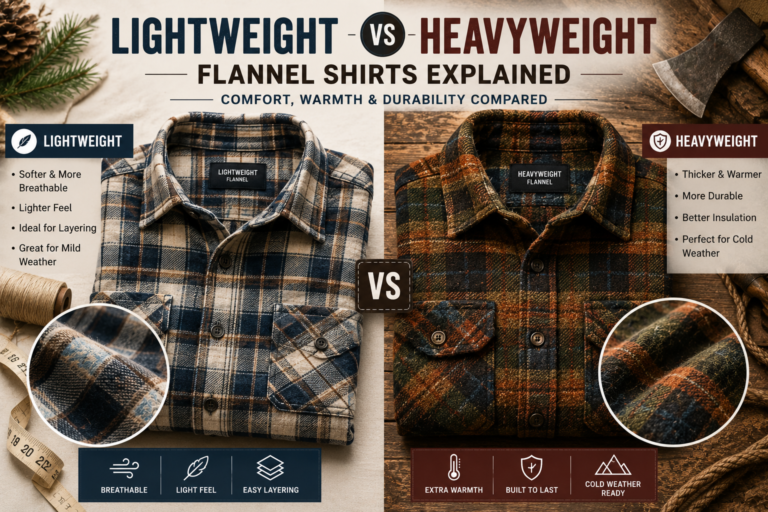
Choosing lightweight vs heavyweight flannel shirts affects a product’s performance in every season and influences the customer’s comfort on cold mornings. Flannel is a multifaceted fabric. The weight determines the shirt’s warmth, drape, and durability. Weight affects how well the shirt sells in your target market.

This guide examines lightweight and heavyweight flannel shirts and all factors your company should consider. Prospective product development should be halted until this weight decision is finalized.

What Fabric Weight Actually Means in Flannel Shirts

Flannel shirts are measured in terms of GSM, grams per square meter. GSM explains how much woven flannel is present in each square meter. With a higher GSM, the fabric is heavier, warmer, and has more structure.

For flannel shirts, lightweight fall in the GSM range of 120–170. Heavyweight flannel starts at 180 GSM and goes to 280 GSM. GSM alone is not the entire story, however. Brushing depth, weave tightness, and fiber content will go a long way to explaining how the flannel shirt performs, despite its GSM.

Furthermore, the right GSM for your collection depends on your target season, your customer’s climate, and your brand’s aesthetic direction. A flannel shirt manufacturer with genuine fabric expertise will always discuss GSM alongside these broader context factors — not in isolation.

Lightweight Flannel Shirts — What They Offer

Performance and Feel of Lightweight vs Heavyweight Flannel Shirts at Lower GSM

Lightweight flannel shirts come in the GSM range of 120–170 and provide breathability and softness unlike any heavier flannel. They have a beautiful drape, a gentle feel against the skin, and suit many body types. Those who run warm, live in milder climates, or need a shirt for spring and autumn readily choose lightweight flannel.

Moreover, lightweight flannel shirts layer exceptionally well. They sit comfortably under a jacket or over a base layer without adding bulk — which makes them a natural fit for brands building coordinated casualwear ranges that include hoodies, sweatshirts, and outerwear pieces designed to be worn together.

Marketing content also benefits from the use of lightweight flannel. The fabric naturally conforms to the body, moves well for action shots, and presents the relaxed and effortless style that has become popular on social media and e-commerce business photography.

Where Lightweight Flannel Falls Short

Lightweight flannel has its drawbacks. First, flannel shirts are typically built with a GSM over 140. If they aren’t, consumers with a fabric weight to quality correlation may feel like they wasted their money. Shirts made with lightweight flannel are further lacking in ability to provide insulation in cold weather. Consumers looking for warmth in their flannel purchase will be disappointed to find that a shirt made with lightweight flannel feels like just another woven cotton shirt.

Secondly, stress points on a flannel like the collar edges and cuffs can lead to excessive pilling. This is especially true if the flannel is of lower quality construction. Thus, at lightweight GSMs, quality of fabric and finish is of utmost importance

Heavyweight Flannel Shirts — What They Offer

Performance and Feel of Lightweight vs Heavyweight Flannel Shirts at Higher GSM

Flannel shirts weighing between 180-280 GSM offer warmth, durability, and a premium texture that lightweight flannel does not. They signal quality and a serious garment to customers, and that touch drives buying at a premium.*

Flannel shirts weighing 180-280 GSM insulate well. The fibers trap body heat, so shirts made from this fabric keep the wearer warm and are significantly warmer than a standard, run-of-the-mill flannel. Flannel fabric weighing 180-280 GSM is ideal for work, play, and everything in between, and provides warmth. *

Heavyweight flannel fabric features the following:

  • Warmth and seasonal relevance: Heavyweight flannel shirts are genuinely suited to autumn and winter collections. Their insulation performance justifies the seasonal purchase — customers buy them specifically because they keep warm, and the fabric delivers on that promise consistently across weeks and months of wear.
  • Durability and longevity: Heavier flannel construction holds up better through extended wear and repeated washing than lighter GSM options. The denser weave resists pilling, fraying, and thinning at stress points more effectively — which suits brands building casual wear collections positioned around quality and longevity rather than seasonal fast fashion.

Where Heavyweight Flannel Falls Short

There are also downsides to heavy flannels. They are limited less across seasons. A 250 GSM flannel is simply too warm for customers during the spring and early autumn. A heavier flannel will also cost the customer more as there is more fabric which affects pricing and profit.

Moreover, heavyweight flannel is more challenging to produce cleanly. Heavier fabrics require more precise handling during cutting to avoid distortion, and seam finishing must be specified carefully to prevent bulk buildup at construction joins. Brands working with ECO JERSEY on heavyweight flannel development benefit from working with a manufacturer experienced in handling dense woven fabrics — because the construction demands are genuinely different from lighter garment categories.

Lightweight vs Heavyweight Flannel Shirts — Direct Comparison

Understanding lightweight vs heavyweight flannel shirts becomes clearer when the key factors sit side by side:

  • Seasonality: Lightweight flannel suits spring, autumn, and mild winter conditions. Heavyweight flannel is built for genuine autumn and winter warmth — particularly in colder climates where customers expect real insulation from a flannel shirt purchase.
  • Layering: Lightweight flannel layers easily under jackets and over base layers without bulk. Heavyweight flannel works better as a standalone outer layer in cold conditions — layering under outerwear can feel restrictive due to the fabric’s structure and weight.
  • Price point: Lightweight flannel suits accessible to mid-market pricing. Heavyweight flannel justifies premium pricing through superior warmth, fabric substance, and longevity — making it the right choice for brands positioning at the quality end of the fashionwear market.
  • Customer profile: Lightweight flannel appeals to a broader customer base — including warmer-climate customers, younger demographics, and buyers looking for versatile year-round layering pieces. Heavyweight flannel appeals to customers who prioritize warmth, durability, and premium quality above versatility and price accessibility.

Choosing the Right Weight for Your Flannel Collection

The lightweight vs heavyweight flannel shirts decision should follow your customer and collection strategy — not trend or personal preference alone.

Choose lightweight flannel if your brand serves customers in mild climates, you are building a year-round casualwear range, or your collection includes coordinated sets and layering pieces where fabric bulk would compromise the overall look. Brands building co-ord sets and tracksuits alongside flannel shirts benefit from lightweight GSM options that coordinate visually and functionally with knit and jersey fabrications in the same range.

Choose heavyweight flannel if your brand targets colder climates, you are building a dedicated autumn-winter collection, or your brand positioning centers on premium quality and longevity. Brands building streetwear collections with heritage or outdoor influences — where heavyweight flannel overshirts and workwear-inspired shirts are core seasonal pieces — find heavyweight options align naturally with their aesthetic and customer expectations.

In addition, several successful brands place both weights within the same flannel collection. Lightweight options reside at the accessible everyday level, while heavyweight options sit at the premium seasonal pieces level. This approach encompasses various customer segments and eliminates the need for two completely different collections. ECO JERSEY supports brands that are expanding across both weight ranges in a collection. It offers fabric sourcing, guides, samples, and manages production of lightweight and heavyweight flannel styles at the same time.

Flannel Across Your Broader Range

Flannel shirts rarely exist in isolation within a fashionwear collection. They sit alongside joggers, cargo pants, knitwear, and outerwear — and the fabric weight decisions you make for your flannel shirts affect how the full range coordinates visually and functionally across the season.

A lightweight flannel shirt looks great with jersey joggers or a thin-knit sweater; they have a similar fabric drape. A heavyweight flannel shirt matches nicely with structured cargo pants, or a woven outerwear jacket; they match in fabric density and seasonal use.

Because of this, keep your lightweight and heavyweight flannel shirts in mind as part of your whole range strategy. The fabric weight of shirts is important to think about how that shirt works with the whole collection that your customer wears together.

Final Thoughts

Lightweight and heavyweight flannel shirts cater to specific customers, seasons, and brand strategies. Lightweight flannel wins on versatility and layering opportunity for year-round usage. Heavyweight flannel wins by being warmer, giving a premium feel, and lasting for extended seasonal use.

Your brand’s actual customer climate, the style of your brand, and the seasonal position of your collection determine the right choice. Get the alignment correct and your flannel shirts could be the top performers in your range.

FAQs

What GSM is considered lightweight vs heavyweight for flannel shirts?

Lightweight flannel shirts typically fall in the 120–170 GSM range. Heavyweight flannel sits between 180–280 GSM. The higher the GSM, the warmer, more structured, and more premium the shirt feels in the hand and during wear.

Can lightweight flannel shirts be worn in winter?

Lightweight flannel works in mild winter conditions — particularly when layered under a jacket or coat. However, it does not provide meaningful insulation in genuinely cold climates, where heavyweight flannel is the more appropriate choice.

Is heavyweight flannel harder to produce than lightweight?

Yes. Heavier flannel fabrics require more precise cutting to avoid distortion and more careful seam finishing to prevent bulk at construction joins. Working with a manufacturer experienced in heavyweight woven fabrics makes a significant difference in production quality.

Which flannel weight suits a streetwear brand better?

Most streetwear brands gravitate toward heavyweight flannel — particularly for overshirt and workwear-inspired styles where fabric substance and visual weight are central to the aesthetic. Lightweight flannel can work for streetwear layering pieces but is less common in heritage-influenced streetwear collections.

Cotton vs Wool Flannel Shirts: Key Differences

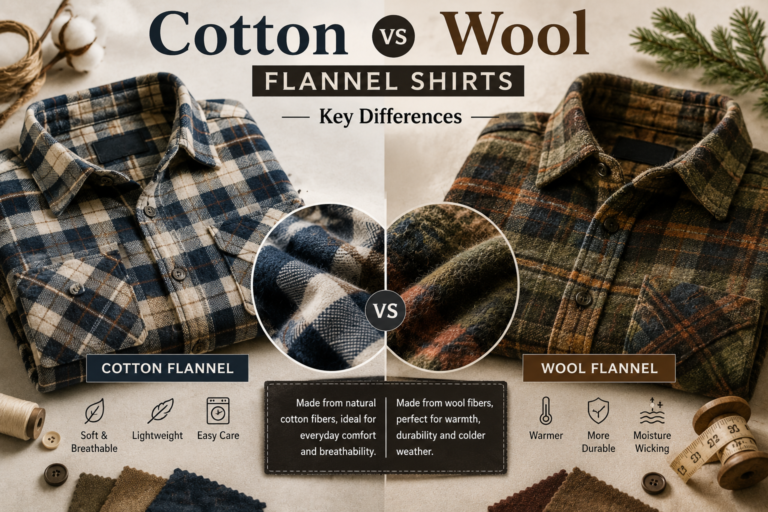
In the casual and leisure wear industry, there are few debates quite as prominent as cotton versus wool flannel shirts. Outside of the products bearing these names, both materials produce shirts that have a recognizable soft and fuzzy texture. Despite these similarities, they serve very different purposes. Understanding these differences allows brands to optimize their product offering.

This guide addresses cotton vs wool flannel shirts for a number of important considerations — warmth, feel, durability, care factors, and market placement. This provides adequate insight for you to select the best material to align with your target customer and your brand values.

What Makes a Fabric Flannel?

Let’s begin with some flannel fundamentals before delving into cotton versus wool flannel shirts. Technically, “flannel” isn’t a type of fabric. It’s actually a style of fabric construction. Flannel is defined as a textile that is woven loosely, then been brushed on one or both of its sides to raise the surface fibers. As a result, flannel has a characteristic texture that is soft and slightly fuzzy.

That said, both cotton and wool can become flannel with the right brushing technique. As far as the construction of the fabric goes, they’re the same. Everything else is determined by the fiber that is brushed. Through that fiber content, you have the lasting preservation of the shape, and the feel of the fabric. How warm the fabric feels is due to the performance of that fiber content. Additionally, the brushing also determines the care instructions for the garment.

Cotton vs Wool Flannel Shirts — Warmth and Insulation

How Cotton Flannel Performs for Warmth

Cotton flannel shirts are warm — but not exceptionally so. Cotton is a natural insulator that traps a moderate amount of body heat between the brushed fibers. This makes cotton flannel shirts comfortable for mild to cool weather conditions — autumn layering, casual indoor wear, and light outdoor activity.

However, cotton flannel loses its insulating properties when it gets wet. Wet cotton conducts heat away from the body rather than retaining it, which makes cotton flannel a poor choice for genuinely cold or damp outdoor conditions.

Brands building casual wear flannel collections typically gravitate toward cotton flannel for this reason — it suits the everyday, moderate-temperature environments their customers actually wear casual shirts in.

How Wool Flannel Performs for Warmth

Wool flannel shirts, being warmer than cotton flannel, are better insulated due to the crimp structure of the wool fibers. Crimps structure traps air which leads to a higher efficiency of air insulation. Also, even when wool absorbs moisture, its insulating properties are still retained.

Therefore, wool flannel suits outdoor-oriented collections, heritage workwear aesthetics, and any brand targeting customers in colder climates. Brands building across a fashionwear range that includes outerwear-adjacent layering pieces should consider wool flannel for their heavier seasonal shirt styles.

Cotton vs Wool Flannel Shirts — Feel and Comfort

Cotton Flannel Feel

Most customers prefer a cotton flannel fabric due to its smooth and gentle touch against the skin. Flannel is breathable and is a great fabric for people who have sensitive skin. In addition, cotton flannel improves in softness over time. The shirt flannel is literally built to get better with time.

This characteristic makes cotton flannel extremely popular in streetwear and casual fashion contexts, where comfort and wearability across long periods are as important as visual aesthetic. Brands building co-ord sets that include flannel shirt styles typically choose cotton flannel for this immediate comfort and versatility.

Wool Flannel Feel

How soft or scratchy wool flannel is depends on what wool was used. Cotton flannel can feel scratchy on the skin while fine merino wool does not. Low grade wool does not feel soft and can be scratchy, and that is not a problem a customer should face when buying a product.

Therefore, brands choosing wool flannel must specify wool grade clearly in their tech packs. A flannel shirt manufacturer experienced in wool fabric handling will advise on appropriate wool grades for direct skin contact versus outerwear-weight applications.

Cotton vs Wool Flannel Shirts — Durability

Cotton and wool flannel shirts both are sturdy— but age in their unique ways.

The durability of cotton flannels hinges on the weight of the fabric and the tightness of the weave. Cotton flannels gauged at a weight of 180–220 GSM maintain their structure and look over years of washing and wearing. Flannels weighing below 150 GSM soften and thin with the fraying of edges at opening and closure points and the formation of fabric pills within one or two years of washing and wearing.

Wool flannels age differently. Wool flannels stand the test of time better because the wool fibers are resilient to compression. Wool flannels keep their shape better of longer than cotton flannels. However, the long-term and better structures of wool flannels attract moths, which ruin flannels over time if (or when) they are stored away. Wool flannels also require better care when washing to avoid the shrinking and felting of the structure.

Brands building premium fashion jacket and shirt ranges where longevity is a key brand message often choose wool flannel specifically because its durability story resonates with customers investing in quality over fast fashion.

Cotton vs Wool Flannel Shirts — Care Requirements

Caring for Cotton Flannel Shirts

For ease of care, you can’t go past flannel shirts. Most styles of flannel shirts made from cotton can be washed in the machine and tumble dried with your average laundry detergent and a bit of heat. When customers are looking for casual everyday apparel, the low level of care required for flannel shirts is a good selling point for customers who don’t want to be constantly considering their laundry schedule.

Furthermore, cotton flannel shirts can be ironed easily — which matters for brands building tracksuits and coordinated casualwear ranges where shirt styles need to look sharp alongside other collection pieces.

Caring for Wool Flannel Shirts

Flannel made from wool needs to be handled with more care than plain cotton flannel. Wool flannel typically needs to be hand washed, or washed in a gentle cycle using cold water. High temperatures can cause wool to shrink or felt. Feling is a quality issue that cannot be undone and customers will complain about that immediately.

Brands selling wool flannel need to explain how delicate the shirt is on the product labels and care instructions. Customers with no experience with wool and flannel together will treat the shirt like a cotton shirt, and will be quick to blame the brand for the damaged shirt.

Cotton vs Wool Flannel Shirts — Price and Market Positioning

Cotton vs wool flannel shirts also differ significantly in cost and market positioning.

Cotton flannel sits comfortably in the mid-market price range. It is accessible, widely produced, and suits brands building volume casualwear collections at competitive price points. It works well alongside hoodies, joggers, and sweatshirts in coordinated casualwear ranges where consistent quality at accessible price points is the brand promise.

Wool flannel sits firmly in the premium segment. Raw wool fabric costs significantly more than cotton flannel per metre — and that cost difference flows through to retail pricing. Therefore, wool flannel suits brands with a premium positioning, a heritage or outdoor aesthetic, and a customer base willing to pay more for superior warmth, authenticity, and longevity.

Here is a quick comparison across the key decision factors:

  • Warmth: Cotton flannel suits mild to cool conditions. Wool flannel suits genuinely cold and damp environments where superior insulation is required.
  • Skin feel: Cotton flannel is universally gentle. Wool flannel varies by grade — fine merino is soft, coarser grades can irritate sensitive skin.
  • Care: Cotton flannel is machine washable and low maintenance. Wool flannel requires gentle washing and careful temperature management to prevent shrinkage.
  • Price point: Cotton flannel suits mid-market collections. Wool flannel suits premium positioning with a higher retail price justified by warmth and quality.
  • Durability: Heavy cotton flannel is long-lasting. Wool flannel holds structure longer but requires proper storage to prevent moth damage.

Which Fabric Is Right for Your Brand?

When deciding whether to offer cotton or wool flannel shirts, it is as much about the brand offering as it is about fabric performance.

Select cotton flannel if your brand targets everyday, casual apparel consumers who appreciate a relaxed, low-maintenance shirt. Cotton flannel is a good fit for a wide customer base and coordinated casualwear collections. For a first flannel launch, cotton is usually the safer pick.

Select wool flannel if your brand targets the premium segment who values warmth, authenticity, and conscience-based purchasing. Wool flannel is a good fit to heritage aesthetics and outdoor-based fashion. It is ideal for brand position that values the premium segment in the market based on true performance and value.

Brands building knitwear and woven shirt ranges together often carry both — cotton flannel for their accessible everyday tier and wool flannel for their premium seasonal collection. That two-tier approach lets a brand serve multiple customer segments within one coherent range. Additionally, brands with Islamic fashionwear collections can benefit from both options — cotton flannel for modest everyday layering pieces and wool flannel for premium outerwear-weight styles suited to cooler climates.

Final Thoughts

Cotton and wool flannel shirts both provide unique and valuable offerings to a line. Cotton is readily available, easy to care for, and comfortable against bare skin. Wool wins with added warmth, is more durable, and sits at a more premium price. Neither option is innately better — the right option will cater to both your customer’s lifestyle and your brand’s goals.

Prioritize your customer, and then let your knowledge help you choose a fabric.

FAQs

What is the main difference between cotton vs wool flannel shirts?

Cotton flannel is softer against sensitive skin, easier to care for, and suits mild to cool conditions. Wool flannel is significantly warmer, more durable in structure, and better suited to cold or damp environments — but requires more careful washing and carries a higher price point.

Is wool flannel itchy to wear?

It depends on the wool grade. Fine merino wool flannel is soft and comfortable against bare skin. Coarser wool grades can cause irritation for people with sensitive skin. Always specify wool grade carefully when developing wool flannel shirt styles.

Which flannel shirt fabric is easier to care for?

Cotton flannel is significantly easier to care for. It is machine washable at standard temperatures and tumble dries easily. Wool flannel requires gentle washing at cold temperatures and careful handling to prevent shrinkage and felting.

Can cotton and wool be blended in flannel shirts?

Yes. Cotton-wool blends combine the softness and care ease of cotton with some of the warmth and structure of wool. They suit mid-market positioning and offer a practical compromise between the two pure fiber options.

Which flannel shirt fabric suits a premium brand better?

Wool flannel suits premium brand positioning more strongly. Its superior warmth, natural resilience, and heritage authenticity justify higher retail pricing and resonate with customers investing in quality garments built to last multiple seasons.

Best Material For Cargo Pants Complete Guide To Fashion Brands

Selecting a material for cargo pants goes beyond sourcing a fabric due to its impact on comfort, durability, and even its desirability in the market. The best materials for cargo pants need to focus on their strength, their ability to allow air circulation, and of course current fashion trends. As a fashion brand, understanding which materials to select when manufacturing cargo pants to fit the season trends and the target market can impact your product significantly. Fashion companies often combine product development with full apparel solutions like Eco Jersey Fashion Wear Manufacturer to create complete clothing collections. In modern fashion, the Best Material For Cargo Pants is not just about fabric—it is about performance and brand identity.

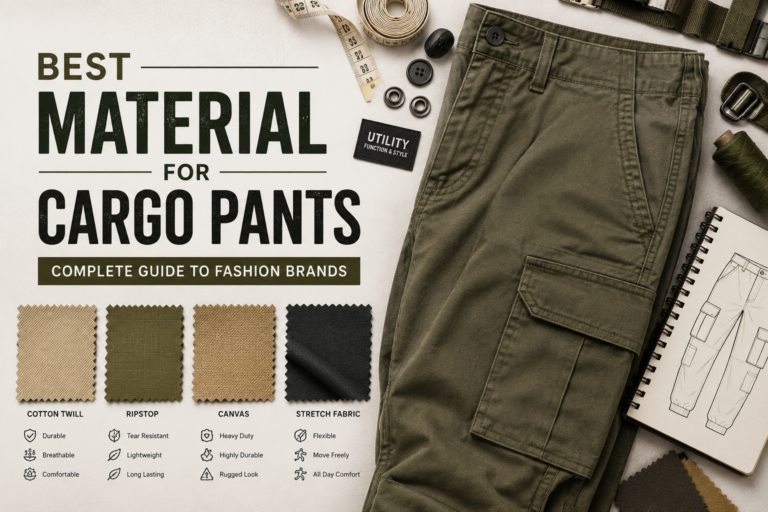
Cotton as Best Material For Cargo Pants

Cotton is one of the most favorable materials to use when manufacturing cargo pants as it is a relatively soft, breathable and it is generally comfortable to use in the course of the day. Due to these aspects of cotton cargo pants as well as the fashion trends in streetwear and casual pants, cotton is the favorable material often used. The sustainable and natural texture of cotton makes it a great option for long term use as a vital fabric in casual wear pants collections. Fashion manufacturers that focus on casual clothing lines often include products like Eco Jersey Casual Wear Manufacturer to support brands that want the Best Material For Cargo Pants in lightweight and wearable designs.

Twill Fabric and Best Material For Cargo Pants

Twill fabric is also a great addition to the list of materials for cargo pants. It is ingrained with a diagonal weave and due to that a great degree of durability and resistance to wear and tear. Twill often recommended addition to cargo pants is due to its use in outdoor and work wear styles as a great option of fabric that is relatively easier to work with, and also gives a great degree of structure.

Brands often combine such fabrics with trendy categories like Eco Jersey Streetwear Manufacturer to build strong urban fashion lines featuring the Best Material For Cargo Pants.

Ripstop Fabric for Durable Cargo Pants

For Cargo Pants, Ripstop Fabric is one of the popular choices as it’s specially designed to resist tearing and ripping. The high level of durability ripstop fabric and cargo pants have a grid-like structure, making them a favorite choice for many military-inspired and utility fashion brands. The use of ripstop fabric is common in outdoor fashion segments where durability is very important. Manufacturers also expand their collections into items like Eco Jersey Cargo Pants Manufacturer using ripstop as the Best Material For Cargo Pants for performance wear.

Key Features of Best Material For Cargo Pants

  • Strong stitching compatibility
  • Breathable and comfortable fabric
  • Long-lasting durability
  • Suitable for casual and streetwear styles
  • Easy maintenance and washing

These features determine the Best Material For Cargo Pants and help brands decide what is best for their target audience.

Polyester Blends in Modern Cargo Pants

Polyester blends are also becoming popular as the Best Material For Cargo Pants in modern fashion. They offer flexibility, wrinkle resistance, and affordability. Many brands use blended fabrics when producing the Best Material For Cargo Pants for fast fashion markets. Clothing manufacturers that also produce seasonal items like Eco Jersey Hoodies Manufacturer help brands maintain consistency across collections that include the Best Material For Cargo Pants.

Best Material For Cargo Pants in Fashion Industry

In the fashion industry, the Best Material For Cargo Pants depends on brand positioning. Luxury brands may prefer high-quality cotton or twill, while budget brands often choose polyester blends. The Best Material For Cargo Pants is also influenced by trends, climate, and customer expectations. Many brands expand their production into lifestyle apparel such as Eco Jersey Tracksuits Manufacturer to complement collections built around the Best Material For Cargo Pants.

Conclusion

Conclusion Researching the right materials to utilize for the production of quality cargo pants is one of the many vital tasks for the successful building block of the fashion brand. Comfort of cotton, structure of twill, and durability of ripstop fabric, has a unique value in product quality. Depending on brand vision, target market and pricing strategy, the Best Material for Cargo Pants may vary. Understanding these aspects of the developing materials, ripstop, cotton and twill, fashion brands can develop cargo pants of quality and durability in range to customer’s satisfaction and also reinforce the brand identity in the competitive world of apparel.

FAQs

What is the best material for cargo pants?

Cotton, twill, and ripstop are commonly considered the Best Material For Cargo Pants due to their durability and comfort.

Are cargo pants made from cotton good?

Yes, cotton is soft and breathable, making it one of the Best Material For Cargo Pants for everyday wear.

Which fabric lasts the longest for cargo pants?

Ripstop fabric is often the Best Material For Cargo Pants when durability is the top priority.

Cotton vs Fleece vs French Terry Sweatshirts — Which Material Is Best

Selecting the optimal fabric is one of the most crucial tasks for any fashion business. When launching a new streetwear brand or even refreshing a winter collection, the better you understand fabric quality, the better you can serve customers. As a result, many fashion entrepreneurs pivot and ask their suppliers, Which Material Is Best For Sweatshirts, in comparison orders for cotton, fleece, or French terry.

Modern apparel brands often partner with professional manufacturers like Eco Jersey Fashionwear Manufacturer to produce stylish and high-quality garments for global markets.

Understanding Sweatshirt Fabrics

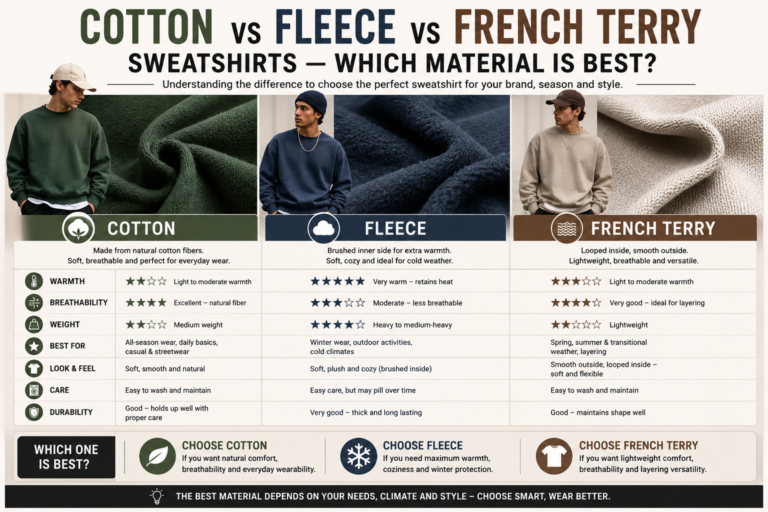
Answering Which Material Is Best For Sweatshirts requires careful consideration of sweatshirts fabrics and how they stand up to everyday use. Cotton sweatshirts are lightly breathable. Fleece sweatshirts are warm and soft, and French terry sweatshirts are flexible and comfortable.

Many modern urban brands use premium fabric options through Streetwear Manufacturer Services because fabric quality strongly affects customer satisfaction and brand image.

Cotton Sweatshirts for Everyday Comfort

The most straightforward answer to Which Material Is Best For Sweatshirts is cotton. Because it is soft and breathable, it’s great for light weather. Cotton sweatshirts are great for casual and everyday use.

Fashion startups focused on relaxed apparel often work with Casual Wear Manufacturer Solutions to create comfortable collections that appeal to modern consumers.

Fleece Sweatshirts for Warmth

Fleece is probably the most popular answer to Which Material Is Best For Sweatshirts. With their insulating softness and warmth, they are great for winter collections and outdoor fashion. Fleece is popular in street and athletic fashion because of their cozy, stylish nature.

Brands producing modest and seasonal collections frequently explore products from Islamic Fashionwear Manufacturer to create fashionable yet comfortable clothing ranges.

French Terry for Versatility

French terry is now a trending fabric in what material is best in sweatshirts. It is lighter than fleece and more structured than basic cotton. It absorbs moisture and is great for both activewear and lifestyle apparel.

Many premium brands manufacture matching apparel through Hoodies Manufacturer Services because French terry hoodies and sweatshirts remain highly demanded in modern fashion.

Which Material Is Best For Sweatshirts

When choosing a fabric to best fit your collection, you have to think about your customer and your end product. There is a range of options, and it is important to consider them all to establish a good collection.

  • Lightweight Comfort and Breathability: Best Fabric is Cotton.
  • Warmth and Winter: Best Fabric is Fleece.
  • Year-Round Fashion and Flexibility: Best Fabric is French Terry.

Brands creating matching activewear collections often combine sweatshirts with products from Joggers Manufacturer Experts to build coordinated fashion sets.

Choosing the Right Fabric for Your Brand

If your customers priority is comfort, then cotton is a great option. If you are looking for a premium sweatshirt, then you will want to choose fleece. French terry fabric is a good option if you want a fabric that is soft and comfortable.

Many apparel businesses also expand their collections with products from Sweatshirts Manufacturer to maintain consistent quality across seasonal fashion lines.

Sweatshirt Trends in Modern Fashion

A lot of the time, people will sacrifice comfort for style, but fortunately, designers have been choosing fabrics that are both comfortable and trendy. Because of features like premium fabrics, neutral colors, and oversized fits, there has been a gradual increase in the popularity and the necessity of sweatshirts. For this reason, there has also been an increase in the consideration of Which Material is Best for Sweatshirts Design.

Many streetwear collections also include products from Cargo Pants Manufacturer to create complete urban fashion outfits.

Conclusion

If you’re considering which material to use for sweatshirt production, you’re likely prioritizing customer preferences and the weather where you sell your products. While each option has its advantages, understanding Which Material Is Best For Sweatshirts, helps your brand create a balanced product in the market. With the appropriate material, partnering with knowledgeable manufacturers, and product focus, a brand’s modern marketplace challenges can be addressed and a positive brand reputation can be established.

FAQs

Which material is best for sweatshirts?

Cotton fleece is considered one of the best materials for sweatshirts because it offers softness, warmth, and comfort for everyday wear.

Are polyester sweatshirts good quality?

Yes, polyester sweatshirts are durable, lightweight, and resistant to shrinking, making them ideal for sportswear and activewear.

Why are cotton sweatshirts popular?

Cotton sweatshirts are breathable, comfortable, and gentle on the skin, which makes them perfect for casual daily use.

Custom Dyeing & Washing Techniques for Cargo Pants

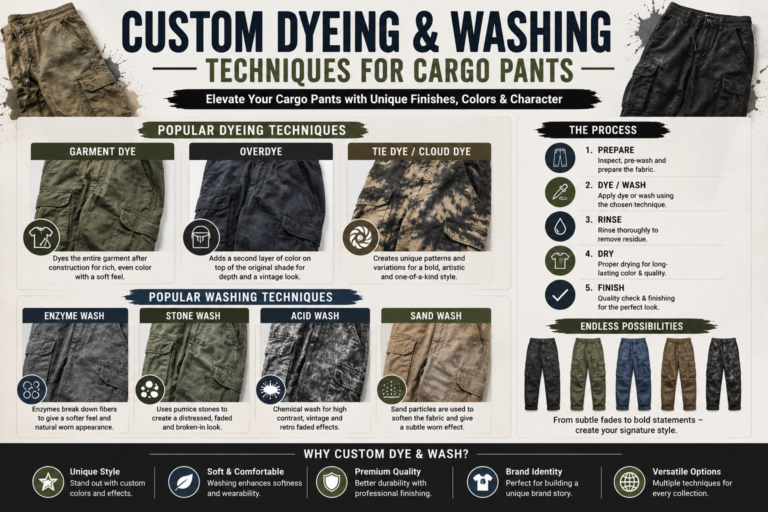
Dyeing and washing are crucial aspects of manufacturing that differentiate modern streetwear styles from classic styles. Due to their customizable finishes, washed and dyed cargo pants create looks coveted for their evidence of craftsmanship. Many clothing companies prefer working with full fashion manufacturers like Fashion Wear Manufacturer to get professional results in Dyeing & Washing cargo pants production.

Importance of Dyeing & Washing cargo pants in Fashion Industry

The popularity of washed and dyed cargo pants is attributable to consumer demand for fashionable and long-lasting products. Corporate streetwear styles employ varied washing techniques to provide cargo pants with vintage, distressed, and rugged appearances. Many brands that focus on urban fashion also expand into related categories like Streetwear Manufacturer to improve their Dyeing & Washing cargo pants collections.

Types of Dyeing & Washing cargo pants Techniques

Dyeing & Washing Cargo Pants uses multiple techniques to achieve different finishes. Popular techniques include Gunmetal Garment Dyeing, Enzyme Wash, Stone Wash, and Acid Wash. Each technique escalates the touch and visibility of Dyeing & Washing Cargo Pants making them appealing to the consumer. Furthermore, several Companies engage advanced processing to enhance Fabric Preparation for Dyeing & Washing Cargo Pantscasual wear lines like Casual Wear Manufacturer to support Dyeing & Washing cargo pants production.

Fabric Preparation for Dyeing & Washing cargo pants

Fabric Preparation is very important before creating Dyeing & Washing Cargo Pants. The Fabric has to be cleaned, made to be pliable, and tested to ensure it can hold the dye. If not, Dyeing & Washing Cargo Pants might not produce the required outcome. Many modest and Islamic Fashion Brands also employ the same strategy.Many Islamic and modest fashion brands also use similar preparation methods through Islamic Fashionwear Manufacturer while working on Dyeing & Washing cargo pants designs.

Key Steps in Dyeing & Washing cargo pants (Built-in Point Paragraph)

  • Fabric selection and pre-treatment
  • Dye application with controlled temperature
  • Washing process for texture effect
  • Drying and finishing for final look

Each step is crucial in Dyeing & Washing cargo pants because even a small mistake can affect the final product quality. Proper execution ensures that Dyeing & Washing cargo pants delivers premium results for fashion brands. Many hoodie and streetwear brands also apply similar finishing methods in Hoodies Manufacturer to maintain consistent Dyeing & Washing cargo pants standards.

Advanced Washing Effects in Dyeing & Washing cargo pants

Modern factories use advanced washing techniques in Dyeing & Washing Cargo Pants to produce better outcomes. Among these stone wash, enzyme wash, and pigment wash stand out. Each technique adds more depth and style to the Dyeing & Washing Cargo Pants creations. Jogger and activewear production lines also apply similar techniques through Joggers Manufacturer for improved Dyeing & Washing cargo pants quality.

Quality Control in Dyeing & Washing cargo pants

Quality control guarantees that each Dyeing & Washing cargo pant corresponds to the color and uniformity and strength and quality of the fabric. Nil inspection may lead to the loss of sales for Dyeing & Washing cargo pants. Quality control is embraced during the manufacture of sweatshirts. systems in Sweatshirts Manufacturer for better Dyeing & Washing cargo pants outcomes.

Benefits of Dyeing & Washing cargo pants for Brands

Uniqueness of product is the greatest advantage of Dyeing & Washing cargo pants. Brands can design distinctive styles that grab attention in the marketplace. High-quality finishes are demanded by consumers, and likewise, Dyeing & Washing cargo pants elevates a brand’s reputation. Cargo pants manufacturers often collaborate with full fashion suppliers like Cargo Pants Manufacturer to improve Dyeing & Washing cargo pants production efficiency.

Conclusion

In the fashion business, Dyeing & Washing cargo pants is always at the center of the production of stylish and quality apparel. Preserving style and quality in Dyeing & Washing cargo pants is not only in the end process, but in every step involved. Companies that invest in Dyeing & Washing cargo pants formulations attract strong market identity and build customer confidence.

FAQs

What is Dyeing & Washing cargo pants?

It is a garment finishing process used to create unique colors, textures, and styles in cargo pants.

Why is Dyeing & Washing cargo pants important?

It improves fabric appearance, durability, and fashion appeal for modern streetwear brands.

Which washing method is best for cargo pants?

Enzyme and stone washing are most commonly used for premium Dyeing & Washing cargo pants results.

Slim Fit vs Baggy Cargo Pants: Which Style Is Trending Now

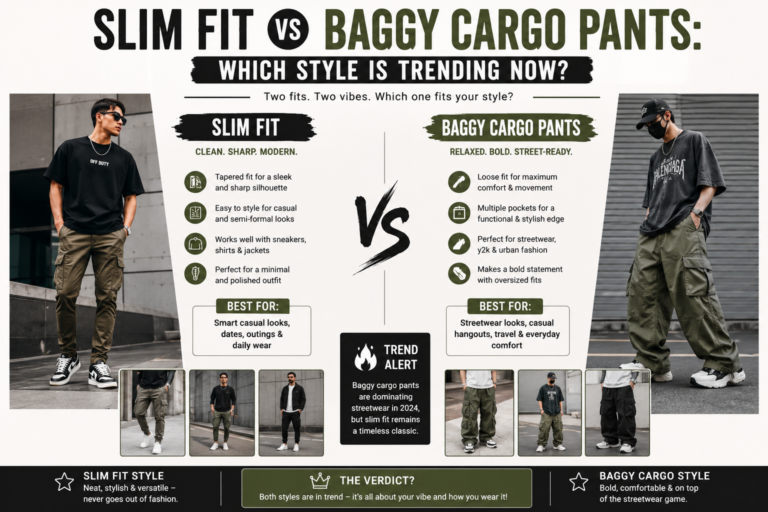
Cargo pants dominate streetwear, even as other fashion trends evolve. Companies must address the Slim Fit vs Baggy Cargo Pants debates since modern customers’ needs are different from customers from a few decades ago. Some customers appreciate the modern slim-fit cargo pants. Others prefer the classic oversized style for convenience and comfort.

Modern fashion labels working with professional suppliers like Eco Jersey Fashionwear Manufacturer are now producing multiple cargo styles to meet changing market demand and customer preferences.

Slim Fit vs Baggy Cargo Pants in Modern Streetwear

When discussing Slim Fit vs Baggy Cargo Pants, it’s important to understand streetwear culture. Baggy cargo pants have faded in and out of style primarily for customers aged 18 – 25. For that same age group, slim-fit cargo pants are also a trendy option for a polished and structured look.

Street fashion brands often combine cargo pants with oversized hoodies from Streetwear Manufacturer Services to create trendy collections inspired by modern urban fashion.

Comfort and Everyday Wear

Slim Fit vs Baggy Cargo Pants also come down to comfort. Baggy cargo pants provide extra breathing room and movement, and are therefore great for daily casual wear. Because of the structure of slim-fit cargo pants, they can be worn for casual outings and even more formal dinner outings.

Many brands pair these cargos with comfortable basics from Casual Wear Manufacturer to create versatile outfits that work for both streetwear and everyday fashion.

Slim Fit vs Baggy Cargo Pants for Different Audiences

Slim Fit vs Baggy Cargo Pants preferences also depend on age. Baggy pants, for example, appeal more to younger customers who enjoy oversized clothing, versus older customers how prefer pants with a more formal fit.

Fashion companies targeting modest fashion trends also style cargo pants with products from Islamic Fashionwear Manufacturer to create comfortable and stylish modest outfits.

Styling Trends in 2026

Emerging trends in the fashion industry reveal high demand for the relaxed and oversize aesthetic. Many believe Baggy Cargo Pants are dominating the debate for the market with Slim Fit vs. Baggy Cargo Pants. That being said, Slim Fit Cargos still have their place as they can easily be utilized for smart casual styling.

Popular combinations include cargo pants with premium essentials from Hoodies Manufacturer and modern layered outfits for street-inspired fashion collections.

Why Fashion Brands Offer Both Styles

Successful clothing brands sell both styles because Slim Fit vs. Baggy Cargo Pants might appeal to some customers depending on their geographical location. Selling a range of styles attracts a larger audience and ultimately drives more sales.

Some brands complete their cargo collections with matching products from Joggers Manufacturer to create coordinated activewear and casual fashion lines.

Slim Fit vs Baggy Cargo Pants Styling Tips

The best choice in Slim Fit vs Baggy Cargo Pants depends on personal style and fashion goals. Here are a few quick styling ideas:

  • Baggy cargos work well with oversized sweatshirts, sneakers, and relaxed streetwear looks, while slim-fit cargos pair better with fitted jackets and clean casual outfits using products from Sweatshirts Manufacturer.

Cargo Pants in Fashion Manufacturing

Slim Fit vs. Baggy Cargo Pants is one of the biggest trends in fashion, inspiring many manufacturers to create cargo-influenced collections. To attract new business, fashion companies are using new premium materials with updated cuts and styles and better customization.

Professional suppliers such as Cargo Pants Manufacturer are helping brands create high-quality cargo collections that match modern fashion expectations.

Complete Outfit Trends with Cargo Pants

Traditionally cargo pants were only worn in Streetwear. Many companies are now offering cargo pants with flannel shirts, co-ord sets, and tracksuits to fill entire collections with the latest Slim Fit vs Baggy Cargo Pants trends.

Fashion labels often expand their collections using products from Flannel Shirt Manufacturer, Co-Ord Set Manufacturer, and Tracksuits Manufacturer for a more complete product lineup.

The Future of Cargo Fashion

As the preferences of consumers evolve, many fashion designers are confident that Slim Fit vs. Baggy Cargo Pants will too. Currently in the world of social media, oversized styles are very popular, but cargo pants that are fitted remain in high demand, due to their versatile look.

Many brands are also pairing cargos with outerwear from Fashion Jacket Manufacturer, knit essentials from Knitwear Manufacturer, and basics from T-Shirts Manufacturer to build modern fashion collections.

Conclusion

Slim Fit vs. Baggy Cargo Pants dispute will most likely come down to personal styles, comfort, and where the current fashion trends sit. Oversized styles have a stronger presence in modern streetwear than clean and refined slim styles. For a fashion brand, to remain competitive in the ever-evolving market, the best option is to have both styles available.

FAQs

Which is more popular today: slim fit or baggy cargo pants?

Baggy cargo pants are currently trending more in streetwear fashion, especially among younger audiences.

Are slim-fit cargo pants still fashionable?

Yes, slim-fit cargo pants remain popular for clean, smart casual, and minimal fashion styles.

Why are baggy cargo pants trending?

Baggy cargos offer comfort, relaxed fitting, and a modern oversized streetwear appearance.

Popular Sweatshirt Styles in Modern Streetwear Fashion

Streetwear has become one of the most influential fashion trends in the world. From oversized silhouettes to minimalist essentials, sweatshirts are now a core part of everyday fashion. Many brands are investing in high-quality apparel production through professional companies like Eco Jersey Fashionwear Manufacturer to meet the growing demand for stylish streetwear collections.

Popular Sweatshirt Styles in Today’s Fashion Industry

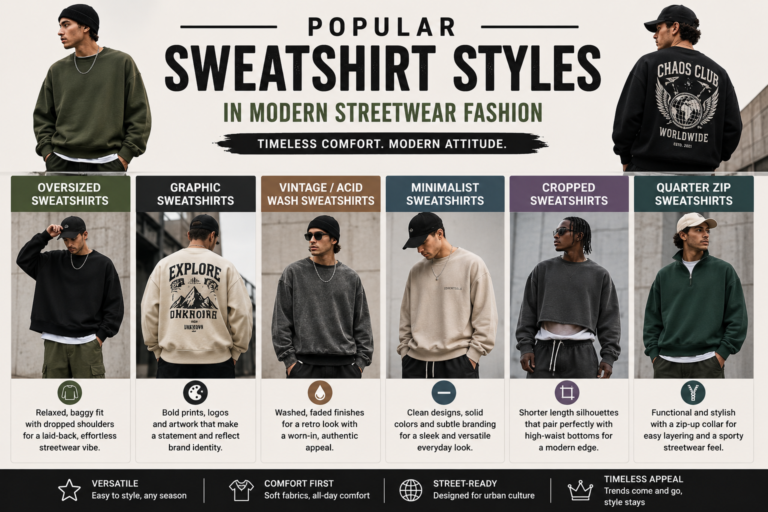
Fashion shifts with the Popular Sweatshirt Styles that are now the go-to for leisurewear. Removing sweatshirts from the list of gym-approved and winter clothing shows how they have become statement pieces worn by celebrities, influencers, and streetwear fans across the globe.

Streetwear-focused brands often collaborate with experienced producers such as Streetwear Clothing Manufacturer to create premium oversized sweatshirts, graphic designs, and relaxed-fit collections that match current fashion trends.

Oversized Sweatshirts Are Leading the Trend

Among Popular Sweatshirt Styles, the oversized sweatshirt has taken the lead. Loose-fitting sweatshirts are incredibly comfortable and stylish. Sweatshirts of this style pair perfectly with cargo pants and joggers and layered outfits of streetwear.

Fashion labels also pair oversized sweatshirts with products from Cargo Pants Manufacturer to create complete streetwear collections that appeal to younger audiences.

Minimalist Sweatshirts for Everyday Wear

A common Popular Sweatshirt Style of today that continues to take over modern fashion is the minimalist fit. Clean, unembellished, neutral color sweatshirts with the tiniest logos take the cake when it comes to casual styles.

Many clothing startups work with Casual Wear Manufacturer to produce versatile sweatshirts that customers can wear daily without sacrificing comfort or style.

Graphic and Printed Sweatshirts

Having a graphic print is a major characteristic of Popular Sweatshirt Styles and gives a brand the opportunity to have a unique and creative stamp. From bold statements to edgy designs and everything vintage in urban style, graphic prints are a must in streetwear.

Streetwear brands frequently combine sweatshirts with products from T-Shirts Manufacturer to offer layered fashion options and build complete seasonal collections.

Hooded Sweatshirts and Layered Looks

Street style favors hooded sweatshirts for their comfort and versatility. Their layering potential makes these sweatshirts among the most practical Popular Sweatshirt Styles for the modern crowd.

Many apparel businesses expand their hoodie and sweatshirt collections through Hoodies Manufacturer to keep up with changing customer preferences in the global fashion market.

Matching Sets and Coordinated Fashion

Another major trend within Popular Sweatshirt Styles is matching sets. Coordinated sweatshirts and joggers or shorts form a tidy and stylish look adaptable for everyday wear and the latest social media fashion.

Brands often create these collections with the support of Co-Ord Set Manufacturer to deliver stylish matching apparel for modern consumers.

Premium Fabrics and Comfort

The growth in the demand for Popular Sweatshirt Styles is based primarily on the element of comfort. The modern sweatshirts most coveted by customers are those made with the softest “feel”, breathable fabrics, and stitching with a premium finish.

Many fashion companies choose experienced suppliers like Knitwear Manufacturer to ensure durability and long-lasting comfort in their sweatshirt collections.

Streetwear Styling with Sweatshirts

The Popular Sweatshirt Styles of today are being layered with joggers, tracksuits, flannel shirts, and fashion jackets to curate looks in line with modern streetstyle.

Fashion brands frequently source trendy apparel from Joggers Manufacturer, Tracksuits Manufacturer, and Fashion Jacket Manufacturer to complete their streetwear product lines.

At the same time, layering sweatshirts with premium shirts from Flannel Shirt Manufacturer has become one of the most stylish streetwear combinations in recent fashion trends.

Modest Fashion and Sweatshirt Trends

The Popular Sweatshirt Styles of today are also being impacted by modest fashion, incorporating relaxed silhouettes and comfortable designs for the diversified cultural market. An instantly recognizable trend in modest streetwear is the love for big sweatshirts that feature little to no branding.

Several brands now collaborate with Islamic Fashionwear Manufacturer to create fashionable yet modest apparel for global audiences.

Conclusion

The demand for Popular Sweatshirt Styles continues to grow as streetwear fashion evolves worldwide. From oversized fits and graphic prints to minimalist and coordinated outfits, sweatshirts have become essential in modern fashion culture. Brands that focus on comfort, quality, and creative styling can successfully build strong streetwear collections that attract today’s fashion-conscious customers.

FAQs

Why are oversized sweatshirts so popular in streetwear?

Oversized sweatshirts offer comfort, relaxed styling, and a modern urban appearance that fits perfectly with current fashion trends.

What fabrics are best for sweatshirts?

Cotton blends, fleece, and knit fabrics are commonly used because they provide softness, durability, and warmth.

Are graphic sweatshirts still trending?

Yes, graphic sweatshirts remain one of the top streetwear choices because they help brands create unique visual identity.