Home Blog Page 13

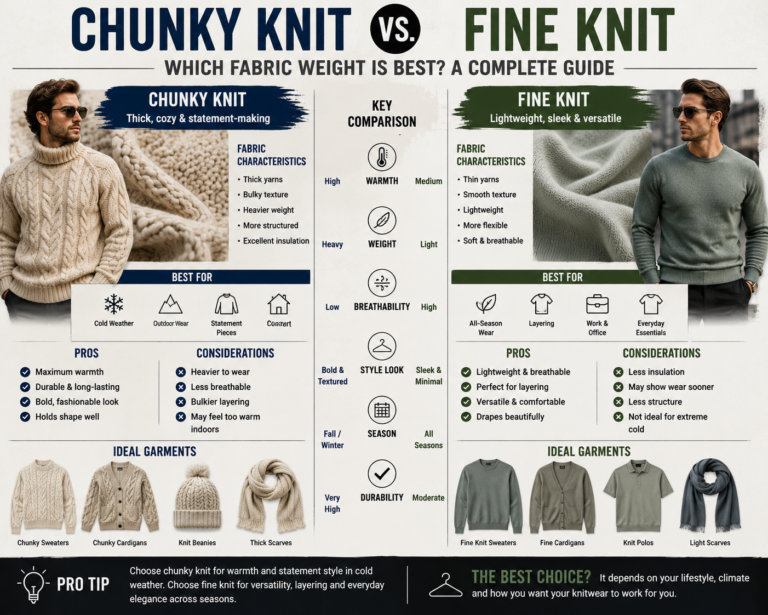
Chunky Knit vs. Fine Knit: Which Fabric Weight is Best A Complete Guide

Selecting the correct knit fabric is vital to the various stages of fashion manufacturing and design. Different weights in knit fabric can yield various looks, comfort levels, and impacts based on the season. This is especially the case with respect to the understanding of Chunky Knit vs. Fine Knit. Such an understanding aids fashion brands in curating collections that cater better to their customers.

Knitwear can be found in almost all clothing from winter fashion to knitwear to even lavish luxury apparel and everyday wear. But not all knit fabrics can be used for all designs, some require heavy textures and warm fabrics, others require lightweight fabrics that are soft and flexible. For this reason, brands must understand the differences of chunky knit versus fine knit fabrics in order to start production.

Many fashion businesses now work with professional services like Knitwear Manufacturer to create high-quality knitwear collections that match modern market trends.

What Is Chunky Knit Fabric?

Chunky knit won’t be as stretchy or pliable as regular knit, but it is softer and warmer. Plain or simple patterns won’t be as popular as more textured ones. These will be more effectively knitted at a larger scale. Because of how warm and cozy it looks, chunky knits are a sought after knitwear style in colder seasons.

Looking at Chunky Knit vs Fine Knit, as you would imagine, Chunky Knit is more popular for the usage of bold aesthetics and oversized fashion appeal. Streetwear cardigans, oversized knit sweaters, and scarves are a must-have for the winter season.

Chunky knit garments are especially popular because they create:

  • Better warmth during winter
  • A relaxed oversized appearance
  • Strong texture and visual depth

Additionally, chunky knitwear often works well in layered fashion trends. Many streetwear brands combine chunky sweaters with oversized pants and outerwear for modern seasonal collections.

Brands creating winter streetwear collections often work alongside Streetwear Manufacturer services to produce fashionable oversized knitwear designs.

What Is Fine Knit Fabric?

Fine-knit fabrics, constructed using tighter stitches and thinner yarns, result in a lighter, more flexible, and smoother final garment. When comparing Chunky Knit vs. Fine Knit, fine knits are typically preferred for styles that are elegant, fitted, and breathable.

Fine knit fabrics are commonly used in:

  • Lightweight sweaters
  • Premium t-shirts
  • Layering garments
  • Fashion tops and fitted apparel

Fine knit fabrics are less bulky and work perfectly for indoor and transitional weather clothing. Also, they have a more refined and polished look compared to thick knitwear.

Many brands producing lightweight fashion collections use Casual Wear Manufacturer solutions for modern fine-knit apparel production.

Chunky Knit vs. Fine Knit: Main Differences

Choosing between Chunky Knit and Fine Knit is essential when selecting fabric options for a collection.

Fine Knit is softer and more lightweight, while Chunky Knit is heavier and warmer. Fine Knit is better for sleek designs, while Chunky Knit is better for bold statements.

Chunky Knit fabric usually gets used during the colder months. Fine Knit fabric usually is used during the warmer months.

Casualness also differs with fine and chunky knits. Chunky knits usually are more casual, oversized, and chunkier. Fine knits are usually more refined and premium.

Fashion brands expanding seasonal apparel collections often combine knitwear production with Fashionwear Manufacturer services to develop balanced product ranges.

Which Knit Fabric Is Better for Streetwear?

Wearing big and knitted clothing has become more fashionable in streetwear. This is because modern fashion now approaches stylings of oversized silhouettes and textured fabrics.

Chunky knitted sweaters and hoodies are suitable oversized clothing inspirations for the winter. Chunky knits add background depth to social media posts, creating a better fabric textural appeal.

Modern streetwear also requires the use of fine knits in lightweight urban fashion. This leads to the consideration of fitted layering and knit tops.

Brands often combine knitwear collections with products developed through Hoodies Manufacturer because layered streetwear continues growing globally.

Choosing the Right Fabric Weight for Your Brand

When comparing Chunky Knit vs. Fine Knit, the best option depends on your target market and collection goals.

If your brand focuses on winter fashion, oversized clothing, or cozy seasonal collections, chunky knit may be the better choice. It offers warmth, comfort, and a fashionable oversized look that customers love.

Meanwhile, if your brand focuses on lightweight luxury, minimal fashion, or everyday layering pieces, fine knit may work better. Its smooth finish and flexibility make it suitable for versatile apparel collections.

Before selecting knit fabric weight, brands should consider:

  • Seasonal demand
  • Customer preferences
  • Garment functionality
  • Production costs
  • Fashion trends

Careful planning helps brands create collections that match both customer expectations and current market demand.

Why Knitwear Continues Growing in Fashion

Knitwear remains popular because consumers now prioritize comfort and versatility. Both chunky and fine knit fabrics support modern fashion needs in different ways.

Chunky knitwear offers warmth and bold styling, while fine knit provides lightweight elegance and flexibility. As a result, many successful brands include both fabric types in their collections.

Eco Jersey continues supporting fashion businesses with modern knitwear manufacturing solutions designed for changing apparel trends and customer expectations.

Conclusion

The debate around Chunky Knit vs. Fine Knit depends largely on fashion goals, climate, and customer preferences. Chunky knit fabrics work best for warmth, texture, and oversized winter fashion. Meanwhile, fine knit fabrics are ideal for lightweight, breathable, and polished clothing styles.

Both fabric weights offer unique advantages, which is why many brands include both options in their collections. Understanding these differences helps fashion businesses create stronger, trend-focused knitwear products for today’s market.

FAQs

What is the difference between Chunky Knit vs. Fine Knit?

Chunky knit uses thicker yarns for warmth and texture, while fine knit uses thinner yarns for lightweight and smooth garments.

Which is warmer, chunky knit or fine knit?

In Chunky Knit vs. Fine Knit, chunky knit is warmer because of its heavier construction and thicker yarns.

Is chunky knit good for streetwear fashion?

Yes, chunky knit is highly popular in oversized streetwear and winter fashion collections.

When should brands use fine knit fabrics?

Brands should use fine knit fabrics for lightweight sweaters, layering pieces, and elegant casual apparel.

Why is knitwear popular in modern fashion?

Knitwear remains popular because it offers comfort, flexibility, warmth, and versatile styling options for different seasons.
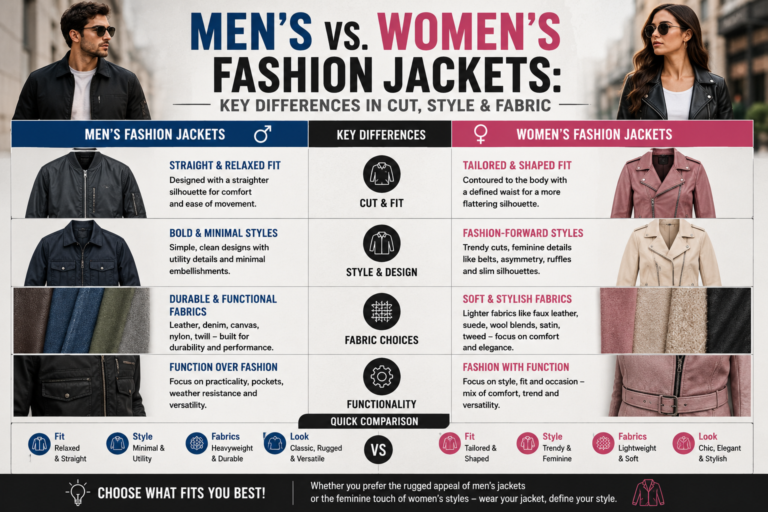
Men’s vs. Women’s Fashion Jackets: Key Differences in Cut, Style & Fabric

Men’s and women’s fashion jackets immediately show the demand from separate body shapes, style preferences, and fashion needs. Manufacturing in the modern world has brands focusing on practical, artistic cuts to achieve both comfort and design. You can explore a wide range of production styles at Eco Jersey Fashion Wear Manufacturer where different jacket categories are developed with distinct gender-based patterns.

Cut Differences in Men’s vs. Women’s Fashion Jackets

The cut shows the most men’s vs. women’s fashion jacket differences because men’s jackets are boxy and straighter, while women’s jackets are molded to be tapered for curvature. These structural differences highlight and build the body’s natural proportions.In modern apparel production like Casual Wear Manufacturer, cutting techniques are carefully adjusted to maintain gender-specific fitting standards.

Style Variations

Style is essential to specifying the differences in men’s vs. women’s fashion jackets. Men’s designs favor minimalism and rugged aesthetics, while women’s incorporate decorative styles, vivid color palettes, and fashion-forward detailing. These reflect the market demands and seasonal trends. Manufacturers such as Streetwear Manufacturer focus on evolving urban styles that influence both categories.

Fabric Selection

The sagacity of fabric Men’s vs. Women’s Fashion Jackets is clear because men’s jackets utilize hardy, more durable materials like denim or thick cotton blends, while women’s jackets may incorporate lighter fabrics like wool synesthetic blends for ease and comfort. Textile innovation is widely used in production facilities like Knitwear Manufacturer to ensure fabric diversity and performance.

Design Elements

The differences in Men’s vs. Women’s Fashion Jackets reveal men’s designs favor functionality with larger pockets, straight zippers, and practical layouts. Women’s styles are more decorative with asymmetrical cuts, belts, and stitching, while retaining functionality and appeal. Production lines such as Hoodies Manufacturer often influence modern jacket design trends.

Seasonal Adaptability

In designing Men’s and Women’s jackets, there are significant differences between winter and summer collections. For winter collections, jackets are designed with materials that combine insulation and layering. For summer collections, jackets are designed with the use of lightweight and breathable materials. Fashion adaptability is necessary for the different requirements of global markets. Many brands working with Fashion Jacket Manufacturer develop season-specific collections to meet diverse consumer needs.

Key Features Summary

Here are some important highlights of Men’s vs. Women’s Fashion Jackets:

  • Men’s jackets are constructed with straight cuts and structured shoulders.
  • Women’s Jackets
  • Women’s jackets taper to the waist and sport fitted silhouettes.
  • Jackets for both Men and Women

Manufacturers like Tracksuits Manufacturer also apply similar design principles across other apparel categories.

Conclusion

In summary, Men’s and Women’s fashion jackets have different cuts, fabrics, and styling. However, they all fulfill the needs for comfort and aesthetics. These differences help fashion brands and manufacturers to create products for different specific audiences.Even categories like cargo or utility wear from Cargo Pants Manufacturer reflect similar design logic across apparel segments.

FAQs

What is the main difference in Men’s vs. Women’s Fashion Jackets?

The main difference is the cut and fit, where men’s jackets are straighter and women’s are more fitted.

Are fabrics different in Men’s vs. Women’s Fashion Jackets?

men’s jackets often use heavier fabrics, while women’s jackets may use lighter, softer materials.

Can styles overlap in Men’s vs. Women’s Fashion Jackets?

Yes, modern fashion trends often blur the lines between both categories.

Best Fabrics for Custom Fashion Jackets From Denim & Leather to Nylon & Fleece

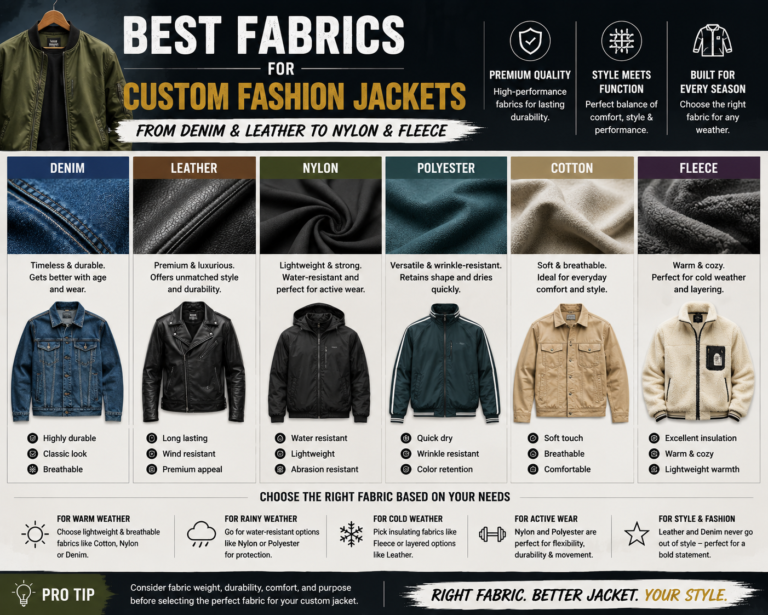
Choosing the right material is the foundation of premium outerwear production. The demand for Best Fabrics for Custom Fashion Jackets continues to grow as brands focus on durability, comfort, and style. Different fabrics define the identity of a jacket, from rugged denim looks to lightweight nylon performance wear. Manufacturers like Eco Jersey Fashionwear Manufacturer play a key role in supplying high-quality materials that align with global fashion standards. Understanding fabric properties helps brands create long-lasting and market-ready apparel. The keyword Best Fabrics for Custom Fashion Jackets is essential for designers aiming to balance aesthetics with functionality.

Denim as a Timeless Jacket Fabric Choice

Denim is a top contender in the Best Fabrics for Custom Fashion Jackets. Casual and street-style jackets require long-term wear resistance and structure, and denim delivers. With a durable, classic look, denim is an excellent choice for custom jackets. Brands sourcing from Streetwear Jacket Production often prefer denim for its versatility in both vintage and modern designs. The keyword Best Fabrics for Custom Fashion Jackets applies strongly here because denim continues to dominate seasonal fashion collections worldwide.

Leather for Premium and Luxury Outerwear

Leather is a big fabric for outerwear in the Best Fabrics Custom Fashion leather Jackets. This fabric has a premium finish, great durability, and a luxury, appealing look. This leather fabric increases brand value and customer perception. It is common for manufacturers to use organized production systems. Many manufacturers utilize structured production systems like Casual Wear Manufacturing Solutions to ensure high-quality leather jacket production. The keyword Best Fabrics for Custom Fashion Jackets highlights leather as a top-tier option for high-end fashion markets and statement pieces.

Nylon for Lightweight and Performance Jackets

Nylon is used in the Best Fabrics for Custom Fashion Jackets, and this is largely due to its low weight and high weather resistance. This fabric is excellent for sports fashion, windbreakers, and outerwear. Brands working with Islamic Fashionwear Manufacturing also explore nylon blends for modest yet functional outerwear. The keyword Best Fabrics for Custom Fashion Jackets is highly relevant in performance fashion segments where comfort and protection are essential.

Hoodies and Fleece-Based Jacket Materials

Fleece has the highest comfort in fabrics for Custom Fashion Jackets and is perfect for casual wear jackets and winter hoodies. Fleece has excellent properties:

  • Fabric has a super soft texture
  • Great insulation for cold fashion
  • Easily blends with cotton and poly
  • Popular in athleisure and streetwear

Manufacturers like Hoodies Manufacturing Experts rely heavily on fleece-based materials. The keyword Best Fabrics for Custom Fashion Jackets is especially important in this category due to increasing demand for cozy fashion apparel.

Joggers and Sweatshirt Fabric Blends in Modern Fashion

Modern fashion puts a lot of value on joggers and sweatpants. Jacket style blended fabrics are key in Best Fabrics for Custom Fashion Jackets. A common practice is the use of a cotton-polyester blend for flexibility and durability.Production facilities such as Joggers Manufacturing Unit help brands develop coordinated sets that match jackets with lower garments. The keyword Best Fabrics for Custom Fashion Jackets also extends into athleisure trends where comfort meets street fashion.

Sweatshirts and Heavyweight Fabric Innovation

When it comes to Best Fabrics for Custom Fashion Jackets, especially with winter collections and layering outfits, the materials used in sweatshirts become very important. These fabrics provide warmth and structure while still being breathable. Advanced production techniques at Sweatshirts Manufacturing Factory ensure consistency in quality and texture. The keyword Best Fabrics for Custom Fashion Jackets remains central in creating balanced designs that combine fashion with functionality.

Final Thoughts

When it comes to the Best Fabrics for Custom Fashion Jackets, striking a good balance between long lasting, comfortable, and visually appealing fabrics is a definite surefire way for success. Fabrics and materials such as denim, leather, nylon, and fleece serve their own unique purpose for jacket styles and designs. Even cargo-style innovations from Cargo Pants Manufacturing Line influence modern jacket design trends. The keyword Best Fabrics for Custom Fashion Jackets should always guide designers and brands toward making informed, market-driven decisions.More read Jacket for Men’s Stylish

FAQs

What are the Best Fabrics for Custom Fashion Jackets?

The most popular fabrics include denim, leather, nylon, fleece, cotton, and polyester blends depending on style and use.

Which fabric is most durable for jackets?

Leather and heavy-duty denim are considered the most durable options for long-lasting jackets.

What is the best fabric for lightweight jackets?

Nylon and polyester blends are best for lightweight, breathable, and weather-resistant jackets.

10 Most Popular Fashion Jackets That Are Trending Worldwide

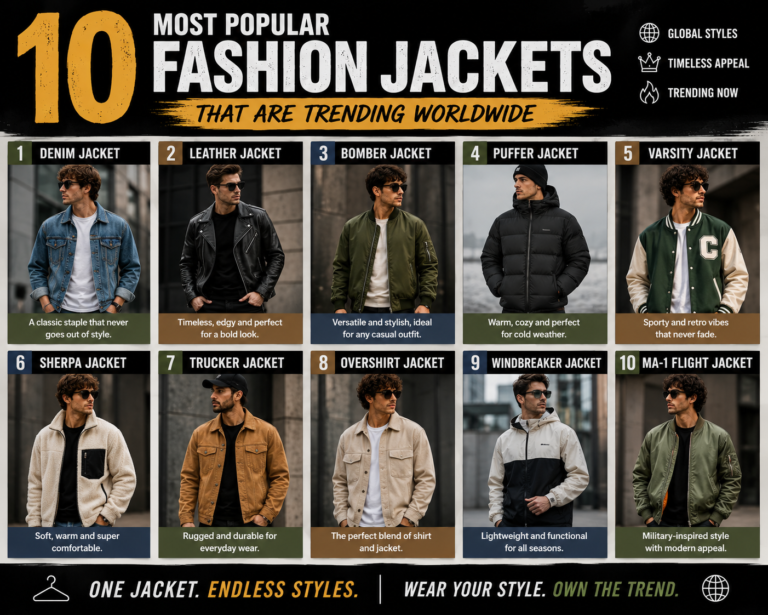
Fashion jackets have become more than just winter essentials. Around the world, they have become an important part of street style, casual wear and luxury styling. People are choosing jackets with trendy designs and comfort, from oversized fits to sporty layering. Many global brands are working with professional manufacturers like Eco Jersey Fashionwear Manufacturer to create stylish outerwear collections that attract modern customers.

10 Most Popular Fashion Jackets in Modern Fashion

These 10 Most Popular Fashion jackets include denim jackets and jackets with hoods. They also include bomber jackets. These styles are a hit in the fashion market because they go with casual outfits as well as urban fashion trends. The latest collections are often inspired by street culture. They are created by experienced designers. partners such as Streetwear Manufacturer.

Casual Jackets Are Becoming Everyday Essentials

Casual clothing continues to be popular because consumers want clothes that are comfortable but stylish. Young buyers are particularly fond of lightweight jackets in neutral colors and clean cuts. Fashion companies are focusing more on outerwear that is practical and can be worn with jeans, joggers and sneakers. Many apparel brands develop these modern styles with the help of Casual Wear Manufacturer to meet changing fashion demands.

Modest Fashion Jackets Are Expanding Worldwide

Modern jacket trends have also been influenced by the modest fashion industry. Global fashion collections are increasingly dominated by longline jackets with loose silhouettes and layered styles. These styles are elegant and versatile, while still maintaining comfort. Many international brands are now exploring modest fashion through partnerships with Islamic Fashionwear Manufacturer for premium-quality apparel production.

Hooded Jackets and Jogger Styling

Hooded Fashion Jackets are still one of the most popular categories, as they can be worn with streetwear and activewear. They are often paired with joggers to create a complete urban look. collections through Hoodies Manufacturer to maintain consistency in modern apparel lines.

Trending Street Looks With Comfortable Bottomwear

10 Most Popular Fashion Jackets is now more about the complete ensemble than a single product. Style jackets look even better when paired with premium joggers or relaxed-fit trousers. Global fashion continues to be dominated by oversized silhouettes and sports-inspired looks.Many growing brands manufacture these coordinated outfits with the support of Joggers Manufacturer for high-quality production and finishing.

Why Fashion Jackets Stay Popular

Fashion jackets continue to lead the apparel market because they offer:

  • Year-round styling flexibility
  • Comfortable layering options
  • Strong streetwear appeal
  • Easy pairing with casual outfits
  • Modern and premium appearance

Many brands also combine jackets with warm apparel items developed through Sweatshirts Manufacturer to create seasonal fashion collections.

Cargo and Utility Fashion Trends

Customers are increasingly interested in functional clothing that has extra pockets and a relaxed fit. Urban 10 Most Popular Fashion Jackets are closely linked to cargo-style jackets, oversized outerwear and other oversized pieces. To keep up with these trends, many brands work alongside Cargo Pants Manufacturer for coordinated fashionwear collections.

Flannel and Layered Fashion Jackets

In recent years, layering has been one of the 10 Most Popular Fashion Jackets trends. Layering flannel shirts over t-shirts, or even under jackets, creates stylish and casual outfits. This style is popular during the autumn and winter season. Many clothing companies now include layered fashion concepts produced by Flannel Shirt Manufacturer in their modern collections.

Conclusion

As fashion increasingly focuses on comfort, versatility and self-expression, the global demand for fashionable outerwear is increasing. The 10 Most Popular Fashion Jackets influence streetwear and casual trends around the world. Quality manufacturing is key to creating successful apparel collections, whether brands are focused on oversized looks, sporty styles, modest fashion or modest fashion. Fashion businesses can stay competitive by working with production partners who have experience.

FAQs

Which jackets are currently trending worldwide?

Bomber jackets, puffer jackets, varsity jackets, oversized jackets, and hooded streetwear jackets are among the top global fashion trends.

Why are fashion jackets so popular?

Fashion jackets provide comfort, layering flexibility, and stylish looks that work in different seasons and fashion styles.

Are oversized jackets still in trend?

Yes, oversized jackets remain highly popular in streetwear and casual fashion because of their relaxed and modern appearance.

Zip-Up vs. Pullover Tracksuits: A Complete Style & Functionality Comparison

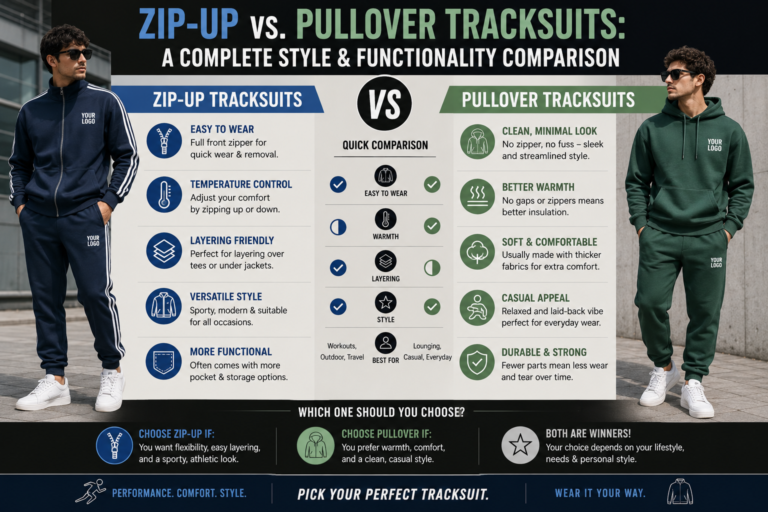
The Zip-up vs. pullover tracksuits Debate has gained increasing importance in the modern streetwear and athletic fashion. Both styles are comfortable and versatile, but they offer a unique experience when it comes to functionality, styling and layering.

The Zip-up vs. pullover tracksuits compare also helps fashion brands to understand which design is better for customer preferences and market trend. Many consumers choose zip-ups because of their convenience and flexibility, while others prefer pullovers due to their more relaxed and cleaner appearance. Manufacturer develops modern tracksuit collections for many brands to maintain comfort, quality and trend-focused production standards.

What Tracksuit Styles Matter?

Tracksuits no longer only serve as sportswear. They are now a key part of streetwear and casualwear. Tracksuits are expected to be both functional and visually appealing.

The choice between zip-up or pullover styles can affect comfort, layering possibilities, and the overall aesthetics of an outfit. Fashion businesses analyze consumer demands before creating new collections.

Comparing Zip-up vs. pullover tracksuits

Zip-Up Tracksuits Offer Flexibility

They are very popular for their convenience and ease of layering. They can be worn open or closed, depending on the weather and style preferences.

Tracksuits are popular for travel, sportswear and casual streetwear. They offer a practical look while still maintaining a stylish appearance.

Pullover Tracksuits in Minimalist Style

Tracksuits with a pullover create a more seamless and cleaner look. This is why they are so popular in streetwear fashion today. Their simplicity gives outfits an elegant and relaxed aesthetic.

Pullovers are a popular choice for many streetwear collections, as they fit in well with the minimalistic and comfort-focused fashion trend.

Comfort and Seasonal Performance

Fabric type and garment construction can affect comfort levels. Zip-up styles allow for better ventilation and layering, while pullover tracksuits are more warm during the colder months.

Fashion brands select fabrics differently depending on the market they are targeting.

Style Differences in Streetwear Clothing

Zip up vs. pullover tracksuits is heavily influenced by streetwear style. Zip-up tracksuits go well with utility-inspired outfits, while pullovers look great with minimalist sneakers and oversized joggers.

  • The two types of tracksuits, zip-up or pullover, are still very popular because they cater to different fashion tastes, comfort requirements, and styling techniques.

Expanding Tracksuit collections into full fashion lines

Streetwear collections are often created by combining tracksuits, sweatshirts, joggers and hoodies. This strategy increases customer engagement and product diversity.

Some businesses increase their winterwear collection through Jackets Manufacturer, while others improve coordinated casualwear production by Joggers manufacturer to meet the modern streetwear market.

Conclusion

Zip-up vs. pullover tracksuits Comparison shows that both styles have unique advantages depending on your comfort, style, and functionality preferences. Zip-up tracksuits offer flexibility and convenience for layering, while pullover styles have a more minimalist and cleaner streetwear look.

Tracksuit collections can be created by fashion brands that focus on manufacturing quality and understand the customer’s preferences to remain competitive in today’s fashion markets.

FAQs

What is better, a zip-up tracksuit or a pullover?

The choice is based on personal style, comfort, and season.

Why is streetwear pulling over tracksuits so popular?

They create a minimalist, clean and oversized streetwear look.

Are zip-up tracksuits more functional?

They offer comfort, convenience, and easy layering.

What fabrics are used most commonly in tracksuits and why?

Cotton, fleeces, polyesters, and blend fabrics are commonly used.

Can tracksuits form part of high-end fashion collections?

Many luxury streetwear and luxury brands produce tracksuit collections.

How to Choose the Right GSM & Fabric Weight for Custom Tracksuits

GSM & fabric weight for custom tracksuits are important factors in determining comfort, durability and the overall quality of tracksuit collections. Fabric weight is important for fashion brands and startups because it affects the way tracksuits fit, feel and perform in different seasons.

GSM & fabric weight for custom tracksuits can also affect production costs, fabric structures, and customer satisfaction. For summer and activewear, lighter fabrics are better. Heavier materials work best for winter and premium streetwear. Before selecting fabrics for mass production, many fashion companies explore professional apparel development by Fashionwear Manufacturing.

Why GSM is Important in Tracksuit Manufacturing

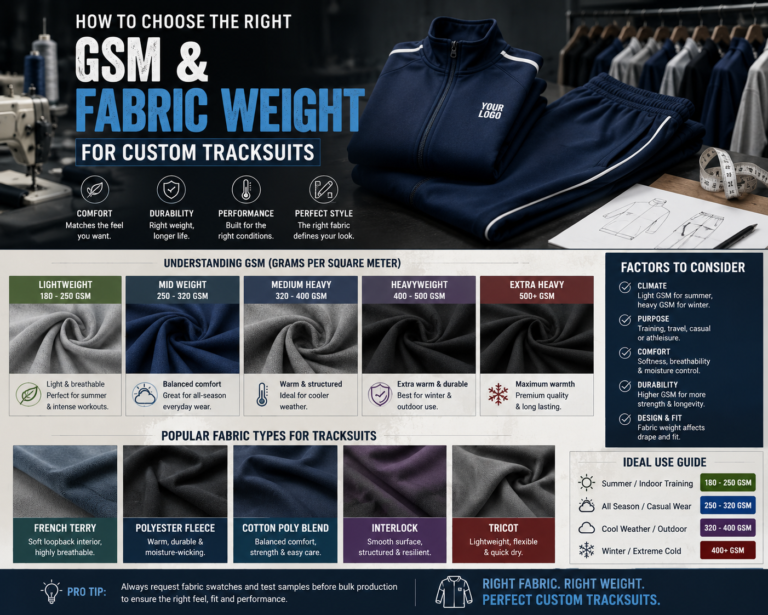
GSM is a measure of fabric thickness and density. Fabrics with a higher GSM usually feel heavier and warmer and are more durable. Lower GSM fabrics tend to be lighter and more breathable.

Knowing the GSM allows brands to create tracksuits that are suitable for different weather and customer preferences. To ensure fabric quality, many companies partner with suppliers like Tracksuits Supplier.

Understanding GSM and Fabric Weight for Custom Tracksuits

Tracksuits in Lightweight GSM Fabric for Summer

These fabrics are used in sportswear, training clothing, and summer collections. These fabrics are more breathable and flexible, which makes them ideal for active lifestyles and warm weather.

Medium GSM for Everyday Comfort

The medium-weight fabric is a popular choice because it balances comfort, durability and versatility. These fabrics are perfect for casual wear, travel attire, and athleisure fashion.

Heavyweight GSM for Premium Stallwear

These fabrics are used to make premium tracksuits for streetwear because they offer structure, warmth and a luxurious feel. These fabrics are popular for oversized winter fashion collections.

Choose Fabrics Based on the Season

Fabric selection is heavily influenced by seasonal demand. Fabrics for summer tracksuits should be breathable and light, while fabrics for winter collections are primarily focused on warmth and insulation.

Fashion brands choose fleece-lined fabrics and thicker fabric for colder climates, as they provide greater comfort and durability.

Tracksuits are made from a variety of fabrics.

Tracksuits today are made from cotton, polyester and fleece fabrics. Cotton provides softness and comfort while polyester increases durability and moisture resistance.

  • Brands can create tracksuits to match the customer’s expectations, seasonal demands, and product performance over time by choosing the right GSM and fabric mix.

What Fabric Weight Does Streetwear Fashion Have to Do with?

The weight of the fabric has a major impact on how tracksuits fit and look in contemporary streetwear collections. To maintain premium styling and structure, tracksuits that are oversized usually require fabrics of medium- to heavyweight weight.

Manufacturer is a popular fashion brand that expands their coordinated collections to include streetwear with the same fabric quality, styling and design direction.

Tracksuits: Expanding beyond Tracksuit Production

Fashion brands that are successful rarely limit themselves to tracksuits. They build complete collections, including sweatshirts, t-shirts, and hoodies to increase their customer base and product range.

Many companies increase their winterwear production by Manufacturer Hoodies in order to create modern streetwear collections.

The conclusion of the article is:

GSM & fabric weight for custom tracksuits have a direct impact on comfort, durability, style, and customer satisfaction. The right fabric weight is important for brands to create tracksuits that are suitable for the different seasons, fashions, and performance requirements.

Brands who understand fabric structure and collaborate with manufacturing partners experienced in the field can create high-quality collections of tracksuits to remain competitive on the modern streetwear market.

FAQs

What does GSM in fabric mean?

GSM stands for grams per square meter and measures the fabric density.

What GSM is the best for tracksuits and why?

Comfort and durability are often preferred with fabrics of medium to heavyweight GSM.

What is the importance of fabric weight in tracksuits?

Fabric weight has a direct impact on comfort, warmth and durability.

What fabrics are used most commonly in tracksuits and why?

Tracksuits are made from a variety of fabrics, including cotton, fleece, polyester and blends.

Can heavyweight tracksuits used as streetwear?

Heavyweight tracksuits do make up a large part of premium and oversized streetwear collections.

10 Trending Tracksuit Styles That Are Dominating Streetwear Fashion

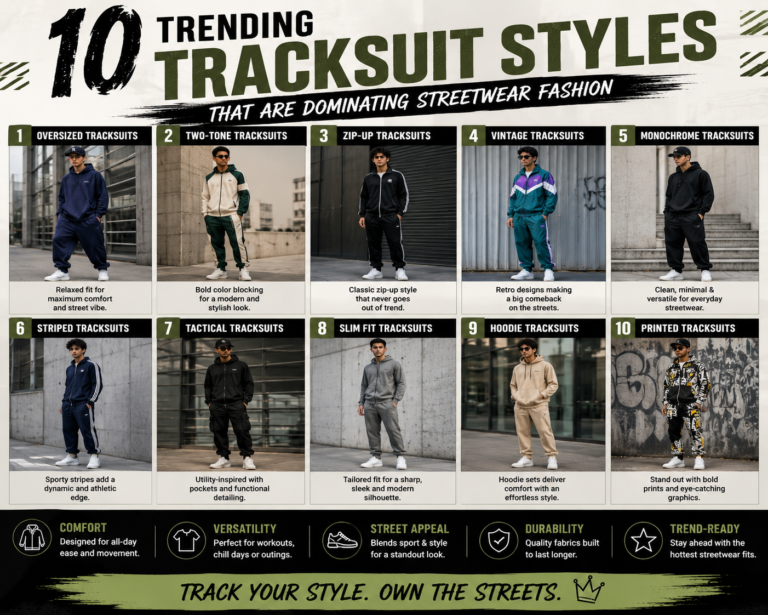
The 10 trending styles of tracksuit have shaped modern streetwear because consumers prefer outfits which combine comfort, functionality and trend-focused designs. Tracksuits have evolved from sportswear to a key part of everyday style and urban fashion.

The top 10 trending tracksuit styles reflect the influence streetwear has on global fashion. Modern tracksuit collections are characterized by oversized fits, coordinated sets and premium fabrics. They also feature minimalistic aesthetics. Several brands use Fashionwear Manufacturing for large-scale production to create complete streetwear collections.

Why Tracksuits Are the Most Popular Streetwear Today

Tracksuits are a popular category in fashion today because of their comfort and versatility. They are worn for travel, casual outings and fitness. Some even wear them as luxury streetwear.

Many fashion brands are now focusing on fabric quality, clean shapes, and coordinated colors to create collections that stand out. Many businesses work with experienced suppliers like Manufacturer in order to maintain modern fashion standards and consistent production quality.

Ten Trending Tracksuit Styles for Modern Fashion

Oversized Tracksuits

Tracksuits are a popular streetwear trend because they provide a relaxed look and feel, while also offering oversized comfort. These styles are popular with younger audiences, who like loose-fitting outfits that have a modern street style aesthetic.

Slim-Fit Tracksuits

These tracksuits are slim-fit and have a more structured look, while still maintaining comfort and flexibility. These tracksuits can be found in minimalist and athleisure fashion collections.

Color Block Tracksuits

Color block designs are still popular because they provide a strong visual contrast, and they give off a streetwear style. Modern brands often use bright color combinations to appeal to younger consumers.

Tracksuits in Neutral Tone

Neutral colors like beige, gray, black and olive have become increasingly popular, as they make for timeless outfits that are suitable for daily wear.

Graphic Print Tracksuits

Brands can showcase their creativity with logos, typography and original artwork on graphic tracksuits. These collections are heavily influenced by modern street style and youth culture.

Vintage Tracksuits

Fashion markets are booming with retro and vintage tracksuits. Consumers love the nostalgic designs that combine modern comfort.

Techwear Tracksuits

Tracksuits inspired by techwear are lightweight, functional, and feature utility features. Urban streetwear is a popular choice for these styles because they combine futuristic style with functionality.

Tracksuits in Premium Fleece

Fleece tracksuits are a popular choice for colder weather because of their warmth, softness and comfort.

Cropped Tracksuit Styles

Women’s streetwear is gaining popularity with cropped tracksuits. They create a stylish and modern silhouette that can be styled to suit the latest trends.

Tracksuits in Luxury Coordinated Colors

Luxury coordinated tracksuits are characterized by premium fabrics, minimal branding and clean tailoring. These collections are aimed at customers who want to elevate casualwear fashion.

  • Tracksuit collections that are based on the latest trends can help brands reach a wider audience while building a stronger brand identity in a competitive streetwear market.

Expanding Tracksuit collections into full streetwear lines

Streetwear collections are often created by successful fashion brands that combine tracksuits, hoodies and joggers with jackets, t-shirts and jackets. This strategy increases customer engagement and product variety.

Some businesses develop their streetwear ranges by incorporating Joggers Supplier into their casualwear collection.

conclusion

The 10 trending tracksuit styles are continued to dominate streetwear fashion due to their comfort, versatility and modern aesthetics. Tracksuits are still one of the biggest categories in fashion today.

Brands who understand the latest streetwear trends, and concentrate on high-quality manufacturing can build stylish and competitive tracksuit collections for global market.

FAQs

Why is streetwear popular?

Tracksuits have become popular due to their comfort, functionality and urban style.

What tracksuit styles are the most popular right now?

Tracksuits in neutral tones and oversized sizes are among the hottest fashion trends.

What fabrics are used most commonly in tracksuits and why?

Many fabrics, including cotton blends, polyester, fleece and performance fabrics, are used.

Can tracksuits be considered luxury fashion?

Many premium brands produce tracksuits in minimalistic designs and high-end fabrics.

Why do brands go beyond tracksuits and other apparel?

Brands can create streetwear collections by expanding into hoodies and jackets.

Sustainable T-Shirts: Why Eco-Friendly Fabrics Are the Future of Fashion

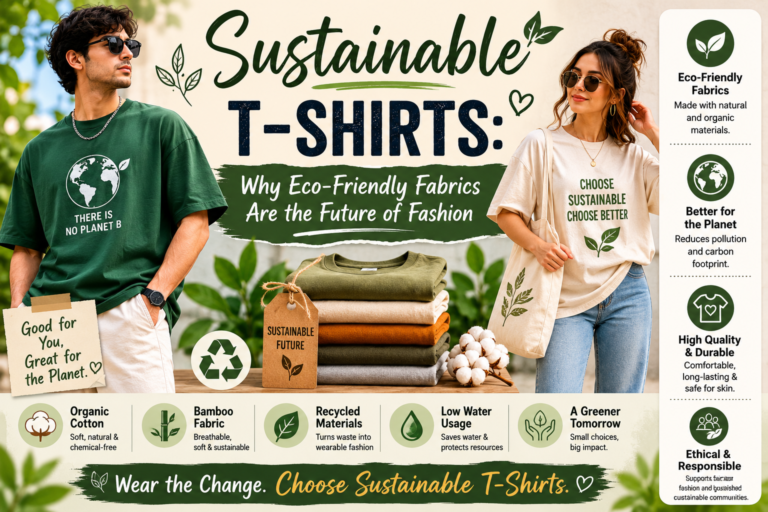
The fashion industry is evolving, and so are consumer expectations. Buyers today aren’t only interested in how the tee shirt looks, or what it costs. The buyers want to know where the t-shirt came from, how it was made, and what effect its production has had on our planet. Sustainability in t-shirts has moved beyond a niche choice for ethical clothing to a mainstream demand. Brands that embrace this trend are creating stronger and more loyal customers, while those that do not are rapidly losing their relevance.

Why Sustainability in T-Shirts Matters More Than Ever

T-shirt production has a high environmental impact. The traditional cotton farming uses huge amounts of water, as well as pesticides. The production of synthetic fabrics is heavily dependent on fossil fuels. Chemical waste from dyeing and finishing is harmful to waterways worldwide.

These impacts are increasingly understood by consumers, and their purchasing decisions reflect this. The research shows consistently that the younger demographic — which is driving growth in fashion — prefers brands with a genuine commitment to environmental protection over those that do not. Sustainability is not a nice-to have in marketing. A growing number of global fashion buyers are using it as a standard purchasing criteria.

The Best Eco-Friendly Fabrics for Sustainable T-Shirts

Not all sustainable fabrics deliver equally — and understanding what each one offers helps brands make informed choices that genuinely serve both environmental and commercial goals.

Organic Cotton Organic cotton grows without synthetic pesticides or fertilizers — significantly reducing chemical impact on soil and waterways compared to conventional cotton. It feels virtually identical to conventional cotton against the skin — soft, breathable, and comfortable for all-day wear. For brands building casual wear collections around sustainable values, organic cotton t-shirts provide the most accessible and commercially familiar entry point into eco-friendly production.

Recycled Polyester (rPET) Recycled polyester is made from post-consumer plastic waste — primarily PET bottles — processed into fiber. It performs comparably to virgin polyester in durability and moisture management while diverting plastic waste from landfill and ocean environments. rPET works particularly well for performance-oriented t-shirts and streetwear collections where fabric performance matters alongside environmental credentials.

Bamboo Fabric Bamboo grows rapidly without irrigation or pesticides — making it one of the most resource-efficient natural fiber sources available. Bamboo fabric is incredibly soft, naturally antibacterial, and moisture-wicking — properties that make it genuinely superior to conventional cotton in comfort and performance terms. Bamboo t-shirts carry strong premium positioning potential because the material story resonates powerfully with eco-conscious consumers willing to pay more for genuinely better products.

TENCEL (Lyocell) TENCEL is produced from sustainably sourced wood pulp through a closed-loop manufacturing process that recycles water and solvents rather than releasing them as waste. The resulting fabric is silky smooth, breathable, and biodegradable — making it one of the most genuinely sustainable fabric options available for fashion production. TENCEL t-shirts and tops suit premium sustainable fashion brands building collections that lead with both environmental credibility and luxury feel.

Hemp Fabric Hemp requires minimal water and no pesticides — growing prolifically with very low environmental footprint. Hemp fabric is durable, naturally antimicrobial, and softens beautifully with washing and wear. It suits brands targeting outdoor, lifestyle, and heritage-inspired markets where durability and natural material stories resonate strongly with core customers.

Building a Sustainable T-Shirt Collection That Actually Sells

Environmental credentials alone don’t sell t-shirts. Quality, design, and brand story all matter equally — and sustainable brands that neglect any of these elements struggle commercially regardless of how strong their environmental commitments are.

Sustainable t-shirts must deliver on every conventional quality metric — fabric hand-feel, construction durability, color fastness, print quality, and consistent sizing — while also carrying credible environmental credentials. Customers who pay a sustainability premium expect superior quality in return. Delivering that quality is what converts first-time buyers into loyal advocates who recommend your brand actively.

A professional t-shirts manufacturer with genuine sustainable fabric expertise guides you through material selection, print technique choices, and construction standards — ensuring your sustainable collection performs commercially as well as it performs environmentally.

Communicating Your Sustainability Story

Sustainable fashion brands that communicate their environmental story clearly and honestly build significantly stronger customer trust than brands that use vague sustainability language without specific evidence behind it.

Be specific about what makes your t-shirts sustainable — the exact fabric, the certification standards it meets, the specific environmental impact it reduces compared to conventional alternatives. Customers who understand exactly what they’re supporting become vocal advocates who market your brand authentically through their own networks and social media platforms.

Brands expanding sustainable credentials across their full collection — into hoodies, sweatshirts, and co-ord sets — benefit from working with a fashionwear manufacturer who sources and works with eco-friendly fabrics consistently across multiple product categories — maintaining credible sustainability standards across your entire brand rather than just your t-shirt range.

Conclusion

Sustainable t-shirts are not a trend that will pass. They represent a permanent shift in how consumers think about the clothes they buy and the brands they support. Eco-friendly fabrics — organic cotton, recycled polyester, bamboo, TENCEL, and hemp — each offer genuine environmental benefits alongside strong commercial appeal to the growing consumer segment that makes purchasing decisions based on values as much as price and aesthetics. Build your t-shirt collection around these materials, communicate your story honestly, and deliver quality that justifies the investment — and your sustainable fashion brand will find customers who stick around for years.

FAQs

Are sustainable t-shirts more expensive to manufacture than conventional ones?

Generally yes — eco-friendly fabrics carry a modest premium over conventional materials. However, brands consistently find that sustainable positioning supports higher retail prices and stronger margins that more than offset the additional production cost.

Do sustainable fabrics perform as well as conventional materials in t-shirt production?

Yes. Organic cotton, bamboo, and TENCEL all perform comparably or superiorly to conventional cotton in comfort, breathability, and durability — while recycled polyester matches virgin polyester in performance applications.

Can sustainable t-shirts be fully customized under a private label?

Absolutely. Sustainable t-shirts support full private label customization including custom fabric weights, colors, print techniques, labels, and packaging — giving your brand complete creative control over every eco-friendly piece you produce.

What certification should I look for when sourcing sustainable t-shirt fabrics?

Look for GOTS certification for organic cotton, GRS certification for recycled materials, and OEKO-TEX Standard 100 for fabric safety — these certifications provide credible third-party verification of your sustainability claims to consumers.

Oversized T-Shirts vs. Fitted T-Shirts: Which Style Is Dominating Fashion in 2025?

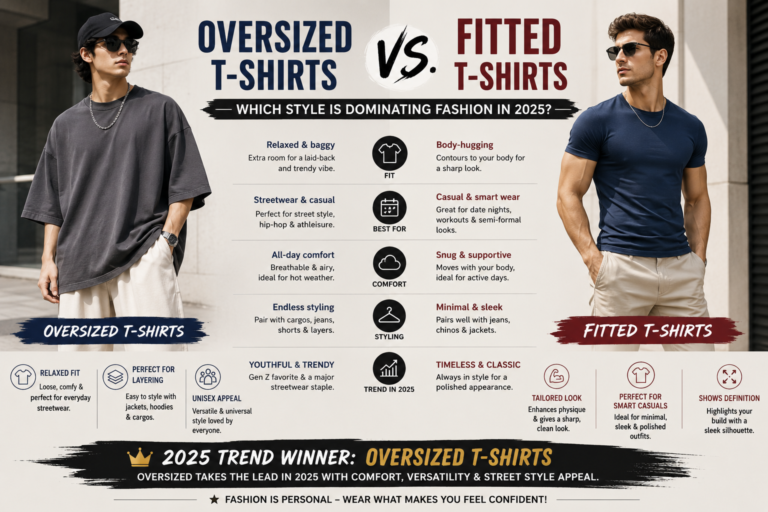
Every fashion brand eventually faces this question — oversized or fitted? Both styles have passionate customer bases. Both generate strong sales in the right collections. But understanding exactly where oversized t-shirts vs fitted t-shirts stand in 2025 helps brands make smarter product decisions rather than following assumptions that may no longer reflect current market reality. Here’s a clear, honest breakdown of both styles and what they mean for your brand right now.

The Rise and Reign of Oversized T-Shirts

Oversized t-shirts have dominated streetwear and casual fashion for several years — and in 2025 that dominance continues without significant signs of slowing. The deliberately large silhouette — dropped shoulders, extended body length, wide chest — communicates the relaxed confidence that contemporary fashion culture celebrates consistently across social media, music, and youth culture globally.

What makes oversized t-shirts commercially powerful is their universal appeal. They work across genders, body types, and styling approaches without requiring any particular fashion expertise to wear well. A customer who buys an oversized tee from your brand wears it constantly — and that repeated visibility builds brand recognition organically every single time they step outside.

Oversized styles perform strongest in:

  • Streetwear collections targeting youth and urban markets
  • Unisex and gender-neutral fashion brands
  • Graphic tee collections where print impact benefits from larger canvas
  • Brands building around heavyweight premium fabrics and luxury casualwear positioning
  • Co-ord collections paired with matching joggers or wide-leg bottoms

Heavyweight cotton between 220 and 280gsm gives oversized t-shirts the structure and premium hand-feel that customers expect at mid to premium price points. Lightweight fabric in an oversized cut looks and feels cheap — and customers notice immediately at the moment of purchase.

The Enduring Strength of Fitted T-Shirts

Fitted t-shirts never truly go out of style — because they serve fundamental human needs that fashion trends cannot eliminate. A well-fitted t-shirt flatters the body naturally, layers cleanly under jackets and outerwear, and works effortlessly across casual, smart-casual, and semi-formal contexts simultaneously.

In 2025, fitted t-shirts are experiencing a genuine resurgence — particularly in markets responding to the clean, minimal aesthetic that positions itself as a counterpoint to years of oversized dominance. Slim-fit and classic-fit styles are performing strongly across men’s fashion specifically — driven by customers who want the contemporary aesthetic without the extreme volume of oversized silhouettes.

Fitted t-shirts work best for:

  • Casual wear brands targeting professional and smart-casual markets
  • Premium basics collections built around fabric quality and precise construction
  • Brands targeting older demographics who prefer polished, tailored casual dressing
  • Layering pieces under fashion jackets and knitwear
  • Athletic crossover collections where body-conscious silhouettes matter

Mid-weight cotton between 160 and 200gsm suits fitted t-shirts well — light enough for comfortable all-day wear while providing enough body to hold the clean, structured silhouette that makes fitted styles genuinely flattering rather than simply tight.

Oversized vs Fitted: 2025 Market Comparison

FeatureOversized T-ShirtsFitted T-Shirts
Current Trend StrengthDominant in streetwearResurgent in premium and minimal markets
Gender AppealStrongly unisexBroad — particularly strong in menswear
Fabric Weight220 to 280gsm recommended160 to 200gsm recommended
Styling VersatilityExtremely highHigh — especially for layering
Best Market SegmentStreetwear and youth fashionPremium basics and smart-casual
Social Media PerformanceVery strong — photographs powerfullyStrong in clean and minimal aesthetics
Price Point PotentialMid to premiumMid to premium
Body Type UniversalityExcellentGood with correct sizing

What the Data Tells Us About 2025

Oversized t-shirts maintain the stronger overall market position in 2025 — particularly in streetwear, youth fashion, and social media-driven brand building. Their broad demographic appeal and powerful visual impact on platforms like Instagram and TikTok give them a commercial advantage that fitted styles struggle to match in purely volume terms.

However, fitted t-shirts are gaining ground meaningfully — particularly among consumers experiencing what fashion analysts describe as silhouette fatigue with extreme oversized proportions. Clean, well-fitted basics are resonating strongly with premium consumers who prioritize fabric quality, precise construction, and understated elegance over volume and graphic impact.

The most commercially successful brands in 2025 aren’t choosing one style over the other. They’re building both into their collections — serving the oversized customer with heavyweight streetwear pieces and the fitted customer with premium basics that justify their price through quality rather than trend alignment.

A professional t-shirts manufacturer produces both silhouettes with the pattern precision and fabric expertise each style requires — ensuring your oversized pieces have genuine structure and your fitted pieces have accurate proportions across every size in your range.

Building Both Styles Into Your Collection

Brands that offer both oversized and fitted t-shirts within a cohesive collection serve a significantly wider customer base without fragmenting their brand identity — provided both styles maintain consistent fabric quality, brand detailing, and construction standards throughout.

The key is intentionality. Your oversized styles should feel deliberately oversized — structured, weighty, and proportionally considered. Your fitted styles should feel precisely fitted — not just smaller versions of the same blank. Each silhouette requires its own pattern development, fabric weight selection, and construction approach.

Expanding beyond t-shirts into co-ord sets, tracksuits, and hoodies becomes significantly more efficient when your manufacturing partner already understands your fit philosophy and quality standards across both t-shirt silhouettes — maintaining collection cohesion without starting from scratch with every new product development.

Working with a trusted fashionwear manufacturer ensures that collection cohesion is maintained consistently — from first sample through bulk production and every reorder that follows as your brand grows.

Conclusion

In the oversized t-shirts vs fitted t-shirts debate for 2025, oversized maintains its dominant market position — but fitted styles are staging a meaningful resurgence that smart brands are already responding to. The most commercially successful approach isn’t picking one winner — it’s understanding what each silhouette delivers, which customer each one serves, and building both into your collection with the intentionality and quality that turns first-time buyers into loyal customers who return for every new drop your brand releases.

FAQs

What fabric weight works best for oversized t-shirts in 2025?

220 to 280gsm heavyweight cotton delivers the structure, drape, and premium hand-feel that makes oversized t-shirts feel intentional and luxurious rather than simply large and shapeless.

Are fitted t-shirts making a comeback in 2025?

Yes. Fitted t-shirts are experiencing a genuine resurgence — particularly in premium basics, menswear, and minimal aesthetic markets responding to years of oversized silhouette dominance across mainstream fashion.

Can oversized and fitted t-shirts be produced in the same collection?

Absolutely. Many successful brands offer both silhouettes within cohesive collections — each in appropriate fabric weights with individual pattern development that serves each silhouette correctly.

Which t-shirt style generates stronger social media performance for fashion brands?

Oversized t-shirts currently generate stronger social media engagement — their visual impact, graphic canvas size, and styling versatility create more dynamic content that performs well across Instagram, TikTok, and Pinterest platforms.

10 Most Popular T-Shirt Styles for Men, Women & Kids

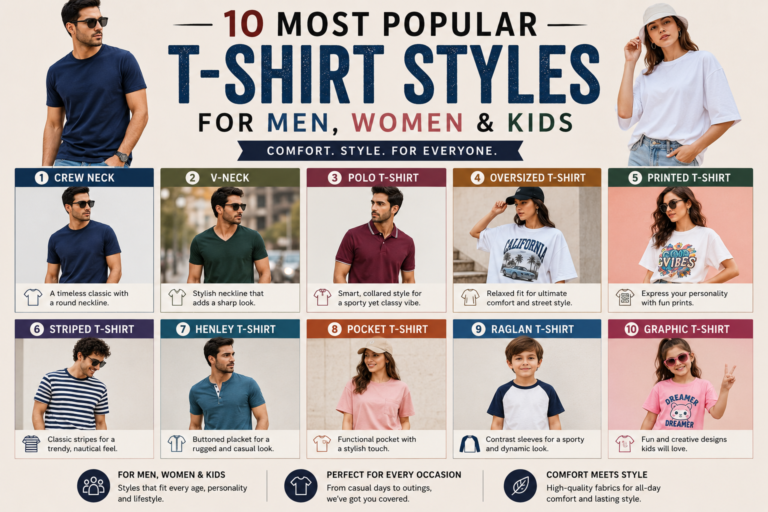
T-shirts are the backbone of almost every clothing brand. They sell consistently, serve every demographic, and work across casual, streetwear, and lifestyle markets simultaneously. But not every t-shirt style performs equally and knowing the 10 most popular t-shirt styles across men, women, and kids helps brands build collections with genuine commercial intention behind every product decision. Here’s your complete guide.

Classic Crew Neck T-Shirt

The crew neck is the most universally purchased t-shirt style across all demographics globally. Clean round neckline, short sleeves, and a simple silhouette its timeless simplicity is precisely what drives consistent, year-round demand. Every serious fashion brand needs a crew neck t-shirt as the foundation of their range.

Mid-weight cotton between 180 and 220gsm suits classic crew necks well comfortable enough for all-day wear while providing enough body to hold a clean shape consistently through repeated washing.

Oversized Graphic T-Shirt

Oversized graphic tees are the dominant force in contemporary streetwear and youth fashion. Bold artwork, typography, and brand imagery printed across a heavyweight oversized canvas create powerful visual statements that drive strong social media engagement and brand recognition simultaneously.

This style anchors streetwear collections globally — and for brands building community-driven fashion audiences, the graphic tee is often the single most important product in the entire range.

V-Neck T-Shirt

V-neck t-shirts elongate the neckline and create a slightly more dressed-up appearance than crew necks making them popular across smart-casual and lifestyle fashion markets. They suit men’s and women’s collections equally and perform strongly as layering pieces under fashion jackets and knitwear.

Lightweight to mid-weight cotton between 150 and 190gsm works best for v-necks — allowing the neckline to lie flat and maintain its shape without heavy fabric pulling the v-opening out of position.

Longline T-Shirt

Longline t-shirts extend significantly below the hip sometimes reaching mid-thigh creating a layered, fashion-forward silhouette that suits streetwear and contemporary casual wear markets powerfully. They pair naturally with slim joggers and fitted bottoms creating balanced proportions that photograph well and style effortlessly.

The extended length makes longline tees particularly popular in modest fashion markets providing additional coverage that works beautifully within Islamic fashion collections without sacrificing contemporary aesthetic appeal.

Polo T-Shirt

Polo t-shirts occupy the smart-casual space between formal shirts and casual tees making them genuinely versatile sellers across multiple market segments. Collar construction, button placket, and slightly structured body create a polished appearance that works for professional casual environments, lifestyle branding, and premium basics collections equally well.

Pique cotton fabric with its distinctive textured weave is the traditional choice for polo production, providing breathability, structure, and a premium appearance that plain jersey cotton cannot replicate.

Crop Top T-Shirt

Crop tops hit above the natural waist creating a fashion-forward silhouette that drives strong sales across women’s streetwear, athleisure, and lifestyle collections. They pair beautifully with high-waisted bottoms and co-ord sets creating complete outfit combinations that photograph powerfully and convert strongly in e-commerce environments.

This style performs particularly well for brands targeting younger female demographics who actively follow fashion trends and build outfit-focused wardrobes around versatile pieces they can style multiple ways.

Henley T-Shirt

Henley t-shirts feature a collarless neckline with a short button placket creating a distinctive, slightly elevated appearance that sits between a crew neck and a polo. They carry strong heritage and lifestyle appeal resonating powerfully with premium casualwear customers who want something more interesting than a plain crew neck without the formality of a full collar.

Henley styles work consistently across men’s collections and they pair particularly well with tracksuits and casualwear ranges targeting lifestyle-driven male customers.

Ringer T-Shirt

Ringer t-shirts feature contrasting color bands at the collar and sleeve hems creating a retro-inspired aesthetic that resonates strongly with vintage, streetwear, and youth fashion markets. The color contrast detail adds visual interest without requiring print or embroidery making ringers a cost-effective way to create distinctive, eye-catching products within a t-shirt collection.

This style suits brands building around 90s and Y2K aesthetic references a trend that continues driving strong commercial performance across youth and streetwear fashion segments in 2025.

Kids Graphic T-Shirt

Kids graphic t-shirts are among the highest-volume selling products in children’s fashion globally. Parents buy them constantly — for school, play, and casual occasions — and children actively express preferences for designs they connect with personally. Bold colors, fun characters, and playful typography all perform strongly across different age ranges within the kids market.

A professional t-shirts manufacturer produces kids graphic tees with child-safe inks, soft pre-shrunk fabrics, and durable print techniques that maintain vibrancy through the repeated washing children’s clothing demands.

Performance T-Shirt

Performance t-shirts use moisture-wicking, quick-drying synthetic fabrics typically polyester or polyester-elastane blends to serve customers who want athletic functionality from their everyday casual clothing. They bridge the activewear and casual fashion markets — attracting customers who maintain active lifestyles and refuse to compromise on performance even in their non-gym wardrobes.

This style suits brands targeting health-conscious, active lifestyle customers and pairs naturally with joggers and hoodies to create complete active lifestyle collections that serve the customer across every part of their daily routine.

Building Your T-Shirt Collection Strategically

The 10 most popular t-shirt styles each serve distinct customers across men’s, women’s, and kids markets. Smart brands don’t launch all ten simultaneously — they identify their core customer, select four to six styles that serve that customer most directly, and expand from there as revenue and market understanding grow.

Working with a reliable fashionwear manufacturer ensures consistent fabric quality, accurate pattern making, and strong construction standards across every t-shirt style in your collection — so each product reflects the same brand quality your customers experience every time they shop.

Conclusion

Understanding the 10 most popular t-shirt styles for men, women, and kids gives your brand the foundation to build collections with genuine commercial confidence. Each style serves a real customer need across specific markets and demographics — and covering the right combination for your brand’s positioning creates a t-shirt range that sells consistently, builds brand recognition, and gives every customer who discovers your brand a compelling reason to keep coming back season after season.

FAQS

Which t-shirt style sells most consistently across all demographics?

The classic crew neck t-shirt consistently outperforms all other styles globally — its universal appeal across genders, ages, and markets makes it the most reliable year-round seller in virtually every fashion brand’s range.

What fabric works best across most t-shirt styles?

100% cotton or cotton-polyester blends between 160 and 220gsm suit most t-shirt styles well — providing comfort, durability, print quality, and the consistent hand-feel customers expect across casual and streetwear price points.

Can all 10 t-shirt styles be produced under a private label?

Yes. All styles support full private label customization including custom fabrics, colors, graphics, labels, and packaging — giving your brand complete creative and commercial control over every piece in your collection.

How many t-shirt styles should a new fashion brand launch with initially?

Start with three to four styles — typically a crew neck, an oversized graphic, and one or two styles relevant to your specific market segment. This covers your broadest customer base without overextending your initial production investment.