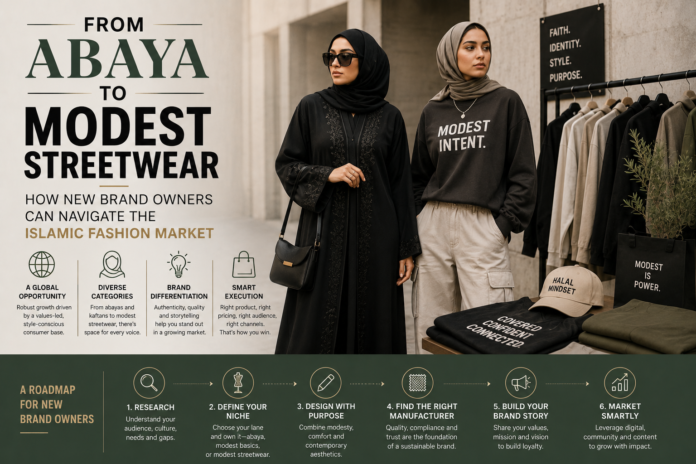
The Islamic fashion market has never been more commercially exciting — or more competitive. From classic abayas to contemporary modest streetwear, today’s Muslim fashion consumer demands clothing that honors religious values while reflecting genuine style sophistication. For new brand owners entering this space, the opportunity is enormous. But navigating the market successfully requires understanding both the cultural depth and the commercial dynamics that make Islamic fashion genuinely different from mainstream apparel markets.
Understanding the Islamic Fashion Consumer
Before building a single product, understand who you’re building for. The Islamic fashion consumer is not a monolith. She spans continents, cultures, age groups, and lifestyle segments each with distinct preferences around silhouette, fabric, color, and occasion.
A teenager in London wants modest streetwear that lets her express her identity through contemporary fashion. A professional in Dubai wants polished, structured modest workwear. A mother in Jakarta wants comfortable, affordable modest casualwear for daily life. A bride in Istanbul wants stunning modest occasionwear that honors tradition while feeling modern.
Each segment represents a real commercial opportunity and the brands that succeed choose one segment clearly, serve it deeply, and expand from there rather than trying to serve everyone from day one.
The Spectrum From Abaya to Modest Streetwear
The abaya to modest streetwear spectrum represents the full range of Islamic fashion — from the most traditional to the most contemporary end of modest dressing. Understanding where your brand sits on that spectrum shapes every product and marketing decision you make.
Traditional Abayas and Modest Dresses Abayas remain the cornerstone of Islamic fashion across many markets — particularly the Middle East and parts of Southeast Asia. Contemporary abaya design has evolved significantly — incorporating embroidery, statement sleeves, structured cuts, and premium fabric choices that transform the traditional garment into a genuine fashion statement.
Viscose, modal, and premium crepe fabrics drape beautifully for abaya construction — providing the fluid, elegant silhouette that abaya customers expect while maintaining full coverage standards comfortably.
Modest Casualwear Modest casualwear serves the everyday dressing needs of Muslim women who want comfortable, covered clothing for daily life. Wide-leg trousers, long tunics, layered co-ord sets, and modest casual wear pieces all serve this segment — prioritizing fabric opacity, comfortable coverage, and contemporary design simultaneously.
Modest Streetwear Modest streetwear is the fastest growing segment in Islamic fashion right now. It combines the visual language of contemporary streetwear — oversized silhouettes, graphic elements, bold color blocking — with full modest coverage requirements. Modest hoodies, wide-leg joggers, longline fashion jackets, and layered outfit combinations all serve this rapidly expanding market segment.
Working with a specialist Islamic fashionwear manufacturer ensures your modest streetwear pieces maintain genuine coverage standards while delivering the contemporary aesthetic that this fashion-forward customer actively seeks.
Choosing Your Market Entry Point
Start focused. Two to four hero pieces that define your brand aesthetic clearly outperform broad collections that try to cover too much territory too soon.
A modest streetwear brand might launch with an oversized longline hoodie, wide-leg joggers, and a modest co-ord set — three products that tell a clear, coherent brand story and serve the same customer across multiple occasions.
A modest casualwear brand might launch with wide-leg trousers, a long modest tunic, and a layered modest knitwear piece — again, a focused collection with clear brand identity rather than a scattered range that confuses rather than attracts.
Every piece must pass the modesty performance test — appropriate coverage, fabric opacity under all lighting conditions, maintained modesty through full range of movement, and cultural appropriateness for your target market.
Working With the Right Manufacturing Partner
Islamic fashion manufacturing requires specific expertise that general apparel factories often lack. Fabric opacity testing, modest silhouette pattern making, coverage-conscious construction, and cultural awareness in design development are all specialized skills that directly impact your product quality and brand credibility.
A professional fashionwear manufacturer with genuine Islamic fashion experience guides you through every production decision — from fabric selection and silhouette development through sampling, quality control, and bulk delivery — ensuring your finished products genuinely serve your modest fashion customer rather than simply approximating what she needs.
Brands expanding across the modest fashion spectrum into tracksuits and streetwear collections benefit enormously from maintaining that single manufacturing relationship — consistent modest design standards across every product category without the complexity of managing multiple suppliers with varying levels of Islamic fashion expertise.
Conclusion
Navigating the Islamic fashion market from abaya to modest streetwear successfully requires genuine cultural understanding, clear market positioning, focused product development, and the right manufacturing partnership. The brands winning in this space aren’t just making longer, looser garments — they’re building authentic, culturally resonant collections that serve Muslim fashion consumers with the same sophistication and intentionality that the world’s best fashion brands bring to every market they enter. Start focused, stay authentic, choose expertise over convenience — and build a modest fashion brand your customers are genuinely proud to wear.
FAQs
What is the fastest growing segment in Islamic fashion right now?
Modest streetwear is currently the fastest growing segment — particularly among younger Muslim consumers in Western markets who want contemporary style that fully honors their modest dressing values.
Which fabrics work best for modest fashion across different garment types?
Viscose and modal suit abayas and dresses for elegant drape. Ponte knit and cotton interlock work well for modest trousers and casualwear. Heavyweight fleece suits modest streetwear and hoodie collections effectively.
How do I ensure my modest fashion collection genuinely meets coverage requirements?
Work with a manufacturer experienced in Islamic fashion who conducts fabric opacity testing, tests garments through full range of movement, and understands regional coverage standards across your target markets.
Should a new Islamic fashion brand launch globally or focus on one market first?
Focus on one market first. Deep cultural understanding of a single market builds stronger brand credibility and more loyal customers than broad global launches that lack the cultural nuance each market requires.