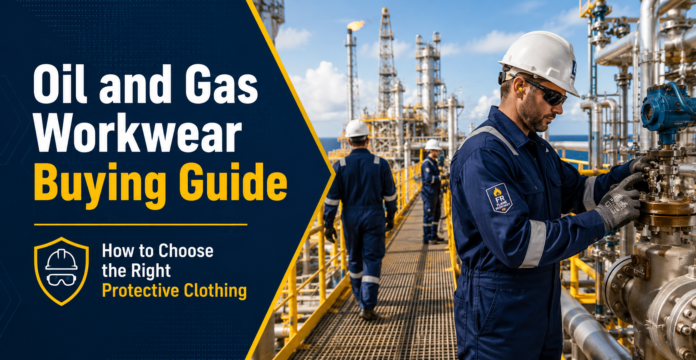
Oil and gas work is tough, hot, dirty, and risky. Workers may face flames, heat, chemicals, oil, gas, sharp surfaces, moving equipment, heavy tools, and rough weather. That is why a proper oil and gas workwear buying guide is important before choosing any protective clothing. Normal clothing is not enough for this kind of work because it can burn, tear, melt, or fail when the worker needs protection most. Good workwear should protect the body, support movement, and stay comfortable during long shifts. It should also match the real job site, not just the company uniform style. OSHA notes that oil and gas extraction workers can face safety hazards such as high-pressure equipment, electrical energy, machine hazards, and ergonomic risks. A smart oil and gas workwear buying guide helps buyers choose clothing that is safer, stronger, and easier for workers to wear every day.
What Makes Oil and Gas Workwear Different?
Oil and gas workwear is different from basic work clothing because it must handle more than dirt and daily wear. It may need flame resistance, high visibility, chemical splash support, abrasion resistance, weather protection, and strong stitching. A good oil and gas workwear buying guide should always begin with the worker’s real environment. A drilling worker, refinery worker, pipeline worker, maintenance worker, and tanker worker may not need the same garment. Some workers need coveralls for full-body coverage, while others need jackets, pants, or vests for specific duties. OSHA has stated that flash fire hazards are associated with oil and gas well drilling, servicing, and production-related operations, and flame-resistant clothing can reduce the extent and severity of burn injuries. This means clothing is not just a uniform. It is part of the safety system. The right oil and gas workwear buying guide helps companies avoid weak fabric, poor fit, unsafe layering, and low-quality garments.
3. Oil and Gas Workwear Buying Guide
This oil and gas workwear buying guide is made for buyers who want practical, clear, and safe clothing choices. The first step is to understand the job hazard. The second step is to choose the right garment type. The third step is to check fabric, fit, stitching, closure, visibility, care, and worker comfort. A company can explore broad protective clothing options through Eco Jersey’s workwear collection when planning uniforms for field teams. However, buyers should not choose only by product appearance. They should check whether the clothing supports the worker’s daily tasks. For example, a worker who climbs, bends, lifts, and works near heat needs clothing that moves well and covers the body correctly. A useful oil and gas workwear buying guide should also remind buyers that comfort matters. If clothing is too heavy, too hot, too tight, or too loose, workers may avoid wearing it properly.
Start With the Real Job Hazard
Before buying clothing, ask what the worker is exposed to. This is the most important step in any oil and gas workwear buying guide. Some job sites involve flash fire risk. Some involve oil, mud, grease, wind, cold, rain, low light, or sharp equipment. Some workers may also face chemicals, gases, loud noise, or low oxygen areas. OSHA lists oil and gas health hazards such as hazardous chemicals, hydrocarbon gases and vapors, hydrogen sulfide, noise, silica, temperature extremes, and low oxygen environments. Clothing alone cannot solve all of these risks, but it can reduce body exposure when chosen correctly. Buyers should speak with safety teams, supervisors, and workers before ordering. They should know the job role, work location, shift length, weather, and required protection level. The best oil and gas workwear buying guide does not say one garment is perfect for every worker. It says the clothing must match the task, hazard, and site policy.
Choose Coveralls for Full-Body Protection
Coveralls are one of the most common choices in oil and gas work because they cover the shirt and pants area in one garment. A strong oil and gas workwear buying guide should recommend coveralls when workers need full-body coverage, fewer gaps, and easier uniform control. Coveralls are useful for drilling, maintenance, field service, and production work where dirt, sparks, splashes, or surface contact may be common. Eco Jersey’s oil and gas safety coveralls are a relevant option when buyers want one-piece protective clothing for tough field use. Still, buyers should check more than the product name. The coverall should have strong seams, safe closures, practical pockets, correct sleeve length, and enough room for bending. It should not pull at the shoulders, knees, or back. A good oil and gas workwear buying guide also reminds buyers to test samples before bulk orders because field workers need real movement, not only a good size chart.
Check Fabric Protection, Not Only Fabric Weight
Fabric weight is important, but it is not the only sign of protection. A heavier fabric may feel strong, but it may also become too hot for long outdoor shifts. A lighter fabric may feel comfortable, but it must still meet the required protection level. That is why this oil and gas workwear buying guide focuses on fabric performance, not just thickness. Buyers should check flame resistance, tear strength, shrinkage, breathability, wash durability, and comfort against the skin. They should also avoid untreated synthetic fabrics in risky areas because some materials can melt when exposed to high heat. For oil and gas sites with possible flash fire hazards, flame-resistant clothing should be selected carefully and worn correctly. OSHA’s enforcement guidance explains that engineering and administrative controls reduce risk but do not remove the potential for flash fires in drilling, servicing, and production operations. A practical oil and gas workwear buying guide should always connect fabric choice with the real heat, flame, and worksite risk.
Fit, Movement, and Daily Comfort
Fit can affect safety, comfort, and worker performance. Clothing that is too tight can restrict movement, pull open at stress points, and feel uncomfortable during long shifts. Clothing that is too loose can catch on tools, ladders, handles, or moving equipment. A smart oil and gas workwear buying guide should help buyers find the middle point. Sleeves should cover the wrists when workers reach forward. Pants should cover the legs when workers climb or kneel. Jackets should close over inner layers without feeling tight across the chest. For colder or windy sites, Eco Jersey’s oil and gas safety jackets can be considered when teams need protective outerwear that supports field movement. Comfort is not a luxury in oil and gas clothing. It helps workers keep garments closed, sleeves down, and layers in place. The best oil and gas workwear buying guide makes comfort part of safety because workers wear good clothing more correctly and more consistently.
One-Paragraph Buyer Checklist
Use this oil and gas workwear buying guide checklist before placing an order:
- Choose clothing according to the job hazard.
- Confirm if flame-resistant protection is required.
- Pick coveralls when full-body coverage is needed.
- Use jackets when weather protection is important.
- Select pants that allow bending and climbing.
- Choose vests when extra visibility is needed.
- Check seam strength and garment construction.
- Avoid poor fit around shoulders, knees, and waist.
- Make sure pockets are useful but not unsafe.
- Review fabric care and washing instructions.
- Test samples before bulk production.
- Ask workers for feedback after trial use.
- Replace damaged clothing before it becomes unsafe.
- Keep the clothing clean, dry, and properly stored.
- Do not use normal casual clothing as protective workwear.
Layering, Visibility, and Weather Protection
Oil and gas workers often work in changing weather, remote areas, early mornings, night shifts, rain, wind, heat, or cold. A complete oil and gas workwear buying guide should include layering and visibility. Inner layers should not reduce the protection of outer garments. For example, unsafe synthetic layers under flame-resistant clothing can be risky in heat exposure. Outer layers should also match the same safety purpose. A normal jacket over protective clothing may create danger if it is not suitable for the hazard. Visibility is also important because oil and gas sites often have trucks, machines, cranes, and workers moving around the same area. Eco Jersey’s oil and gas safety vest can be useful when buyers need a visible outer garment for site identification and low-light work. OSHA lists machine hazards, high-pressure equipment, electrical energy, and ergonomic risks among oil and gas safety concerns, so workers need clothing that supports awareness, movement, and protection.
Care, Washing, and Replacement Rules
Good protective clothing can lose value if it is washed, stored, or used badly. This oil and gas workwear buying guide should always include care instructions because workwear faces oil, grease, dust, sweat, mud, and rough handling. Buyers should check the care label before ordering. Workers should avoid bleach, harsh chemicals, and wrong drying methods unless the garment maker clearly allows them. If clothing is flame-resistant, incorrect washing may affect performance over time. Damaged clothing should not stay in service just because it still looks wearable from far away. Tears, missing buttons, broken zippers, open seams, heavy contamination, and unreadable labels are warning signs. A strong oil and gas workwear buying guide should also recommend a simple inspection routine. Workers can check garments before each shift, and supervisors can review condition during safety checks. Replacement should happen before failure, not after an accident. Clean, well-kept clothing protects better, lasts longer, and looks more professional.
Conclusion
The right oil and gas clothing should protect workers, support movement, and survive hard daily use. This oil and gas workwear buying guide shows that buyers should not choose garments only by price, color, or style. They should look at job hazards, flame resistance, fabric strength, fit, comfort, visibility, weather needs, washing rules, and replacement plans. Coveralls may be best for full-body coverage, jackets may help in cold or windy areas, pants should allow movement, and vests may support visibility. The safest choice is usually the one that matches the real worksite and is comfortable enough for workers to wear correctly. A good oil and gas workwear buying guide helps companies protect teams better, reduce clothing mistakes, and build a practical uniform program for demanding field conditions.
FAQs
What is the main purpose of oil and gas workwear?
The main purpose of oil and gas workwear is to protect workers from jobsite hazards such as heat, flame, dirt, oil, rough surfaces, and weather. It should also help workers move safely during long shifts. Good workwear is both protective and practical.
Is flame-resistant clothing always needed in oil and gas work?
Flame-resistant clothing may be needed when workers face flash fire or heat hazards. The exact need depends on the job task, site risk, and safety rules. A proper hazard assessment should decide the required protection level.
Are coveralls better than separate shirts and pants?
Coveralls are better when full-body coverage and fewer clothing gaps are needed. Shirts and pants may work better when workers need more flexible sizing or lighter daily wear. The best choice depends on the job, weather, and hazard level.
How should oil and gas workwear fit?
Oil and gas workwear should not be too tight or too loose. It should allow bending, climbing, lifting, and reaching without exposing the skin. A safe fit helps workers stay protected and comfortable during the full shift.