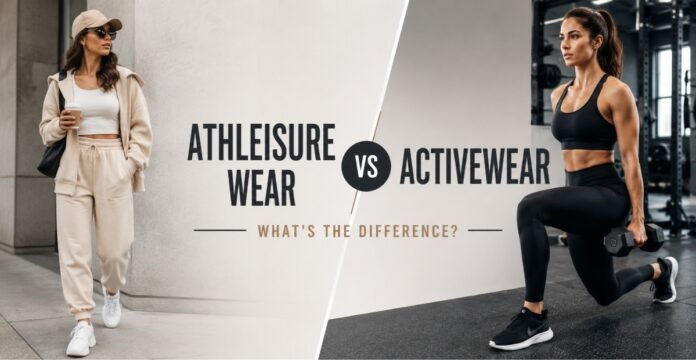
You might think athleisure wear vs activewear are the same, they serve different functions. Activewear’s primary use is for exercising, playing sports, running, heading to the gym, and moving. On the other hand, athleisure is meant to allow people to look sporty while remaining comfortable doing everyday things. The best way to think about athleisure wear vs activewear is to look at the purpose each serve. One is for performing during the activity, the other is for looking relaxed and stylish outside of the gym. Because of the current evolution of clothing, both athleisure and activewear can sometimes look the same, hence the confusion.
Athleisure Wear vs Activewear
In athleisure wear vs activewear, the most crucial distinction lies in what each type of clothing is designated to do. Activewear is meant to allow movement, handle perspiration, and minimize chafing and be comfortable while exercising. On the other hand, athleisure centers around easy style, comfort and softness, and a clean sporty look. To put it simply, if thinking about athleisure and activewear, the former is lifestyle-focused and the latter is performance-focused. Athleisure can absolutely be used for light exercise, but probably doesn’t have the support that true workout apparel does.
What Makes Activewear Different?
Activewear is designed for people who plan to move, stretch, train, or sweat. It often uses lightweight fabric, quick-drying material, stretch panels, breathable areas, and strong seams. You can explore different activewear clothing options to see how workout garments are shaped around movement and practical use. In the athleisure wear vs activewear comparison, activewear usually gives better support during running, weight training, cycling, yoga, and team practice. It may also include useful details such as secure pockets, flat seams, elastic waistbands, or fitted cuts. These features make athleisure wear vs activewear easier to separate when performance matters most.
What Makes Athleisure Wear Different?
Athleisure combines athletic style with clothing that feels suitable for travel, shopping, school, casual work, or meeting friends. The athleisure wear range shows how sporty shapes can be used in simple everyday outfits without looking like full gym clothing. In the athleisure wear vs activewear debate, athleisure often uses softer fabrics, relaxed fits, calm colors, and designs that are easy to match with jackets, sneakers, or casual accessories. A person may wear athleisure all day without planning a workout. This is why athleisure wear vs activewear is not only about how the garment looks, but also about where and why it is worn.
Fabric Differences You Can Feel
Textiles help delineate athleisure vs activewear as well. Stretch, breathability, and quick drying are key for activewear because the fabric has to manage heat generated while working out. Stretch fabric is helpful in athleisure, but may not be the priority. Softness, warmth, and comfort are more important in athleisure. Fabrics that work for athleisure are cotton blends, jersey, and fleece. Activewear utilizes polyester, nylon, elastane, and mesh. It’s worth nothing that fabric doesn’t classify product categories, but in most cases, it’s a good first guess. In athleisure vs activewear, contrast lifestyle fabrics and performance fabrics.
Fit, Shape, and Design
Fit also changes the way athleisure wear vs activewear feels on the body. Activewear may be close-fitting to reduce loose fabric during movement, or it may include shaped panels that support certain muscles. It can also be relaxed when airflow and freedom are more important. Athleisure usually follows fashion trends, so it may include oversized hoodies, tapered joggers, wide-leg pants, cropped tops, or matching sets. Looking at athletic hoodies can show how one garment may offer both a sporty appearance and everyday comfort. Because styles overlap, athleisure wear vs activewear should be judged by function as well as fit.
Where Each Type Is Usually Worn
In different locations, the distinction between athleisure vs activewear becomes clearer. Activewear is meant for the gym, sports fields, fitness classes, running routes, cycling, and all forms of training. Athleisure is seen at airports, cafes, shopping centers, schools, casual offices, weekend trips, and other relaxed social environments. Although, the same leggings, joggers, or t-shirts can go from one to the other. A person can train in the same outfit they wear to run their errands. While this overlaps, athleisure vs activewear categories can still be decided based on where clothing was originally meant to be worn.
Performance, Comfort, and Durability
While both clothing styles should feel comfortable, the difference between comfort in athleisure vs activewear is big. Activewear should help you feel cool, dry, and supported to move during strenuous activities. Athleisure should help you feel soft, relaxed, and presentable for long periods of time. Activewear should also be strong and should keep its shape because of the workouts it goes through. Athleisure should also keep its shape and withstand daily movements and washes. Choosing the right athleisure vs activewear brings the choice between long-lasting comfort and casual wear, or performance and short-lived comfort.
Quick Athleisure Wear vs Activewear Comparison
Use these simple points when you need a fast athleisure wear vs activewear answer:
- Purpose: Activewear supports exercise, while athleisure supports everyday comfort and style.
- Fabric: Activewear often dries quickly, while athleisure often feels softer and warmer.
- Fit: Activewear supports movement, while athleisure follows casual fashion shapes.
- Use: Activewear suits training, while athleisure suits travel, errands, and relaxed outings.
- Features: Activewear may include mesh, support panels, and secure pockets.
- Style: Athleisure is easier to combine with normal daily clothing.
These points show that athleisure wear vs activewear is mainly a choice between performance needs and lifestyle needs.
How to Choose the Right Option
Choose activewear for when you’re doing activities that require a lot of movement, sweating, stretching, or training that is highly repetitive. Athleisure is more suited for sporty outfits that prioritize comfort for activities that are more light and casual. For walking, traveling, or doing activities that are more lowkey, either style will be a good fit. Make sure you take note of the fabric, fit, seams, the waistband, pockets, and care instructions. In athleisure vs activewear, the best choice is the one that is least fashionable, but most suitable for the activity you will be doing. Taking into account your schedule and climate to highlight your comfort is the best way to determine which one to choose.
Conclusion
The distinction between athleisure wear and activewear becomes clear when you look beyond the sporty appearance. Activewear is designed for movement, athleisure is designed for comfort and everyday style. Some garments can fulfill both tasks, especially the modern hoodies, joggers, T-shirts, leggings, and tank tops. However, the hard training individual should consider the clothing that has the right support, stretch, construction, sweat management, and durability. The individual that desires an effortless everyday outfit may prefer the looser and more relaxed designs. The question is not which one is better, it is which one fits your day.
FAQs
Is athleisure the same as activewear?
No. Activewear is mainly designed for exercise and physical activity, while athleisure is designed for comfortable everyday wear with a sporty appearance.
Can athleisure be worn to the gym?
Athleisure can be used for walking, stretching, or light exercise. However, hard workouts usually require activewear with better sweat control, support, stretch, and durability.
Can activewear be worn casually?
Yes. Many activewear garments, including joggers, hoodies, leggings, and athletic T-shirts, can be worn as casual clothing when they match the rest of the outfit.