Motorcycle armor is designed to protect against blunt force impacts, not abrasions. The inserts are designed to absorb and distribute crash energy, keeping it away from the rider’s joints or high-risk areas. They act as a structural support for any garment that claims real protection.
Before promoting any riding gear as truly protective, it is important that clothing brands and retail stores source motorcycle armor. The guide explains how motorcycle armor works and what the different certification levels are. It also outlines what to verify when buying it for your catalog.
What motorcycle armor actually does
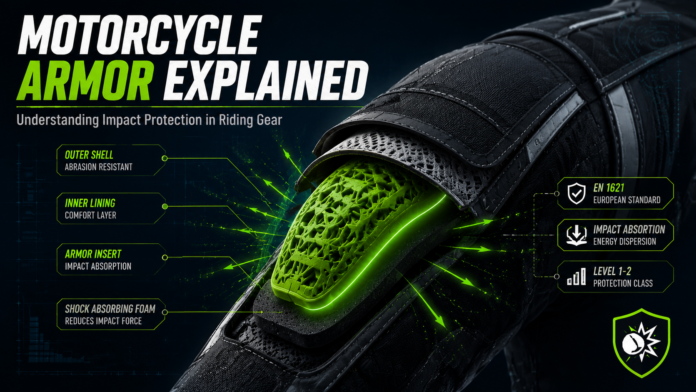
The motorcycle armor absorbs kinetic energy and spreads it over a larger surface area. This prevents the force from concentrating on one joint or bone. In a collision, this function is crucial, as an unprotected crash at the elbows, shoulders, hips or knees could cause joint and bone damage.
The majority of armor is made from foam- or gelbased materials that are designed to absorb and compress force, rather than just cushioning it. Genuine motorcycle armor is more structural than padding. This is why the certification tests focus on energy absorption, not just subjective comfort.
Common Armor Placement Zones
The placement of armor is based on the most vulnerable points in the body during a motorcycle fall. In jackets, elbows and shoulders are protected by special inserts because they absorb a lot of impact when the rider instinctively extends his arm during a fall. Hips and knees also receive protection.
The back protector is another important armor zone. It protects the spine from impacts that can cause serious injury. This area of the rider’s body has a high importance for their overall safety and mobility. When evaluating the gear of a manufacturer, buyers should ensure that all standard zones are covered. They shouldn’t assume coverage in one area will provide protection for other areas.
Understanding Armor Certification Levels
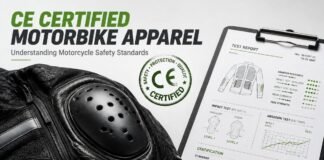
The EN 1621 standards are used to test motorcycle armor, and they measure the effectiveness of an insert in absorbing impact energy. The standard has two levels of protection: level 1, which is the baseline certification, and level 2, which indicates armor with significantly reduced residual forces during impact.
The cost of Level 2 armor is higher and it can be bulkier than the Level 1 option. This creates an actual tradeoff in terms of rider protection versus comfort and mobility. This tradeoff is important for brands sourcing motorcycle protection. Level 2 armor may not be the best option because it can compromise the rider’s flexibility.
Modern Armor Construction Materials
Due to their lightweight design and low cost, foam-based armor is still popular. It uses compressible materials which absorb energy by controlled deformation. Many manufacturers are now using advanced non-Newtonian material that is flexible during normal movements but becomes hardening instantly when struck. This offers better protection and comfort without having to sacrifice everyday flexibility.
The shift to adaptive materials is a significant improvement in rider comfort, as older designs of rigid armor often limited natural movements and made riders uncomfortable on long rides. The technology used in the manufacture of armor materials is important for both its protective capabilities and comfort during use.
Gloves with Armor and Smaller Accessories
The knuckles, as well as the heel of the hand, are often protected by gloves. This is because these areas have a high risk for injury during a fall. Motorcycle Gloves for Men, and Motorcycle Gloves for Women benefit from this armored knuckles. This is because the hands are often first to contact the ground during a fall.
Off-road gloves extend protection with heavier knuckle protectors. This is due to the greater frequency of falls that are typical for off-road riding. heated glove are increasingly incorporating thin armor panels. This proves that technical features do not have to be at the cost of real impact protection.
Motorcycle Armor: What to look for?
When evaluating the armor of their products, brands should check for:
- Level of certification for EN 1621, indicating whether the armor meets level 1 or 2 impact absorption standards
- Placement anatomically correct: Cover shoulders, elbows and hips where required by the garment type
- Materials used: traditional foam, adaptive non-Newtonian structure
- Balance between comfort and mobility, to ensure that armor does not restrict riding movements excessively
- A secure fit within the garment that ensures armor remains in its correct position during riding, rather than moving.
- Consistency between accessory lines; verifying that gloves and smaller items are certified to protect, not only marketing language
Checklist for Buyers Before Sourcing
To confirm the quality of genuine armor, you need to do more than rely on a product’s description that claims “impact protection.” The buyer should insist on the EN 1621 documentation that specifies the exact level of protection achieved, as well as the test body who verified it.
Ask the manufacturer how they secure armor in each garment. Even certified armor will perform poorly if its internal fit is inadequate. The motorcycle equipment catalog and the armor certification documents of a manufacturer will give buyers a better idea about genuine protection than just product photos.
Last Thoughts
Understanding certification levels, material technology, and placement is key to sourcing gear that reduces injuries, rather than just appearing protective. When buyers insist on real documentation and verify the correct positioning of every category in their catalog, they build an actual catalog that riders will trust.
Eco-Jersey produces riding gear for both men and women with armor certified across all jacket, pant, and glove line. Browse the catalog of motorcycle gear, or contact us to request a consultation for armor certification documents.
FAQs
How does Level 2 armor differ from Level 1?
While Level 2 offers greater protection and less impact, it may add a little more weight and cost.
Are motorcycle gloves armored?
Quality gloves often include palm and heel protection as well as knuckle-armor. This is because the hands are frequently first to contact the ground in a crash.
Does foam armor perform less well than adaptive modern materials?
No, it is not less effective. However adaptive materials that are non-Newtonian offer greater flexibility and impact resistance compared with traditional rigid foam.
What is the best way for a buyer to confirm that armor has been certified?
The buyer should ask for documentation stating the EN 1621 certification level and the testing agency who verified it rather than just relying upon marketing claims.