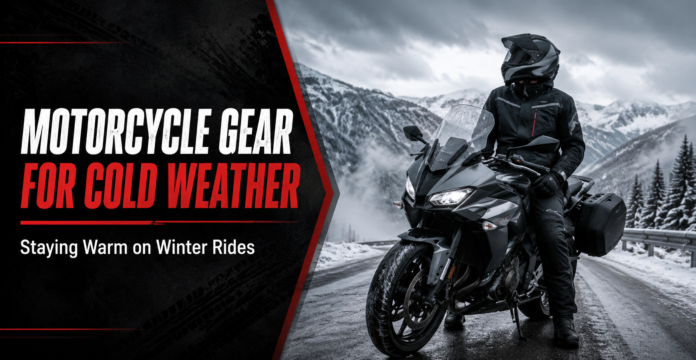
Cold weather riding is not only about feeling cold. It can affect your focus, grip, body movement, and reaction time. When your hands, feet, chest, or neck become too cold, riding becomes harder and less safe. That is why motorcycle gear for cold weather should be planned before winter starts. A normal hoodie, jeans, or casual jacket may feel warm while walking, but it is not made for wind pressure, road spray, long rides, or rider protection. On a motorcycle, cold air hits the body with force, so the temperature can feel much colder than it really is.
The right winter gear should protect the rider from wind, cold, light rain, and road conditions while still allowing easy movement. Good motorcycle gear for cold weather keeps warmth close to the body, blocks cold air, and helps the rider stay alert. It should also work with protective riding features, not replace them. A rider still needs safe gloves, jacket, pants, boots, helmet, and base layers. Warmth is important, but protection matters just as much.
Motorcycle Gear for Cold Weather
Motorcycle gear for cold weather means riding clothing and accessories designed to keep riders warm, dry, and protected during winter rides. It can include insulated jackets, thermal liners, base layers, waterproof pants, winter gloves, neck warmers, warm socks, boots, and helmet accessories. The best setup depends on the ride length, road speed, weather, and personal cold tolerance. A short city ride may need lighter layers, while a long highway ride needs stronger wind blocking and insulation.
The main rule is simple: use layers that work together. The first layer should manage sweat, the middle layer should hold warmth, and the outer layer should block wind and water. Motorcycle gear for cold weather should not be too tight because tight clothing can reduce blood flow and make the rider colder. It should not be too loose either because loose fabric can flap, leak cold air, or feel unstable at speed. A good winter riding system feels warm, secure, and easy to move in.
Start With the Right Winter Riding System
A strong winter riding system starts with the full body, not just one warm jacket. Many riders make the mistake of buying one thick coat and ignoring gloves, pants, boots, and neck coverage. That leaves cold gaps where wind can enter. Winter riding gear should cover the wrists, waist, ankles, neck, and lower back properly. If cold air enters from one gap, the whole body can feel colder. Riders building a complete winter setup can review Eco Jersey’s motorcycle gear collection to understand how gloves and riding accessories fit into the full gear system. Motorcycle gear for cold weather should be selected as a full outfit instead of one single item.
The jacket should overlap the pants. Gloves should meet the sleeves. Boots should cover the ankles. A neck warmer should seal the space between helmet and jacket. When all parts work together, the rider stays warmer for longer and does not need to stop again and again.
Choose Base Layers That Keep Skin Dry
The base layer is the clothing closest to your skin, so it matters a lot in winter. Its job is not only to feel warm. Its main job is to keep sweat away from the skin. If sweat stays on the body, it can become cold quickly and make the rider uncomfortable. Cotton is usually a poor choice for winter riding because it can hold moisture. A better base layer should feel soft, light, and quick drying. It should cover the arms, legs, and chest without feeling bulky.
Motorcycle gear for cold weather works better when the base layer supports the rest of the outfit. A thermal shirt and thermal leggings can help hold warmth while letting the rider move freely. The base layer should not be so thick that it makes the jacket tight. If the outer gear becomes too tight, warm air cannot stay between layers. That warm air space is useful because it helps the body keep heat. A dry base layer, warm middle layer, and wind-blocking outer layer make winter riding much more comfortable.
Gloves Are a Big Safety Point in Winter
Hands become cold faster than many riders expect. Cold fingers can make it hard to use the throttle, clutch, brake, switches, and indicators. This is why gloves are one of the most important parts of motorcycle gear for cold weather. Winter gloves should protect the hands from wind, cold air, and road impact while still allowing good control. Gloves should not be so thick that the rider cannot feel the controls. They should also not be so tight that fingers lose warmth.
Heated gloves can be helpful for riders who travel in very cold weather, ride at night, or spend long hours on the road, and Eco Jersey’s heated gloves for motorbike are a relevant option for winter riding glove planning. A good glove should cover the wrist area, fit under or over the jacket cuff properly, and stay secure while riding. Motorcycle gear for cold weather should always protect the hands because warm hands help the rider stay in control.
Jacket and Pants Should Block Wind First
A winter motorcycle jacket should do more than feel thick. It should block wind, hold warmth, and protect the rider. Wind protection is very important because cold air at riding speed can remove body heat quickly. A jacket with an insulated liner, sealed cuffs, strong front closure, and high collar is useful for winter rides. Motorcycle pants are also important because legs face constant wind pressure. Normal jeans can feel very cold on a motorcycle because wind passes through them easily.
Winter riding pants should reduce wind flow and cover the lower body properly. Motorcycle gear for cold weather should also allow bending, sitting, and moving without pulling at the knees, waist, or shoulders. A jacket that rides up at the back can expose the lower back to cold air. Pants that sit too low can create a gap at the waist. The best winter jacket and pants work together as one system. They should be warm enough for the weather, but not so bulky that they make the rider stiff.
One Simple Winter Gear Checklist
Before a winter ride, check your motorcycle gear for cold weather like this:
- Wear a dry thermal base layer.
- Add a warm middle layer if needed.
- Use a wind-blocking riding jacket.
- Wear protective winter riding pants.
- Choose insulated gloves with good grip.
- Cover your neck to stop cold air.
- Wear warm socks that do not squeeze your feet.
- Use boots that protect the ankles.
- Check helmet vents before riding.
- Keep a waterproof layer ready.
- Avoid loose clothing that can flap.
- Make sure you can move easily.
- Test your grip before starting.
- Stop and warm up if your hands go numb.
- Replace damaged winter gear early.
Boots, Socks, and Foot Warmth Matter Too
Cold feet can make a ride feel much longer than it really is. Feet are exposed to wind, road spray, and cold metal parts, so they need proper protection. Thick socks can help, but socks alone are not enough if the boots are weak. Winter riding boots should cover the ankles, block wind, and give stable grip when the rider stops at lights or parks on wet ground. The boots should not feel too tight because tight boots can make feet colder. Warm socks should fit well and should not bunch up inside the boot.
Motorcycle gear for cold weather should protect the feet without making gear shifting difficult. Riders should avoid casual sneakers in winter because they usually do not protect well from cold, water, or impact. For riders comparing hand protection and winter-ready accessories together, Eco Jersey’s men’s motorbike gloves can be used as part of a wider gear planning process. Warm feet and warm hands make winter riding safer because the rider can control the bike with more confidence.
Neck, Helmet, and Face Protection Stop Heat Loss
The neck area is one of the easiest places for cold air to enter. Even if the jacket is warm, cold air can move through the space under the helmet and around the collar. A neck warmer, balaclava, or windproof tube can help seal this area. Motorcycle gear for cold weather should include neck and face protection because small cold gaps can ruin the whole ride. The helmet also needs attention. Some riders close all vents in winter, but this can create fogging inside the visor.
A foggy visor can become dangerous because the rider may not see clearly. A pinlock visor, anti-fog insert, or careful vent setting can help reduce fog. The face should stay warm, but vision must stay clear. A good winter setup keeps cold air away without trapping too much moisture inside the helmet. Riders should test their helmet, visor, and neck warmer together before a long ride. If the neck warmer pushes the helmet out of position or blocks breathing, it is not the right setup.
Common Winter Gear Mistakes Riders Should Avoid
Many winter riding problems come from small mistakes. One mistake is wearing too many thick layers that make the rider stiff. Another mistake is wearing clothing that is warm off the bike but weak against wind on the bike. Some riders wear tight gloves or tight boots, thinking they will feel warmer, but tight gear can reduce comfort and make hands or feet colder. Another mistake is leaving gaps at the wrists, waist, ankles, and neck.
Motorcycle gear for cold weather should close those gaps without making the rider feel trapped. Riders should also avoid non-protective fashion jackets, loose scarves, thin sneakers, and casual gloves. A loose scarf can move in the wind and become unsafe. Casual gloves may feel warm at first, but they may not give proper grip or protection. Wet clothing is another big problem. If your gear gets wet and does not dry quickly, your body temperature can drop faster. The safest plan is to test your gear before a long winter ride and fix weak areas early.
Conclusion
The best motorcycle gear for cold weather is not only the warmest gear. It is the gear that keeps the rider warm, dry, visible, flexible, and protected at the same time. A good winter setup starts with a dry base layer, adds warmth in the middle, and uses a protective outer layer to block wind and water. Gloves, boots, socks, neck protection, and helmet comfort are just as important as the jacket. Riders should think about the full body because cold air can enter from small gaps and make the whole ride uncomfortable. Motorcycle gear for cold weather should also fit correctly because gear that is too tight, too loose, or too bulky can affect riding control. Before winter starts, riders should check old gear, replace damaged items, and test their full outfit on a short ride. When the body stays warm and the hands stay ready, winter riding becomes safer, easier, and more enjoyable.
FAQs
What is the most important motorcycle gear for cold weather?
The most important motorcycle gear for cold weather includes a wind-blocking jacket, warm gloves, protective pants, boots, thermal base layers, and neck protection. Gloves are especially important because cold hands can affect braking, clutch control, and throttle use.
Can I wear normal winter clothes on a motorcycle?
Normal winter clothes may feel warm while walking, but they are not always safe for riding. Motorcycle gear for cold weather should block wind, protect against road contact, and fit securely at riding speed. Casual coats, scarves, jeans, and sneakers may not give enough protection.
Are heated gloves good for winter motorcycle rides?
Yes, heated gloves can be useful for long winter rides, night rides, and very cold weather. They help keep fingers warm, which can improve comfort and control. The gloves should still fit well, grip properly, and allow easy use of motorcycle controls.
How do I stop cold air from entering my riding gear?
Use layers that overlap properly. Make sure gloves meet jacket cuffs, pants meet the jacket, boots cover the ankles, and a neck warmer seals the space under the helmet. Motorcycle gear for cold weather works best when there are no open gaps for wind.