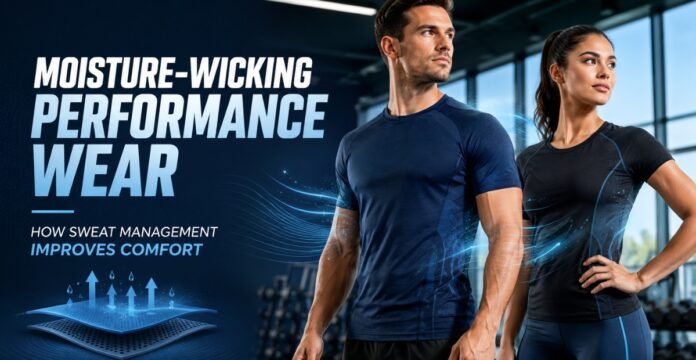
Sweating is one of the body’s methods of regulating temperature, so heavy clingy fabric from a sports apparel can create an unwanted distraction. On the other hand, moisture-wicking clothing transfers sweat away from the body. Instead of collect moisture in one place, the fabric disperses it over a larger area. This fabric can be useful in a variety of daily activities as well as sports: running, cycling, hiking, practicing, and playing sports. Good moisture-wicking clothing helps to not stop sweating, but rather helps the individual feel drier and lighter and helps more comfortable to maintain an active lifestyle.
What Is Moisture-Wicking Performance Wear?
Moisture-wicking performance wear is technical clothing designed to pull sweat from the skin and move it toward the outer face of the fabric. Once the moisture reaches the outside, air can help it evaporate. This process is often called capillary action. People can explore a wider performance wear collection to see how different garment shapes support movement, layering, and comfort. Moisture-wicking performance wear may include shirts, tank tops, leggings, shorts, base layers, sweatshirts, and lightweight jackets. The best design combines the right fabric, fit, seams, and ventilation instead of depending on one feature alone.
How Moisture-Wicking Performance Wear Improves Comfort
Moisture-wicking active wear makes you more comfortable because it pulls moisture away from the body. While cotton can soak up and become heavy, sticking to the back, chest, and underarms, moisture-wicking active wear pulls the moisture away. This is even helpful to remedy the distraction a person feels from the constant contact of a damp fabric. This type of active wear is especially useful during long sessions because the fabric still pulls moisture away, keeping the fabric less sticky and damp and the person more comfortable and able to focus on his movement, breathing, and form.
How Sweat Moves Through the Fabric
Moisture-wicking active wear starts pulling sweat away from the body the moment the sweat touches the fabric. There are small pockets between the active wear fabric’s fibers that pull sweat away. The fabric then spreads the moisture and doesn’t leave it in a large, heavy patch. In fact, the more surface area that is wet, the faster it will dry. This is how moisture-wicking active wear actually works, and it requires that the garment be free of any non-breathable layer.
Why Wet Clothing Feels Hot, Cold, and Heavy
Wet clothing keeps a body feeling hot, cold, and heavy, all at the same time. While exercising, clothing that holds sweat may trap body heat and make a person feel hotter. Once the person stops exercising, clothing that is now getting cold may feel cold to the person especially if it’s windy or cold outside. Clothing that absorbs and holds moisture is also heavier. Clothing that dries faster and holds sweat better, like moisture-wicking clothing, helps a person feel comfortable whether it’s hot or cold outside.
Moisture Wicking and Breathability Are Different
Moisture-wicking clothing is somewhat linked to breathable clothing, but the two are not the same. Wicking is moving liquid sweat, while breathability is the movement of heat, moisture vapor, and air. If a fabric is thick or being tightly covered, it may wick better, but may not be warm. A breathable fabric may allow air, but may not move liquid sweat. Comfortable moisture-wicking clothing has both. To improve both, a fabric can be main fabric for moving sweat and have panels that are air-permeable for better air flow.
Fabrics and Construction That Support Sweat Management
Polyester, nylon, and blended stretch fabrics are common choices for moisture-wicking performance wear because they can be designed to move moisture and dry quickly. Some fabrics use special yarn shapes, surface treatments, or knit patterns to improve this action. A fitted high-neck tank top can also show how a sleeveless cut, soft ribbed structure, stretch, and quick-drying performance work together. However, fabric alone is not enough. Moisture-wicking performance wear also needs smooth seams, useful ventilation, flexible panels, and a fit that keeps the material close enough to collect sweat without feeling tight or restrictive.
Choosing the Right Fit for Better Wicking
The fit of the fabric also plays a role in how moisture-wicking performance wear collects and moves moisture. A very loose shirt may not make contact with the body in areas where moisture accumulates and can leave the body. A very tight garment can also hinder movement, trap heat, and create a pressure fit. A potentially appropriate fit provides contact with body moisture and the garment with the air necessary for unrestricted movement. An example of this sort of fit can be seen with running tops and bottoms, while apparel designed for other activities such as hiking may use a more relaxed fit to accommodate layering.
Layering Moisture-Wicking Performance Wear in Cold Weather
Cold-weather comfort depends on moving sweat away before it cools against the skin. A ski base layer can sit next to the body, collect moisture, and help pass it toward warmer outer layers. Moisture-wicking performance wear used as a base layer should feel smooth, flexible, and close-fitting without squeezing. The middle layer should hold warmth, while the outer layer should protect against wind, rain, or snow. If one layer traps too much moisture, the full system may feel damp. This is why moisture-wicking performance wear must be chosen as part of a complete clothing setup rather than as a single magic solution.
Simple Features to Check Before Buying
- Choose moisture-wicking performance wear that clearly states its fabric content and intended activity.
- Look for quick-drying fabric that does not remain heavy after it becomes damp.
- Check whether the garment has mesh zones or ventilation in high-sweat areas.
- Select flat or smooth seams to reduce rubbing during repeated movement.
- Make sure moisture-wicking performance wear stretches without becoming see-through.
- Pick a fit that stays close to the skin without limiting breathing or movement.
- Check whether waistbands, collars, and armholes remain comfortable when wet.
- Choose moisture-wicking performance wear that matches the weather and workout length.
- Avoid very thick designs for hot training unless strong ventilation is included.
- Read the care label because poor washing habits can reduce fabric performance.
Conclusion
Maintaining performance wear that wicks moisture is easy. Simply wash it soon after you wear it for a hefty workout. Be sure to follow the care instructions and use mild detergents. Don’t overdo it on the detergent either; this will create a residue buildup inside the fibers. Fabric softeners can also coat the fibers and will inhibit the fabric’s moisture-wicking capabilities. The care instructions will also indicate if the garment can be air dried.
FAQs
Does Moisture-Wicking Performance Wear Stop Sweating?
No. Moisture-wicking performance wear does not stop the body from producing sweat. It moves sweat away from the skin and spreads it across the fabric so it can dry faster and feel less uncomfortable.
Is Moisture-Wicking Performance Wear Good for Hot Weather?
Yes, moisture-wicking performance wear can be helpful in hot weather when it is lightweight, breathable, and not overly tight. It should still be combined with hydration, breaks, shade, and safe training times.
Can Moisture-Wicking Performance Wear Reduce Odor?
Moisture-wicking performance wear may dry faster, but it does not automatically prevent odor. Odor control also depends on fabric treatments, washing habits, body oils, bacteria, and how long the garment stays damp.