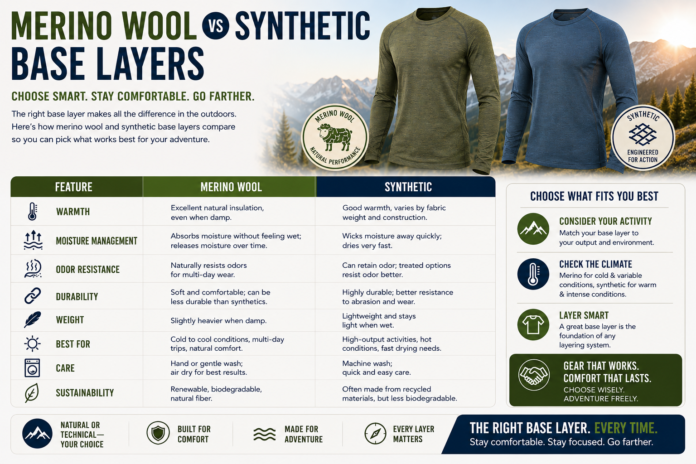
Choosing the right base layer can shape how comfortable you feel during an entire outdoor trip, and the debate between merino wool vs synthetic base layers comes up often among hikers, skiers, and campers. Both materials offer distinct advantages, so understanding their differences helps you select the option that best matches your activity, climate, and personal preferences. Therefore, this guide compares merino wool vs synthetic base layers across warmth, moisture management, durability, and care, so you can make an informed decision for your next adventure.
Why Base Layer Material Matters
For outdoor enthusiasts who love hiking, skiing, and camping, a suitable outdoor base layer directly impacts their comfort throughout their entire trip. The two common base layer materials each have distinct strengths, and people often disagree over whether to choose a base layer made of merino wool or synthetic fiber. This guide compares the two materials across four dimensions—warmth retention, moisture management, durability, and care requirements—to help you select the option that fits your specific needs.
Merino Wool Base Layers
The form-fitting base layer, which sits directly against the skin, is the core layer of outdoor apparel responsible for regulating temperature and controlling moisture throughout the day. A well-chosen base layer can wick sweat, maintain a comfortable body temperature, and reduce exercise-related chafing, while a poorly selected one will leave the wearer damp, cold, and uncomfortable. Therefore, before purchasing gear for hiking, skiing, or multi-day trips, it is necessary to compare base layers made of merino wool and synthetic fibers.
Benefits of Merino Wool
Merino wool originates from a specific breed of sheep, and its fibers are finer and softer than those of traditional wool. The close-fitting base layers made from this material sit comfortably against the skin, and do not cause the itchy irritation that is common with old-style wool garments.
Drawbacks of Merino Wool
Merino wool can naturally regulate body temperature: it retains heat to keep the wearer warm in cold environments, while offering breathability during moderate-intensity activity. Furthermore, its odor-resistant capacity far outperforms that of synthetic fabrics, making it suitable for multi-day trips where laundry is unavailable. In addition, it maintains its heat-insulating properties even when wet, allowing it to sustain consistent warmth even in rainy environments.
Synthetic Base Layers
Compared with synthetic alternative fabrics, merino wool is priced higher, dries slowly after washing or heavy sweating, and is prone to wear and tear; its durability must be assessed when used for high-intensity activities.
Benefits of Synthetic Base Layers
Most of the mainstream synthetic base layer fabrics currently available on the market are made of polyester or polyester-spandex blends, and they dominate the market thanks to their reliable performance and high cost-effectiveness.
Drawbacks of Synthetic Base Layers
Synthetic fabrics boast prominent advantages that make them well-suited for outdoor use: they dry quickly, capable of coping with scenarios involving sweat or sudden weather changes; furthermore, their cost is lower than merino wool, which lowers the entry threshold for outdoor participation; in addition, they are wear-resistant and durable, making them suitable for high-intensity activities such as running and rock climbing.
Merino Wool vs Synthetic Base Layers: Quick Comparison
Compared with merino wool, synthetic fabrics are more prone to retaining odors, as bacteria easily multiply in their fibers, and their antimicrobial treatments lose effectiveness after repeated washing; when activity levels fluctuate, these fabrics perform worse in thermoregulation when used as a base layer.
Odor resistance: Merino wool resists odor naturally, while synthetic fabrics often require antimicrobial treatments.
Drying time: Synthetic base layers dry faster than merino wool after washing or sweating.
Warmth when wet: Merino wool retains warmth even when damp, whereas synthetic fabrics lose insulation more quickly.
Cost: Synthetic base layers typically cost less than merino wool options.
Durability: Synthetic fabrics resist abrasion better, making them suitable for high-intensity activities.
Comfort: Merino wool offers a soft, non-itchy feel, while synthetic fabrics provide a smooth, lightweight texture.
This paper will unpack the performance differences between merino wool and synthetic fiber base layers across multiple core dimensions.
Choosing Base Layers for Different Activities
The right choice between merino wool vs synthetic base layers often depends on the specific activity and trip length. For example, hiking clothing for multi-day treks often favors merino wool base layers because of their odor resistance and temperature regulation. Similarly, camping apparel benefits from merino wool layers that stay comfortable across changing campsite temperatures.
On the other hand, high-intensity activities often call for synthetic options. Brands producing ski wear frequently pair synthetic base layers with insulated outerwear, since synthetic fabrics manage moisture well during active descents. Likewise, outdoor fleece layers often pair with synthetic base layers to create a moisture-wicking, fast-drying system. For demanding environments, tactical outdoor apparel and hunting apparel often rely on synthetic or merino blends, depending on whether scent control or durability takes priority. For a closer look at base layer options across both materials, dedicated base layer clothing collections allow you to compare fabrics side by side.
Caring for Base Layers
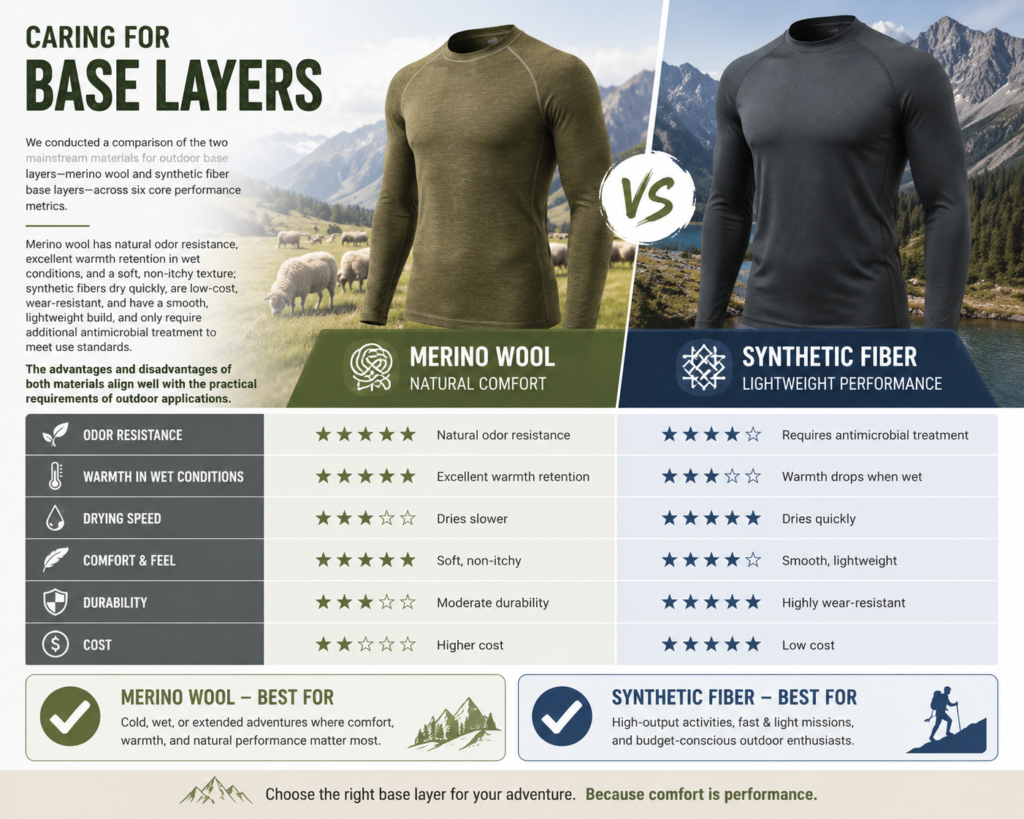
We conducted a comparison of the two mainstream materials for outdoor base layers—merino wool and synthetic fiber base layers—across six core performance metrics. Merino wool has natural odor resistance, excellent warmth retention in wet conditions, and a soft, non-itchy texture; synthetic fibers dry quickly, are low-cost, wear-resistant, and have a smooth, lightweight build, and only require additional antimicrobial treatment to meet use standards. The advantages and disadvantages of both materials align well with the practical requirements of outdoor applications.
Partner with a Trusted Manufacturer for Base Layers
You may sort out the differences among all available options, and match them to your needs for odor control, quick-drying performance, or high cost-effectiveness in order of priority.
Choose base layers made of merino wool or synthetic materials. The optimal option is determined by activity type and trip duration. Merino wool is recommended for multi-day hikes, as it prevents odors and regulates body temperature; when worn for camping, it adapts to variable air temperatures to maintain consistent comfort.
Coclusion
The choice between merino wool vs synthetic base layers ultimately depends on your priorities, whether that’s odor resistance, drying time, durability, or cost. Merino wool excels in temperature regulation and odor control, making it ideal for multi-day trips, while synthetic base layers offer fast drying and durability for high-intensity activities. Additionally, blended options provide a middle ground for those who want benefits from both materials. By weighing these factors against your specific needs, you can choose a base layer that keeps you comfortable throughout your outdoor adventures.
Frequently Asked Questions
Is merino wool better than synthetic for cold weather?
The core guideline for selecting apparel for high-intensity outdoor activities is to prioritize synthetic fabrics. Ski suits adopt a synthetic base layer paired with a warm outer layer to meet the moisture-wicking needs of downhill skiing; outdoor fleece layers are also paired with synthetic base layers to build a moisture-wicking and quick-drying system.
Which dries faster, merino wool or synthetic base layers?
Proper care can extend the service life of base layers made of merino wool and synthetic fibers, and the two types have only slightly different care requirements: Merino wool must be washed in cold water with a wool-specific detergent, and laid flat to dry to prevent shrinkage; synthetic fibers can also be washed in cold water, but fabric softeners that damage their moisture-wicking properties must never be used.
Do synthetic base layers smell more than merino wool?
If apparel brands face selection challenges when choosing between merino wool and synthetic material base layers, they can rely on established manufacturing partners. The former material meets odor prevention needs, while the latter meets the requirements of quick-drying performance and durability; these partners can secure a full supply of all necessary raw materials and maintain stable production quality.
Are merino wool base layers worth the higher cost?
We are a professional custom apparel manufacturer. We can develop base-layer garments suited for specific events for brands, and supply fabrics including merino wool, synthetic fibers, and blended fabrics. We are able to align on fabric selection, customized services, and production cycles to co-create products that meet the needs of brands’ end consumers.