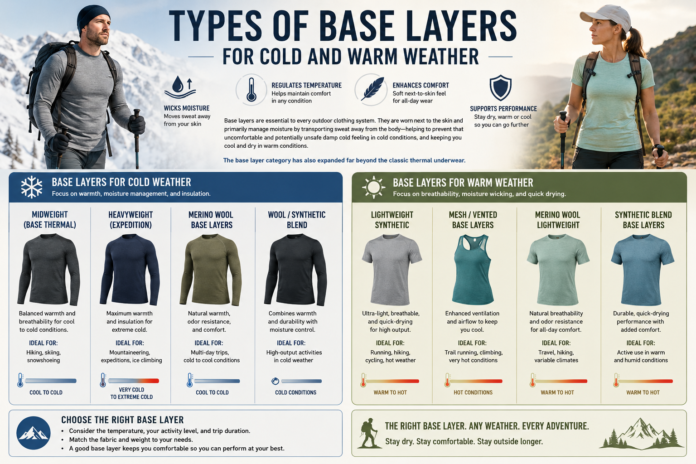
Base layers are essential to every outdoor clothing system. For any company designing outdoor apparel, and for any buyer selecting the most appropriate next-to-skin layer for a given activity and context, knowledge about base layers for different cold and warm climates is critical. Types of base layers are the layers worn next to the skin. The primary purpose of a base layer is to manage moisture by transporting sweat from the body to avoid the uncomfortable and potentially unsafe damp cold perception that limits outdoor activity. The base layer category has also expanded far beyond the classic thermal underwear.
Why the Right Base Layer is the Most Important Layer for Outdoor Activities
Manufacturers of shells and mid layers invest significant time and money producing a variety of options. Outdoor enthusiasts purchase shells and mid layers but compromise the integrity of the entire system by wearing substandard base layers. The following provides the rationale for why base layers should be the primary concern when selecting outdoor layers.
The Base Layer
The base layer is the first layer applied to the skin and therefore has the most significant impact on comfort and the system’s ability to regulate temperature and manage moisture. Base layers are the most impactful garment in an outdoor system. They are the most commercially and functionally viable layer of all the outdoor layers available. The drier the base layer, the drier every layer built upon it. Base layers are particularly important when the system is exposed to cold. The combined moisture of the mid and outer layers compromises the insulating and protective nature of the system.
Why Cotton is an Unacceptable Base Layer Option
Cotton traps moisture, which is not ideal for base layers. During your climb, cotton base layers will trap moisture and remain cold during the descent and while you are at rest. It cannot be substituted by mid layers or a shell jacket. It will lead to huge amounts of heat loss. This is why all base layers are made from either natural or synthetic fibers that have the ability to dry and pull moisture away from the skin. If your brand would like to bring to market base layers that are made for the outdoors, speak with our base layer clothing manufacturing team right away.
Base Layer Types by Fabric
When considering base layers, the most important distinction is the fabric and determines the base layers ability to handle moisture, manage odors, dry quickly, and be worn for multiple days. The base layer fabric options are Merino wool, synthetics and natural-synthetic blends.
Merino Wool Base Layers
Merino wool provides moisture management, odor resistance, and the ability to be worn for days on end, faster drying, and superior natural performance quality. It is for these reasons that Merino wool base layers have achieved the reputation of being the best of the best of all base layers. Versatile base layer options with performance properties that other alternatives do not have can be found in Merino wool base layers.
The moisture management and temperature regulation qualities of merino wool are especially important for activities with high temperatures, like alpine hiking and backcountry skiing. For multi-day treks with high body temperature fluctuations during the physical exertion and body temperature cooling during the rest, merino wool has natural odor resistance. This makes merino wool best for outdoor trips where washing is not easily accessible. A merino wool base layer can be worn for three to four multi-day treks and remain odor free, while a synthetic base layer would be odor free after a single day.
Synthetic Base Layers
Synthetic Base Layers are made from polyester, polypropylene, or nylon that is modified to manage moisture. Base layers that are made this way pull sweat away from the skin and, through capillary action, spread the sweat over a large surface area and then dry quickly.
While merino wool is known for its wool management, synthetic base layers actually dry much faster after getting wet. Synthetic base layers are also a more efficient choice at drying speed vs. odor management for activities like trail running, mountain biking, skiing, and fast hiking. These activities also manage moisture at an optimal level.
For brands focused on performance-oriented and cost-effective base layer clothing, synthetic base layers are a great option.
Merino-Synthetic Blend Base Layers
These base layers strike the perfect balance with Merino wool with its quality natural odor control, temperature control, and combined with the strength and faster drying of synthetic fibers. Merino-synthetic blends achieve this balance by manufacturing layers with either merino-polyester or merino-nylon in an 80%-20% and 60%-40% ratio. The result is a base layer that is stronger, faster drying, and still smells fresh and maintains the natural soft touch that Merino has in its pure form.
Finally, merino-synthetic blends offer good value by using less merino wool. The blends also help keep the cost more reasonable. The blends also help keep the cost more reasonable. Merino-synthetic blends help create base layers with a special blend of performance characteristics that help them be more versatile and usable for a larger range of outdoor activities. The blends are especially useful for extended backpacking and skiing trips.
Types of Base Layers by Weight
A base layer’s weight also has a large impact on the temperature and performance level of the base layer. Typically, the heavier the base layer, the warmer and higher the impact the base layer can be used at. Knowing the weight categories of base layers, helps brands and customers identify the right base layers for the right conditions.
Lightweight Base Layers
Lightweight base layers are made in the 120 to 160 GSM range and designed for cool to mild weather activities that involve a lot of physical exertion like cycling and ski touring. Because they lack thermal insulation, they help transport moisture away from the body.
Lightweight base layers can also be used in warmer weather as a moisture wicking, active, and breathable top. Because additional layers during this season can lead to the body overheating, lightweight base layers are the outermost layer. This also provides a strong selling point to both the outdoor and general lifestyle markets.
As part of our outdoor tees manufacturing, we provide base layer tees and outdoor tees. If you have a need for lightweight base layers, contact us.
Midweight Base Layers
Midweight base layers, manufactured in the 180 to 230 GSM range, are the most commercially versatile base layers because they offer a balance of insulation and moisture management. They are the most widely purchased base layers because they can be used in most outdoor activities and across most weather conditions.
In addition, midweight layers are preferred for most three-season outdoor activities. They are warm enough for cool weather but are breathable enough for most activities. For companies developing a base layer line, midweight is the most important weight to start, as it caters to the largest customer base and the most consistent activities.
For companies developing a base layer line as a core component of a complete ski apparel line, midweight base layers, particularly in merino or merino-synthetic blends, are ideal for most resort and backcountry ski trips.
Heavyweight Base Layers
Heavyweight base layers are in the 250 to 350 GSM range, and are the best for insulation in extreme cold. They are intended for low-output activities for very cold conditions. These include high altitude winter mountaineering, winter ice climbing, sub-zero winter camping, and static cold exposure for winter outdoor activities.
Additionally, heavyweight base layers are not intended for high-output activities. Their weight and decreased breathability cause overheating. Therefore, heavyweight base layers cater to a more specialized customer segment than lightweight or midweight. However, they are critical for outdoor activities in very cold conditions, as no other weight provides the necessary insulation.
In extreme cold layering systems, heavyweight base layers fit seamlessly with outdoor fleece mid-layers and hardshell jackets. Insulation and weather protection come together with all three layers. Additional Outdoor Fleece insulation, combined with Hardshell protection, fulfills the extreme thermal needs of truly cold conditions.
Base Layers for Warm Weather Activities
The purposes of warm weather base layers and base layers for cold weather differ tremendously. While cold weather base layers are primarily about the insulation of the body, warm weather base layers are about moisture and temperature management, UV protection, and the absence of insulation. Being aware of the warm weather base layers available helps outdoor brands realize the potential of differentiated summer outdoor collections and helps outdoor users remain comfortable during demanding outdoor activities in warm weather.
Active Cooling Base Layers
Active base layers create evaporative cooling by moving sweat away from the skin, then quickly spreading it across the entire fabric to maximize evaporation. Rapid evaporative cooling helps maintain skin temperature. There is a noticeable cooling effect during evaporative cooling for treating phase-change materials that move heat during the evaporation process.
Warm weather cooling base layers are ideal for trail running and fast hiking, as they help manage sweat and prevent skin temperature from rising. Skin temperature elevation can impair endurance performance during outdoor activities in warm weather.
UPF Sun Protection Base Layers
With ratings of UPF 30 to UPF 50, sun protection base layers are designed to protect against ultraviolet radiation during outdoor activities that experience higher sun exposure at altitude or in open terrain. These base layers are designed to provide coverage of the torso and arms and block the UV rays that sunscreen cannot.
In addition, these base layers are great for higher elevation hiking, mountaineering, desert trekking, and virtually any outdoor activity that experiences higher sun exposure and UV levels that are significantly higher than in normal city environments. For brands creating camping apparel collections aimed at warm climate markets, UPF sun protection base layers are a great opportunity to have a new product that is significantly different from other offerings in the market.
Key Properties to Compare When Choosing Types of Base Layers
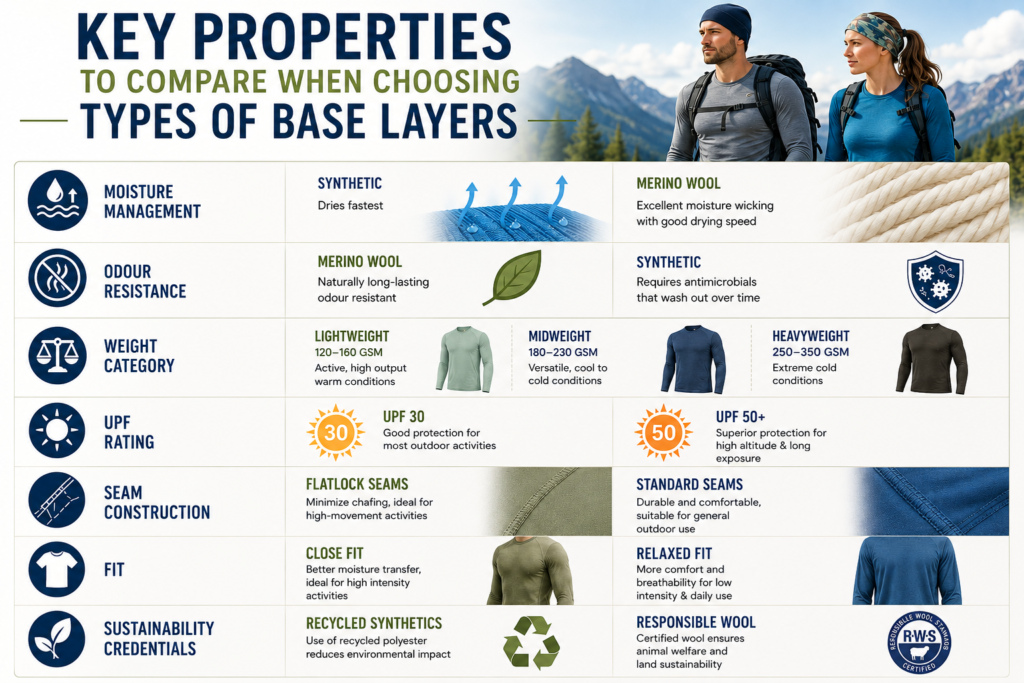
The following traits, when looking for base layers to buy or manufacture, identify base layers’ performance and their commercial viability, across the entire spectrum of base layers, regardless of type, fabric, or weight:
- Moisture management — use of base layers at high output levels of activity is limited to the wicking and drying speeds. Synthetics dry fastest, merino is best for odor management on multi-day uses.
- Odour resistance — merino is naturally long-lasting odour resistant, whereas synthetics require antimicrobials that wash out over time.
- Weight category — active lightweight 120-160 GSM, versatile midweight 180-230 GSM, extreme cold heavyweight 250-350 GSM.
- UPF rating — baseline protection for outdoor activities is UPF 30, whereas greater protection for higher altitudes and extended outdoor activities is UPF 50.
- Seam construction — flatlock seams eliminate chafing during trail running and dynamic activity, typical seams construction are adequate for general outdoors use.
- Fit — construction that is close-fitting, allows moisture transfer from skin to fabric quicker, looser construction is better for low intensity and every day outdoor activities.
- Sustainability credentials — other than the use of synthetic recycled polyester, responsible wool certified base layers are an indication of brands that are conscious of their environmental impact.
Building a Base Layer Range for Your Outdoor Brand
The commercially diverse base layer types have a wealth of technical properties. A base layer range that is structured to include lightweight active, versatile midweight, heavyweight cold weather, and warm weather base layers that include UPF protection, covers all customer base segments across all seasons, from one product category.
Also, base layers tend to create more loyalty and repeat purchases than outer layers do, as they are more likely to be ruined and worn out, achieving a future revenue stream post customer acquisition.
Moreover, creating a base layer, mid-layer, and outer layer combination — outdoor fleece and softshell jackets — integrates insulation and a layering system to protect against the elements. This combination helps market your brand as a full outdoor clothing provider, rather than a one-layer apparel company.
Ready to expand your outdoor base layer line? Our manufacturing team are ready to help! We assist outdoor brands at all levels with initial fabric and design, all the way through to bulk production.
Conclusion
A good range of base layers that can be used for a variety of outdoor activities in both warm and cold weather, as well as different levels of intensity, requires a good understanding of the trade and the market. Examples of this are lightweight synthetic tees for warm-weather trail runs or heavyweight merino wool thermals for cold-weather outdoor activities. Knowing the differences in material and weight will help you design base layers that will serve your customers for every outdoor activity. This is true whether you are sourcing base layers for your own outdoor adventures or for your own base layer line.
If you are interested in beginning your base layer collection, take the time to see the complete line of base layer clothing manufacturing services available and speak to our team to launch your production!
FAQs
What is the best base layer for cold-weather activities?
For cold weather activities, midweight merino would be on top of the options available for warmth, moisture management and too for less lingering odor. For extremely cold, low activity, heavyweight merino or a merino-synthetic blend would be the better option.
Why is cotton not suitable as an outdoor base layer?
Cotton, unlike merino baselayers, retains moisture and can make the wearer cold. Performance base layers are primarily made of fibers that will wick and release moisture, unlike cotton.
What base layer weight should I choose for skiing?
Midweight base layers (180 to 230 GSM) are for most skiing (both resort and backcountry) because of the balance of warmth and breathability.
What advantages do merino-synthetic base layers have over pure merino base layers?
Merino-synthetic base layers would be a better option for durability and drying time, but still retain some natural odor resistance and temperature regulation. This makes them a good option for brands that want to sell a more affordable outdoor base layer that will be used for multi-day activities.