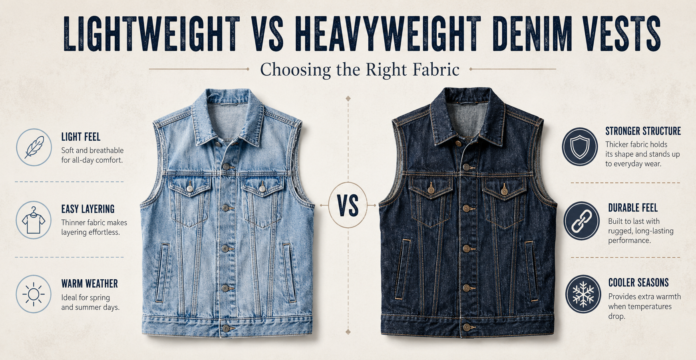
The difference in fabric weight between a lightweight and heavyweight denim vest can affect how it feels, looks, performs, etc. The fabric thickness of a denim vest can affect comfort, layering and durability. Heavyweight denim is stronger and more structured, while lightweight vs heavyweight denim vest denim is easier to wear and cooler. The wrong fabric weight can make the vest feel too hot, stiff or thin. The denim vest you choose should be appropriate for the season, your outfit and your daily activities. This guide will help buyers determine which fabric weight is best for them.
Lightweight vs Heavyweight Denim Vest Basics
The difference between lightweight and heavyweight denim vests is based on a simple principle: lighter fabrics are more comfortable, while heavier fabrics have a stronger structure. A full category like the denim vest collection can include many colors, washes, and fits, so fabric weight guidance helps customers compare options more easily. lightweight vs heavyweight denim vest are often better for summer, travel, and casual layering. Heavyweight denim vests are often better for rugged looks, workwear-inspired styling, and cooler weather. The right choice depends on how the vest will be worn.
What Is a Lightweight Denim Vest?
When comparing a heavyweight denim jacket with a lighter denim jacket, the lighter denim jacket is the softer and easier option. It is usually lighter and allows for better airflow. It is ideal for wearing in warm weather and at outdoor events. It can also be worn as a casual outfit or to layer over t-shirts. It is easier to travel with lightweight vs heavyweight denim vest because it occupies less space. It should have clean seams, strong stitching and secure buttons. The vest can lose its shape if the fabric is too thin. The vest should be comfortable and look like denim.
What Is a Heavyweight Denim Vest?
In a guide comparing lightweight and heavyweight denim, the heavyweight vest is stronger. The lightweight vs heavyweight denim vest is thicker and more structured. This vest type can appear rugged, durable, and premium. Denim in heavyweight is great for colder weather, outfits inspired by workwear, motorcycle styling and layering. It holds its shape better than thinner denim but may feel warmer. Before buying, buyers should consider shoulder comfort, armhole space, and fabric stiffness. The vest should be strong and durable without being too heavy or uncomfortable to wear every day.
Comfort and Breathability
The choice between a lightweight denim vest and a heavyweight denim jacket is largely based on comfort. In warm weather, lightweight vs heavyweight denim vest feels better because it is lighter and allows for more airflow. Heavyweight denim is more protective and gives a better shape but can be hot in summer. For a clean everyday option, a blue denim vest can work well in lighter or medium fabric weights because blue denim often supports relaxed daily styling. Buyers should choose fabric weight based on temperature, activity level, and how long they plan to wear the vest.
Structure and Shape Holding
The structure of the vest is also a key factor in deciding between lightweight and heavyweight denim. The fabric body of heavier lightweight vs heavyweight denim vest allows it to hold its shape better. It keeps the hem, collar, front panels and pockets looking good. It may feel lighter and softer, but if it is too thin, the denim can wrinkle more or collapse. It does not mean that lightweight denims are bad. You just need to make sure the pattern is well cut and sewn. Structured vests look cleaner in pictures and with outfits. Denim can be heavier for buyers who prefer a more sharp look, and lighter denim is better for those who prefer comfort.
Layering Over Shirts and Hoodies
The decision between a lightweight denim vest and a heavyweight denim jacket is affected by the layering. lightweight vs heavyweight denim vest can be worn over thin shirts and summer tops. They don’t add much bulk. When the weather is cooler, heavyweight vests are better worn over sweatshirts or flannel tops. A style like a mens denim vest can be chosen in different fabric weights depending on whether the buyer wants casual layering or rugged structure. The armholes should give enough room for movement. A vest should not pull at the chest or shoulders when layered.
Durability and Daily Wear
The durability of a vest is a key factor in choosing between lightweight and heavyweight denim. Denim that is heavier can be more durable due to the thicker fabric. The denim may be able to withstand rubbing and frequent use. It can last if the lightweight vs heavyweight denim vest is made of a good quality fabric, has reinforced stress points and strong stitches. Fabric weight alone does not decide durability. The quality of the stitching, buttons, pockets, seams and wash also matters. Even a heavy vest that has weak stitching can fail prematurely. Even a lightweight vest that is constructed well can be used for casual daily wear.
Simple One-Line Fabric Checks
These checks make lightweight vs heavyweight denim vest selection easier before buying or approving production.
- Choose lightweight denim if you want cooler daily comfort.
- Choose heavyweight denim if you want stronger structure.
- Check armhole room because layering needs space.
- Check fabric softness because stiff denim can limit movement.
- Check stitching because durability depends on sewing quality.
- Check season because warm and cool weather need different weights.
- Check wash and color because fabric weight changes the final look.
These one-line checks help buyers compare denim vest fabric without difficult textile words.
Color and Fabric Weight
The color can affect the styling of a lightweight vs heavyweight denim vest vest compared to a heavyweight one. Black denim is more sharp and modern, while blue denim can feel classic. A black denim vest in heavyweight fabric can create a strong, bold look, while a lighter black denim vest can feel easier for daily outfits. Blue denim in lightweight fabric can feel fresh for warm weather, while dark heavyweight denim can feel rugged and structured. Buyers should choose color and weight together. The best vest should match the outfit mood, season, and comfort need.
Final Guide for Choosing the Right Fabric
What determines the final decision between a lightweight vs heavyweight denim vest one is comfort, style, durability, as well as season. If the buyer is looking for easy-to-wear denim, comfort in warm weather, layers that are travel friendly, and casual outfits, choose lightweight denim. Heavyweight denim is best for buyers who want a strong structure and rugged style. They also prefer to layer in cooler weather. Fabric weight should be clearly stated in the product description because consumers need clear guidance prior to purchasing. The guide to lightweight denim vests vs. heavyweight denim helps improve product value and reduce confusion. It also allows buyers to choose vests that are suitable for everyday use.
FAQs
What is the main difference between lightweight and heavyweight denim vests?
The main difference is fabric thickness. Lightweight denim feels cooler and easier, while heavyweight denim feels stronger and more structured.
Which denim vest is better for summer?
A lightweight denim vest is usually better for summer because it feels more breathable and easier to wear in warm weather.
Is a heavyweight denim vest more durable?
A heavyweight denim vest can feel more durable, but real durability also depends on stitching, buttons, seams, fabric quality, and care.
Which vest is better for layering?
Lightweight vests are better over t-shirts and thin shirts, while heavyweight vests work better over hoodies, sweatshirts, and thicker layers.
How should buyers choose the right denim vest fabric?
Buyers should compare lightweight vs heavyweight denim vest options by checking season, comfort, fabric weight, layering needs, stitching, and style.