Not every leather skirt is cut from the same kind of hide, and this Leather Skirt Materials Explained guide breaks down exactly what separates lambskin, cowhide, goatskin, and faux leather from one another. Each material brings a different balance of softness, durability, and drape, which has a direct impact on how a skirt fits, moves, and holds up over time, regardless of how similar two skirts might look side by side.
Understanding these differences makes it much easier to choose a skirt that actually matches how you plan to wear it, rather than relying on how it looks in a product photo. In this guide, we’ll walk through the most common materials used in leather skirts, how they compare, and how to pick the right one for your needs and budget.
Lambskin: Soft, Lightweight, and Fluid
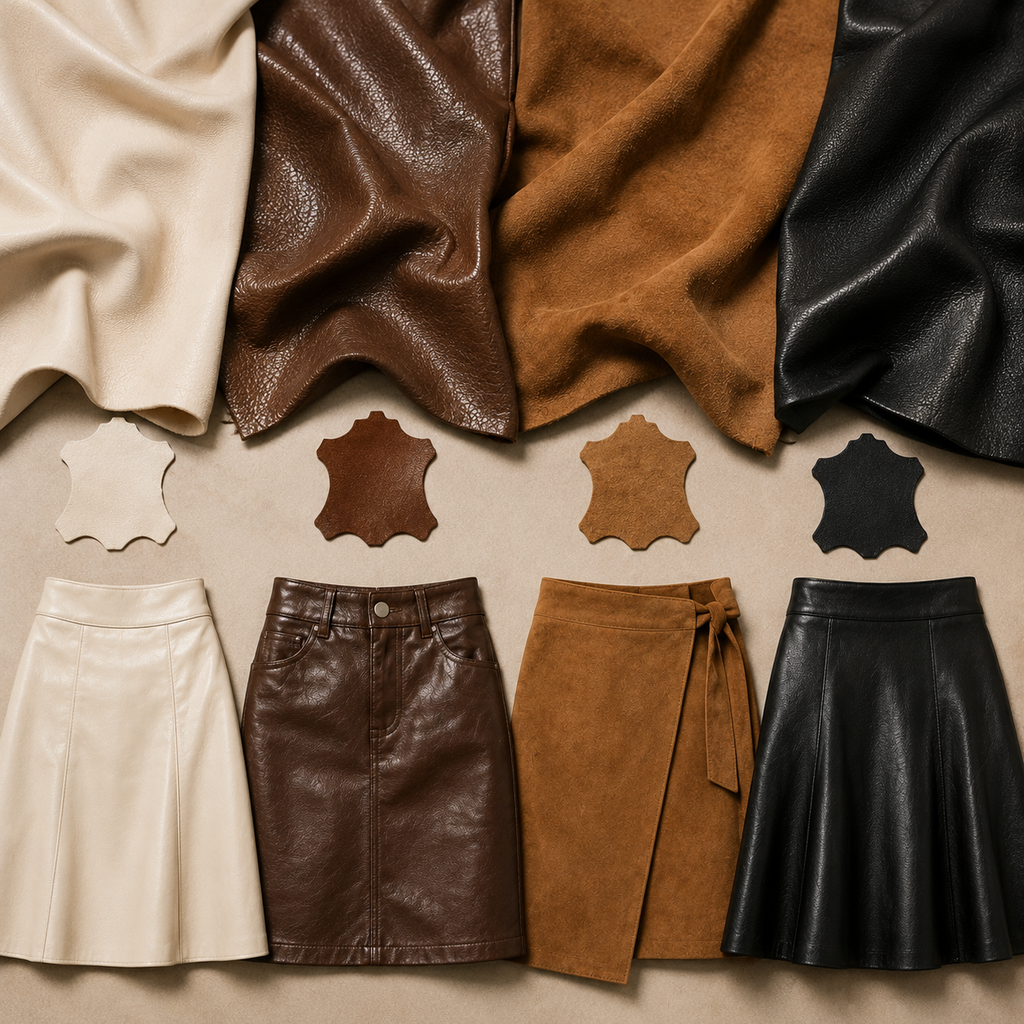
Lambskin is the softest and lightest of the common leather materials used in skirts, typically measuring just 0.5 to 0.8mm thick. Its fine, loosely structured fibers give it an almost fabric-like drape, which is why lambskin skirts move fluidly with the body rather than holding a rigid shape, particularly in wrap or pleated silhouettes.
This softness comes with a trade-off in durability, since lambskin is more prone to stretching and surface marks than thicker hides. It’s generally the better choice for skirts meant for lighter, more occasional wear rather than daily use, particularly in fitted or draped silhouettes where movement matters more than raw toughness, though proper care can still extend its lifespan considerably.
Cowhide: Durable and Structured
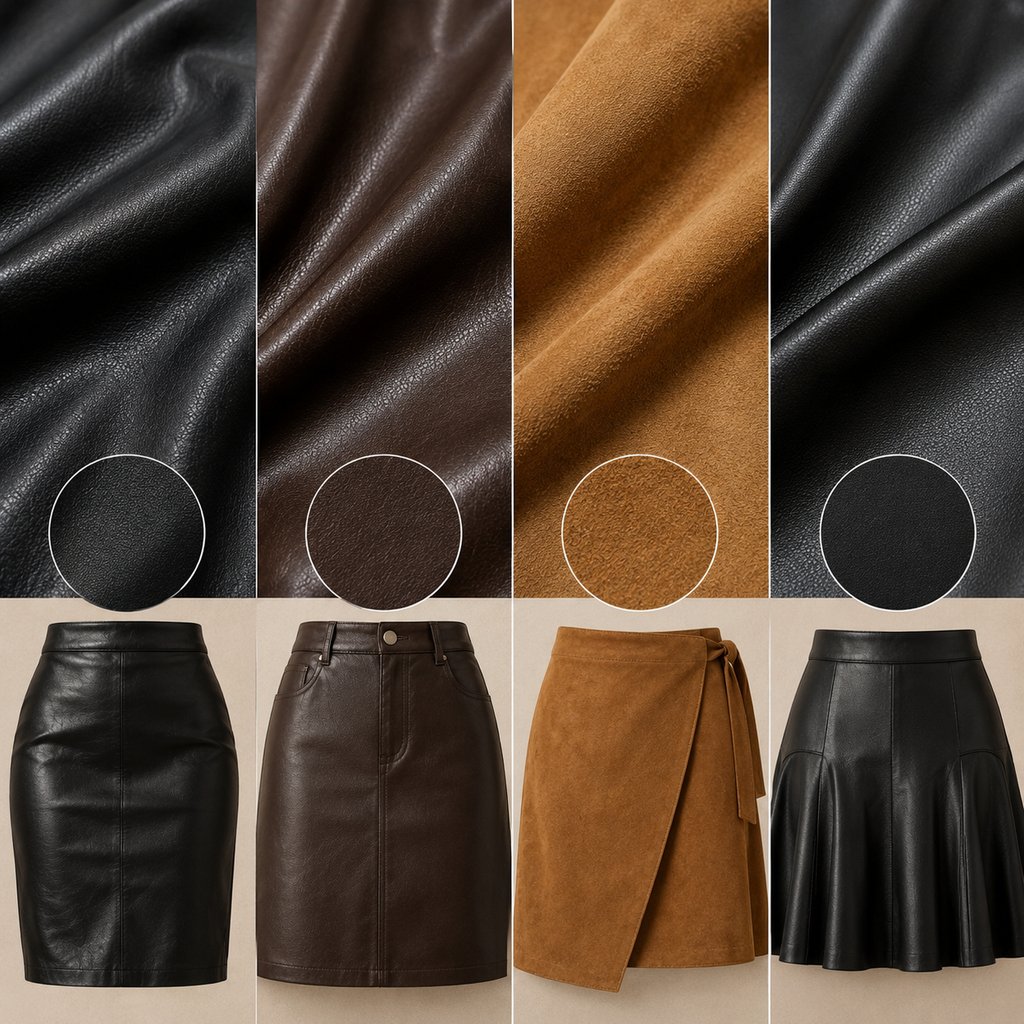
Cowhide sits at the opposite end of the spectrum, typically measuring 1.0 to 1.4mm thick with a dense, tightly packed fiber structure. This density gives cowhide skirts significantly more structure and resistance to everyday wear, making it a common choice for pencil and A-line silhouettes that need to hold their shape throughout the day, including through sitting, walking, and general handling.
Cowhide does require a longer break-in period than lambskin, since it starts out stiffer and gradually softens with wear. In exchange, cowhide skirts tend to last considerably longer and develop a richer patina over years of regular use, which many people specifically seek out in a long-term wardrobe piece.
Goatskin: A Practical Middle Ground
Goatskin falls between lambskin and cowhide in both thickness and character, typically measuring 0.6 to 1.0mm. It offers more durability than lambskin while remaining noticeably softer and more flexible than cowhide, thanks to natural oils in the hide that also give it a degree of water resistance not found in the other two common materials.
Goatskin’s signature pebbled grain isn’t purely cosmetic that texture helps hide minor scuffs and scratches, which is part of why goatskin skirts tend to age gracefully with regular wear, making it a practical option for pieces that see moderate, ongoing use without the higher price tag often attached to premium cowhide.
Genuine, Top-Grain, and Full-Grain: Why Grade Matters Too
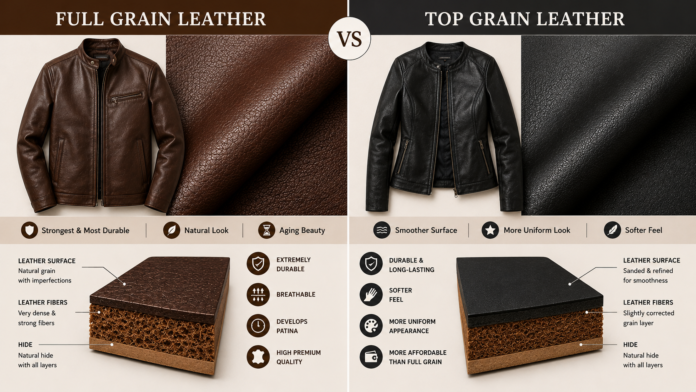
Material type isn’t the only factor at play the grade of the hide matters just as much as which animal it came from. Full-grain leather retains the hide’s natural, unaltered surface and offers the greatest durability, while top-grain leather is lightly sanded for a smoother, more uniform look at a slight cost to long-term strength. Genuine leather, despite the name, sits lower on the quality scale, made from thinner, less dense layers of the hide that don’t hold up nearly as well.
A skirt made from full-grain cowhide and one made from genuine lambskin will behave very differently even though both are technically “real leather,” which is why checking both the animal source and the grade matters when comparing options, rather than assuming all “genuine leather” products perform similarly.
Faux Leather: A Synthetic Alternative
Faux leather skirts are made by coating a fabric backing with polyurethane (PU) or polyvinyl chloride (PVC) rather than using animal hide at all. PU-based faux leather tends to be softer and more flexible, while PVC versions are generally more water-resistant but stiffer and less breathable, making the choice between the two largely dependent on intended use.
Faux leather skirts are typically more affordable and don’t involve animal products, making them appealing for budget-conscious or values-driven shoppers, though they generally don’t match genuine leather’s lifespan, particularly with repeated wear and flexing at the waist and seams where synthetic coatings tend to crack first.
Leather Skirt Materials Explained at a Glance
Here’s a quick summary of how the most common materials compare:
- Lambskin:0.5-0.8mm; softest and most fluid; best for lighter, occasional wear
- Goatskin:0.6-1.0mm; balanced durability and softness; naturally water-resistant
- Cowhide:1.0-1.4mm; most durable and structured; best for daily wear
- Faux Leather (PU):Softer synthetic option; more affordable; shorter lifespan
- Faux Leather (PVC):Stiffer, more water-resistant synthetic; less breathable
Choosing the Right Material for Your Needs
Matching material to intended use is the most practical way to apply everything in this Leather Skirt Materials Explained guide. If a skirt will be worn frequently and needs to hold a tailored shape, cowhide or a full-grain hide is generally the better investment. If softness and drape matter more than daily durability, lambskin or a quality faux leather option makes more sense, particularly for pieces reserved for occasional or seasonal wear.
For anyone deciding between genuine and synthetic materials specifically, our comparison of leather versus faux leather skirts breaks down the durability, cost, and care differences in more depth, covering considerations that go beyond material type alone.
Exploring Leather Skirt Materials in Person
Photos and spec sheets only go so far when comparing hides, which is why browsing our full leather skirts range side by side can help clarify how different materials actually look and feel before making a final decision. For anyone specifically comparing genuine leather against a synthetic option, the faux leather skirt offers a practical, budget-friendly reference point for how PU-based material compares to the animal-hide options covered above, both in feel and in price.
The Role of Custom Manufacturing in Leather Apparel
As demand grows for well-made leather apparel, more businesses are turning to custom manufacturers who understand how material choice affects durability, comfort, and cost, rather than relying on generic sourcing that doesn’t specify hide type or grade clearly.
At ECO-JERSEY, we manufacture and supply custom apparel including leather-based skirts and accessories to businesses around the world. Whether a company needs the durability of cowhide, the softness of lambskin, or a budget-conscious faux leather alternative, our team works directly with clients to produce apparel that matches their exact specifications, down to the exact material and grade.
Care Differences Between Materials
How a leather skirt needs to be cared for also depends heavily on its material. Lambskin requires gentle handling and benefits from regular conditioning to prevent drying and cracking, since its thin structure is more vulnerable to damage than thicker hides. Cowhide is more forgiving and can tolerate more frequent handling, though it still benefits from periodic conditioning to maintain flexibility over time.
Goatskin’s natural oils give it a built-in advantage when it comes to everyday resilience, requiring less frequent conditioning than lambskin while still staying supple. Faux leather generally needs the least specialized care, though its synthetic coating can’t be restored the way genuine leather can once it starts to crack or peel.
Conclusion
Understanding this Leather Skirt Materials Explained breakdown makes it much easier to choose a skirt that actually fits your needs, rather than guessing based on appearance alone. Lambskin, goatskin, cowhide, and faux leather each bring their own balance of softness, durability, and cost, and the right choice ultimately depends on how the skirt will be worn and how long it needs to last, along with any personal preferences around animal-derived materials.
For businesses looking to source reliable leather apparel whether for fashion lines or branded professional wear working with an experienced manufacturer like ECO-JERSEY ensures every piece is built with the right material for the job.
FAQs
What materials are leather skirts typically made from?
Leather skirts are commonly made from lambskin, cowhide, or goatskin, along with faux leather alternatives made from PU or PVC-coated fabric.
What is the most durable material for a leather skirt?
Cowhide is generally the most durable material for a leather skirt, thanks to its thick, dense fiber structure that resists abrasion and holds its shape over years of wear.
Is lambskin or cowhide better for a leather skirt?
It depends on the priority: lambskin offers superior softness and drape with less break-in time, while cowhide offers significantly greater durability for frequent, daily wear.
What is the difference between genuine leather and full-grain leather?
Genuine leather is made from lower, less dense layers of the hide, while full-grain leather comes from the top layer and retains the greatest natural strength and durability.