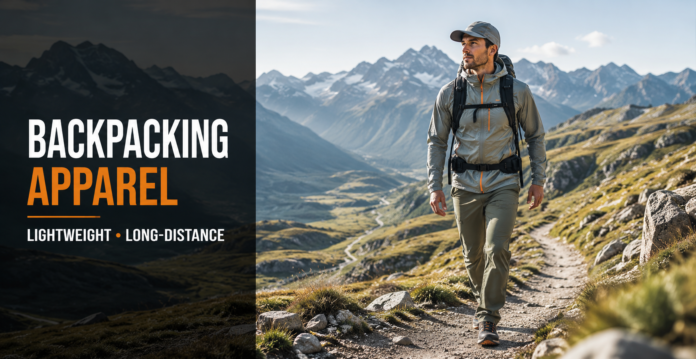
Every gram matters in backpacking. Unlike day hiking where a heavy pack is merely inconvenient, a poorly optimized backpacking kit compounds across every mile — draining energy, slowing pace, and reducing the enjoyment that long-distance trips should deliver. Outdoor clothing for backpacking demands a fundamentally different selection approach than casual outdoor use — prioritizing lightweight construction, multi-functional versatility, and packability without sacrificing the performance protection that multi-day wilderness travel genuinely requires.
The Core Principle — Every Piece Must Earn Its Place
Backpacking clothing selection operates under one non-negotiable rule — every garment must justify its weight through genuine functional necessity. Clothing that serves one purpose only competes poorly against alternatives that serve two or three purposes simultaneously — and multi-day trips provide limited opportunities to discard mistakes once you’re days from the trailhead.
This principle drives experienced backpackers toward clothing systems built from fewer, lighter, more versatile pieces rather than comprehensive wardrobes that cover every possible scenario with dedicated garments. A merino wool base layer that works as both a hiking shirt and a sleeping layer eliminates one item entirely. A packable waterproof jacket that serves as both rain protection and wind shell replaces two separate garments with one.
Base Layers — The Foundation of Your Backpacking Kit
Merino wool dominates backpacking base layer selection for one primary reason that no synthetic alternative replicates adequately — multi-day odor resistance. Synthetic base layers perform excellently for single-day use but develop persistent odor within one to two days of continuous wear that makes extended backpacking trips genuinely unpleasant without washing opportunities.
Merino’s natural antimicrobial protein fiber structure prevents bacterial growth responsible for odor — allowing the same base layer to be worn across multiple consecutive days without the odor accumulation that synthetic alternatives develop rapidly under continuous multi-day backpacking conditions. This single property allows backpackers to reduce base layer count significantly — carrying one merino top instead of the multiple synthetic alternatives that odor management would otherwise require for equivalent trip duration.
Lightweight merino — 150 to 180gsm — suits three-season backpacking where base layers serve moisture management rather than primary insulation functions. Midweight merino — 200 to 250gsm — suits cold weather backpacking where thermal contribution from the base layer adds meaningful system warmth without dedicated insulation weight addition.
Mid Layers — Lightweight Warmth on Demand
Backpacking mid layers face the most demanding weight optimization requirements of any clothing category — because warmth is genuinely needed at camp and during cold weather movement but any insulation weight that isn’t absolutely necessary represents inefficiency that compounds across the entire trip duration.
Lightweight synthetic insulated jackets — using advanced synthetic fills at 40 to 60g fill weight — provide meaningful warmth addition in packable formats that compress to volleyball-sized volumes. These packable insulated layers suit three-season backpacking where significant insulation is needed only during rest stops and cold evenings rather than throughout continuous active movement.
Down insulated layers offer superior warmth-to-weight for dry climate backpacking — providing equivalent warmth at 30% to 40% less weight than synthetic alternatives at comparable fill specifications. The wet-condition limitation of untreated down — losing insulating effectiveness when dampened — is addressed through hydrophobic down treatments that maintain meaningful performance when moisture exposure occurs during backpacking conditions.
For deeper understanding of how insulation choices affect cold weather backpacking performance, this Alaska winter jackets guide covers extreme cold insulation selection in detail — directly applicable to serious cold weather backpacking where insulation choices determine both comfort and safety across multi-day exposed wilderness travel.
Shell Layers — Packable Weather Protection
Backpacking shell layers must balance genuine weather protection with minimal weight and compressed volume — because a shell that gets left in the pack due to weight concerns provides zero protection when unexpected rain arrives mid-route.
2.5-layer waterproof constructions represent the optimal backpacking shell format — providing genuine membrane waterproofing in sub-200 gram packages that compress to fist-sized volumes within hiking packs. These ultralight shells pack into chest pockets for instant deployment during sudden weather deterioration — the rapid weather changes that mountain and backcountry backpacking environments regularly create without warning.
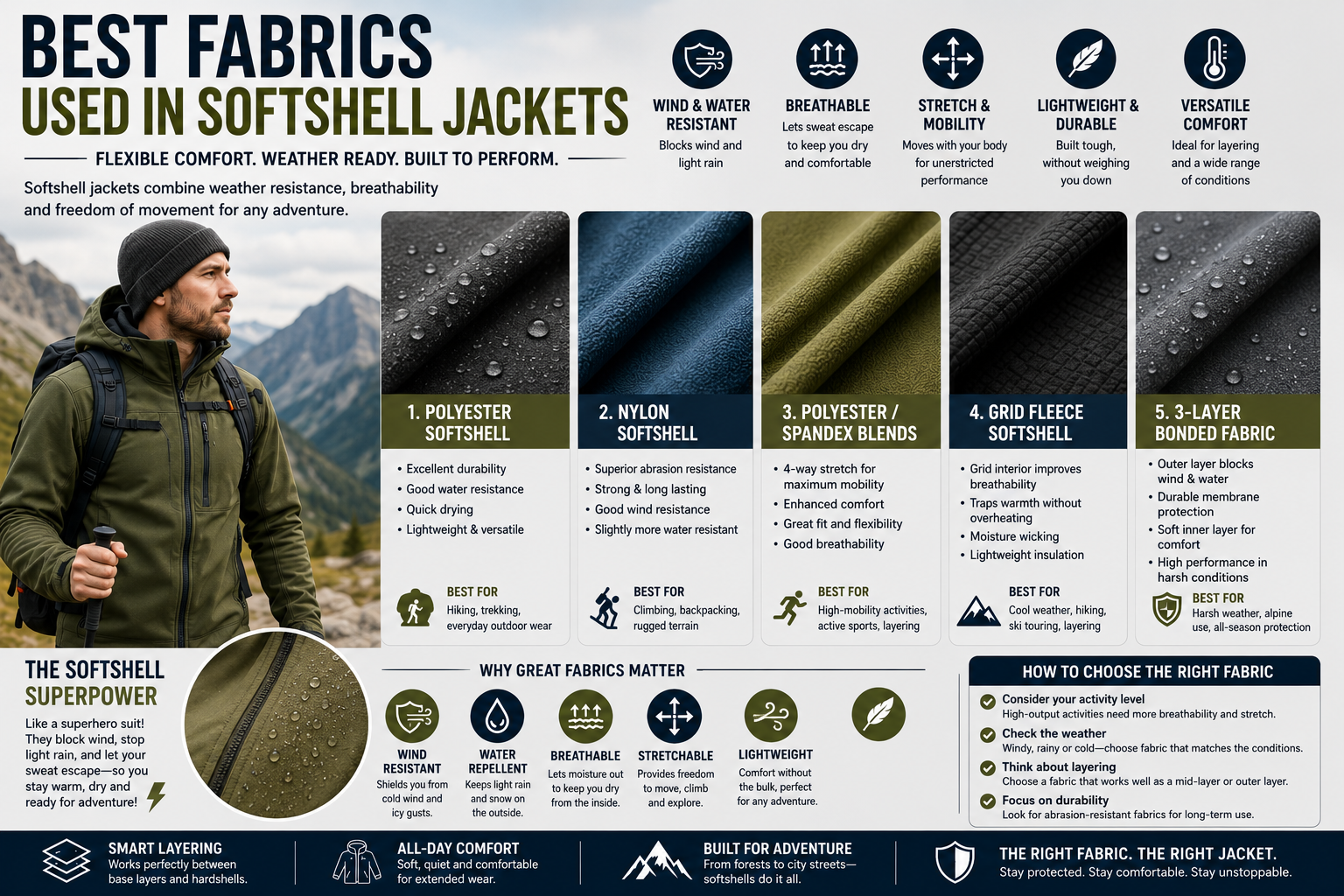
Softshell jackets suit dry climate backpacking where wind resistance and stretch matter more than full waterproofing — providing better breathability and freedom of movement during sustained aerobic hiking output than rigid hardshell alternatives deliver at equivalent weight.
Backpacking Bottoms — Lightweight and Versatile
Lower body backpacking clothing requires the same weight optimization discipline as upper body choices — with additional versatility requirements that multi-day camping creates across hiking, camp tasks, and sleeping contexts throughout each trip day.
Lightweight nylon-elastane hiking pants — 80 to 100gsm construction — provide four-way stretch, quick-dry performance, and meaningful durability at weights approaching ultralight benchmarks. These pants serve hiking, camp activities, and creek crossing recovery equally well — eliminating the need for separate hiking and camp clothing that duplicate lower body coverage unnecessarily in a well-optimized backpacking kit.
For a complete understanding of how to choose lower body backpacking clothing correctly across fabric, length, and feature requirements, this outdoor shorts fabric guide covers the material performance principles that apply equally to backpacking shorts and lightweight trail pants.
Footwear and Accessories — Complete the Lightweight System
Socks represent one of the highest weight-efficiency opportunities in backpacking clothing optimization — because merino wool hiking socks provide odor resistance, cushioning, and blister prevention across multi-day use without the washing frequency that synthetic alternatives demand for equivalent comfort maintenance.
Lightweight gloves, sun-protective headwear, and a packable neck gaiter complete cold weather and sun protection requirements across the varied conditions that multi-day backpacking creates — each piece adding minimal weight while providing meaningful comfort and safety value across the trip.
Building a Complete Backpacking Clothing System
Outdoor clothing for backpacking works most effectively when designed as a coordinated system rather than individual garments assembled without considering how they interact across the full range of conditions a long-distance trip creates. Every piece should complement every other piece — base layers compatible with mid-layer fit, mid-layers compressible within shell jacket volume, and all layers packable within the clothing compartment of your specific backpacking pack.
Our hiking clothing range covers the complete spectrum of lightweight trail clothing options available for brand development — from ultralight base layers through packable shell jackets that serve the specific weight and performance demands of serious long-distance backpacking applications.
For practical product examples of lightweight outdoor construction applied to backpacking-relevant garments, these hiking pants demonstrate how nylon construction delivers the stretch, durability, and quick-dry performance that multi-day trail use demands without the weight penalty that heavier outdoor trouser constructions impose across long-distance trip distances.
Conclusion
Outdoor clothing for backpacking succeeds through disciplined selection — choosing lightweight, versatile, performance-verified pieces that justify every gram they add to your pack through genuine functional necessity across the full range of conditions your trip creates. Merino base layers for multi-day odor resistance, packable insulation for efficient warmth, ultralight shells for weather protection, and lightweight stretch trail pants for lower body performance together create a complete backpacking clothing system that keeps you comfortable, protected, and moving efficiently across every mile of your long-distance outdoor adventure.
FAQs
How many clothing items should I carry for a multi-day backpacking trip?
Most experienced backpackers carry one base layer, one mid-layer, one shell jacket, one hiking bottom, one camp layer, and two pairs of socks — adjusting quantities based on trip duration, conditions, and access to water for washing during extended trips.
Is merino wool worth the higher cost for backpacking base layers?
Yes — for multi-day trips where odor resistance allows wearing the same base layer across multiple consecutive days without washing. The weight saved by carrying fewer base layers typically exceeds the weight difference between merino and synthetic alternatives at equivalent performance specifications.
What shell jacket weight is appropriate for backpacking?
Sub-300 gram packable waterproof shells suit most three-season backpacking applications — providing genuine membrane waterproofing in formats light enough that weight concerns don’t prevent carrying the jacket on every outing regardless of forecast conditions.
Can lightweight backpacking clothing be produced under a private label?
Yes. Professional outdoor apparel manufacturers offer complete private label production for lightweight backpacking clothing with performance fabrics, custom designs, colors, labels, and packaging — giving outdoor brands full technical and commercial control over their backpacking apparel collections.