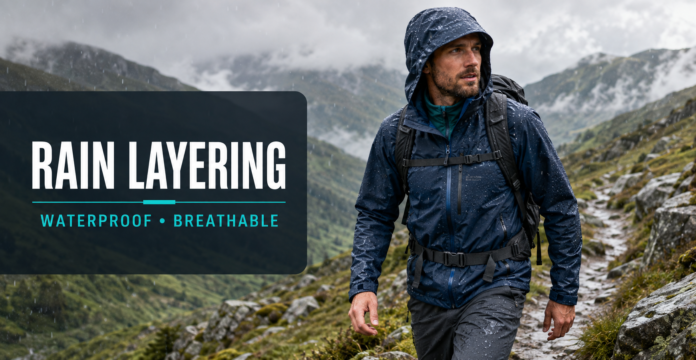
The best outdoor clothing for rain keeps water outside while allowing heat and perspiration to escape. A waterproof jacket alone may stop rainfall, but it can still leave the wearer wet from trapped sweat. An effective rain system therefore combines a moisture-wicking base layer with a waterproof, breathable shell and suitable lower-body protection.
The correct garments depend on rainfall intensity, activity level, temperature, and exposure time. A lightweight shell may handle short summer showers, while prolonged mountain rain requires stronger waterproofing, sealed seams, and dependable closures. Understanding these differences helps outdoor users stay dry without sacrificing comfort or mobility.
Waterproof and Water-Resistant Clothing
Water-resistant fabric delays light moisture but cannot normally withstand continuous rain. It may use a tightly woven surface or durable water-repellent finish that causes droplets to bead and roll away. This construction works for drizzle, short walks, and changeable forecasts, but water can eventually pass through under prolonged exposure.
Waterproof garments use membranes or coatings that create a stronger barrier against rain. Their performance also depends on seam sealing, zipper protection, cuffs, and hood construction. Even waterproof fabric can leak if needle holes remain uncovered. Eco Jersey’s rain gear guide provides additional guidance on selecting practical protection for wet conditions.
Why Breathability Matters
Breathability describes how effectively moisture vapor moves from inside a garment to the outer environment. During hiking, climbing, or outdoor work, the body generates heat and sweat. If the shell cannot release this moisture, condensation forms inside, making the base layer damp even when rain never penetrates the fabric.
Waterproof and breathable materials balance these opposing needs through technical membranes, microporous coatings, or hydrophilic layers. However, no shell can release unlimited heat. Underarm zippers, back vents, mesh-lined openings, and adjustable front closures provide direct ventilation during demanding activity and improve comfort in warm, humid rain.
Build an Effective Rain Layering System
A rain system should begin with a synthetic or merino wool base layer that moves moisture away from the skin. Cotton is unsuitable for sustained wet conditions because it absorbs water and dries slowly. In cool weather, a light fleece can provide insulation between the base layer and shell, although excessive insulation may cause overheating during movement.
The outer shell should fit comfortably over these layers without becoming excessively loose. Rain trousers protect the legs when rainfall is heavy or vegetation is wet, while waterproof footwear prevents socks from becoming saturated. Brands developing complete collections can work with an outdoor manufacturer to coordinate fabrics, patterns, seam construction, and performance features.
Features to Check Before Choosing Rainwear
Useful details can determine whether outdoor clothing for rain remains protective during prolonged exposure. Buyers should examine the complete garment rather than judging performance only by the fabric description:
- Taped seams cover stitching holes that may admit water.
- Adjustable hoods protect the head without limiting visibility.
- Storm flaps reduce water entry around front zippers.
- Secure cuffs stop rain from running into the sleeves.
- Drawcord hems prevent wind-driven rain from entering below.
- Ventilation openings release heat during physical activity.
- Covered pockets protect maps, phones, and small essentials.
Fit also affects protection. A jacket that is too tight may strain seams and compress the insulating layer, while an oversized shell can catch wind and allow water through open areas. Articulated sleeves, shaped knees, and adjustable openings improve mobility while preserving coverage during bending, climbing, or walking with a backpack.
Match Rainwear to the Activity
Day hikers usually need lightweight, packable rainwear that can be stored until the weather changes. Multi-day trekkers should prioritize durability, breathability, and reliable seam sealing because repeated rain exposure places greater stress on the garment. Camping clothing may also require abrasion resistance around rough ground, equipment, and campsite surfaces. Eco Jersey’s camping fabrics guide explains how common outdoor materials perform in wet and demanding environments.
Outdoor workers may need high visibility in addition to rain protection. A reflective jacket combines waterproof coverage with enhanced visibility for roadside, construction, and low-light settings. Cyclists and runners should look for low weight, ventilation, reflective details, and patterns that remain comfortable during repeated movement.
Care for Waterproof and Breathable Layers
Dirt, body oils, and detergent residue can reduce breathability and prevent the outer surface from shedding water effectively. Rainwear should be washed according to its care label using a suitable technical-garment cleaner. Fabric softener and bleach should be avoided because they may damage membranes, coatings, or water-repellent finishes.
When water stops beading on the surface, the durable water-repellent treatment may need reactivation or renewal. Small tears and damaged seam tape should be repaired before they spread. Correct cleaning, drying, and storage help outdoor clothing for rain maintain its performance throughout repeated outdoor use.
Conclusion
Reliable rain protection requires more than a waterproof label. Fabric performance, breathability, sealed seams, ventilation, fit, and protective details must work together. A moisture-wicking base layer and suitable shell help control both external rain and moisture produced by the body.
The best outdoor clothing for rain should match the weather, activity, and exposure time. Choosing an adjustable system keeps users drier and more comfortable while allowing them to respond to changing temperatures and rainfall intensity.
FAQs
Is waterproof clothing completely breathable?
No. Breathable waterproof fabrics release moisture vapor, but ventilation may still be necessary during intense activity.
Is water-resistant clothing suitable for heavy rain?
No. It is better for drizzle and brief showers than prolonged or wind-driven rain.
Should a rain jacket fit loosely?
It should accommodate inner layers comfortably without becoming oversized or restricting movement.
Can brands customize waterproof rainwear?
Yes. Manufacturers can customize waterproof fabrics, seam sealing, ventilation, fit, branding, labels, and packaging.