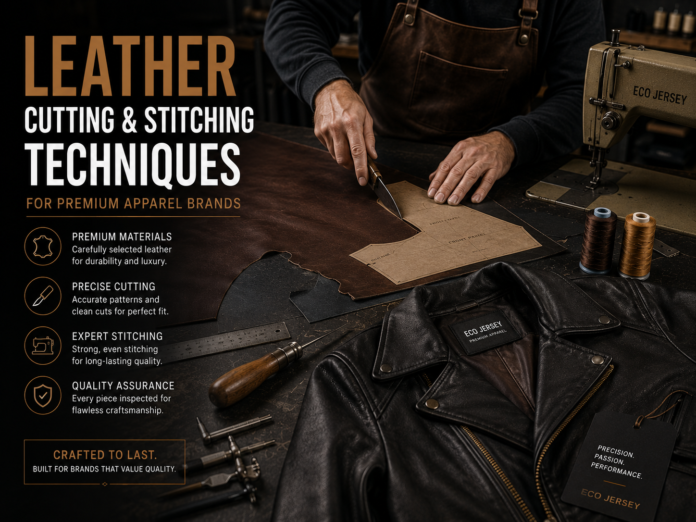
In premium apparel manufacturing, the techniques of leather cutting &stitching is significant to the quality, durability, and overall finish of the garment. In contrast to woven fabrics, leather will not fray or stretch unevenly; hence, each cut must be done with purpose and each seam strong and tidy. A mastery of these leather cutting and stitching techniques is crucial for apparel brands to manufacture high-quality, durable apparel that the discerning customer will be proud to wear.
Why Leather Cutting and Stitching Matter
Leather is unyielding. Once you’ve cut it, there’s no going back. And seams that are done poorly will not only lose their integrity but can also shape the garment. Given the points mentioned, attention to detail, skill, and experience are all crucial in the execution of each and every step of the leather cutting and stitching process. This will invariably be the case when we consider premium apparel manufacturing and how a premium brand’s reputation depends on consistency and quality throughout every batch.
Nail down cutting and expert stitching are part of our complete apparel manufacturing services. Not only are our leather garments beautiful; they are also made to last.
Leather Cutting Techniques Every Manufacturer Should Know
There is more to cutting leather than “trace and cut.” Different styles and functions of garments (biker jackets vs vests vs premium pants) require different techniques.
Hand Cutting Techniques
Using scissors, knives, or blades to individually cut pieces is the hand cutting technique. It is great for small runs and bespoke pieces.
Die Cutting Techniques
For larger runs, die cutting is efficient and accurate. A shaped metal die and a press are used to quickly cut multiple pieces. This technique is excellent when consistency and uniformity across multiple sizes and repetitions is necessary.
Automated Techniques
Using CNC or a computerized laser can lead to great precision especially for patterns or curves. This advanced technique can also minimize waste by optimizing the arrangement of the pieces on the leather hide.
Skiving and Edge Preparation
Skiving is the term used for the flattening of leather edges prior to stitching to help reduce the thickness of the seams. This technique becomes very important in leather constructions which help to promote the function of the garment while improving the aesthetics and comfort of the garment.
Stitching Techniques That Build Strength and Style
After cutting leather pieces, the joining process by stitching requires considering the balance of strength, flexibility, and appearance of leather.
Saddle Stitch
This is one of the most traditional ways of hand stitching. This is done using two needles and one thread. Each side of the stitching crosses one half of the thread. This creates a clear advantage in that it is still secure in case one half of the thread or one side of the stitching fails. This is important in leather products as durability is very important and this is mainly why this stitching method is used in this category.
Machine Stitching
In mass production of leather products, machines are used to help streamline the process. Heavy duty leather stitching machines use lockstitch to help stream line the stitching process and maintain high performance levels.
Pre-Stitch Guidelines
Before stitching, uniform stitch placement can be accomplished by either grooving or dying holes in the leather; this relieves stress on the leather and improves the seam’s appearance and durability.
Strategies to Construct Quality Leather Clothing
These strategies can create clothing that is durable and elegant:
- Use the correct tools for the material: Stronger blades and specialized needles are essential for thicker leather.
- Use tools that are in good condition: Uneven edges or tearing can be a result of using a dull blade.
- Use the appropriate resin: A resin that is waxed or a thicker polyester will be stronger.
- Consider the direction of the grain: The placement of the panels can be done in such a way that the natural grain adds to style and longevity.
- Finish the edges: Burnishing the edges protects the seams and adds an elevated appearance to the clothing.
How Eco Jersey Aids Creation of Quality Leather Garments
If you are creating leather clothing and need skilled production assistance from beginning to end, Eco Jersey can offer a broad production capability guarantee on leather cutting, sewing and final finishes of your clothing.
Lets start with us today
Knowing the appropriate leather cutting and stitching techniques is imperative for either enhancing a current leather product or creating a new quality line. To help you achieve your desired product, we have created a simple process to make high quality custom apparel a reality; simply Get Quote Now and begin your journey with us, or Contact Us Now for specialty production assistance.
Conclusion
Taking care and attention to detail with leather apparel should not be mistaken as sewing, but as creation. Each step from the cutting to the stitching should be carefully considered as it improves the feel and comfort of the garment. With the knowledge of the best quality cutting and stitching methods, your leather apparel is sure to emerge as the best choice for customers — durable, consistent and most importantly, appreciated.
FAQs
What should I consider before cutting leather for garments?
When making the decision to cut leather, the grain direction, the quality of the hide, and panel positioning should be all be factored in as once cut, leather cannot be repositioned as fabric can.
Is hand stitching always better than machine stitching?
Saddle stitched hand stitching is durable and adds to the overall quality of the craftsmanship, however, for bigger runs, machine stitching is best for quality and consistency.
Can automated cutting replace all traditional methods?
Laser and CNC cutting can reduce the time and effort with cutting, however for more complicated designs, the traditional cutting methods still hold their place in the bespoke production.