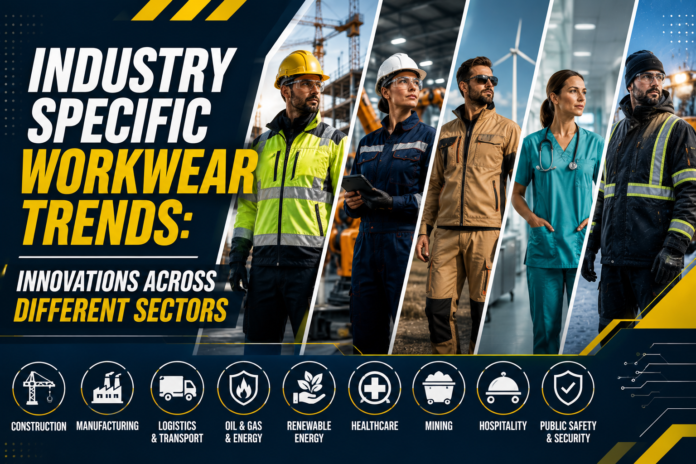
Workwear is changing according to the industry. Every workplace needs clothes that are appropriate for its tasks, weather, safety hazards, and professional appearance. The clothing required by a warehouse team is different from that of an office team. Outdoor workers do not require the same clothing as oil and gas workers. Businesses today want to wear industry specific workwear trends which is more comfortable, durable and easy to clean. Clothing should be functional and not just a team uniform. To compare workwear for various job roles, businesses can browse the collection.
What are the latest trends in workwear?
Industry specific trends in clothing are changes made to workwear based on the requirements of each industry. The trends are high visibility garments, waterproof clothing, clothing that is durable for industrial workers, professional uniforms, and clothing designed for customers.
It’s simple. The workwear must be appropriate for the environment in which workers are working. Workwear should be designed to help workers move comfortably, see clearly where necessary, deal with weather and present the company in a professional manner.
What is the importance of sector-based workwear?
Industry specific workwear trends are valuable because they allow businesses to avoid uniforms that fit all. It may seem easy to maintain a single style of workwear, but this can cause problems for different teams who face different working conditions.
Pickers in warehouses may require lightweight clothing with high visibility. An outerwear that is waterproof may be required by a delivery person. Corporate receptionists may require a uniform that is polished. Site workers may require garments that are more durable and stronger. Workwear can be more effective and cost-effective if you choose by industry.
Wear High Visibility Workwear in Warehousing, Logistics and Warehouse
Often, warehouse and logistics teams work in areas with forklifts and trucks, as well as pallets and other busy moving zones. In these environments, visibility is a must because the workers need to be easily visible.
Hi-vis workwear is a collection of clothing that is designed to be visible. It includes brighter colors, reflective tape placed better, lighter vests and more comfortable jackets. The collection of hi-vis clothing can be used by teams who need to wear clothes that are visible for operations in warehouses, transport and logistics.
Wear Waterproof Clothing for Outdoor Teams
Clothing for outdoor workers should be able to withstand rain, wind and changes in weather. Workers’ focus and movement can be affected if they become uncomfortable or wet.
Workwear for waterproofing is characterized by stronger seams and breathable finishes, as well as better closures, adjustable sleeves, lighter materials, and more breathable fabrics. Workwear that is waterproof can be useful to delivery crews, outdoor maintenance teams, loading staff, and construction workers who are working in wet weather conditions.
Oil and Gas Workwear For Demanding Sites
Clothing for oil and gas work environments should be stronger than standard clothing. Work conditions can include dirt, heat and outdoor exposure. Workwear for these occupations must be durable, comfortable, and suitable for the site.
Workwear for oil and gas is selected based on the job risks, garment construction and worker movements. The modern designs are based on better stitching, more practical pockets, a better fit and clothing that will last for longer.
Corporate uniforms for professional teams
Not only industrial workers need workwear. Professional clothing is also needed in offices, retail stores and showrooms. Appearance, comfort, consistency of brand and fit is very important for these roles.
Corporate Uniforms have become more stylish and modern with subtle branding, cleaner colors, wrinkle-resistant fabric, smart casual styling, and better tailored uniforms. The best corporate uniforms should be able to make the employees feel comfortable and look professional during their long working days.
Specialized Workwear Systems
Role-based planning of workwear is one of the most innovative innovations in modern times. Businesses no longer give every employee the same shirt, jacket or trousers. Instead, they select clothing based on department, job, weather and visibility requirements.
The collection of industry-specific clothing assists businesses in selecting the right clothes for their real work conditions. The approach reduces waste and improves comfort because every garment is designed for a specific purpose.
Better Fabric Technology
Modern workwear is heavily influenced by fabric innovation. Modern fabrics are designed to be breathable, flexible, resistant to water, stain and abrasion, easy-to-clean, and color stable. The features of these fabrics help keep workers comfortable and their garments functional for longer.
What fabric is best for you depends on your industry. Fabrics that are lightweight, breathable and suitable for warehouse workers may be needed. An outdoor worker may need waterproof fabric. A worker in the industrial sector may require a stronger material. Corporate workers may require smooth and wrinkle-resistant fabric.
Comfort and Movement
Modern workwear must support natural movement. Worker may stand, bend, lift up, drive, walk, scan, drive, ascend, pack or greet customers for many hours. Wearing clothing that limits movement reduces performance and comfort.
Workwear is more comfortable to wear with better pattern designs, improved sleeves, adjustable closures and stretch panels. Comfort has become a key feature and not just a minor detail.
Wearing garments for longer and with greater durability
The business world is also focused on durability, as frequent replacements increase costs. Better fabric, stronger stitching, more durable zippers and buttons, as well as reinforced stress points will help to make garments last.
Sustainability is also supported by a longer garment lifespan. It is better to have a durable item of workwear that can withstand repeated washings than an inexpensive item which fails very quickly. Workwear of high quality should remain useful, professional, and clean through everyday wear.
Sustainable Development in Different Sectors
In many industries, sustainability is now a part of the workwear design process. Businesses want durable fabrics and responsible materials, as well as reduced waste. They also prefer designs with timeless appeal that don’t need to be replaced often.
Sustainable workwear must still be appropriate for the task. It is not enough to have eco-friendly clothes if they do not also support safety, comfort and movement.
Branding, Role Identification and Other Identifiers
The modern workwear helps to keep teams organized. Employees can be identified by using logos, colours, names, badges and labels. It is useful in industrial and warehouse sites, as well as retail shops, office buildings, and events.
The branding should be simple and functional. Small logos or labels that clearly define the role of the garment often look more professional than large printing. Branding is important for a company’s identity, but it shouldn’t make the clothing look too busy.
Wearable Technology with Smart Features
Modern workwear features improved materials such as reflective fabrics, waterproof fabrics with breathable finishes, moisture control fabrics, antimicrobial surfaces, reinforced panels and better pocket system. They are only useful when they address real-world problems.
The daily performance of a lightweight, waterproof jacket, durable, hi-vis vest or comfortable, corporate shirt can be improved more by a design that looks good on paper than one with merely slick, modern features.
Checklist of Industry-Specific Workwear Trends
Check out this list of industry specific workwear trends before you update your workplace attire:
- Workwear should be chosen based on the actual job requirements.
- Wear hi-vis clothing when visibility is important.
- Select waterproof clothing for rainy conditions.
- Choose stronger clothing in industrial areas.
- For corporate roles, use polished uniforms.
- Examine the fabric’s strength and wash life.
- Ensure that your clothing allows for easy movement.
- Clean branding and labelling is important.
- Order samples first before ordering in bulk.
- When the garment is no longer functional or attractive, replace it.
Avoid these Common Mistakes
The trend of choosing uniforms for all workers is a common error in the industry-specific workwear. It may seem simple but this can lead to comfort issues, safety problems and poor performance if different departments require different uniforms.
A second mistake is to choose workwear solely because of its modern appearance. It is useless to wear a trendy item if the garment does not fit your job. Business owners should select innovations which improve comfort, durability and safety. They can also choose to enhance visibility or weather protection.
Conclusion
Workwear is different for each sector. Visibility is important for warehouse and logistics workers. Weather protection is needed for outdoor workers. Teams working in oil and gas need garments that are durable. Corporate teams require polished uniforms that are comfortable.
The modern workwear chosen should reflect the job, and not just style or cost. Clothing that is based on the real needs of a sector will make workers more comfortable and professional. It also provides better value over time.
FAQs
What is industry-specific clothing?
It’s modern, tailored workwear that caters to the specific needs of various sectors. For example, logistics, outdoor jobs, corporate roles, oil and energy, etc.
Why are industry-specific clothing better than generic workwear?
The ergonomics of the workstation is better, as it provides greater comfort, safety and durability.
What is the best workwear for logistic teams?
Logistics and warehouse workers can benefit from wearing hi-vis vests and safety jackets as well as durable trousers and layers of comfortable clothing.