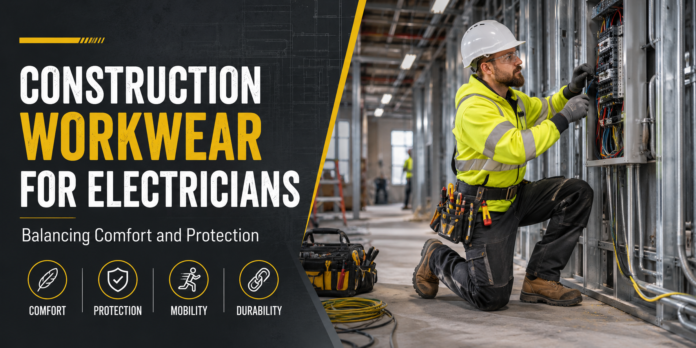
Electricians on construction sites need clothing that protects them without making their job harder. Construction workwear for electricians is not just about looking professional. It must help workers move, bend, climb, kneel, carry tools, and stay visible while working around wires, panels, unfinished walls, dust, sparks, rough surfaces, and changing weather. The right outfit should feel comfortable for a full shift, but it should also support safety from head to toe. A shirt that is too loose can catch on equipment. Pants that are too tight can limit movement. A jacket that is too heavy can make workers tired. This is why construction workwear for electricians should balance comfort, durability, visibility, and proper protection. The best choice depends on the job type, site rules, weather, and electrical risk level. Good workwear does not replace training, lockout procedures, or certified electrical PPE, but it helps electricians work with better confidence every day.
Why Electricians Need Special Construction Workwear
Electricians face different risks compared with many other construction workers because they may work near live circuits, temporary power systems, switchboards, cable trays, lighting systems, and unfinished electrical setups. Construction workwear for electricians should be chosen with these risks in mind. Regular clothing can tear quickly, collect dust, restrict movement, or even become unsafe near sparks and heat. Proper workwear helps protect the body from minor cuts, scrapes, dirt, and daily site wear while keeping the worker comfortable during long hours. For general site clothing, brands and buyers can start with professional workwear options that are made for harder use instead of casual wear. Still, electricians must remember that basic workwear is only one part of safety. When there is an arc flash, flame, or electrical hazard risk, the clothing must match the required safety rating and the company’s safety rules.
Construction Workwear for Electricians
Construction workwear for electricians should be practical, simple, and safe enough for real jobsite use. A good outfit usually includes a strong work shirt, durable pants, a protective jacket when needed, safety footwear, gloves, helmet, eye protection, and a high-visibility layer if the site has moving vehicles or low-light areas. The clothing should not have loose strings, weak seams, oversized cuffs, or hanging parts that can catch on ladders, tools, or open panels. Electricians often work in tight areas, so the fit must allow easy shoulder, arm, knee, and waist movement. Breathability also matters because electrical work can involve climbing, pulling cables, drilling, and standing in warm mechanical rooms. Construction workwear for electricians should be tough, but it should not feel like a burden. The goal is to help the worker stay focused on the task instead of adjusting uncomfortable clothing again and again.
Comfort Matters During Long Electrical Shifts
Comfort is not a luxury for electricians because uncomfortable clothing can distract workers and slow down simple tasks. Construction workwear for electricians should allow workers to reach overhead, crouch near floor outlets, crawl through service areas, and climb ladders without pulling at the shoulders or knees. Fabric should feel smooth enough against the skin, but strong enough for daily use. In hot weather, breathable fabrics help reduce sweat buildup. In cold weather, layering is better than wearing one very bulky garment. Stretch panels can help with movement, but stretch fabric should not be used as a replacement for required protective clothing. Buyers can explore practical construction workwear when they need garments made for site movement, rough use, and daily comfort. The best workwear feels easy to wear, but it still looks clean, professional, and suitable for a serious construction environment.
Protection Should Match the Real Job Risk
Protection must always match the task, not just the job title. Construction workwear for electricians may need different levels of protection depending on whether the worker is doing basic installation, low-voltage work, panel maintenance, industrial electrical work, or tasks near energized systems. Basic construction clothing may protect against dust, light abrasion, and weather, but it may not protect against arc flash or flame hazards unless it is clearly rated for that purpose. Electricians should never guess the protection level from fabric thickness alone. A thick garment is not automatically safe for electrical hazards. Safety managers should check labels, standards, arc ratings, and site requirements before approving clothing for risky tasks. Construction workwear for electricians should also work well with other PPE, such as gloves, face shields, helmets, hearing protection, and safety boots. Protection works best when the whole outfit is planned together.
Best Fabrics and Fit for Electricians
The best fabric for electricians depends on the work area, weather, and hazard level. Cotton-rich fabrics can feel comfortable and breathable for general work, while stronger blends can improve durability for rough construction use. However, synthetic fabrics must be chosen carefully around heat, sparks, and electrical hazards because some materials can melt or behave badly in dangerous conditions. Construction workwear for electricians should also have a fit that is neither too tight nor too loose. Tight clothing can limit movement and make kneeling or climbing difficult. Very loose clothing can catch on tools, ladders, and panels. A good fit gives space for movement while keeping cuffs, hems, and pockets controlled. Reinforced knees, strong seams, and practical pocket placement can make a big difference during daily electrical work. The worker should be able to move freely without the clothing dragging, twisting, or blocking access to tools.
Jackets, Pants, and Vests for Electrical Site Work
A complete outfit should protect the areas that take the most stress during the day. Jackets should allow arm movement and should not block tool belts or harnesses. Pants should handle kneeling, bending, and contact with rough floors. Vests should improve visibility without getting in the way. Construction workwear for electricians can include durable outerwear when workers are exposed to dust, cold, wind, or outdoor tasks. For example, electricians working on open building sites may need weather-ready jackets for construction work that support warmth and movement. Pants should have strong stitching and useful pockets, but too many bulky pockets can become annoying in tight spaces. Safety vests are useful when electricians work near cranes, vehicles, forklifts, or shared construction zones. Each garment should support the job instead of adding extra weight or discomfort.
One-Paragraph Safety Checklist for Electricians
- Construction workwear for electricians should fit close enough to stay controlled but loose enough for safe movement.
- Clothing should not have hanging cords, loose cuffs, or weak fasteners that can catch on tools or panels.
- Any electrical hazard task should use PPE that matches the site risk assessment and required safety rating.
- High-visibility layers should be used when electricians work near traffic, machines, or low-light areas.
- Pants should allow kneeling and climbing without pulling at the waist, knees, or crotch.
- Jackets should allow shoulder movement and should not hide important PPE or tool access.
- Base layers should be comfortable, but they should not replace proper protective workwear.
- Workwear should be inspected for tears, burns, worn seams, broken zippers, and damaged reflective trim.
- Dirty or damaged clothing should be cleaned, repaired, or replaced before it creates a safety problem.
- Construction workwear for electricians should always support safe work methods, not replace them.
Common Mistakes When Choosing Electrician Workwear
One common mistake is buying clothing only because it looks strong. Construction workwear for electricians must be judged by fit, task, fabric, comfort, and safety needs, not just appearance. Another mistake is choosing oversized garments because they feel easy at first. Oversized clothing can become unsafe when workers climb, carry tools, or work near moving parts. Some buyers also choose very heavy clothing because they think heavy always means protective. In reality, heavy clothing can cause heat stress, fatigue, and poor movement if it is not designed well. Another mistake is ignoring weather. Electricians who work outside need layers that can handle changing conditions, while indoor workers may need lighter and more breathable clothing. It is also a mistake to use casual sportswear as workwear on construction sites. Construction workwear for electricians must be built for real site pressure, not just comfort.
How to Choose the Right Workwear for Your Team
Choosing construction workwear for electricians becomes easier when you start with the worker’s daily tasks. First, list the type of electrical work they do. Then check whether the work involves energized equipment, outdoor exposure, dust, sparks, low light, climbing, kneeling, or tight spaces. After that, choose clothing that matches those needs. A team doing rough installation work may need stronger pants, reinforced seams, and high-visibility layers. A team doing indoor finishing work may need lighter clothing with better breathability. A team working near serious electrical hazards may need certified protective clothing selected by a safety professional. Construction workwear for electricians should also be tested by workers before bulk buying. If a sample feels uncomfortable after one full shift, it may become a bigger problem later. Good buying decisions come from both safety requirements and real worker feedback.
Care and Replacement of Electrician Workwear
Even strong clothing becomes less useful when it is damaged, dirty, or badly maintained. Construction workwear for electricians should be checked often because small tears, worn knees, broken zippers, loose seams, and faded visibility trim can reduce performance. Workers should follow the care label and avoid harsh cleaning methods that damage fabric or protective features. If clothing has a special safety rating, it should be washed and maintained according to the approved instructions. Workers should not cut sleeves, remove labels, modify pockets, or repair protective clothing in a way that changes its safety performance. A garment that looks fine from a distance may still be unsafe if the fabric is burned, melted, thinned, or weakened. Construction workwear for electricians should be replaced when it no longer supports comfort, movement, visibility, or required protection.
Conclusion
Construction workwear for electricians should balance comfort and protection because both matter on a real jobsite. Comfortable clothing helps electricians move, climb, bend, kneel, and stay focused during long shifts. Protective clothing helps reduce risks from rough surfaces, weather, low visibility, sparks, and task-specific hazards. The best choice is not always the thickest, heaviest, or most expensive garment. The best choice is the garment that fits the task, follows safety rules, supports movement, and lasts through daily construction work. Construction workwear for electricians should be selected carefully, tested in real use, and maintained properly. When electrical hazards are involved, always follow the site safety plan and use properly rated PPE. In the end, good workwear should help electricians do skilled work with more comfort, better protection, and fewer distractions.
FAQs
What is the best construction workwear for electricians?
The best construction workwear for electricians is comfortable, durable, properly fitted, and suitable for the job risk. It should support movement, visibility, and protection without loose parts that can catch on tools or panels.
Do electricians need flame-resistant workwear?
Electricians may need flame-resistant or arc-rated workwear when the job involves electrical hazards, arc flash risk, or energized equipment. The required protection should be decided by the site safety rules and risk assessment.
Can electricians wear stretch workwear?
Electricians can wear stretch workwear for general comfort and movement if it matches the site rules. However, stretch fabric should never replace rated protective clothing when electrical hazard protection is required.
How should construction workwear for electricians fit?
Construction workwear for electricians should fit close enough to stay controlled but loose enough for bending, climbing, reaching, and kneeling. It should not feel tight, oversized, or distracting during work.