Outdoor shorts seem like a simple purchase until you’re two hours into a steep trail with shorts that chafe, don’t dry, or restrict your stride at every step. Knowing how to choose the right outdoor shorts prevents those experiences — matching construction, fabric, fit, and features to your specific activity and conditions before you ever leave the trailhead. Here’s everything that genuinely matters when making this decision.
Start With Your Primary Activity
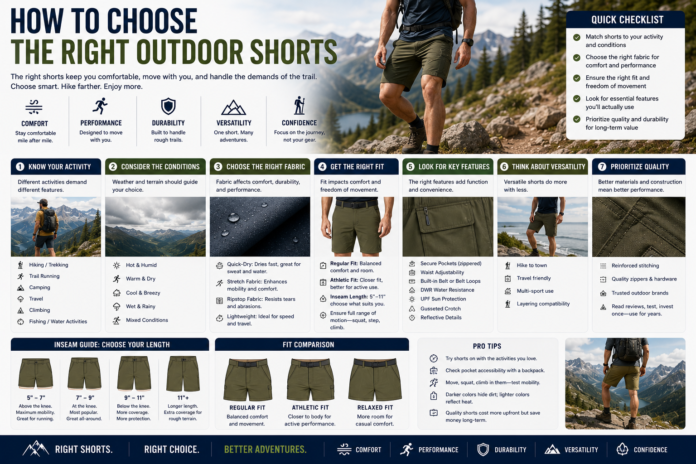
The most important outdoor shorts selection decision is matching the construction to your primary use case. Different activities create fundamentally different performance demands — and shorts optimized for one activity often perform poorly in another.
Hiking demands durability, moisture management, and enough stretch for steep terrain movement. Shorts that resist abrasion from pack hip belts, rocky terrain contact, and brush exposure serve trail hikers significantly better than lightweight constructions built for lower-impact activities.
Trail running demands minimum weight, maximum freedom of movement, and built-in liner construction that prevents chafing during high-cadence running movement. Every unnecessary gram and every fabric restriction point compounds across long distances into meaningful performance and comfort impacts.
Camping and travel prioritize comfort, versatility, and storage capacity over technical performance optimization. Shorts that transition comfortably between campsite activities, casual hiking, and town visits serve travelers better than highly specialized technical constructions optimized for single activities.
Water activities — stream crossings, kayaking, coasteering — demand fast-drying fabrics that return to comfortable land performance within minutes rather than remaining heavy and wet for extended periods after water exposure.
A professional outdoor shorts manufacturer builds different short constructions around these specific activity requirements — ensuring the details that matter for each use case are present rather than compromised for universal average performance.
Match Fabric to Performance Needs
Fabric choice directly determines how well your outdoor shorts perform across the specific demands your activity creates. Understanding the key fabric properties helps you evaluate shorts against the right criteria.
Moisture management matters most for high-intensity activities. Moisture-wicking polyester and nylon fabrics pull sweat away from skin surfaces — preventing the saturated, heavy feeling that non-wicking fabrics create during sustained physical effort. Quick-drying fabrics recover rapidly after perspiration, rain, or water exposure — restoring comfortable dry weight and reducing the chafing risk that prolonged wet fabric contact creates.
Stretch performance determines movement freedom across demanding terrain. Four-way stretch fabrics accommodate simultaneous horizontal and vertical stretch — critical for the hip flexion demands of steep trail climbing and the stride extension requirements of trail running. Non-stretch constructions restrict movement in ways that compound into genuine discomfort across long active outdoor days.
Durability determines how long shorts maintain their performance properties across repeated demanding use. Ripstop nylon and higher denier constructions resist the abrasion from rock scrambling, vegetation contact, and pack friction that gradually degrades lighter weight alternatives. Hiking clothing designed for serious trail use specifies fabric durability appropriate for the mechanical stresses trail activity regularly imposes.
Quick-dry performance matters for all outdoor activities involving water exposure or high perspiration rates. Fabrics that dry within 20 to 30 minutes of thorough wetting serve multi-activity outdoor use far more effectively than slower-drying alternatives that require hours of wear or sun exposure to return to comfortable dry weight.
Choose the Right Length
Inseam length significantly impacts both performance and comfort across different outdoor activities — and the right length depends on your activity, terrain type, and personal preference for coverage.
3 to 4 inch inseam suits trail running and high-intensity activities where maximum leg freedom matters above coverage considerations. Short inseams eliminate any potential for fabric bunching during high-knee movements and maintain the aerodynamic profile that running efficiency benefits from.
5 to 7 inch inseam suits most hiking applications — providing adequate thigh coverage for sun protection and brush contact resistance while maintaining the movement freedom that trail climbing demands. This range represents the most commercially popular inseam length across outdoor hiking short collections.
8 to 10 inch inseam suits casual hiking, camping, and travel where additional coverage provides sun protection and modest appearance across various outdoor environments. These longer constructions also suit camping apparel applications where shorts are worn throughout full days including campsite activities, town visits, and varied social contexts.
Evaluate Waistband Construction
Waistband construction determines both fit security and compatibility with the equipment systems outdoor activities require. Getting this detail right prevents the constant waistband adjustment that poorly designed alternatives demand throughout active outdoor use.
Elastic waistbands with internal drawcords provide secure, adjustable fit across the full range of body positions that outdoor activity creates — from seated rest to aggressive uphill climbing lean. The drawcord allows precise fit dialing that elastic alone cannot achieve across different body proportions and layering system configurations.
Pack hip belt compatibility matters specifically for hiking applications. Waistband bulk and position must allow pack hip belt placement and adjustment without creating uncomfortable pressure points where belt and waistband overlap across the hip crest. Low-profile waistband constructions suit hiking applications better than thick, structured alternatives that conflict with hip belt positioning during long loaded hikes.
Belt loop inclusion serves travel and casual outdoor applications where a conventional belt provides preferred fit adjustment — and creates versatility that elasticated-only constructions can’t offer for the urban and casual outdoor contexts that travel shorts regularly navigate.
Assess Pocket Design and Storage
Pocket configuration determines how useful how to choose the right outdoor shorts guidance is for your specific carry requirements — because storage needs vary significantly between activities and personal gear management preferences.
Consider these pocket requirements by activity:
- Trail hiking — secure zippered hand pockets for phone and valuables, accessible back pocket for map or snack, thigh pocket for quick-access items during movement
- Trail running — minimal pockets to reduce weight and profile, secure closure on any pocket carrying phone or keys during high-movement running gait
- Camping and travel — generous pocket capacity including secure closure options for valuables in varied environments where pickpocket risk may exist
- Field and tactical use — multiple accessible cargo pockets for equipment organization, secure closures that maintain pocket contents during physical activity
Outdoor cargo pants principles applied to shorts constructions create cargo short options with maximum storage capacity — serving field activities, fishing, photography, and any outdoor use where carrying multiple items within immediate reach genuinely improves activity efficiency.
Check Sun Protection Rating
Extended outdoor activity in open terrain, water environments, and high-altitude settings creates significant UV exposure that inadequate fabric protection allows to reach skin harmfully. UPF-rated outdoor shorts provide verified sun protection that construction weight alone doesn’t guarantee.
UPF 30 blocks approximately 96.7% of UV radiation — adequate for moderate sun exposure conditions. UPF 50+ blocks 98%+ of UV radiation — recommended for extended sun exposure during hiking, water activities, and high-altitude outdoor pursuits where UV intensity increases meaningfully above sea level.
Tightly woven fabrics, darker colors, and synthetic fiber constructions generally provide better natural UV protection than lightweight open weaves and light colors — though only UPF-rated fabrics provide verified protection credentials that marketing descriptions without testing cannot guarantee.
Consider Liner and Brief Construction
Internal liner construction significantly impacts comfort across different outdoor activities — and choosing correctly based on activity type prevents the friction and chafing discomfort that inappropriate liner configurations create during sustained movement.
Built-in brief liners suit most hiking and general outdoor applications — providing modest support and reducing the need for separate base layer shorts beneath the outer shell. Quality brief liners use soft, quick-drying fabrics that minimize friction against inner thigh areas during walking movement patterns.
Mesh liner shorts suit trail running and cycling applications — extending further down the thigh than brief liners to prevent the inner thigh friction that high-cadence leg movement creates against outer short fabric during running and cycling specific movement patterns.
Liner-free constructions suit water activities and amphibious use where liner fabrics would retain water longer than the outer shell — and where boardshort-style construction or separate quick-dry underwear serves the combined water and land performance requirements more effectively than built-in liner alternatives.
Evaluate Durability Against Your Use Intensity
Matching durability specification to actual use intensity prevents both overpaying for heavy constructions that casual use doesn’t justify and under-buying lightweight alternatives that fail prematurely under demanding regular use.
Light recreational camping and travel use suits 40 to 50 denier nylon or polyester constructions — adequate durability for the limited abrasion contact these activities create without unnecessary weight addition. Regular technical hiking suits 70 to 100 denier constructions — providing meaningful abrasion resistance for frequent rock, pack, and vegetation contact that lighter fabrics don’t withstand across multiple seasons of regular trail use.
Demanding field applications — tactical outdoor apparel use, serious scrambling, multi-day technical routes — suit heavyweight ripstop constructions in 100 denier and above that prioritize durability over weight optimization for the sustained mechanical stresses professional and serious recreational outdoor use regularly imposes.
Conclusion
Knowing how to choose the right outdoor shorts means honestly matching activity requirements, fabric performance, length, waistband construction, pocket configuration, sun protection, liner type, and durability specification to your specific outdoor use rather than selecting on appearance or price alone. The right outdoor short becomes one of the most comfortable and reliable garments in your outdoor kit — worn constantly across the warm-weather activities it was built to serve. Choose thoughtfully and it delivers reliable performance across every outdoor adventure you take it on.
FAQs
What is the most important feature in outdoor hiking shorts?
Moisture management and quick-drying performance are most critical for hiking — fabrics that handle perspiration effectively and dry rapidly after water exposure maintain comfort throughout long active outdoor days more reliably than any other single performance characteristic.
Should outdoor shorts have a liner built in?
For most hiking applications — yes. Built-in liners provide modest support, reduce chafing, and eliminate the need for separate base layer shorts beneath the outer shell. Trail running applications benefit specifically from mesh liner shorts that extend further down the thigh than brief liners.
What length outdoor shorts suit most outdoor activities?
5 to 7 inch inseam suits the broadest range of outdoor activities — providing adequate thigh coverage for sun protection and brush resistance while maintaining movement freedom for technical terrain and varied trail activity.
Can outdoor shorts be produced under a private label for outdoor brands?
Yes. Professional outdoor apparel manufacturers offer complete private label production with verified performance fabrics, custom lengths, pocket configurations, colors, labels, and packaging — giving outdoor brands full technical and commercial control over their shorts collection.