Base layers are the most important garment in any outdoor clothing system — yet they receive the least attention from most outdoor enthusiasts who focus their buying decisions on impressive outer shells and insulating mid-layers. The base layer sits directly against your skin throughout every outdoor activity — managing moisture, regulating temperature, and determining whether every layer above it functions as intended. Knowing how to choose the right base layer clothing for your specific activity and conditions transforms your entire outdoor clothing system performance from the inside out.
Understand What a Base Layer Actually Does
Before evaluating specific options, get clear on the base layer’s fundamental role within the outdoor clothing system. A base layer serves two primary functions simultaneously — managing moisture and contributing to thermal regulation — and how well it performs these functions determines the effectiveness of every other layer worn above it.
Moisture management is the critical function. During physical activity, the body produces significant perspiration that must move away from the skin surface rapidly — preventing the wet, cold, clammy sensation that moisture accumulation creates against skin. Fabrics that wick moisture effectively pull perspiration from the skin contact surface and move it outward toward the fabric’s outer face where evaporation can occur — keeping skin surface dry and comfortable throughout sustained activity.
Thermal contribution varies by base layer weight — lightweight bases contribute minimal insulation while heavyweight bases add meaningful warmth directly against the skin where its insulating effect is most immediately felt. Understanding which thermal contribution your activity requires guides weight selection more reliably than generic temperature guidance that doesn’t account for activity intensity variations.
Choose the Right Material for Your Activity and Conditions
Material choice is the most important base layer decision — directly determining moisture management performance, thermal properties, comfort against skin, and care requirements across regular outdoor use.
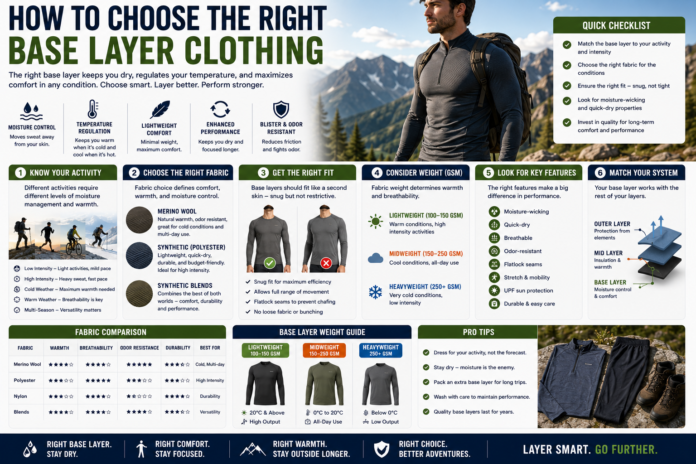
Merino Wool — the premium natural fiber option. Merino’s natural crimp structure manages moisture through fiber absorption rather than surface wicking — absorbing perspiration into the fiber core where it doesn’t create the cold wet sensation that surface moisture causes. Natural odor resistance through protein fiber structure allows multi-day wear without washing — genuinely valuable for extended backcountry trips where washing opportunities are limited.
Temperature regulation is merino’s most distinctive property — the fiber naturally moderates body temperature across a wider range of conditions than synthetic alternatives, making merino bases genuinely comfortable from cool mountain mornings through warm afternoon hiking sections within the same wearing day. Base layer clothing built from quality merino wool serves the broadest range of outdoor conditions from a single garment — making it particularly valuable for outdoor enthusiasts who want simplified, versatile kit rather than multiple activity-specific alternatives.
Synthetic — Polyester and Nylon Blends — the performance moisture management option. Synthetic base layers wick moisture from the skin surface rapidly — moving perspiration to the outer fabric face for fast evaporation. Quick-drying performance exceeds merino significantly — synthetic bases recover from thorough wetting in minutes rather than the longer drying times that merino’s moisture absorption properties create.
However, synthetic fibers support bacterial growth that creates persistent odor during multi-day use without washing — a meaningful limitation for extended backcountry applications where merino’s natural odor resistance provides genuine practical advantage. Synthetic bases suit high-intensity activities where maximum moisture wicking speed matters more than odor resistance across multi-day use periods.
Merino-Synthetic Blends — combining natural fiber comfort and odor resistance with improved durability and faster drying than pure merino. These blends represent the most commercially balanced base layer option — delivering meaningful advantages from both fiber types while minimizing the limitations each has in isolation. Brands building camping apparel and outdoor clothing collections find merino-synthetic blends serve the broadest customer base across varied outdoor applications.
Select the Right Weight for Your Conditions
Base layer weight — measured in grams per square meter — determines thermal contribution and appropriate use temperature range more directly than any other specification. Matching weight to your typical activity conditions prevents the overheating that heavy bases cause during intense activity and the insufficient warmth that lightweight bases provide in genuinely cold conditions.
Lightweight — 100 to 150gsm suits warm weather hiking, high-intensity aerobic activities, and warm climate outdoor use where moisture management matters far more than thermal contribution. These bases regulate temperature effectively during high-output activity by managing perspiration without adding warmth that would cause overheating.
Midweight — 150 to 220gsm suits cool to cold weather hiking, skiing, snowboarding, and outdoor activities where both moisture management and meaningful warmth contribution matter across varied activity intensities throughout the outdoor day. This weight range suits the broadest range of outdoor conditions — making midweight the most commercially versatile base layer specification for brands covering general outdoor markets.
Heavyweight — 220gsm and above suits cold weather camping, winter activities, and any application where significant warmth contribution matters alongside moisture management. Ski wear applications in genuinely cold mountain conditions benefit from heavyweight base layers that provide serious thermal foundation for the insulation and shell layers built above them.
Match Fit to Activity Requirements
Base layer fit significantly impacts both comfort and moisture management performance — and the right fit depends on how the base layer will be worn and what activity it serves.
Close-fitting or compressive fit — the standard recommendation for most outdoor base layer applications. Close contact between fabric and skin maximizes moisture transfer efficiency — fabric must touch skin to wick moisture from it effectively. Loose base layers create air gaps between fabric and skin that reduce wicking performance and allow moisture to pool against skin rather than transferring to the fabric surface for evaporation.
Active fit — close but not compressive — suits most outdoor hiking, skiing, and general activity applications where full range of motion matters alongside moisture management performance. Active fit base layers move with the body without restricting joint movement during the varied physical demands of outdoor activity.
Compressive fit — genuinely tight against muscle groups — suits specific applications where compression benefits like improved circulation and reduced muscle vibration add performance value beyond moisture management. Trail running and endurance activities benefit from compression base layers in ways that casual hiking doesn’t.
Flatlock seam construction eliminates the raised seam edges that create friction points during extended wear — particularly important for base layers worn directly against skin during high-repetition activities like running and cycling where seam contact against the same skin point occurs thousands of times per hour.
Consider Specific Activity Requirements
Different outdoor activities create specific base layer requirements beyond the general material and weight principles that serve most applications adequately.
Skiing and snowboarding demand heavyweight merino or merino-synthetic blend bases that provide serious thermal foundation while managing the significant perspiration that lift-accessed skiing creates during physical effort sections. Ski wear base layers must also accommodate the layering volumes of mid-layers and shell pants over the base — requiring slim enough profiles to avoid bulk within the combined system.
Hiking and backpacking benefit from mid-weight merino or blend bases that manage moisture during uphill exertion and provide meaningful warmth during rest stops and cold morning starts without overheating during sustained physical effort. Multi-day backpacking specifically benefits from merino odor resistance — reducing the washing frequency that synthetic alternatives require across extended trips.
Hunting and field activities sometimes require scent-control base layer treatments alongside thermal and moisture management performance — specialist requirements that hunting apparel manufacturers address through specific fabric treatment options unavailable in general outdoor base layer constructions.
Cold weather camping and winter outdoor activities demand heavyweight base layers that provide maximum thermal foundation for the insulation layers built above them — prioritizing warmth contribution over moisture management speed in applications where activity intensity is lower and thermal retention matters most across extended cold exposure periods.
Evaluate Top and Bottom Separately
Most outdoor enthusiasts focus base layer attention on tops while neglecting base layer bottoms that serve equally important thermal and moisture management functions across the lower body. Matching base layer bottom specification to top specification — same material, same weight — creates a consistent layering foundation across the full body rather than a performance mismatch between well-served upper body and inadequately supported lower body thermal and moisture management.
Base layer bottom length matters for specific activities — full-length thermal bottoms suit skiing and cold weather activities, three-quarter length suits cycling, and shorts-length thermal liners suit running and warmer weather hiking applications where full-length coverage would cause lower body overheating during sustained aerobic effort.
Conclusion
Knowing how to choose the right base layer clothing means matching material to your moisture management and odor resistance priorities, selecting weight appropriate for your typical activity conditions, fitting correctly for maximum moisture transfer performance, and considering the specific requirements that your primary outdoor activity creates beyond general base layer principles. The right base layer transforms your entire outdoor clothing system performance — keeping you comfortable, dry, and thermally regulated from the inside out across every outdoor activity and condition you encounter.
FAQs
Is merino wool or synthetic better for outdoor base layers?
Merino suits multi-day outdoor activities where odor resistance and natural temperature regulation matter most. Synthetic suits high-intensity activities where maximum moisture wicking speed and fast drying performance after thorough wetting are the primary performance priorities.
How tight should a base layer fit?
Base layers should fit close to the body without restricting movement — close enough for fabric-to-skin contact that maximizes moisture wicking efficiency, but not so tight that it restricts the range of motion your specific outdoor activity demands.
Can I wear a base layer as a standalone garment for outdoor activities?
Lightweight and midweight base layers suit standalone warm weather use effectively. In cold conditions, base layers are designed to work within a layering system — their thermal contribution is meaningful but insufficient for standalone cold weather protection without mid-layer and outer shell additions.
Can base layer clothing be produced under a private label for outdoor brands?
Yes. Professional outdoor apparel manufacturers offer complete private label base layer production with merino, synthetic, and blend fabric options, custom weights, colors, labels, and packaging — giving outdoor brands full technical and commercial control over their base layer collection.