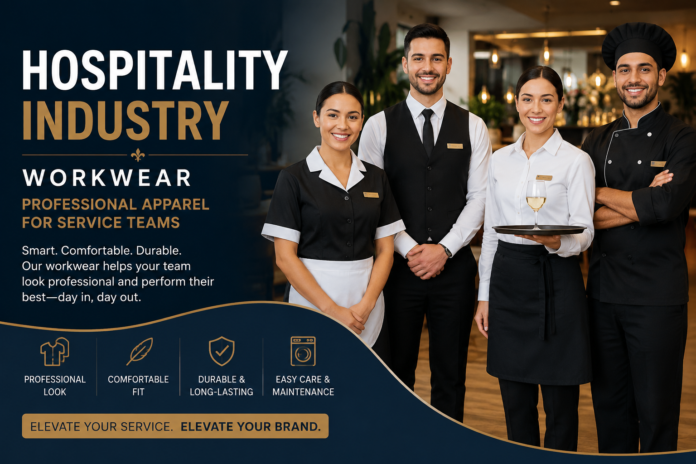
Hospitality teams meet customers before the service even begins, so their clothing matters a lot. A clean shirt, smart jacket, comfortable trousers, apron, or service vest can quickly show that the team is trained, ready, and professional. Hospitality industry workwear is not only about looking nice. It helps guests recognize staff, trust the business, and feel welcome from the first moment. In hotels, restaurants, resorts, cafes, catering companies, housekeeping teams, and event venues, workwear becomes part of the customer experience. If uniforms look messy, too casual, or uncomfortable, guests may judge the service before anyone speaks. Good hospitality industry workwear should feel neat, friendly, and practical at the same time. It should help workers move easily, serve faster, stay comfortable during long shifts, and match the brand image. The best uniform is the one that looks professional but still feels easy to wear every day.
Hospitality Industry Workwear
Hospitality industry workwear means professional clothing made for people who work in service environments such as hotels, restaurants, cafes, resorts, catering services, banquets, cleaning teams, and guest support roles. It can include shirts, polos, trousers, aprons, jackets, vests, chef coats, housekeeping uniforms, reception clothing, and outdoor service layers. Unlike normal fashion clothing, hospitality industry workwear must handle long hours, repeated washing, walking, bending, lifting, serving, greeting, and cleaning. It also needs to match the type of workplace. A luxury hotel may need elegant suits and formal shirts, while a cafe may choose relaxed polos and aprons. A resort team may need breathable uniforms, while an outdoor event team may need jackets or weather-ready layers. The main purpose of hospitality industry workwear is to make the team look organized, feel comfortable, and perform their daily tasks without clothing becoming a problem.
Why Service Teams Need the Right Apparel
Service teams work in busy places where speed, comfort, and appearance all matter. A waiter may walk for hours, a housekeeper may bend and lift, a receptionist may stand in front of guests all day, and a catering worker may move between kitchen and service areas. This is why hospitality industry workwear must support real work, not just look good in pictures. Businesses can choose practical clothing styles from a wider workwear collection when building uniforms for different service roles. The right apparel helps teams look consistent, reduces confusion for guests, and gives workers clothing that fits the job. For example, front desk staff may need polished shirts and jackets, while cleaning teams need flexible, washable, and durable clothing. Good hospitality industry workwear also helps managers create a clear brand image because every worker appears as part of one team. When uniforms are planned properly, service feels smoother and more professional.
4. Comfort Is Just as Important as Style
A uniform can look beautiful, but if it is uncomfortable, workers will not enjoy wearing it. Hospitality industry workwear should allow staff to move, stretch, bend, carry, and walk without feeling tight or heavy. Comfort matters because service workers often have long shifts, busy weekends, hot kitchens, crowded events, and constant guest contact. If a shirt traps heat, if trousers pull at the knees, or if a jacket feels too stiff, the worker may feel tired sooner. Comfortable uniforms can improve confidence and help the team focus on service instead of clothing. Breathable fabrics are useful for indoor and outdoor tasks. Soft collars, smooth seams, flexible waistbands, and easy-care materials can make a big difference during long workdays. Hospitality industry workwear should also fit different body shapes because every team includes different people. A good uniform program offers sizes, cuts, and layers that help each worker look neat and feel comfortable.
Choose Fabrics That Handle Daily Work
The fabric is one of the most important parts of hospitality industry workwear. Hospitality clothing is washed often, worn for long hours, and exposed to spills, dust, sweat, heat, and movement. That means weak fabric can fade, shrink, wrinkle, or lose shape quickly. Cotton blends can feel soft and breathable, while polyester blends can dry faster and resist wrinkles better. Stretch fabrics can help workers move easily, especially in trousers, shirts, and fitted uniforms. For service teams, fabric should be easy to wash and strong enough for repeat use. Darker colors may hide small stains, while lighter colors can look fresh but need more care. Hospitality industry workwear should also match the job area. Kitchen and cleaning teams may need tougher fabrics, while reception and guest-facing teams may need smoother, more polished materials. A smart fabric choice saves money because uniforms last longer and stay presentable after many washes.
Safety and Visibility for Outdoor Hospitality Roles
Not every hospitality worker stays indoors. Hotels, resorts, event venues, parking services, security teams, delivery support, and outdoor catering staff may work near vehicles, rain, low light, or busy public spaces. In these roles, hospitality industry workwear may need extra visibility and safety features. A parking attendant, event guide, or outdoor support worker may need a vest or jacket that makes them easier to see. For these roles, a custom safety vest can be useful when the team needs clear identification and better visibility. The goal is not to make hospitality uniforms look like construction clothing. The goal is to add safety in a clean and professional way. Hospitality industry workwear for outdoor roles should still match the brand, but it should also protect the worker. Bright trims, reflective details, practical pockets, and durable fabric can help staff work safely while still looking organized.
Weather-Ready Layers for Hotels, Resorts, and Events
Weather can affect hospitality work more than many people think. Outdoor dining, hotel entrances, resort activities, valet service, event management, and catering setups can continue in wind, rain, or cold conditions. That is why hospitality industry workwear should include layers for different seasons. Light jackets can help in cool weather. Waterproof outerwear can help in rain. Breathable layers can help workers stay comfortable when moving between indoor and outdoor spaces. For wet conditions, professional rainwear can support hospitality teams who need protection without losing a clean service appearance. Good layering also prevents workers from wearing random personal jackets that may not match the brand. Hospitality industry workwear should give staff the right options before the weather becomes a problem. A planned uniform system may include shirts, trousers, aprons, vests, jackets, and rain layers so the team stays neat in every season.
One-Paragraph Uniform Checklist for Buyers
When choosing hospitality industry workwear, follow these simple points:
- Choose clothing that matches the service role.
- Use breathable fabric for long shifts.
- Pick stretch where workers need movement.
- Select easy-care fabric for regular washing.
- Keep colors close to the brand identity.
- Make sure sizes fit different body shapes.
- Add pockets only where they are useful.
- Use aprons for food and cafe service.
- Choose jackets for outdoor or formal roles.
- Avoid fabric that wrinkles too quickly.
- Test samples before bulk ordering.
- Keep uniforms simple, clean, and professional.
Branding, Color, and Team Identity
Uniforms are one of the easiest ways to show brand identity. A hotel, cafe, restaurant, or resort can use color, fabric, trims, embroidery, or small logo placement to make staff look connected to the business. Hospitality industry workwear should not be too loud unless the brand is casual and playful. For most service teams, simple colors work better because they look clean and professional. Black, navy, white, grey, beige, and deep green are common choices, but the final color should match the interior, logo, and customer experience. A luxury hotel may choose formal neutral tones, while a casual cafe may choose warmer colors and softer fabrics. Hospitality industry workwear can also help guests find staff quickly. When everyone wears random clothing, customers may feel confused. When the whole team looks connected, the service feels more organized. Good branding should be visible, but it should not make the uniform uncomfortable or difficult to maintain.
Fit, Sizes, and Practical Details
Fit is where many uniform programs fail. If clothing is too tight, workers cannot move easily. If clothing is too loose, it can look untidy and may get in the way during service. Hospitality industry workwear should give staff enough room to bend, walk, reach, carry trays, clean rooms, and help guests. Shirts should not pull across the shoulders. Trousers should not restrict the knees. Jackets should close properly without looking squeezed. Aprons should sit at the right height and not twist during work. Practical details also matter. Pockets should be useful for pens, order pads, small tools, keys, or cleaning items. Buttons, zippers, and seams should be strong enough for daily use. Hospitality industry workwear should be tested in real movement before final approval. A sample may look good on a hanger, but the real test is how it feels during a full shift. Better fit creates better confidence and better service.
Conclusion
Hospitality industry workwear is more than a uniform. It is part of service quality, brand image, worker comfort, and daily performance. The right clothing helps guests recognize staff, helps workers feel confident, and helps businesses look more professional. A good uniform should be simple, clean, comfortable, durable, and suitable for the exact role. Front desk teams, cafe staff, hotel workers, housekeeping teams, resort crews, outdoor event staff, and catering teams all need different clothing details. The best hospitality industry workwear does not copy one style for everyone. It matches the job, the weather, the movement, the brand, and the guest experience. When businesses choose better fabric, better fit, and better layers, workers can focus more on service and less on clothing problems. In the end, hospitality industry workwear should make the whole team look ready, feel comfortable, and represent the business with pride.
FAQs
What is hospitality industry workwear?
Hospitality industry workwear is professional clothing made for hotels, restaurants, cafes, resorts, catering teams, and other service staff. It helps workers look neat, stay comfortable, and perform their daily tasks better.
Why is hospitality industry workwear important?
Hospitality industry workwear is important because it creates a strong first impression and helps customers identify staff easily. It also supports comfort, teamwork, safety, and brand identity.
What fabrics are best for hospitality uniforms?
Cotton blends, polyester blends, stretch fabrics, and wrinkle-resistant materials are common choices. The best fabric depends on the job, climate, washing needs, and comfort level.
How should hospitality workwear fit?
Hospitality uniforms should fit neatly without being too tight or too loose. Workers should be able to walk, bend, reach, serve, and clean comfortably during long shifts.