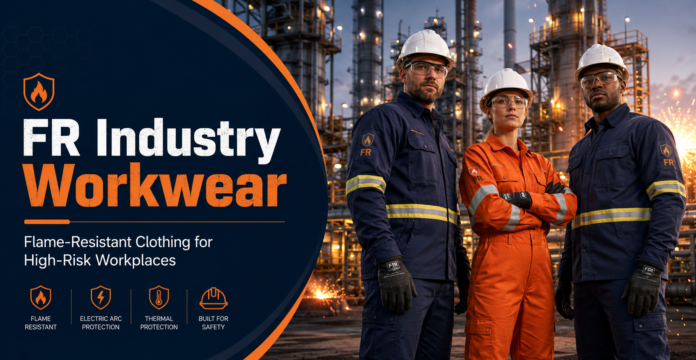
FR industry workwear is protective clothing made to reduce burn injury when workers face flame, flash fire, heat, sparks, or certain electrical hazards. It does not make a person fireproof, and it does not remove the danger from the job. Its main purpose is to give the worker a safer layer of defense when something goes wrong. In high-risk workplaces, normal clothing can catch fire, melt, drip, or continue burning after contact with flame. That is why FR industry workwear is used in oil and gas, welding, utilities, electrical work, chemical plants, metal work, construction, and other tough job sites. Good flame-resistant clothing should protect the body, stay comfortable during long shifts, and allow workers to move, bend, lift, and climb without feeling trapped. The best choice is not always the thickest garment. The better choice is clothing that matches the risk level, work environment, weather, and daily task.
Why FR Industry Workwear Matters in High-Risk Jobs
FR industry workwear matters because fire-related injuries can happen very fast, often in seconds, and workers may not have time to react. A flash fire, short flame contact, or hot spark can turn ordinary clothing into a serious danger. Cotton may burn, synthetic fabric may melt, and loose garments may catch easily if they are not made for the worksite. Many companies begin their safety planning by reviewing general workwear options and then choosing flame-resistant layers for workers who face heat, sparks, fuel, electrical exposure, or explosive materials. This step is important because one uniform style does not fit every workplace. A road worker may need visibility first, a welder may need spark protection, and an oilfield worker may need protection against flash fire. FR industry workwear gives the worker a safer barrier while still keeping the clothing practical enough for daily use.
How Flame-Resistant Fabric Works
Flame-resistant fabric works by resisting ignition, slowing flame spread, and helping the material stop burning once the flame source is removed. Some FR fabrics are made from fibers that are naturally flame-resistant. These are often called inherent FR fabrics because the protection is part of the fiber itself. Other FR fabrics are treated with special finishes that help the cloth resist burning. Both types can be useful, but the right choice depends on the job, wash process, budget, comfort needs, and expected life of the garment. FR industry workwear should also be tested and selected according to the risks of the workplace, not only by how it looks or feels. A worker may wear FR coveralls, jackets, shirts, trousers, vests, or layered garments depending on the job. The fabric should not melt against the skin under heat because melting can make injuries worse.
Common Workers Who Need FR Protection
FR industry workwear is used by workers who face heat, flame, sparks, combustible dust, electrical risk, or flammable materials during normal job duties. This can include welders, electricians, linemen, oil and gas crews, refinery teams, chemical plant workers, foundry workers, railway workers, and some construction teams. It can also be important for maintenance workers who enter high-risk areas only part of the day. A person does not need to stand next to open fire all day to need protection. A short task near welding sparks, live electrical equipment, fuel storage, or hot machinery can create enough risk to require FR clothing. Employers should review the job task, hazard type, exposure time, and work location before choosing protective clothing. Workers also need training because even the best garment cannot help if it is worn open, rolled up, damaged, or mixed with unsafe layers.
FR Clothing vs Regular Workwear
FR industry workwear is different from regular workwear because its first job is protection against flame and heat, while regular workwear usually focuses on comfort, durability, pockets, and general job use. Regular workwear may still be strong and useful, but it may not react safely during flame contact. Some regular polyester or nylon fabrics can melt under heat, and this can be dangerous if the material sticks to the skin. FR garments are designed to reduce this kind of risk. However, FR clothing still needs the same practical features that workers expect from everyday work clothing. It should have strong seams, proper fit, useful pockets, easy closures, and fabric that can handle repeated use. In many workplaces, FR clothing is combined with other safety needs, such as rain protection, high visibility, or cold-weather warmth.
Fit, Comfort, and Movement
FR industry workwear must fit properly because a poor fit can reduce both safety and comfort. Clothing that is too tight can restrict movement, trap heat, and make workers uncomfortable during bending, lifting, or climbing. Clothing that is too loose can catch on tools, equipment, or moving parts. A good fit gives workers enough room to move while keeping the garment close enough to stay controlled. Sleeve length, shoulder width, waist comfort, trouser rise, and jacket length all matter. Workers should be able to close all buttons, zippers, and cuffs without pulling the garment too tight. For hot workplaces, breathable FR fabrics and lighter garment designs can help reduce fatigue. If the worker avoids wearing FR industry workwear because it feels too heavy or uncomfortable, the safety program becomes weak. Comfort is not a luxury in protective clothing. It is one reason workers keep wearing it correctly.
Key Features of Good FR Industry Workwear
Good FR industry workwear should protect the worker while staying practical for real jobs, so buyers should check every feature before placing an order.
- The fabric should resist flame and should not melt against the skin.
- The garment should cover body areas exposed to heat, sparks, or flash fire.
- The fit should allow easy movement without being too tight or too loose.
- Seams should be strong enough for bending, lifting, and repeated washing.
- Closures should stay secure and should not leave large open gaps.
- Pockets should be useful but should not create extra snagging risks.
- Reflective tape may be needed when workers also need visibility.
- Labels and care instructions should be clear for laundry teams and workers.
- The design should match the real workplace, not just the catalog picture.
Visibility, Weather, and Extra Protection
Many high-risk jobs also happen in dark, wet, cold, or busy outdoor areas, so FR industry workwear may need more than flame resistance. Road crews, utility teams, oilfield workers, and construction workers may need bright colors and reflective tape so drivers, machine operators, and other workers can see them clearly. In these cases, companies may compare hi-vis workwear with flame-resistant options to create a safer uniform system. Rain can also change the clothing need because wet garments can feel heavy and uncomfortable, and workers may stop wearing them correctly. Wind, mud, grease, dust, and cold temperatures can also affect daily performance. Some jobs need FR jackets, rainwear, safety vests, gloves, or layered outerwear depending on the hazard. The important point is that extra features should not reduce flame protection.
Washing, Care, and Garment Life
FR industry workwear needs proper washing and care because dirt, oil, grease, chemicals, or wrong laundry products can reduce performance and comfort. Workers should follow the care label and avoid using products that are not recommended by the manufacturer. A garment that is torn, heavily stained, badly faded, or damaged by heat may no longer provide the same level of protection. FR clothing should be inspected often, especially around cuffs, knees, elbows, pockets, zippers, and seams. If a garment has holes, broken closures, or exposed damaged areas, it should be repaired correctly or replaced. Companies should also train workers not to modify FR clothing in unsafe ways. Cutting sleeves, removing labels, adding non-FR patches, or wearing unsafe layers underneath can create problems. Proper storage also matters. Clothing should be kept dry, clean, and away from chemicals when not in use.
Choosing the Right FR Clothing for Your Team
Choosing FR industry workwear starts with understanding the job, not with choosing the garment color. The safety manager or buyer should ask what hazards are present, how often workers face them, and which body areas need protection. The next step is to think about climate, movement, shift length, washing method, branding needs, and worker comfort. Some teams may need jackets, while others may need coveralls, shirts, trousers, vests, or rain layers. For teams that need outer layers, safety jackets can be part of the discussion when visibility, weather, and protection must work together. The buyer should also avoid choosing the cheapest item without checking its real performance. A cheap garment that workers dislike, damage quickly, or wear incorrectly may cost more in the long run. Good FR industry workwear should be easy to wear, easy to maintain, and suitable for the specific workplace.
Mistakes to Avoid When Buying FR Workwear
Companies sometimes make simple mistakes when buying FR industry workwear, and those mistakes can affect safety. One common mistake is buying only by price without checking the hazard level. Another mistake is choosing fabric that is too heavy for hot weather, which can make workers tired and less careful. Some buyers also forget that workers need different sizes, not just small, medium, and large. A poor size range can cause tight shoulders, short sleeves, loose waists, or uncomfortable movement. Another issue is mixing FR and non-FR layers without thinking about how they behave together. If a worker wears a regular synthetic hoodie over an FR shirt, the outer layer may still burn or melt. Companies should also avoid buying garments with unclear labels, weak stitching, or no care guidance. Branding should be added carefully so logos, patches, or trims do not reduce protection.
Conclusion
FR industry workwear is one of the most important clothing choices for high-risk workplaces because it helps protect workers when flame, heat, sparks, or flash fire risks are present. It should be chosen with a clear understanding of the job, the hazard, the weather, and the worker’s daily movement. The right garment is not only protective; it is also comfortable, durable, easy to wear, and easy to care for. Companies should look at fabric type, fit, seams, closures, washing rules, layering, visibility, and replacement needs before making a decision. Workers should also be trained to wear the clothing correctly because open zippers, rolled sleeves, damaged fabric, or unsafe inner layers can reduce safety. FR industry workwear works best as part of a full safety plan that includes training, hazard control, inspection, and correct maintenance.
FAQs
What is FR industry workwear?
FR industry workwear is flame-resistant clothing made for workers who face heat, sparks, flame, flash fire, or electrical hazards. It helps reduce burn injury by resisting ignition and slowing flame spread. It is used in jobs such as oil and gas, welding, electrical work, chemical plants, construction, and metal work.
Is FR clothing completely fireproof?
No, FR clothing is not completely fireproof. It is designed to reduce injury risk, not remove all danger. The clothing can help protect the worker for a short time, but workers still need safe job methods, proper training, hazard controls, and the right protective gear for the task.
How should FR workwear fit?
FR workwear should fit comfortably without being too tight or too loose. The worker should be able to bend, lift, climb, and reach without the garment pulling or opening. Sleeves, cuffs, zippers, and closures should stay in place during work so the body remains covered.
When should FR workwear be replaced?
FR workwear should be replaced when it has holes, heavy stains, broken closures, heat damage, weak seams, or fabric damage that cannot be repaired safely. It should also be replaced if it no longer fits properly or if care labels and safety markings are missing or unreadable.