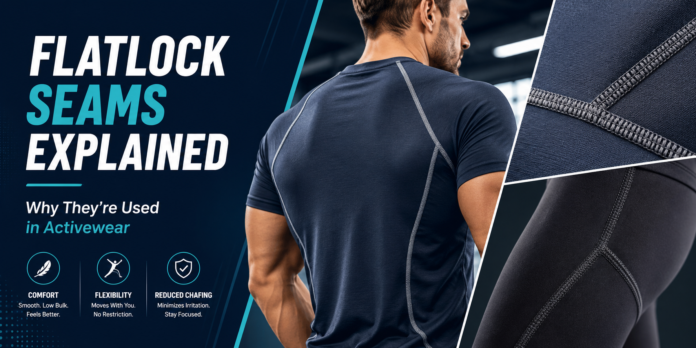
Flatlock Seams are special seams that join two pieces of fabric in a smooth, flat way instead of leaving a thick raised edge inside the garment. In simple words, Flatlock Seams help activewear feel softer on the skin, especially when the body moves, stretches, sweats, or rubs against fabric for a long time. They are common in leggings, gym tops, yoga wear, compression clothing, swimwear, and performance shirts because these clothes sit close to the body. A normal seam can feel bulky during exercise, but a flatlock seam spreads the stitching more evenly. This reduces pressure on the skin and helps the garment move better with the body. That is why many high-quality activewear brands use Flatlock Seams in areas like shoulders, sides, underarms, waistbands, inner thighs, and sleeves. They are not only used for comfort; they also improve the clean look and strength of stretch clothing.
Why Activewear Needs Smooth Seams
Activewear is made for movement, so every part of the garment has to support the body without causing discomfort. When someone runs, stretches, lifts weights, cycles, or trains, the fabric moves again and again over the same skin areas. If the seams are thick or rough, they can cause rubbing, redness, or irritation. This is one big reason Flatlock Seams are used in modern activewear, because they sit flatter against the body and make the garment feel cleaner inside. A smooth seam is especially useful in fitted clothing because there is less empty space between the fabric and the skin. In loose clothing, rough seams may not be noticed quickly, but in activewear, every seam matters. Flatlock Seams help the clothing feel lighter, softer, and more flexible during repeated movement. This makes them important for people who wear activewear for workouts, sports, walking, travel, or everyday comfort.
Flatlock Seams in Gym, Yoga, and Training Clothes
Flatlock Seams are very useful in gym wear, yoga clothing, and training outfits because these activities involve stretching, bending, twisting, and pressure from body movement. During yoga, a person may hold poses where the fabric stretches across the hips, knees, shoulders, and waist. During gym training, the body may move fast and create sweat, heat, and friction. In both cases, a bulky seam can feel uncomfortable. That is why brands often use Flatlock Seams in leggings, sports bras, fitted tops, base layers, and gym wear that needs to stay comfortable for long sessions. The flat structure helps the garment move with the body instead of fighting against it. This is also helpful for beginners, because they may not know why some clothes feel better than others. A well-made garment with Flatlock Seams can make training feel easier, not because it increases strength, but because it removes small distractions from rubbing and seam pressure.
How Flatlock Seams Reduce Skin Rubbing
Skin rubbing happens when fabric, sweat, and movement create friction in the same place again and again. This can happen under the arms, between the thighs, around the waist, behind the knees, or near the shoulders. Flatlock Seams reduce this problem because the seam does not form a hard ridge inside the garment. Instead, the stitching lies flatter and spreads the contact area more softly across the fabric. This matters most during longer workouts because small rubbing can become painful over time. People who run, cycle, hike, or do high-repetition exercises may notice the difference more than casual users. Flatlock Seams do not make a garment completely friction-free, but they lower the chance of irritation when the fabric fits well and the right material is used. For activewear, comfort is not only about softness; it is also about how the garment behaves after sweat, heat, and repeated movement. Flatlock Seams help keep that comfort more stable.
Why Flatlock Seams Help Stretch Fabrics Last Longer
Stretch fabrics are pulled in many directions during exercise. If the seam is weak, stiff, or too bulky, it can become the first place where the garment starts to fail. Flatlock Seams help because they are designed to work with stretch fabric instead of blocking its movement. The stitching allows the seam area to open and move more naturally when the body bends or stretches. This is useful in polyester blends, nylon blends, spandex fabrics, and compression materials. A good flatlock seam can reduce stress on one single line of stitching because the thread structure covers the join in a wider, flatter way. This does not mean Flatlock Seams can fix poor fabric quality, but they can support good fabric when the garment is properly made. In activewear, durability depends on many things, such as fabric weight, thread quality, stitch tension, washing method, and pattern shape. Still, Flatlock Seams are one important detail that helps stretch garments perform better.
Fit and Comfort: Why Seam Placement Matters
Flatlock Seams work best when they are placed in the right areas of the garment. A flat seam is helpful, but if it is placed in a bad position, it can still feel annoying. For example, seams around the inner thigh, underarm, shoulder, and waistband need careful planning because these areas move a lot. Good activewear does not only use Flatlock Seams randomly; it uses them where the body needs softness, stretch, and less pressure. The fit of the garment also matters. If leggings are too tight, even smooth seams may press into the skin. If a top is too loose, the fabric may move too much and still create rubbing. This is why activewear design is about balance. Flatlock Seams support comfort, but they work best with correct sizing, stretch recovery, breathable fabric, and smart garment patterns. When all these things work together, the clothing feels natural instead of heavy, stiff, or distracting.
Built-In Point: Flatlock Seams Benefits in One Look
Flatlock Seams reduce bulky seam edges that can press against the skin.
Flatlock Seams help lower rubbing during running, yoga, gym training, cycling, and daily movement.
Flatlock Seams support stretch fabrics by allowing the seam area to move more smoothly with the body.
Flatlock Seams give activewear a cleaner and more professional inside finish.
Flatlock Seams are useful in tight clothing because the seam sits closer and flatter against the body.
Flatlock Seams can improve comfort in sweat zones like underarms, inner thighs, shoulders, and waistbands.
Flatlock Seams are often used in premium activewear because comfort, movement, and durability are all important.
Flatlock Seams are not only a design detail; they are a real performance feature when made with good fabric and proper stitching.
Flatlock Seams vs Normal Seams
A normal seam usually joins fabric by placing the pieces together and stitching them with an edge or allowance inside the garment. This method is common in many everyday clothes because it is simple, strong, and cost-effective. However, in fitted activewear, that extra seam allowance can feel bulky. Flatlock Seams are different because the fabric edges are joined in a flatter way, so the inside surface feels smoother. This makes a big difference in garments that touch the skin closely. Normal seams can still be good for many products, such as casual shirts, jackets, or loose pants, but activewear has different needs. Activewear has to handle sweat, stretch, body heat, and repeated motion. Flatlock Seams are better suited for these conditions when comfort is a main goal. The choice is not always about which seam is stronger in every case; it is about which seam is better for the fabric, fit, and purpose of the garment.
Flatlock Seams in Compression and Performance Wear
Compression clothing needs extra care because it fits tightly and applies gentle pressure to the body. If the seams are rough, the user can feel discomfort quickly because the garment is already close to the skin. Flatlock Seams are commonly used in compression wear because they help reduce seam pressure while still supporting stretch and movement. Performance clothing also benefits from this seam type because athletes and active users often wear these garments for longer periods. A runner may wear compression tights for miles, while a gym user may wear a fitted performance top through a full training session. In both cases, smooth seams matter. Flatlock Seams help the garment feel less distracting and more natural during activity. They also improve the inside finish, which makes the product feel more premium. This is why many serious sportswear and performance-wear designs include Flatlock Seams in high-movement and high-contact zones.
What to Check Before Buying Activewear With Flatlock Seams
When buying activewear, do not look only at color or style. Turn the garment inside out and check how the seams feel with your fingers. Good Flatlock Seams should feel smooth, even, and secure. The stitching should not look loose, broken, twisted, or overly tight. If the seam feels scratchy when touched by hand, it may feel worse during exercise. Also check whether the seam is placed in smart areas. For example, leggings should have smooth seams around the inner thigh and waistband, while tops should feel comfortable around the shoulders and underarms. Fabric quality also matters. A weak fabric with Flatlock Seams may still lose shape, pill, or stretch out after washing. The best activewear combines good fabric, good stitching, correct fit, and practical design. Flatlock Seams are a strong sign of better construction, but they should be judged together with breathability, stretch recovery, moisture control, and washing durability.
Why Brands Use Flatlock Seams for a Premium Feel
Brands use Flatlock Seams because customers can feel the difference even if they do not know the technical name. When someone wears a smooth pair of leggings or a soft training top, they may simply think the garment feels better. In reality, seam construction is one of the hidden reasons. Flatlock Seams also give garments a cleaner appearance, especially when the stitching is neat and matches the design. Some brands use contrast stitching as a style detail, while others use matching thread for a more minimal look. In both cases, the seam supports both function and design. For manufacturers, Flatlock Seams may take more care than basic seams, but they can increase product value. For customers, they show that the garment was designed for real movement, not just for display. This is important in activewear because buyers expect comfort, flexibility, and a better wearing experience.
Conclusion
Flatlock Seams are worth it in activewear because they solve a real comfort problem. They reduce bulk, lower rubbing, support stretch, and help fitted clothing feel smoother against the skin. They are especially helpful in leggings, compression tops, yoga wear, gym wear, cycling clothing, swimwear, and performance base layers. Flatlock Seams do not automatically make every garment high quality, because fabric, fit, thread, and stitching control still matter. However, when they are used correctly, they make activewear more comfortable and more suitable for movement. For buyers, Flatlock Seams are a useful detail to check before choosing workout clothing. For brands and manufacturers, they are a smart construction feature that can improve product quality and customer satisfaction. In simple words, Flatlock Seams help activewear do what it is supposed to do: move with the body, feel soft on the skin, and stay comfortable during exercise.
FAQs
What are Flatlock Seams in activewear?
Flatlock Seams are flat stitches that join fabric pieces without leaving a thick raised edge inside the garment. They are used in activewear to reduce rubbing and improve comfort.
Are Flatlock Seams better than normal seams?
Flatlock Seams are better for fitted activewear because they feel smoother against the skin. Normal seams can still be good for loose or casual clothing.
Do Flatlock Seams stop chafing completely?
Flatlock Seams can reduce chafing, but they cannot stop it completely if the garment is too tight, too loose, poorly made, or made from rough fabric.
Where are Flatlock Seams most useful?
Flatlock Seams are most useful in high-movement areas such as underarms, inner thighs, shoulders, waistbands, side panels, and fitted stretch zones.