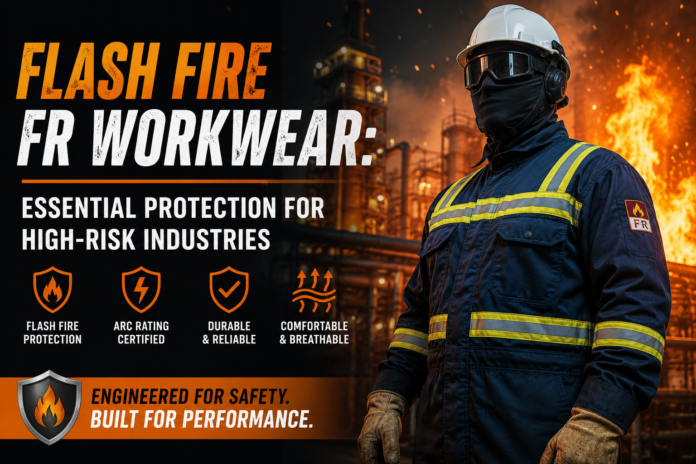
flash fire FR workwear is protective clothing made to reduce burn injury risk when workers face sudden fire, heat, sparks, or short flame exposure. A flash fire can happen very quickly, so normal cotton, polyester, or basic work clothing may not give enough protection. The main job of flash fire FR workwear is to resist ignition, slow flame spread, and give the worker a few extra seconds to move away from danger. These few seconds can matter a lot in oil and gas, welding, electrical, chemical, and industrial workplaces. This type of clothing is not magic armor, and it does not make a worker fireproof. However, it helps reduce how badly clothing burns against the skin. Good flash fire FR workwear should feel strong, comfortable, and practical enough for daily use, because workers need protection they can actually wear all shift.
Why High-Risk Industries Need FR Protection
High-risk industries need flash fire FR workwear because fire hazards are often fast, unexpected, and serious. Workers in oil fields, refineries, gas plants, utilities, metal shops, and construction sites may work near flammable vapors, hot surfaces, sparks, open flame, or electrical energy. In these jobs, one small mistake, leak, arc, or ignition source can create a dangerous event. Basic clothing can melt, shrink, or keep burning, which can increase injury. That is why many businesses use professional workwear clothing as part of a larger safety plan. The right clothing does not replace training, safe tools, or workplace rules. Instead, it supports them. flash fire FR workwear gives workers a safer clothing layer while they complete tough tasks in places where heat and flame risks are part of the job.
flash fire FR workwear for Oil, Gas, and Industrial Teams
flash fire FR workwear is especially important for oil, gas, and industrial teams because these workers often operate near fuel, vapor, pressure systems, machinery, and heat. A flash fire usually lasts only a few seconds, but those seconds can cause serious burns if clothing catches fire. FR garments are designed to self-extinguish or stop burning when the flame source is removed. That means the clothing should not continue feeding the fire like untreated fabric might. For field workers, coveralls, jackets, pants, and shirts can all be part of the protection plan. Many teams choose flame-resistant coveralls because coveralls protect more of the body in one garment and reduce gaps between upper and lower clothing. For outdoor sites, the right flash fire FR workwear should also allow movement, handle dirt, and stay comfortable in changing weather.
Main Features That Make FR Workwear Safer
The safety value of flash fire FR workwear comes from several features working together in one garment. The fabric should resist ignition, reduce flame spread, and avoid melting onto the skin. The stitching should be strong enough for hard use, because weak seams can fail during work. The fit should allow bending, lifting, climbing, and tool handling without leaving the body exposed. Closures, cuffs, pockets, and collars should be designed carefully, because small design details can affect safety. Reflective tape may be useful when workers also need visibility, especially near vehicles or low-light areas. Breathability is also important because workers are more likely to wear protective clothing correctly when it feels comfortable. Good flash fire FR workwear should balance protection, comfort, durability, and everyday function, not just look strong on paper.
FR Fabric Choices and Daily Comfort
Fabric choice matters because workers wear flash fire FR workwear for long hours, often in hot, dirty, or physically demanding jobs. Some FR fabrics are made with protection built into the fiber, while others are treated to resist flame. Both can be useful when made and cared for properly. The best choice depends on the workplace risk, washing needs, climate, and budget. A heavy fabric may feel stronger, but it can also feel hot during summer work. A lighter fabric may feel better in warm weather, but it still needs the right safety performance for the job. That is why many companies review fabric weight, breathability, shrinkage, color fastness, tear strength, and wash durability before buying. Comfortable flash fire FR workwear helps workers stay focused because they are not fighting against stiff, hot, or poorly fitted clothing all day.
Key Points to Check Before Buying
Before choosing flash fire FR workwear, buyers should check the job risk first, then choose clothing that matches the real working conditions.
• Choose garments that match the hazard level of the site.
• Check whether the fabric is flame-resistant and suitable for repeated washing.
• Pick a fit that covers the body without blocking movement.
• Make sure shirts, pants, jackets, and coveralls work together as a safe system.
• Avoid loose hanging parts that can catch on tools or machinery.
• Check seams, zippers, snaps, cuffs, and pockets for strength.
• Think about weather, sweat, and long-shift comfort.
• Buy from suppliers that understand industrial clothing needs.
• Train workers to wear the clothing properly.
These steps make flash fire FR workwear more useful in real life, not just on a product label.
Coveralls, Jackets, Pants, and Shirts: Which Is Better?
There is no single best garment for every job, because flash fire FR workwear works best when it matches the task. Coveralls are useful when workers need full-body coverage with fewer gaps. FR jackets are helpful in cooler weather or for outdoor teams that need a protective top layer. FR pants are important when workers need durable lower-body protection for kneeling, climbing, or working near sparks. FR shirts are useful for daily wear because they can be paired with FR pants or layered under jackets. Some companies use a full system from the FR workwear category so workers can choose items that match the season and job. The goal is not to wear the most clothing possible. The goal is to wear the right flash fire FR workwear correctly.
Fit, Mobility, and Worker Performance
A safe garment must also be wearable. If flash fire FR workwear is too tight, workers may feel restricted when bending, reaching, or climbing. If it is too loose, it may catch on equipment or create unsafe gaps. A good fit gives enough room for movement while keeping the body covered. Sleeves should not ride too far up when the worker reaches forward. Pants should allow squatting without pulling too low at the waist. Jackets should close properly without feeling tight across the chest. Pockets should be useful but not bulky. Workers also need clothing that supports real job motions, such as carrying tools, driving machinery, lifting materials, or working overhead. Better fit leads to better compliance, and better compliance means workers are more likely to keep their flash fire FR workwear on when risk is present.
Layering FR Clothing the Right Way
Layering can improve comfort and protection, but it must be done carefully. Wearing flash fire FR workwear over unsafe inner clothing can reduce the value of the protection system. For example, if a worker wears a meltable synthetic T-shirt under FR clothing, heat can still create problems close to the skin. Inner layers should be chosen with care, especially in cold weather. Outer layers should not block movement or create loose areas that catch on machinery. In winter, workers may need FR shirts, FR hoodies, FR jackets, or insulated FR outerwear depending on the site. In summer, lighter FR shirts and pants may help reduce heat stress. The simple rule is that every layer should support the safety goal. flash fire FR workwear works best when the whole outfit is planned, not chosen piece by piece without thought.
Care and Washing for Longer Protection
Care is important because flash fire FR workwear must stay useful after many working days and many washes. Workers should follow the care label because wrong washing can affect fabric life, shape, color, comfort, and performance. Heavy dirt, oil, grease, or chemical buildup should be removed because contamination can create extra risk. Bleach, harsh chemicals, and wrong drying methods may damage some garments. If clothing has holes, weak seams, broken closures, or heavy damage, it should be repaired correctly or replaced. Companies should also teach workers not to cut sleeves, remove labels, or modify garments in unsafe ways. Clean, well-maintained flash fire FR workwear looks more professional and works better as part of a safety program. Care is not just about appearance; it is part of protection.
Common Mistakes to Avoid
One common mistake is thinking that any thick clothing can replace flash fire FR workwear. Thickness alone does not mean flame resistance. Another mistake is buying protective clothing only by price, without checking comfort, fit, fabric, and real job use. Some teams also choose one garment for every worker, even when different workers face different tasks, climates, and movement needs. Another problem is wearing non-FR layers under FR clothing. Workers may also leave jackets open, roll up sleeves, or wear damaged garments because they feel hot or uncomfortable. These small habits can reduce protection. Businesses should make clothing easy to wear correctly by choosing better fits, breathable fabrics, and practical designs. flash fire FR workwear protects best when workers understand why it matters and when supervisors support proper daily use.
Conclusion
flash fire FR workwear is an important part of protection for high-risk industries where sudden fire, heat, sparks, or flame exposure can happen. It helps reduce burn risk by resisting ignition, slowing flame spread, and giving workers extra time to move away from danger. The best choice depends on the job, climate, fabric, fit, garment type, and daily comfort needs. Coveralls, jackets, pants, and shirts can all be useful when they are selected as part of a complete safety system. Good flash fire FR workwear should protect workers without making their jobs harder. When companies choose wisely, train workers clearly, and maintain garments properly, FR clothing becomes more than a uniform. It becomes a practical safety tool for people doing difficult work in risky places.
FAQs
What does flash fire FR workwear mean?
flash fire FR workwear means flame-resistant clothing made for jobs where sudden fire or short flame exposure can happen. It helps reduce burn injury risk by resisting ignition and slowing flame spread.
Is FR workwear completely fireproof?
No, FR workwear is not completely fireproof. It is designed to reduce injury risk, not make a worker safe from all fire hazards. Workers still need training, safe tools, and proper site rules.
Which industries need flash fire FR workwear?
Oil and gas, welding, utilities, electrical work, chemical plants, refineries, construction, and heavy industrial sites often need flash fire FR workwear because workers may face heat, sparks, flame, or flammable materials.
How should FR workwear fit?
FR workwear should fit comfortably without being too tight or too loose. It should cover the body properly, allow movement, and stay closed during normal work tasks.