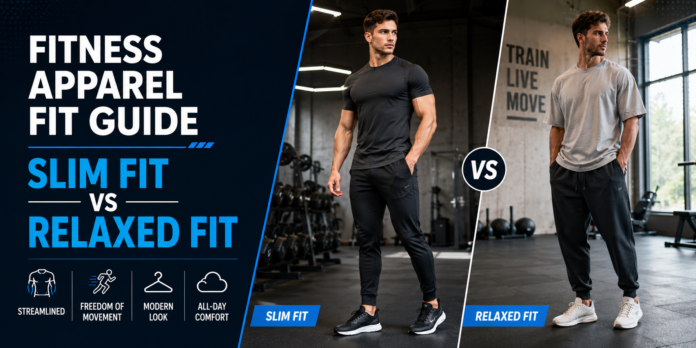
Choosing between slim fit and relaxed fit fitness clothing is not only about style. It affects how you move, how comfortable you feel, how your body looks, and how well your clothes support your workout. A good fitness apparel fit guide helps you understand the difference before buying, because the wrong fit can make exercise feel harder than it should. Slim fit clothing sits closer to the body and gives a cleaner, sharper shape. Relaxed fit clothing gives more room around the chest, waist, shoulders, hips, and legs, so it often feels easier for casual training, walking, stretching, or daily wear. Both fits can be useful, but they are made for different needs. Some people like slim fit because it feels controlled and athletic. Others prefer relaxed fit because it feels soft, easy, and less tight. This fitness apparel fit guide explains both options in simple words so you can choose the best fit for your workout style, body comfort, and daily routine.
Fitness Apparel Fit Guide: Simple Meaning of Slim Fit and Relaxed Fit
A fitness apparel fit guide should start with the basic meaning of each fit. Slim fit means the clothing follows the natural shape of your body without being extremely tight. It usually has less extra fabric around the arms, chest, waist, thighs, or calves. A slim fit t-shirt, tank, hoodie, jogger, or workout top looks more fitted and athletic. Relaxed fit means the clothing has more space and does not hug the body closely. It gives a softer, looser feel and allows air to move more easily between your skin and the fabric. Relaxed fit is not the same as oversized. Oversized clothing is usually much larger for a fashion look, while relaxed fit is still shaped properly but with more comfort room. This fitness apparel fit guide is useful because many buyers confuse slim fit with compression fit and relaxed fit with baggy fit. Slim fit should feel neat, not painful. Relaxed fit should feel easy, not sloppy.
Slim Fit Apparel: Close Shape, Clean Lines, and Better Body Control
Slim fit fitness apparel is best for people who want a neat, athletic look and clothing that stays close during movement. It is popular for gym training, running, cycling, weightlifting, and body-shaping activewear because it reduces extra fabric that may flap, twist, or get in the way. A slim fit workout shirt can make the upper body look sharper because it follows the shoulders, chest, and arms more closely. For example, a fitted training top like a compression t-shirt can work well when someone wants a close-body feel during intense training. However, slim fit should not stop blood flow, pull at the seams, or make breathing uncomfortable. A good fitness apparel fit guide always separates slim fit from “too tight.” If the fabric stretches well and the seams are strong, slim fit can feel smooth and supportive. If the fabric is stiff or the size is wrong, it can feel restrictive and uncomfortable.
Relaxed Fit Apparel: More Room, Easier Movement, and Everyday Comfort
Relaxed fit fitness apparel is better for people who want comfort first. It gives more space in key areas like the shoulders, stomach, hips, and thighs, which makes it easier to move naturally without feeling squeezed. Relaxed fit is a strong choice for light workouts, warm-ups, walking, yoga practice, casual gym days, travel, and daily activewear. Many people also choose relaxed fit when they do not want their clothing to show every body line. A soft relaxed top such as soft drop shoulder tees can feel comfortable for training, lounging, and streetwear styling. This fitness apparel fit guide recommends relaxed fit for buyers who want clothing that works beyond the gym. It can be worn before training, after training, while running errands, or while relaxing at home. The main point is balance. Relaxed fit should still look clean and controlled, not careless or shapeless.
Slim Fit vs Relaxed Fit for Different Workouts
The best fit depends on the activity. For high-speed movement, slim fit often works better because it stays close to the body and reduces fabric movement. Runners, cyclists, and people doing fast gym circuits usually prefer slim fit because it feels more controlled. For heavy weightlifting, the choice depends on personal comfort. Some lifters like slim fit tops because they can see body posture and muscle movement, while others like relaxed tops because they do not want tight fabric pulling during shoulder presses, squats, or deadlifts. For yoga, stretching, Pilates, and mobility work, relaxed fit can feel better on the upper body, but bottoms usually need enough stretch so they do not slide or bunch. This fitness apparel fit guide suggests choosing slim fit for speed, structure, and a sharp athletic look, while relaxed fit is better for comfort, airflow, and easy movement. Neither fit is always better. The better option is the one that supports the exercise without distracting you.
Fabric Stretch, Breathability, and Sweat Control
Fit is important, but fabric decides whether the fit feels good or bad. Slim fit clothing needs stretch because it sits close to the body. Without stretch, it may pull across the chest, shoulders, elbows, knees, or thighs. Relaxed fit clothing also needs good fabric because loose clothing can feel heavy if it traps sweat. A useful fitness apparel fit guide looks at fabric features like stretch recovery, moisture control, breathability, softness, and durability. Fitness clothing made with polyester, nylon, spandex, cotton blends, or performance fabrics can feel different even when the fit name is the same. Buyers looking at broader fitness apparel options should check whether the item is made for training, casual wear, or both. Breathable fabric helps relaxed fit stay cool. Stretch fabric helps slim fit stay comfortable. Moisture-wicking fabric helps both fits feel better during sweat-heavy workouts. So the fit should never be judged alone.
Body Type, Confidence, and Personal Comfort
A fitness apparel fit guide should not tell every person to wear the same style. Different body types feel comfortable in different fits. A person with broad shoulders may need relaxed fit tops to avoid tightness under the arms. Someone with a lean build may like slim fit because it gives shape and avoids extra fabric. A person with stronger thighs may prefer relaxed joggers or shorts, while another person may like slim fit bottoms because they feel more secure during training. Confidence also matters. Some people feel motivated when their gym clothes look fitted and athletic. Others feel more confident when their clothing gives space and does not cling to the stomach or hips. The best fit should help you move without thinking about your clothes again and again. If you keep pulling your shirt down, adjusting your sleeves, or fixing your waistband, the fit is not working. Comfort and confidence should come together.
One-Paragraph Bullet Guide: Quick Fit Checklist
A simple fitness apparel fit guide can be remembered like this Choose slim fit if you want a close shape and less extra fabric. Choose relaxed fit if you want more space and easier comfort. Pick slim fit for running, cycling, circuits, and sharp gym looks. Pick relaxed fit for walking, warm-ups, stretching, travel, and casual activewear. Make sure slim fit stretches when you lift your arms or bend your knees. Make sure relaxed fit does not look too baggy or heavy. Check shoulder seams, waistband comfort, sleeve movement, and fabric recovery. Avoid any fit that causes pulling, rubbing, rolling, or tight breathing. Choose fabric based on sweat level, workout intensity, and climate. Remember that the best fit is the one you can train in without distraction.
Common Fit Mistakes Buyers Should Avoid
Many people make the mistake of buying fitness apparel only by size label. Small, medium, large, and extra-large can fit differently across brands, fabrics, and product types. One slim fit shirt may feel comfortable, while another slim fit shirt in the same size may feel too tight because the fabric has less stretch. Another mistake is choosing relaxed fit in a size too large. That can make the clothing look messy and may disturb movement during training. A good fitness apparel fit guide also warns against ignoring seam placement. Shoulder seams should not dig into the skin. Waistbands should not roll down during squats or sit-ups. Sleeves should not pull when arms move forward. Pants should not bunch badly behind the knees. Buyers should also avoid choosing clothing only for mirror appearance. A shirt may look good while standing still but feel uncomfortable during exercise. Always judge fit by movement, not only by looks.
Which Fit Is Better for Brands, Teams, and Gym Wear?
For brands, teams, and fitness clothing collections, the best approach is often to offer both slim fit and relaxed fit. Not every customer has the same body shape, training style, or comfort preference. Slim fit products are useful for customers who want a performance look, clean lines, and close-body shaping. Relaxed fit products are useful for people who want everyday comfort, modest coverage, and easier wear. A smart fitness apparel fit guide for brands should include clear size charts, fabric details, model measurements, and fit notes. For example, a product page can say “slim fit, size up for a looser feel” or “relaxed fit, choose your normal size for comfort.” This reduces returns and improves customer trust. Gym wear brands should also think about different climates. Hot weather may need breathable relaxed tops, while intense training may need fitted moisture-wicking tops. The better brand is the one that helps buyers choose with confidence.
Conclusion
The final answer in this fitness apparel fit guide is simple: slim fit is better for a close, athletic, controlled feel, while relaxed fit is better for comfort, airflow, and easy daily wear. Slim fit works well when you want clothing that stays close during movement. Relaxed fit works well when you want more room and less body cling. But the best choice depends on your workout, fabric preference, body shape, and comfort level. Do not choose slim fit only because it looks sporty, and do not choose relaxed fit only because it feels safe. Try to match the fit with your real routine. If you train hard, sweat a lot, or move fast, slim fit may help. If you walk, stretch, travel, or wear fitness clothes all day, relaxed fit may feel better. A good fitness apparel fit guide always ends with one rule: the right fitness apparel should help you move better, feel better, and stay focused.
FAQs
What is the main difference between slim fit and relaxed fit fitness apparel?
Slim fit fitness apparel sits closer to the body and gives a sharper athletic shape, while relaxed fit fitness apparel gives more room for comfort and easier movement. Slim fit is usually better for controlled workouts, and relaxed fit is often better for casual training or daily activewear.
Is slim fit the same as compression fit?
No, slim fit is not always the same as compression fit. Slim fit follows the body shape, but compression fit is tighter and designed to apply pressure or support. This fitness apparel fit guide recommends checking the product description before buying because some fitted clothing may not offer true compression support.
Is relaxed fit good for gym workouts?
Yes, relaxed fit can be good for gym workouts if the fabric is not too loose, heavy, or baggy. It works well for warm-ups, stretching, walking, light lifting, and casual training. For fast movement, slim fit may feel more secure.
Which fit should I choose if I want both comfort and style?
Choose slim fit if you like a clean athletic look and close body shape. Choose relaxed fit if you want comfort, space, and easy daily wear. For the best balance, use this fitness apparel fit guide: slim fit for performance days and relaxed fit for comfort days.