Distressed denim has a worn and aged appearance that makes it look casual yet stylish. Undeniably, character is added to a pair of jeans with denim distress. Meanwhile, denim that has yet to be finished is nice and clean, but lacks the personality and character that comes with distressing. It is common to see jeans that have a faded look and jeans that have worn areas, cut-out sections, and edge fraying among raw edges and vintage wash effects. Quality distressing will appear even and planned. Distressing should never compromise the integrity of the jeans. Buying jeans that are well made with great balance in mind will give you a strong and stylish daily pair of jeans.
Distressed Denim Jeans Basics
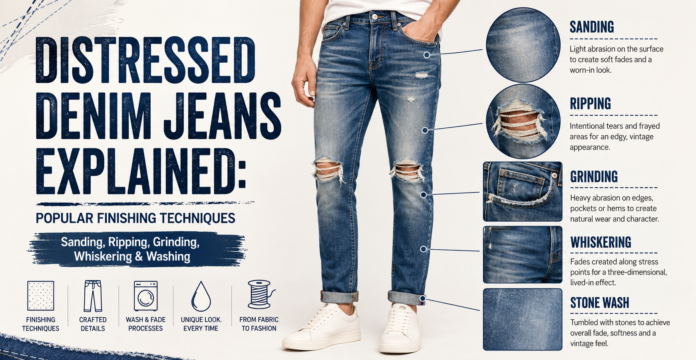
With distressed denim, washing techniques give the product a vintage, worn-in aesthetic. Drilling, sanding, grinding, ripping, and whiskering (to name a few) are just some of the methods that can give denim that old, time worn look. A full product category like the denim jeans collection can show many wash styles, so explaining distressing helps buyers compare looks more easily. The goal is not only to damage the fabric. The real goal is to create controlled fading, natural wear marks, and a finished fashion look. When done well, distressing makes jeans look more premium and more expressive.
Sanding for Soft Faded Areas
Sanding is a commonly used technique to distress denim jeans. This technique lightens specific areas of the jeans to give the jeans a soft, faded look. Common areas to distress are the thighs, knees, pockets, and the seat of the jeans. These areas naturally fade and distress from normal use. Depending on the effect a company is trying to achieve, employees may use different techniques to apply different amounts of pressure. Heavily distressed denim jeans will have a greater contrast than lightly sanded jeans. The goal is to have the sanding appear to blend in with the denim. Fabric can weaken with harsh sanding.
Ripping and Tear Effects
“Ripping” refers to purposely tearing or cutting certain areas of denim to produce open cuts, knee tears, and fashion holes in distressed denim jeans This is one of the most common features used in casual and street styles. Rips don’t have to be large to be cool, but must be intentional. Rips are typically placed on the knee, thigh, and lower legs. Cutting or tearing in the weak spots of denim will result in permanent damage to the jeans. Ripped denim should be a careful cut, and often has thread protection surrounding the cut. For bold examples, mens ripped denim jeans connect naturally with this finishing style because ripped details create a stronger fashion look.
Grinding on Edges and Seams
Grinding is another critical method for distressed denim. This technique is most commonly used on seams, hems and edges of the pockets and waistband. Grinding creates the effect of these jeans having rough and worn edges and like they are already vintage instead of having a large hole. Grinding needs to be done in moderation. Too much damage to the edges can cause the jeans to lose their structural integrity. Grinding is best done in a way that adds some structural integrity. When damaged edges are just enough, balance can be restored to the jeans. Grinding can give jeans a look that makes them feel vintage and distressed, but doesn’t look cheap.
Whiskering for Natural Crease Lines
Whiskering adds subtle crease lines in the front pocket and upper thigh that mimic the natural movement of the body and of the denim as well. This is why whiskering is considered a good technique for distressed denim jeans. Lines caused by good whiskering will always give jeans that “already broken in” feeling. Light whiskering is perfect for a clean casual look while the rugged look is achieved by strong whiskering. These lines should mimic the direction of a crease as whiskering that is done poorly is too straight, too bright, or worse, is out of place.
Stone Washing for Vintage Texture
Because it both softens fabric and adds a faded texture, stone washing is one of the most common finishing techniques for creating distressed denim. Washing the denim with real stones (or other similar finishing materials) develops a distressed denim jeans surface. The finishing surface can be light, medium, or strong based on the washing duration and the type of denim. Stone washing gives a casual vintage appearance to denim and softens the fabric. It also adds almost a level of comfort to the overall fabric. For stone washing to look right, it has to be done carefully and precisely.
Enzyme Washing for Cleaner Softness
Using enzymes to wash denim is a cleaner process of washing jeans to produce a softer, faded look. Distressing denim can also be smoother with wear effects without damaging fabric with washing methods. The finished denim will be softer, smoother, and a pretty wash tone. With enzyme wash, denim brands can have a softer finish without much abrasion cleaning. Though stronger effects won’t be made alone from enzyme washing, it can be used along with sanding, washing, and whiskering to achieve better looking jeans.
Simple One-Line Quality Checks
These checks make distressed denim jeans easier to understand before buying or approving production.
- Check if the fading looks natural and balanced.
- Check if ripped areas are placed carefully.
- Check if the fabric around tears still feels strong.
- Check if sanding blends smoothly with the wash.
- Check if whiskering follows natural crease lines.
- Check if grinding does not weaken the hems.
- Check if the full distressing matches the jean style.
These one-line checks help buyers judge distressed finishing without difficult factory terms.
Light vs Heavy Distressing
Distressed denim can be categorized as heavy, medium, or light, depending on the design. Designs with light distressing can have very mild sanding with soft fading or very small whiskers. Distressing with a medium level can have small tears, slight sanding, and fading that is more noticeable. The designs that are heavily distressed denim jeans can have very raw edges, large more noticeable rips, and more graphic details, as well as bold faded designs. Styles like denim tears jeans connect with expressive denim because strong finishing can support a more noticeable fashion story. The right level depends on the buyer’s taste, occasion, and target market. Good distressing should look intentional, not careless.
Final Guide for Better Denim Finishing
Distressed jeans have gained popularity because they are fashionable while still being comfortable and easy to wear. Certain techniques enhance the look of denim, like careful grinding, faint whiskering, and keeping a balanced wash. Distressing comes in all variations, but consider going for lighter distressing for a bolder day-to-day look, while deeper distressing is saved for night. Finishing is important to explain to customers to avoid confusion of differing looks throughout the product. Natural distressed jeans that are meant to be worn have a good balance of comfort and quality. Quality is important to keep in mind to not compromise the structural integrity of the jeans up to the wear limit after implementing distressing.
FAQs
What are distressed denim jeans?
Distressed denim jeans are jeans finished with faded, ripped, scraped, or worn-looking details to create a casual vintage style.
How are distressed denim jeans made?
They are made using techniques like sanding, ripping, grinding, whiskering, stone washing, enzyme washing, and controlled fading.
Are distressed denim jeans durable?
They can be durable if the distressing is controlled and the fabric around rips, seams, and hems remains strong.
What is the difference between ripped and distressed jeans?
Ripped jeans usually have visible tears or holes, while distressed denim jeans can also include fading, sanding, whiskering, and grinding.
Why do brands use distressed denim jeans finishing?
Brands use distressed denim jeans finishing to create a worn-in look, add fashion value, and make jeans more attractive for casual styling.