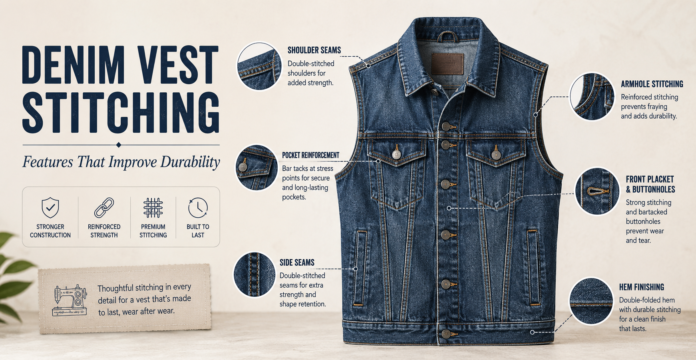
The stitching on a denim vest is crucial because it needs to be strong, even when there are no sleeves. During daily use, the shoulder area, armholes and pockets, as well as the front opening and hem, are all subject to regular movement. The vest may lose its shape, become distorted, have a sagging seam, or appear old after washing if the stitching is weak. The vest will retain its shape and feel comfortable when worn over shirts, T-shirts or hoodies with strong stitching. Stitching is a sign of quality for buyers and brands because it’s easy to spot loose threads and uneven seams. Clean sewing is the foundation of a durable denim vest stitching.
Denim Vest Stitching Basics
The denim vest stitching is the sewing that joins and reinforces all of the important parts of a vest. This includes shoulder seams and side seams as well as armhole edges, pockets corners, the front placket, buttons, waistbands, and bottom hems. A full category like the denim vest collection can include many colors, fits, and fabric weights, so clear stitching details help buyers compare quality more easily. The fabric gives the vest body, but stitching gives it strength and shape. When sewing is controlled properly, the vest looks cleaner and lasts longer.
Shoulder Seam Strength
The shoulder seams of denim vest stitching play a vital role in the fit of the vest. When a vest is worn, taken off, or overlaid with another garment, it can be pulled away from the shoulder. Shoulder seams that are weak can stretch or open up too early. Shoulder stitching that is done well should be straight, secure, and even. The fabric should be strong and durable, yet not bulky. The vest will also fit better if the shoulders are strong. The vest will look better with everyday outfits.
Armhole Stitching and Shape
The armhole is a crucial part of the denim vest stitching because there are no sleeves on vests to hold up the edges. It is important that the armhole remains smooth and strong while moving. The fabric can curl or stretch if the stitching around the armhole is not strong. The vest will keep its shape if the armholes are sewn correctly. They also prevent the rough edges rubbing on the body. Stitching should follow the contour of the armhole. The armholes should be able to move freely without pulling on the chest and shoulders. The durability of the garment is improved by this detail.
Pocket Stitching and Bar Tacks
Because pockets are often used, they require strong stitching. The stitching on denim vests around the pockets must include neat topstitching, corner reinforcement and secure corners. Small, tight stitches called bar tacks protect stressed points against tearing. These are particularly useful in pockets corners, where they will be subjected to repeated pulls. A style like a mens denim vest often needs practical pocket support because buyers may use it for daily casual wear, travel, or layering. Strong pocket stitching keeps the vest useful and helps the front area look clean. Weak pocket corners can make the vest look low quality quickly.
Front Placket and Buttonhole Strength
Denim vests must have strong stitching on the front placket because it is always worn. Plackets can be used to hold buttons, buttonholes or snaps. This area can cause the front to twist, lose its shape, or pull if it is not stitched properly. The buttonholes must be neatly and securely sewn to prevent fraying. The buttons should be attached firmly because the pressure is applied when closing the vest. The vest will look straighter and more stable with a strong front placket. The front opening of denim vest stitching is the part that is most noticeable.
Side Seams and Body Shape
The side seams control the shape of the vest. The side seams of a denim vest stitching should be stitched to keep both the front and rear panels in balance. The vest could not fit properly if the side seams twisted after washing. The vest will also move less when you bend, sit, or layer the vest with other clothes. From the underarm to the hem, the seam must be secure and straight. The vest will look and feel better with a neat side seam. A good side seam also helps to maintain the shape of your vest over time.
Topstitching for Style and Structure
The outside stitching of the vest is called topstitching. Topstitching is often used to stitch denim vests around the pockets, shoulder, armholes and front placket. This stitching adds style and helps keep fabric layers together. A blue denim vest can show topstitching clearly because contrast thread often stands out on blue denim. Clean topstitching makes the vest look more premium and structured. Uneven topstitching can make even good fabric look poorly made. The stitch lines should be straight, balanced, and matched with the vest design.
Simple One-Line Stitching Checks
These checks make denim vest stitching easy to understand before buying or approving production.
- Check shoulder seams because they should look straight and strong.
- Check armholes because the edge should stay smooth and secure.
- Check pocket corners because bar tacks should protect stress points.
- Check the front placket because buttons should sit in a clean line.
- Check side seams because the vest should not twist after washing.
- Check topstitching because straight lines show better sewing control.
- Check loose threads because too many loose ends show weak finishing.
These one-line checks help buyers judge denim vest stitching without difficult garment terms.
Hem Finishing and Long-Term Wear
The bottom hem is a small detail, but it affects the final look and durability of a vest. Denim vest stitching at the hem should keep the edge flat, stable, and clean. If the hem is weak, it can curl, fray, or open after washing. A good hem should match the vest style. Some vests have a clean folded hem, while others may have a raw or distressed finish. A black denim vest often looks sharper when the hem finishing is clean and controlled. Strong hem stitching helps the vest stay neat for longer.
Final Guide for Durable Denim Vests
The stitching on a denim vest is a hidden feature that determines the durability of a vest. To improve the durability of a vest, it is important to have strong shoulders, clear armholes and pockets that are secure, as well as neat side seams. It is important that a denim vest not only looks good when it’s new, but also remains strong even after being washed, layered, or worn every day. These stitching details should be explained in the product description because customers want to understand what makes one denim vest superior than another. The vest will look cleaner and feel better when the denim is stitched well.
FAQs
What is denim vest stitching?
Denim vest stitching means the sewing used to join and strengthen vest parts such as shoulders, armholes, pockets, placket, side seams, and hems.
Why is denim vest stitching important?
It is important because strong stitching helps the vest keep shape, resist seam damage, and stay durable after daily wear and washing.
Which stitching areas should buyers check first?
Buyers should check shoulder seams, armholes, pocket corners, front placket, buttonholes, side seams, topstitching, and bottom hem.
What shows poor stitching in denim vests?
Poor stitching signs include loose threads, uneven seams, weak pocket corners, twisted side seams, fraying armholes, and buttonholes that open quickly.
How can brands improve denim vest durability?
Brands can improve durability by using strong thread, secure bar tacks, clean topstitching, reinforced seams, strong buttonholes, and quality control.