A denim shirt is indeed lighter than a denim jacket or jeans, but denim shirt stitching is just as important. Denim shirt stitching holds all the components together – the shoulders, sleeves, collar, placket, pockets, cuffs, and hem. Without strong stitching, a shirt can easily lose shape and even fall apart at certain points after a few washes. Strong stitching is the primary factor that offers reinforcement and structure to the denim shirt when worn over t-shirts, tucked in, or even layered. From a buyer and brand perspective, the quality of stitching is very evident and is an important aspect of the stitching.
Denim Shirt Stitching Basics
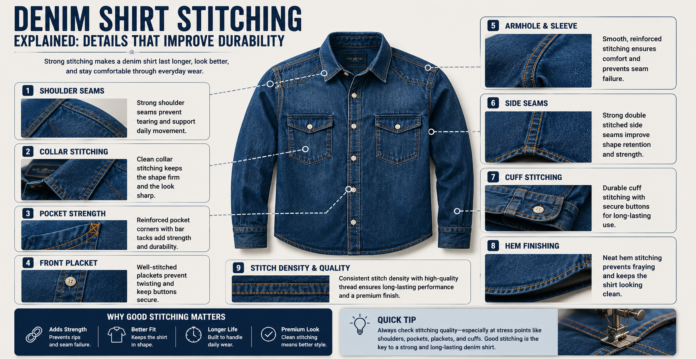
Stitching on denim shirts refers to the method of sewing that joins all of the crucial components of the denim shirt (e.g., shoulder seams, side seams, seams on sleeves, corners of pockets, edges of collars and cuffs, buttonholes, and bottom hems). A full category like the denim shirts collection can include many shirt styles, so clear stitching details help customers compare quality more easily. The fabric gives the shirt body, but the stitching gives it structure. When the thread, seam type, and finishing are controlled properly, the shirt feels better and lasts longer.
Shoulder Seams for Daily Movement
As the body moves, the shoulders carry the weight of the arms and any items that may be handled, along with the weight of any outer layers worn over a shirt. The stitching on a denim shirt’s shoulders should be neat and secure. When shoulder seams are weak, the shirt loses its shape and pulls across the upper body. The quality of the sewing along the shoulder seam of a shirt also contributes to comfort, as the shape and neatness of the shirt improve the fit.
Side Seams and Shirt Shape
A denim shirt’s side seams can influence the shirt’s overall shape. While stitching side seams, both front and back panels must match. If the side seams twist after one wash, the shirt will likely appear cheaply made. A side seam must support the shirt’s shape and fit. This is necessary for slim and loose fit shirts. The seam should appear neat from the underarm to the end of the shirt. Strong side seams support the shirt’s shape during everyday actions like sitting and bending.
Pocket Stitching and Reinforcement
As denim shirts typically have chest pockets, sewing those pockets must be done securely. Stall stitching of denim shirt stitching pockets must include top stitching and reinforcements. Due to the pressure pockets endure with items such as hands, pens and sunglasses, and items that are typically placed in pockets, or just left there, stall may give way. A practical style like a denim button down shirt needs clean pocket construction because the front area is easy to see. Strong pocket stitching improves both function and appearance. It also makes the shirt feel more useful for daily wear.
Collar Stitching and Shape Holding
Shirt collars are easy for people to see first. A denim shirt stitching collar should have clean, firm, and balanced stitching. A weak collar can easily warp after washing. Well-stitched and shaped collars keep shirts looking tidy. The collar points and seam should be even. The denim’s thickness may also affect how bulkily a collar closes; stitching has to be controlled here too. In both product photos and real life, a strong collar shows off a shirt’s best features.
Sleeve and Armhole Stitching
Because sleeves and armholes are the most flexible and most used areas in the design of a denim shirt, this area will require the strongest and most flexible stitching. When a person reaches out, or bends the arm, or when the shirt is worn as an outer design, the armhole seam is subjected to the most stress. Poor stitching in this area can lead to discomfort when the shirt is worn, and can even cause the shirt to tear. The design, and more, the attachment of the sleeve, should be even most importantly easy and comfortable to move in. Stitching the armhole should be perfect to enable the denim shirt to be used in different settings including work and travel.
Cuff and Button Placket Strength
Repeated use of cuffs and button plackets makes it necessary for sewing on denim shirt stitching to be more secure. Stitching on cuffs hold the sleeve opening neat and secure. Since the placket controls the front opening of the shirt, it must be straight. It is also necessary for buttonholes to be neat, and buttons to be well secured. For relaxed fits like an oversized denim shirt, the placket and cuffs still need clean construction because extra fabric should look planned, not loose or messy. Strong placket stitching helps the shirt close properly and stay sharp after washing.
Simple One-Line Stitching Checks
These simple checks make denim shirt stitching easy for buyers to understand before choosing a product.
- Check shoulder seams because they should look straight and strong.
- Check pocket corners because they should not lift or loosen.
- Check the collar because it should hold shape after washing.
- Check side seams because they should not twist.
- Check the placket because buttons should sit in a clean line.
- Check cuffs because sleeve openings should stay firm.
- Check loose threads because too many loose ends show weak finishing.
These one-line checks help buyers judge shirt quality without difficult garment terms.
Hem Stitching and Final Finishing
A small detail that strongly impacts the shirt’s final look is the bottom hem. Denim shirt stitching should keep the hem edge flat, smooth, and secured. Weak hems can open and/or curl after a wash. When hems are curved, the stitching should be done with consideration of the curves so that the clean stitching is visible on both sides. Straight hems should also be evenly balanced when the shirt is worn untucked. Final touches should be done on the shirt to trim stray threads and thoroughly inspect and press the button holes. Hem stitching also improves a shirts fresh and clean look ready for daily styling. Additionally, this detail of denim shirt stitching positively impacts the product finish.
Final Guide for Durable Denim Shirts
Stitching is the secret denim shirt detail that shows how well the shirt will hold up over time. Shoulders, pockets, collars, cuffs, hems, and armholes all work together to show strong, quality stitching. denim shirt stitching with great stitching will keep their quality over time. A great denim shirt should look great right out of the store, but should also keep that quality after multiple washes and wears. Because of this, stitching details should be clearly stated in product descriptions. Customers want to know why one shirt is better than another. When stitching is done to a high standard, the denim shirt will be a better investment.
FAQs
What is denim shirt stitching?
Denim shirt stitching means the sewing used to join and strengthen shirt parts such as shoulders, sleeves, collar, pockets, cuffs, placket, and hem.
Why is denim shirt stitching important?
It is important because strong stitching helps the shirt keep its shape, resist seam damage, and stay durable after daily wear and washing.
Which stitching areas should buyers check first?
Buyers should check shoulder seams, side seams, pocket corners, collar stitching, sleeve attachment, cuffs, button placket, and bottom hem.
How can brands improve denim shirt durability?
Brands can improve durability by using strong thread, clean seam control, reinforced pocket corners, firm buttonholes, and proper quality checking.
What shows poor stitching in denim shirts?
Poor signs include loose threads, uneven seams, twisted side seams, weak pocket corners, rough armholes, and collars that lose shape quickly.