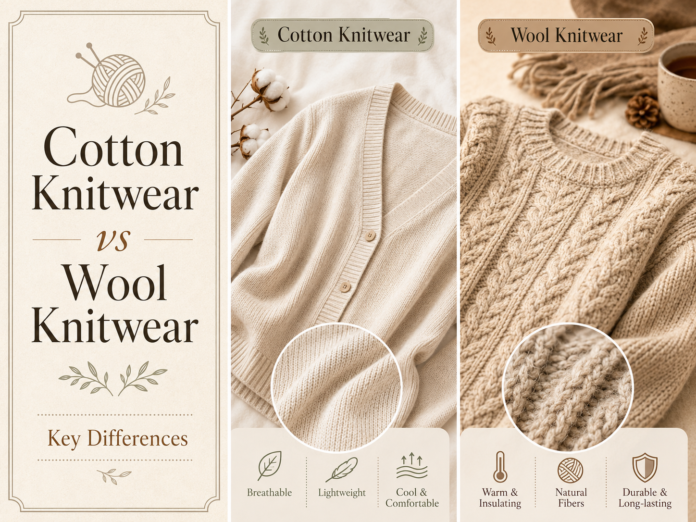
Cotton knitwear vs wool knitwear is a common comparison for people who want soft, comfortable, and useful clothing for daily wear. Cotton knitwear is made from cotton yarn, which comes from the cotton plant. It feels soft, breathable, and gentle on the skin. Wool knitwear is made from animal fleece, most commonly sheep wool, and it is usually warmer, thicker, and better for cold weather. Both fabrics are used in sweaters, cardigans, pullovers, hoodies, vests, and winter layers, but they do not feel or perform the same. Cotton knitwear is often better when you want comfort without too much heat, while wool knitwear is better when you need strong warmth. This is why cotton knitwear vs wool knitwear depends on your weather, your skin comfort, your budget, and how often you want to wear the garment. A cotton sweater may feel easy and light in spring or mild winter, while a wool sweater may feel more protective in very cold weather. If you understand the main difference from the start, choosing the right knitwear becomes much easier.
Cotton Knitwear vs Wool Knitwear
Cotton knitwear vs wool knitwear is not about which one is always better. It is about which one is better for your use. Cotton knitwear is usually softer in a smooth and clean way, so many people like it for casual outfits and indoor wear. It lets air pass through more easily, which helps the body feel fresh. Wool knitwear, on the other hand, is famous for warmth because wool fibers can trap air and hold body heat. This makes wool useful for cold mornings, outdoor walks, travel, and winter layering. However, some people feel that wool is slightly itchy, especially if the wool quality is rough. Cotton is normally easier for sensitive skin, but it may not keep you warm enough in harsh cold. When comparing cotton knitwear vs wool knitwear, think about the season first. For mild weather, cotton can be more practical. For cold weather, wool can be more protective. Both are valuable, but they serve different needs.
Comfort and Skin Feel
Comfort is one of the biggest points in cotton knitwear vs wool knitwear because knitwear touches the body for long hours. Cotton knitwear feels soft, smooth, and relaxed. It is a good choice for people who do not like heavy clothing or rough textures. Cotton also feels cooler than wool, so it works well when you want a neat knitted look without feeling too hot. Wool knitwear can feel warm and cozy, but its comfort depends on the type of wool. Fine wool can feel soft, while low-quality wool can feel scratchy. Some people also feel irritation when wool touches their neck or arms for many hours. That is why a cotton pullover may be better for school, office, or daily indoor use, while wool may be better for short outdoor use in cold air. For people exploring different knitted styles, the full knitwear collection can help compare shapes like sweaters, hoodies, and cardigans in one place without making the choice feel confusing. In simple words, cotton gives easy comfort, while wool gives warm comfort.
Warmth and Weather Use
Warmth is where wool knitwear usually wins in the cotton knitwear vs wool knitwear comparison. Wool has a natural ability to keep heat close to the body. This is because wool fibers have small spaces that trap warm air. That trapped air works like a soft shield against cold weather. Cotton knitwear can also provide warmth, but it is usually lighter and less insulating than wool. Cotton is better when the weather is cool, not freezing. For example, a cotton knitted sweater can work well in autumn, spring, light winter, or indoor places where heaters are already running. Wool is better for cold winter days, outdoor events, mountain areas, and windy weather. However, wool may feel too warm if the temperature changes quickly or if you stay indoors for a long time. Cotton knitwear vs wool knitwear becomes easier when you ask one simple question: do I need light comfort or strong warmth? If the answer is light comfort, cotton is better. If the answer is strong warmth, wool is better.
Breathability and Sweat Control
Breathability means how well a fabric allows air to move through it. In cotton knitwear vs wool knitwear, cotton is usually more breathable in a fresh and simple way. Cotton allows air to pass through, so it helps reduce overheating. This makes cotton knitwear a good option for everyday use, layering, and places where the weather is not too cold. Wool can also manage moisture in its own way because it can absorb some moisture without feeling wet immediately. However, wool may still feel warmer and heavier than cotton. If you sweat easily, cotton knitwear may feel more comfortable for longer indoor wear. If you are outside in cold weather, wool can help manage warmth better while still offering some moisture control. A knitted sweater for men can be a practical example of how knitwear can look neat while still staying useful for daily outfits. In cotton knitwear vs wool knitwear, cotton is usually better for airflow, while wool is usually better for heat control.
Durability and Long-Term Use
Durability matters because good knitwear should not lose shape after only a few wears. Cotton knitwear vs wool knitwear shows a clear difference here. Cotton knitwear is strong for regular washing and daily use, but it can stretch or lose shape if it is too loosely knitted or not dried correctly. It can also shrink if washed in hot water. Wool knitwear can last for years when cared for properly, but it needs more careful handling. Wool can shrink badly if washed with heat or rough movement. It can also develop pilling, which means small fabric balls appear on the surface. Cotton may also pill, but wool pilling is more common in many knitted garments. If you want easy daily wear, cotton may feel less risky. If you want long-term winter value and you are ready to care for it properly, wool can be a strong choice. Cotton knitwear vs wool knitwear is not only about buying the garment; it is also about how you will wash, dry, store, and wear it.
Care, Washing, and Maintenance
Care is a major reason why many people choose cotton knitwear over wool knitwear. Cotton knitwear is usually easier to wash at home. Many cotton sweaters and hoodies can be washed gently in a machine, although checking the care label is always important. Wool knitwear needs more care. Some wool garments require hand washing or dry cleaning. Wool should not be washed in hot water, and it should not be twisted hard because it can shrink or lose shape. Drying is also important. Knitwear should usually be dried flat instead of hanging, because hanging can stretch the shoulders and body length. Cotton is more forgiving, while wool is more sensitive. For women who want a stylish layer without too much difficult care, a knitted cardigan for women can be a good type of knitwear to compare with heavier wool layers. In cotton knitwear vs wool knitwear, cotton is better for easy care, while wool needs gentle care to stay beautiful.
Style, Fit, and Daily Outfit Use
Style is another important part of cotton knitwear vs wool knitwear because both fabrics create a different look. Cotton knitwear often gives a cleaner, lighter, and more relaxed style. It works well with jeans, trousers, skirts, casual pants, and simple everyday outfits. Cotton sweaters and hoodies can look modern without feeling too formal. Wool knitwear usually gives a richer winter look. It can make an outfit feel cozy, premium, and more seasonal. Wool cardigans, pullovers, and turtlenecks are often used for winter fashion because they add depth and texture. Fit also matters. Cotton knitwear may fall more smoothly on the body, while wool knitwear may look bulkier depending on the yarn thickness. If you want a slim and easy outfit, cotton may suit you better. If you want a warm and layered winter outfit, wool may look better. Cotton knitwear vs wool knitwear should be decided by both comfort and appearance because knitwear is not only for warmth; it is also part of personal style.
Main Differences at a Glance
Cotton knitwear vs wool knitwear becomes easier when you look at the main points side by side. Cotton knitwear is usually softer for sensitive skin. Wool knitwear is usually warmer for cold weather. Cotton knitwear is better for breathability and light comfort. Wool knitwear is better for insulation and winter protection. Cotton knitwear is easier to wash and maintain. Wool knitwear needs more careful washing and storage. Cotton knitwear is often better for daily indoor use. Wool knitwear is often better for outdoor winter use. Cotton knitwear can feel lighter and smoother. Wool knitwear can feel heavier and cozier. Cotton knitwear may be more comfortable in mild weather. Wool knitwear may be more useful in freezing weather. Cotton knitwear vs wool knitwear is not a fight between good and bad fabric. It is a choice between two different fabric behaviors. The best option depends on climate, skin sensitivity, care routine, outfit style, and how much warmth you really need.
Price and Value for Money
Price is a practical point in cotton knitwear vs wool knitwear. Cotton knitwear is often more affordable than wool knitwear because cotton yarn is commonly available and easier to process for many everyday garments. This makes cotton a good choice for people who want several sweaters, hoodies, or cardigans for regular use. Wool knitwear can cost more, especially when the wool is fine, soft, and high quality. The higher price may be worth it if you live in a cold place and need real warmth. However, if your weather is mild, spending more on wool may not be necessary. Value for money means the garment should match your real needs. A low-cost cotton sweater can be valuable if you wear it often. An expensive wool sweater can also be valuable if it keeps you warm for many winters. Cotton knitwear vs wool knitwear should be judged by cost per wear, not only the price tag. The better value is the one you actually use, enjoy, and care for properly.
Conclusion
The best way to decide cotton knitwear vs wool knitwear is to think about your lifestyle. Choose cotton knitwear if you want soft comfort, easy washing, light warmth, and simple everyday style. Choose wool knitwear if you want serious warmth, winter protection, and a cozy seasonal look. Cotton is better for mild weather, indoor use, and sensitive skin. Wool is better for cold weather, outdoor layering, and strong insulation. If you live in a place where weather changes often, keeping both types in your wardrobe can be the smartest choice. A cotton sweater can serve you on normal days, while a wool sweater can help on colder days. Cotton knitwear vs wool knitwear also depends on how much time you want to spend on garment care. Cotton is easier, wool is more delicate. In the end, the right choice is not only about fabric names. It is about comfort, warmth, care, budget, and how the garment fits your daily life.
Conclusion: cotton knitwear vs wool knitwear is a useful comparison because both fabrics have clear benefits. Cotton knitwear gives soft, breathable, and easy comfort for regular wear. Wool knitwear gives warmth, insulation, and winter protection. If you want something simple for daily outfits, cotton is a safe choice. If you want something warm for colder days, wool is a better choice. The final decision should match your weather, your skin, your washing routine, and your personal style.
FAQs
Is cotton knitwear better than wool knitwear?
Cotton knitwear is better if you want breathable comfort, easy washing, and a soft feel for daily wear. Wool knitwear is better if you need more warmth in cold weather.
Which is warmer: cotton knitwear or wool knitwear?
Wool knitwear is usually warmer because wool fibers trap body heat better than cotton. Cotton knitwear gives lighter warmth and is better for mild weather.
Is wool knitwear good for sensitive skin?
Wool knitwear can be warm and comfortable, but some people may feel itching. Fine wool is softer, while rough wool can irritate sensitive skin.
Which is easier to care for: cotton or wool knitwear?
Cotton knitwear is usually easier to wash and maintain. Wool knitwear needs gentle washing, flat drying, and careful storage to avoid shrinking or damage.