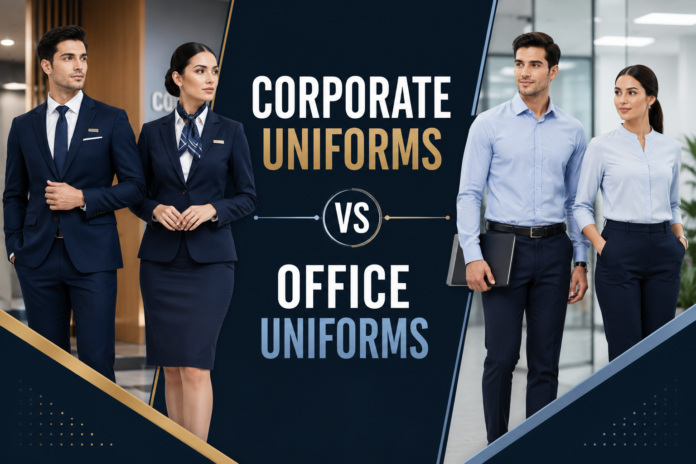
It is important to distinguish between corporate uniforms and office uniforms because both terms are often used interchangeably, but not always. Corporate uniforms usually represent the company’s image to customers, business identity, and brand. Office uniforms are designed to promote professionalism and comfort in the workplace, as well as daily dress standards.
The purpose is the main difference. Corporate uniforms are designed to emphasize brand recognition, team identity and public appearance. Office uniforms are more focused on neat dress, professionalism, and employee comfort. Businesses can choose from the collection of uniforms to suit different teams and industries.
What are Corporate Uniforms?
Corporate uniforms consist of branded clothing worn by employees in order to represent their company. Uniforms can include shirts or blouses and trousers, blazers or jackets, dresses, aprons or lab coats. These uniforms often feature brand colors, embroidery with logos, name badges or a dress code.
In retail, hospitality and healthcare, as well as in banks, front desk, customer service, events and the airline industry, corporate uniforms are a common sight. It is important that staff look like they are part of the company.
What are Office Uniforms?
Office uniforms are the professional clothes worn by office workers. The uniforms may not have a big logo or bright colors. They focus instead on neat appearances, comfort, modesty and workplace consistency.
Dress shirts, blouses and chinos are all common office uniform pieces. They can also include blazers, cardigans and other simple business casual pieces. Office uniforms often include a clean , white dress shirt. It looks professional and is easy to match with many bottoms.
Office uniforms vs Corporate Uniforms: The main difference
The main differences between Office Uniforms and Corporate Uniforms are the branding and purpose. Corporate uniforms can be made to represent a business before customers. Office uniforms usually maintain a professional dress standard within the office.
The corporate uniform can include logo placement, brand colors, embroidery and styling based on role. Office uniforms may be made of neutral colors, simple designs, and comfortable fabrics. Office uniforms are more workplace-focused than corporate dressing.
Branding and Company Identification
Branding is more effective with corporate uniforms. Customers are more likely to remember a business if they see the same colors, logos and uniformity of staff. It is especially useful for teams that interact with customers, as the uniforms become part of the visual identity.
Businesses who want to create a strong brand image use uniforms for their employees. A uniform that is well designed can make a business appear more professional, organized, and reliable.
Office Professionalism
Office uniforms are designed to promote a professional and clean workplace. Employees can avoid confusion over what to wear each day. It creates a uniform look without the need for a highly branded outfit.
Office teams, for example, may wear neutral shirts or blouses. It is not always about advertising the brand. It is important to maintain a clean, respectable, and conducive work environment for internal meetings, deskwork, and other business tasks.
Formality Level
Corporate uniforms are formal, semi-formal or casual, depending on the industry. Retail brands may wear polo shirts with trousers. Hotel staff may wear dress shirts and blazers. Lab coats or uniforms of the medical type may be used by a healthcare brand.
Business casual or formal uniforms are the norm. They avoid bold colors and strong designs. A black blazer will make corporate uniforms and office uniforms more professional, especially for managers and employees who are in contact with clients.
Tops used in both uniform types
The styling of shirts and blouses can be different for both uniform types. Logos, brand colours, and special trimmings can be added to corporate tops. Office tops tend to be simpler and neutral.
Button-down blouse will work in both situations. It can be customized with branding or color coordination for corporate use. It can be kept plain, professional, and clean for office use.
Bottoms are used in both uniform types
Uniform bottoms must be comfortable, allow for movement and have a neat appearance. Corporate teams can use trousers, skirts or chinos depending on their work environment. Office teams prefer simple skirts, dress pants or chinos.
chino trousers for men are suitable for corporate uniforms for men. These pants look more formal than jeans, but are also more comfortable.
Role-based Uniform Needs
Corporate uniforms are often different depending on the role. Uniforms can be different for sales staff, receptionists, doctors, security personnel, and managers. Customers can easily identify who is doing what.
The role of office uniforms is usually less distinct. The majority of employees will dress the same, with slight variations based on seniority or department. It is more important to maintain uniformity in the workplace than to recognize specific roles.
Differences in Industry
In industries where employees interact with customers on a regular basis, corporate uniforms are common. Uniforms for retail stores, hotels and clinics as well as restaurants, event teams, showrooms, and showrooms are needed to make sure customers can easily recognize them.
Office uniforms can be found in many workplace settings, including administrative, finance and HR offices, sales offices, and corporate environments. labcoats for doctors are often part of professional uniforms in healthcare offices and clinics because they convey authority, cleanliness, and trust.
Comfort and Daily Wear
Comfort is a must for both corporate uniforms and office uniforms. They can be worn for long shifts, customer service, deskwork, travel, and meetings. When the uniform is tight, hot or uncomfortable to wear, it can negatively affect performance and confidence.
Fabric, fit, breathability and stretch are all factors that affect comfort. A professional uniform must look good, but should still allow for natural movement. Fabrics that are easy to care for can also be useful, as uniforms require regular washing.
Placement of Logos and Branding
Logos are often visible on corporate uniforms. Logos are commonly placed on the left chest or sleeve. They can also be found in pockets, blazers, pockets, aprons, and upper backs. The logo should not be too large but it should be clearly visible.
The logo on office uniforms can be very small or not present at all. This makes the uniforms look more professional and less promotional. When you consider the logos, it is easier to distinguish between corporate uniforms and office uniforms.
Color Selection
Brand colors are often used in corporate uniforms. These colors connect the uniforms of the employees with the corporate identity. Strong colors must be balanced by neutral shades to avoid the uniform looking too loud.
Most office uniforms use safe colors like white, black or navy. These colors are professional and easy to repeat. The color scheme you choose depends on your company’s image and the role of staff.
Which one is better for customer-facing staff?
It is better to have corporate uniforms for staff who are in contact with customers because it makes them easier to identify. In a shop, clinic, showroom or hotel, customers can find assistance quickly.
While office uniforms are still useful for staff who interact with customers, they may not be as effective in creating brand recognition. Corporate uniforms are the best choice if the goal is to increase visibility and build customer trust.
Which one is better for internal office teams?
They are comfortable, simple and professional. They make employees look professional without feeling too promotional or branded.
It may not be necessary to use bold colors or logos for internal teams. Clean office uniforms can help create consistency and discipline while still providing comfort for desk work, meetings and everyday office tasks.
Checklist for Corporate Uniforms and Office Uniforms
Check this Corporate Uniforms Vs Office Uniforms check list before selecting a uniform style.
- Corporate uniforms are a great way to build brand recognition.
- Office uniforms are a great way to maintain consistency in the workplace.
- Select visible logos for teams that are in contact with customers.
- Select neutral colors to use in your office.
- Select blazers to wear for formal and premium roles.
- Comfortable shirts and blouses are ideal for long shifts.
- Wear chinos and trousers to keep your clothes clean.
- Select fabrics that are easy to care for and wash regularly.
- Choose a uniform that matches the employee’s role.
- Design your website to be practical, professional and comfortable.
Common Mistakes in Uniform Selection
A common mistake is to choose a uniform solely because it’s stylish. A uniform should also be comfortable, allow for movement, washable, and support daily work. The uniform won’t perform as well if employees are uncomfortable.
The same design is used for all departments. Different uniforms may be needed by front-desk workers, retail employees, doctors, office staff, and managers. The best option for Corporate Uniforms or Office Uniforms depends on the role, workplace needs, and brand visibility.
conclusion
Office uniforms and corporate uniforms are both designed to make employees look professional. However, they have different purposes. Corporate uniforms are better for branding, customer identification, role identity and public-facing team. Office uniforms are best for comfort, consistency and daily professional dressing.
Your business type and employee role will determine the best option. When brand visibility is important, choose corporate uniforms. Office uniforms are the best choice when professionalism is more important. A uniform program that is well-planned can combine both ideas, using clean office clothes with small branded elements.
FAQs
What is the difference between office uniforms and corporate uniforms?
Office uniforms are more focused on professionalism and consistency.
Are corporate uniforms reserved for staff who interact with customers?
They are not required, but can be very useful to employees who interact with customers.
Can blazers be worn with office uniforms?
Office uniforms include blazers and dress shirts as well as trousers, chinos, skirts and other professional pieces.