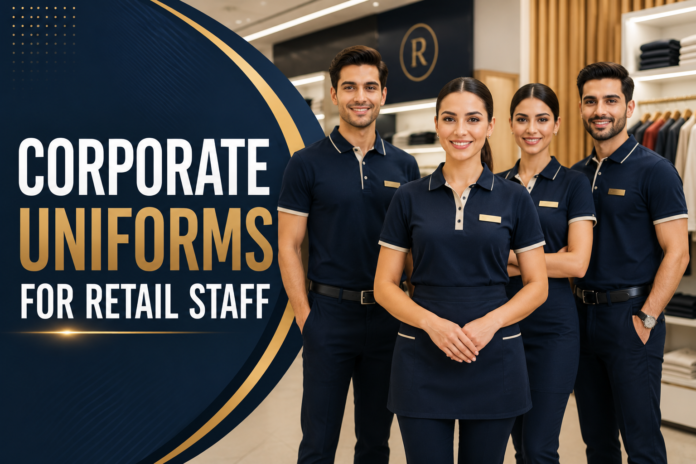
Corporate uniforms are essential for retail staff because they allow customers to recognize them quickly in a store. First impressions are important in retail. Staff wearing uniforms makes the store look more professional and organized.
It is more than just matching clothing. The uniform also helps with brand colors, customer service and comfort. It can be used to improve daily performance. Retailers can look at the collection for a better understanding of how professional clothing is designed to fit different work environments.
What are corporate uniforms for retail staff?
Corporate uniforms are outfits that have a specific logo or design worn by retail employees in stores, showrooms and malls. They can also be used for customer service staff. Uniforms can include shirts and blouses or trousers, blazers and aprons. They may also have name badges.
The goal is for the team to look like they are part of the brand. Customers feel more confident when they can identify the staff. They are more likely to ask questions, find products and get support. It improves customer service as well as store services.
Why Brand Recognition is Important in Retail
Customers can identify your company by its colors, logos, presentation, and style. Uniforms are a great way to demonstrate brand identity. A uniform that is clean and consistent helps the team to look professional.
If employees are wearing different casual clothes, it may make the store feel unorganized. When everyone wears the same style, it makes your brand more visible. Many businesses use uniforms for their employees in order to create a professional and clear image.
Create a Consistent Image for Your Store
Corporate uniforms are a great way to create a consistent image for all retail staff. The uniform helps customers recognize and connect with the entire team, whether they are speaking to a sales assistant, floor supervisor, customer support representative, or cashier.
Consistency is also a factor that builds trust. When customers can see the employees in the store, they are more likely to seek assistance. It is important to do this in busy retail environments where customers might feel rushed or confused.
Improved Customer Trust
Customers judge the professionalism of a shop by its staff. A neat uniform makes employees look more reliable, trained and prepared to help. The uniform does not have to be expensive. The uniform must be comfortable, clean and appropriate for the brand.
A clean , white dress shirt will create a professional and sharp look for retail teams who want to present a polished but simple appearance. This shirt looks great with trousers, blazers and accessories in brand colors.
Professional Tops for Retail Staff
Retail staff needs tops that are both professional and comfortable for long shifts. Shirts and shirts should be easy to move because employees bend, reach, unfold products, guide clients, and stand many hours.
It is easy to style and looks good. A button down blouse works well for retail uniforms. The blouse can be worn with skirts, trousers or blazers based on the brand’s tone and dress code.
Bottoms That Support Movement
Uniform trousers must be neat and comfortable, but they should also allow for movement. Retail workers move, stand, organize shelves and assist customers all day. Uncomfortable pants can have a negative impact on confidence and performance.
chino trousers for men are a great way to create a casual, smart uniform look. Chinos can be useful as they are more casual than formal dress trousers but look cleaner than jeans.
Blazers for Premium Retail Shops
Some retail stores require a uniformed look. Blazers are often used by fashion boutiques, showrooms of luxury goods, jewelry shops, reception desks and premium retail spaces to enhance their brand image.
Corporate uniforms can look more professional with a black jacket. The blazer goes well with chinos and skirts as well as dress shirts. The blazer can also make senior managers and staff more visible in the sales floor.
Uniforms for Retail Specialist Roles
Uniforms are needed in certain retail environments to match specific product categories. Uniforms that are cleaner and look more professional may be needed for pharmacy counters, optometry stores, skincare clinics and wellness shops.
In such settings, labcoats for doctors may inspire specialist retail uniforms, where hygiene, authority and customer confidence are important. In retail environments that are related to healthcare, a lab-style coat will help staff appear knowledgeable.
Comfortable Shifts
Retail staff often works long hours, so uniforms must be comfortable. Employees can stand the entire shift, walk the store, lift stock items and talk to many customers. When the uniform is too tight or feels hot, this can affect performance.
Fabric choice, fit and breathability are all important factors in comfort. Uniforms can be made more functional with lightweight shirts, easy-care fabrics, and flexible trousers. A good uniform for retail should allow employees to work with confidence without feeling restricted.
Matching uniforms to Brand Colors
Brand colors play a major role in uniform design. Stores can use their main brand color on shirts, scarves and ties, aprons as well as trims, badges or embroidery. The uniform will be more closely connected to the company identity.
The color chosen should be appealing but not distracting. Black, white, grey, beige and soft blue, for example, can form a professional foundation. Use bright brand colors in small details to keep the outfit looking clean and professional.
Placement of Logos and Embroidery
The placement of the logo can make a uniform more recognizable. Logos are commonly placed on the left chest area, the sleeve or pocket of a uniform, as well as in front of an apron, on a blazer, and at the blazer’s lapel. The logo should not be too large, but it should still be clearly visible.
Embroidery can be a good choice, as it is more professional looking and will last longer than printed details. Retail staff should keep logo sizes balanced. A clean, small logo will look more professional than a loud and large design.
Plan your uniforms for the season
The uniforms for retail should be adjusted to the seasons. Uniforms for summer may require short sleeves, lighter materials, and breathable fabrics. Winter uniforms can include blazers or jackets.
When the store offers both warm-weather uniforms and cold-weather uniforms, it is better for staff to be comfortable all year round. The uniforms will keep the staff comfortable throughout the year, while maintaining the brand identity.
Included in the Fit and Size
The uniforms should be able to fit different body types. Some staff may feel restricted if the uniform is too thin. The team could look messy if the uniform is too loose. The uniform will look more professional if you choose the right size.
A good fit can also boost confidence. When employees feel confident in their uniforms, they can better focus on the customer. Uniforms that are well-designed should be available in multiple sizes and styles, with easy adjustments. They should also allow for movement.
Durability and easy care
Retail uniforms must be able to withstand regular washings, long shifts and repeated use. Fabrics must be durable, easy to maintain, and colorfast. Poor-quality uniforms may fade, shrink or lose their shape very quickly.
Staff uniforms must look good every day, so they need easy-care fabrics. Uniforms last longer if they are made of wrinkle-resistant shirts and trousers, have strong seams and stitching, or are durable. It saves money and maintains the image of your store.
Checklist for Corporate Uniforms in Retail Staff
Checklist to use before selecting retail uniforms
- Select colors that complement the brand identity.
- Comfortable fabrics are ideal for long shifts.
- Choose tops that are clean and professional.
- Choose trousers or skirts with movement.
- Add blazers to premium retail environments.
- Placing logos neatly and in an area that is easily visible will help to make them more memorable.
- Easy-care fabrics are ideal for washing daily.
- All staff should be sized properly.
- Plan your seasonal uniform options.
- Design your brand with simplicity, functionality, and focus.
Common uniform mistakes to avoid
A common mistake is to choose uniforms solely for their appearance. Retail staff need more than a uniform that looks good on photos. They also require comfort, mobility, and durability. The uniform must be comfortable for employees to provide good service.
A uniform with too many colors and large logos can also be unprofessional. A busy uniform can look unprofessional. Corporate uniforms for retail employees should clearly support the brand, but still feel easy to wear.
conclusion
Corporate uniforms are a great way to improve employee and customer confidence, brand recognition, store appearance and trust. A well-designed corporate uniform helps staff to be more easily identified and gives the store an organized appearance.
Style and functionality should be balanced in the best retail uniform. Select fabrics that are comfortable, choose clean colors, ensure a proper fit, place the logo neatly, and make sure it is durable. When uniforms match the brand and support daily work, they become a powerful element of the customer’s experience.
FAQs
Why is it important to have uniforms for retail staff?
Uniforms make it easier for customers to identify staff and look more professional.
What should retail staff be wearing?
Retail staff can wear shirts or blouses. They may also wear trousers, blazers and aprons.
How can uniforms help improve brand recognition?
Uniforms are designed with consistent colors, logos and styling to help customers remember your brand.