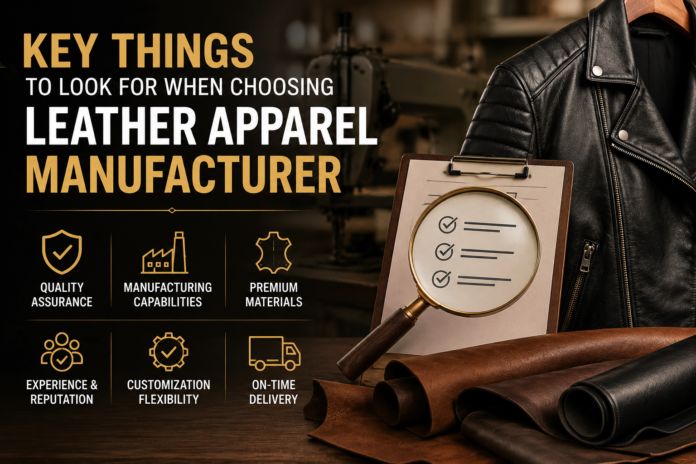
Leather mistakes are permanent. Unlike textiles, leather offers little room for error. A wrong cut, uneven seam, inferior hide, or poor craftsmanship can ruin the entire product with no easy fix.
That is why choosing leather apparel manufacturer carefully is one of the most important decisions for any brand. The right manufacturer becomes a reliable partner that delivers consistent leather quality, expert craftsmanship, and dependable production standards. A poor manufacturing choice, however, can lead to costly mistakes, product delays, and major financial losses.
This guide is meant to help you select a leather manufacturer and make that decision with confidence.
Leather differs from fabric.
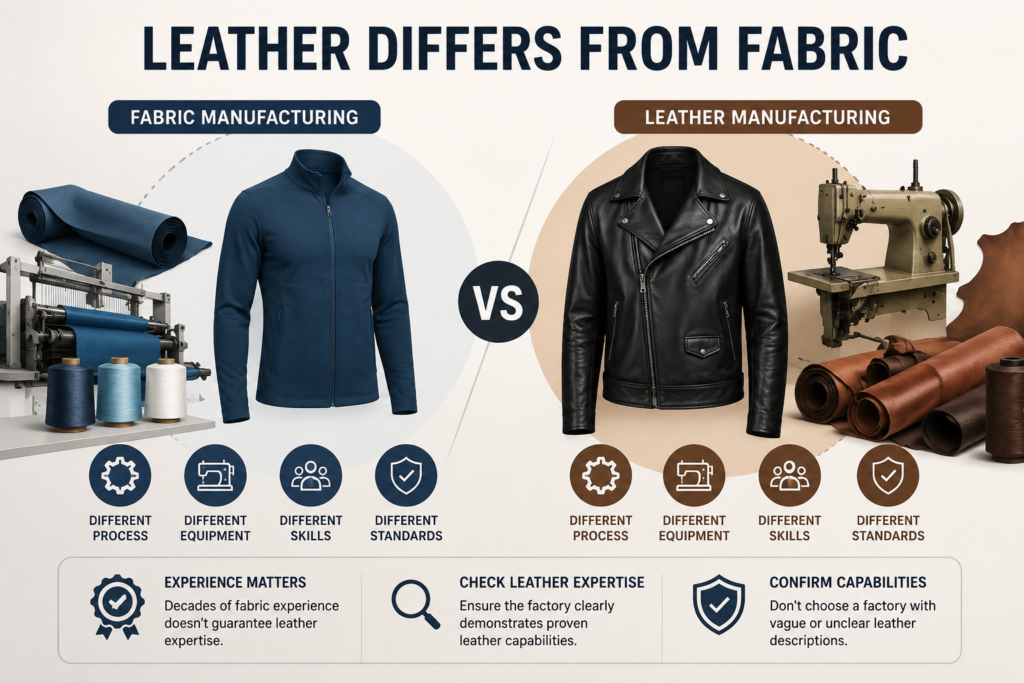
Manufacturing leather as opposed to fabric is completely different. When it comes to fabric, you have a different process, different equipment, different skills and different standards of quality.
Just because the same factory is making polyester activewear doesn’t mean they can also make leather jackets. There are many kinds of cutting, stitching and finishing. While some equipment for making jackets is also applicable for leather, that factory will probably have decades of experience in fabric.
This is why you should place extreme importance on experience. The first thing you should confirm is that the factory you are evaluating does not have a vague description of its capabilities in leather.
Verify Leather Sourcing and Hide Quality
The quality of leather can be highly variable.
The pinnacle of leather quality is full-grain leather.
Full-grain leather retains the natural imperfections or markings in the hide and ages to a deep, rich colour. Then you have top-grain leather. Top-grain leather is altered the most and gets sanded and finished to provide a smoother surface. Genuine is a lower quality leather and is produced from the remaining layers after the top grades are taken off. Lastly, we have bonded leather, which is commonly used in apparel.
A credible leather apparel manufacturer will be completely transparent about which grade of leather they source, where it comes from, and how it is tanned. Ask specifically about tanning method — chrome tanning is faster and more common, while vegetable tanning is slower, more expensive, and more environmentally responsible.
If a manufacturer is vague about their leather sourcing, that’s a serious red flag.
Assess Their Range of Leather Products
A manufacturer’s product range tells you a lot about their actual capabilities. A factory that only produces leather belts and bags is a very different operation from one that produces full leather jackets, coats, and pants.
Look for a manufacturer who covers the full spectrum of leather apparel. Experience across leather jackets, leather coats, leather pants, and leather vests indicates a factory with broad technical capability — one that can handle the complexity of full garment construction, not just simple accessories.
Ask to see samples across their product range. A factory confident in its work will show you examples without hesitation.
Evaluate Stitching and Construction Quality
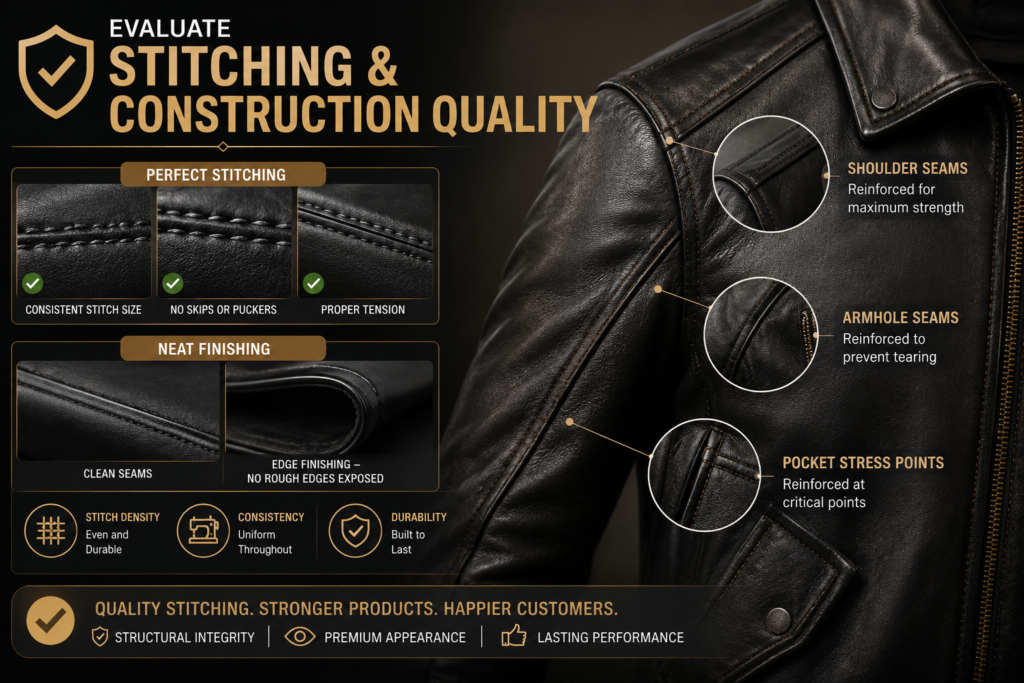
Stitching is quite literally everything with leather. It’s structural yet also aesthetic. It’s a clear indicator of a factory’s ability.
Stitch density, consistency, and tension are important. Stitches need to be the same size and have no skips or puckers. Seam and edge finishing need to be performed neatly and the rough edges should not be exposed.
Evaluate the reinforcement of sewing at points of stitch stress. This is typically the shoulder seams, the seams of armholes, and the seam points of pockets.
Check Hardware and Finishing Standards
A quality leather product will have quality zippers, buttons, buckles, and snaps.
Ask you about the sourcing of the hardware. YKK brand zippers are typically a good sign of quality. Ensure all zipper, button, and snap hardware is functioning and the snaps are closing. Also, ensure all the buttons and snaps are even.
A manufacturer producing leather bags and leather belts alongside apparel often has stronger hardware sourcing relationships — because accessories demand consistent hardware quality across every unit.
Understand Their Quality Control Process
Quality control in leather production is more complex than in standard fabric manufacturing. Every hide is unique, which means variation in texture, thickness, and colour is inherent to the material. A good manufacturer manages this variation systematically rather than hoping it won’t matter.
Ask how they inspect hides before cutting. How do they manage colour and texture matching across a single garment? What happens to panels cut from hides with natural imperfections? How is each finished garment checked before packing?
A leather gloves manufacturer or accessories producer with strong QC systems — where consistency across pairs and sets is critical — brings that same rigour to apparel production.
Sample Before You Commit to Anything
There’s no need to purchase an entire bulk order just to see how well a factory meets your needs. You owe it to yourself to sample first.
Place your order per the particulars of your desired leather grade, your construction requirements, and your chosen hardware. You must examine every element. Consistency of the leather surface must be tested. Evaluate the surface of the stitching and the alignment. Wear the finished product to see how well the garment fits, how the lining feels, and how the hardware works.
You should be prepared to justify the sampling process. Anyone trying to undue the sampling process and skip to bulk production is letting you see how they feel about quality.
Conclusion
Choosing leather apparel manufacturer are committed to producing quality leather apparel. They are flexible when it comes to providing samples.
You need to judge leather apparel manufacturers by how well they meet leather quality. Fulfill your requirements by maintaining the highest standards.
When you’re ready to move forward, explore the full range of leather apparel manufacturing options and find the right partner for your brand.
FAQs
What makes leather apparel manufacturing different from fabric garment production?
Leather requires specialist cutting techniques, different stitching methods, and specific finishing processes — as well as hide quality management that doesn’t exist in fabric production.
What leather grades should I look for in apparel manufacturing?
Full-grain and top-grain leather are the most suitable for quality apparel. Avoid bonded leather for anything beyond very budget-oriented products.
How do I evaluate stitching quality on leather samples?
Look for uniform stitch length, consistent tension, clean edge finishing, and reinforcement at stress points like shoulder seams and pocket attachments.
Why does hardware quality matter in leather garments?
Hardware is both functional and aesthetic. Cheap zippers, snaps, and rivets undermine even the best leather — and fail faster under regular use.