The fabric is what makes the hoodie. The best fabrics for hoodies. If you choose the wrong fabric, your hoodie will pill after three washings, lose its shape after one month or not feel as comfortable to the customer. If you choose the right fabric, your customers will reach for it every day.
This guide will cover the best fabrics for hoodies, including what they are, their performance, and which suits which styles and uses.
Why fabric choice is more important than most brands realize
The majority of new brands place a high priority on branding and design, and the best fabrics for hoodies are treated as an afterthought. This is a big mistake.
Fabric determines the feel of the hoodie against the skin. It also affects its performance during physical activity. How it is washed and how long it will last. If your customer loves the design of your hoodie, but it is uncomfortable or poorly made, they will not order it again and may even recommend it to others.
The most important thing that you can do to ensure your hoodie will perform well in the long term is to choose the right fabric from the beginning.
French Terry
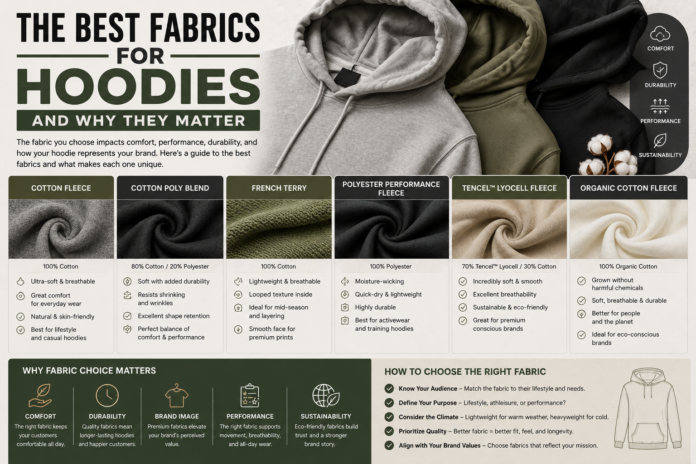
French terry fabric is used for activewear and fitness hoodies. It is smooth on the outside and looped inside, giving it a light, breathable feeling without the weight of traditional fleece.
The fabric is durable, moves well and absorbs moisture. It also holds its shape after washing.
The jacket is also suitable for all seasons. It’s light enough for the warmer months and warm enough for cool environments in gyms. This year-round wearability is a smart commercial choice for brands looking to add a hoodie to their core range.
French terry is available from a specialist hoodies in varying weights, typically ranging between 220 GSM and 320 GSM. This allows you to choose the perfect feel for your product.
Fleece
The traditional fabric for hoodies is fleece. It is warm, soft and very comfortable. The fleece material is perfect for hoodies that are designed to be worn primarily as casual clothing and for warmth.
It is important to know the different types of fleece. Standard fleece is widely available and affordable. Brushed fleece is softer and more luxurious. Sherpa has a thick, textured inner lining that provides maximum warmth. Technical fleece, which is often used for outdoor and performance hoodies, offers wind resistance and moisture management properties.
Fitness brands should look for a brushed mid-weight fleece between 280 and 380 GSM to find the perfect balance of warmth, comfort and wearability both during and after workouts.
Cotton Blend
Cotton-polyester is a classic blend for casual hoodies. Cotton is soft and breathable. Polyester increases durability, shape retention and shrinkage reduction after washing.
Most commonly, 80 percent cotton and 20 percent polyester is used. However, 60/40 or 50/50 blends may also be popular depending on whether the brand wants softness or performance.
Cotton blends are a great choice for gym T-shirts and a matching hoodie set. They create a casual, cohesive aesthetic, which is perfect for fitness brands that cater to lifestyle. Cotton blends are also the most affordable fabric option, which makes it easier to keep costs down at smaller order quantities.
Performance Knit
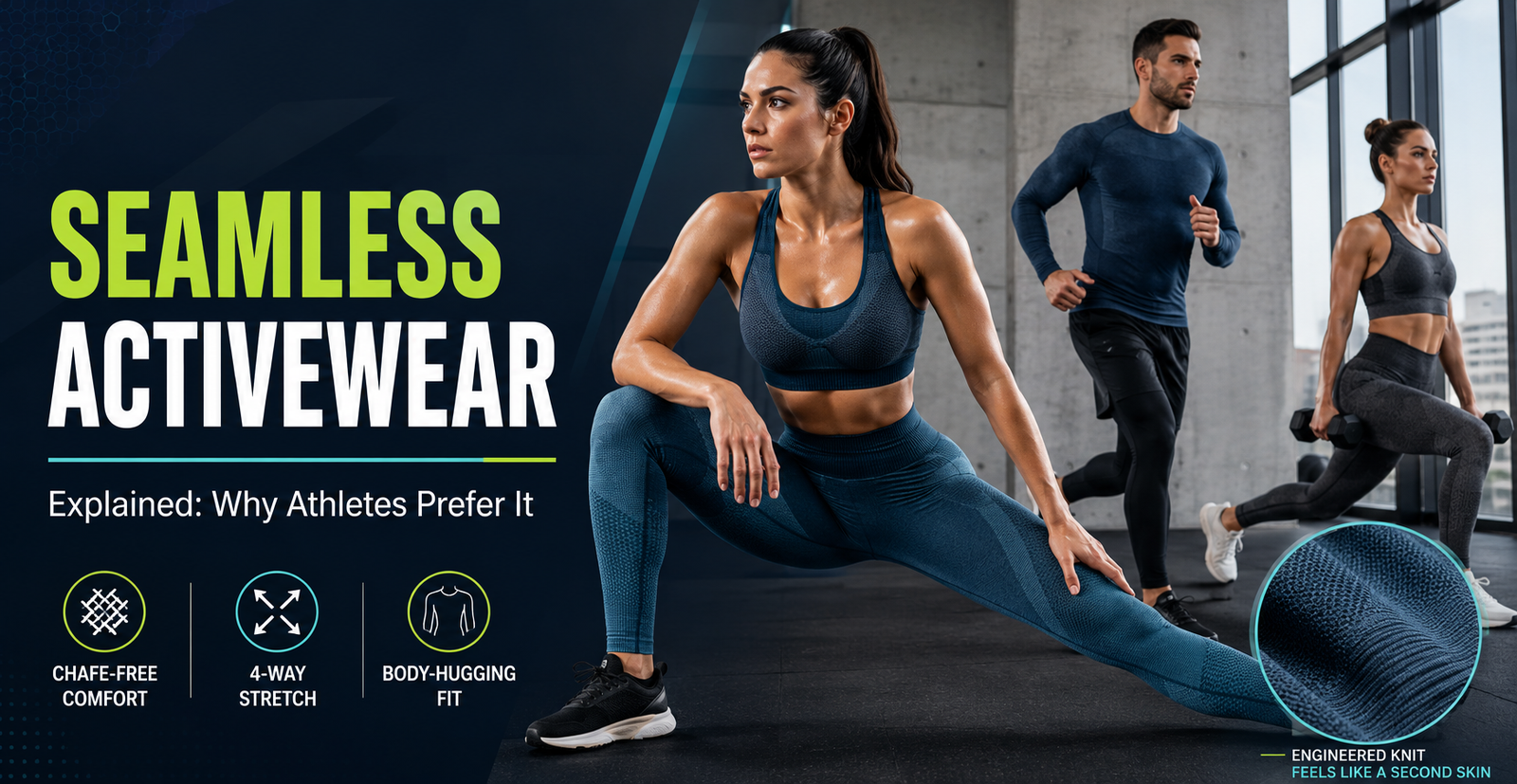
Performance knit fabrics are ideal for brands creating technical performance hoodies, which can be worn while training, running or doing outdoor activities. Standard fleece and cotton blends cannot match the capabilities of performance knit fabrics.
The performance knits are usually a combination of polyester and spandex. They provide four-way stretch and moisture wicking while providing warmth in cooler training environments. They are lighter than fleece and move more freely than Cotton. They also hold their shape when used repeatedly.
The right fabric for brands that want to create a range of coordinated activewear, including shorts and tanks.
What Fabric to Use for Your Hoodie?
These are the questions that will help you make a fabric choice:
- Does the hoodie have a primary use for casual wear or training?
- What is the level of warmth required by your target customers?
- Is it necessary for the fabric to stretch or move when you are exercising?
- What is your target price at retail?
- Sustainability credentials are important for your brand.
A jogger’s or activewear manufacturer who also makes hoodies may recommend fabrics that coordinate across your entire range, so your hoodie, bottoms, and tops all work as one cohesive set, in terms of weight and drape.
Conclusion
It’s important to choose fabrics that are suitable for the purpose of your garment, not just those that are popular. French terry is great for active wear. Fleece is a great choice for comfort and warmth. Cotton blends to suit lifestyle positioning. Performance knits for technical training items.
If you choose the right fabric, your hoodie will be a strong foundation. If you get it wrong, no amount of design can save it.
Explore the options for hoodie manufacturers and find a partner who can help you.
FAQs
Which fabric is most commonly used to make gym hoodies and activewear?
French Terry is often used because it is lightweight, breathable and retains its shape after repeated washing and wearing.
What’s the difference between French Terry and Fleece?
French Terry is lighter and more breathable because it has a looped inside. Fleece, on the other hand, is thicker and warm. It’s better for casual or cold weather hoodies.
What GSM is the best fabric for hoodies?
French terry, mid-weight fleece or 220 to 320 GSM are good choices. Heavier weights over 380 GSM are best for casual styles that focus on warmth.
Are cotton blends suitable for casual and lifestyle fitness hoodies or hoodies for activewear?
Cotton is a great fabric for lifestyle and fitness hoodies. Polyester or performance knits are the better fabrics for high-performance activewear.