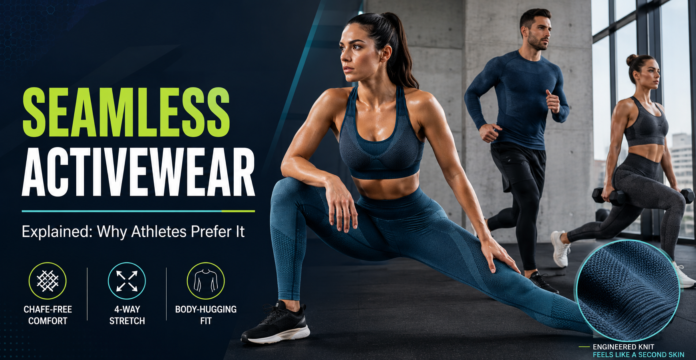
Seamless activewear is sports clothing made with fewer stitched seams, so the fabric feels smoother on the body during movement. Athletes prefer it because it can reduce rubbing, improve comfort, and stretch easily during workouts. Normal activewear often has cut-and-sew panels joined together with seams, while seamless activewear is usually made with advanced knitting methods that shape the garment with fewer rough joins. This makes it useful for running, gym training, yoga, cycling, stretching, and everyday fitness. Seamless activewear does not mean the garment has no seams at all, but it means the design uses fewer seams in high-friction areas like the sides, underarms, waist, and inner legs. For athletes, this matters because small discomfort can become a big problem during long sessions. A shirt that rubs under the arms or leggings that dig into the waist can disturb focus. Seamless activewear helps solve this by giving a cleaner, softer, and more body-friendly feel.
Seamless Activewear: What It Means
Seamless activewear is made to sit close to the body without feeling hard, bulky, or irritating. The word “seamless” mostly refers to how the fabric panels are formed and joined. Instead of many stitched lines, seamless activewear uses circular knitting or special fabric construction to create shape, stretch, and support in one smoother piece. This is why many seamless tops, leggings, shorts, and sports bras feel like a second skin. The design also allows different zones in one garment. For example, a seamless activewear top may have more ventilation around the back, more stretch around the shoulders, and more hold around the waist. These zones can be made without adding heavy extra fabric. That is one reason athletes like seamless activewear: it feels simple, but it works smartly. It supports the body without looking too technical or feeling too tight. For a beginner, the easiest way to understand it is this: seamless activewear is made to move with you instead of fighting against your movement.
Why Athletes Prefer Seamless Activewear for Movement
Athletes prefer seamless activewear because movement becomes easier when fabric stretches smoothly in different directions. During squats, lunges, sprints, push-ups, yoga poses, or jumping exercises, the body bends, twists, and extends again and again. Clothing with thick seams can pull against the skin or limit movement in small but annoying ways. Seamless activewear helps reduce this because the fabric can stretch more evenly across the body. Many athletes who wear activewear need clothing that supports speed, flexibility, and comfort in the same outfit. Seamless activewear can help with that balance because it is usually lightweight, smooth, and close-fitting without feeling stiff. It also helps the athlete stay focused on performance rather than fixing the shirt, adjusting leggings, or checking if the waistband is twisting. When a garment moves naturally, the workout feels cleaner. This is especially important in sports where small movements matter, such as yoga, pilates, running, functional training, and gym workouts.
How Seamless Activewear Reduces Chafing
Chafing happens when skin rubs against fabric or fabric rubs against fabric for a long time. It is common during running, cycling, gym training, hiking, and long sports sessions. Seamless activewear helps reduce chafing by removing or lowering the number of raised seams in sensitive areas. Underarms, inner thighs, shoulders, waistbands, and side panels are common places where irritation starts. If those areas have thick stitching, sweat and movement can make the rubbing worse. Seamless activewear feels smoother because fewer seams touch the skin. This does not make chafing impossible, but it lowers the risk when the fit and fabric are correct. A good seamless activewear garment should feel snug but not painful. It should not roll, bite, or leave deep marks. Athletes like this because comfort affects confidence. A runner who is worried about thigh rubbing or a gym user who keeps pulling down a tight top cannot train freely. Smooth construction allows the body to move with less distraction.
Seamless Activewear vs Compression Clothing
Seamless activewear and compression clothing are related, but they are not always the same thing. Seamless activewear focuses on smooth construction, fewer seams, better comfort, and flexible movement. Compression clothing focuses on tight support and controlled pressure around muscles. Some seamless activewear also has compression zones, but not every seamless piece is made for strong compression. For example, seamless leggings may feel soft and supportive, while true compression leggings may feel tighter and more performance-focused. Athletes checking compression wear should understand this difference before choosing. Seamless activewear is often better for comfort, stretching, yoga, everyday gym sessions, and long wear. Compression clothing may be better for muscle support, recovery, running, and intense training when the athlete wants a firmer fit. The best choice depends on the workout. If the goal is smooth comfort with easy movement, seamless activewear is a strong option. If the goal is firm pressure and muscle stability, compression gear may be better.
Why Fit Matters in Seamless Activewear
Fit is very important because seamless activewear is usually made to follow the shape of the body. If the garment is too loose, it may not support movement well. If it is too tight, it may feel uncomfortable, roll at the waist, or limit breathing. A correct fit should feel close, smooth, and secure without squeezing too much. Seamless activewear should stretch when the athlete moves and return to shape when the movement ends. This helps leggings stay in place, tops stay smooth, and sports bras feel more stable. Fit also depends on body type and workout type. A person doing yoga may prefer softer stretch, while someone doing high-intensity training may prefer a more locked-in feel. Seamless activewear can work for both, but the size and fabric weight should match the activity. A good rule is simple: you should be able to bend, squat, raise your arms, and breathe deeply without feeling trapped. If you keep adjusting the garment, the fit is not right.
Breathability and Sweat Control in Seamless Activewear
Breathability is another reason athletes like seamless activewear. Many seamless garments are designed with ventilation zones that help air move through the fabric. These zones are often placed near the back, chest, underarms, or behind the knees, where sweat can build up during exercise. Seamless activewear can also use moisture-wicking yarns that pull sweat away from the skin and help it spread across the surface of the fabric. This can make the athlete feel drier and more comfortable. People comparing performance wear often look for this mix of airflow, stretch, and sweat control. Seamless activewear is useful because it can combine these features without adding thick panels or heavy stitching. However, not all seamless activewear is equally breathable. Fabric thickness, yarn type, knit density, and garment fit all matter. A thick seamless legging may feel supportive but warmer, while a lightweight seamless T-shirt may feel cooler and better for summer training.
Best Uses of Seamless Activewear
Seamless activewear is useful in many sports and fitness activities because it can support the body while staying soft against the skin. It is especially helpful when the workout includes repeated movement, sweat, stretching, or long wear time. Here are the best uses in simple one-line points:
- Seamless activewear works well for yoga because it stretches smoothly during deep poses.
- Seamless activewear is helpful for running because fewer seams can reduce rubbing.
- Seamless activewear supports gym training because it stays close during lifts and machines.
- Seamless activewear is good for pilates because it allows controlled movement without bulk.
- Seamless activewear can suit cycling when the garment fits well and does not bunch.
- Seamless activewear is comfortable for travel and daily wear because it feels soft for hours.
- Seamless activewear is useful for warm-ups because it gives light support without stiffness.
- Seamless activewear works for athleisure when people want sporty comfort with a clean look.
Materials Used in Seamless Activewear
Seamless activewear is often made from nylon, polyester, elastane, spandex, or blended technical yarns. Nylon is popular because it can feel soft, smooth, and strong. Polyester is used because it can dry faster and manage sweat well. Elastane or spandex adds stretch, which helps the garment move with the body and return to shape. The fabric blend affects comfort, durability, stretch, breathability, and support. A higher stretch percentage may make seamless activewear more flexible, while a stronger nylon or polyester base can make it more durable. Some seamless activewear also uses ribbed zones for hold, mesh zones for airflow, and thicker zones for coverage. The best material depends on the activity. A gym legging may need more support and opacity, while a seamless activewear T-shirt may need more breathability. Athletes should also check whether the fabric feels smooth after washing. A garment that loses stretch, becomes rough, or turns see-through too quickly is not a good choice, even if it looks nice when new.
Seamless Activewear Buying Guide
When buying seamless activewear, do not choose only by color or style. First, check the activity. Running, yoga, strength training, and casual wear all need different levels of support. Second, check the fit. The garment should feel close but not painful. Third, check the fabric thickness. Thin fabric may feel cool, but it should still give enough coverage. Fourth, check stretch recovery. Pull the fabric gently and see if it returns to shape. Fifth, check waistbands, cuffs, and underarm areas because these spots often decide comfort. Sixth, check whether the garment is squat-proof if you are buying leggings or shorts. Seventh, check care instructions because good washing habits help seamless activewear last longer. Athletes should also think about climate. Hot weather needs lighter and more breathable pieces, while winter training may need thicker seamless layers. The best seamless activewear is not just the one that looks modern. It is the one that stays comfortable from the first warm-up to the last movement.
Conclusion
Seamless activewear is worth it for athletes and active people who want smoother comfort, better stretch, and less irritation during movement. It is not magic, and it cannot replace correct sizing, good fabric, or proper garment design. Still, seamless activewear solves many common problems found in traditional workout clothing, especially rubbing, bulky seams, poor flexibility, and constant adjustment. It is a strong choice for yoga, running, gym training, pilates, travel, warm-ups, and everyday sporty outfits. The best results come when the garment fits well, uses quality yarns, has enough breathability, and matches the activity. For beginners, seamless activewear is a safe and comfortable starting point because it feels easy to wear and simple to understand. For serious athletes, it can improve focus by removing small distractions. In the end, seamless activewear is popular because it supports the body quietly. It does not need to feel heavy, tight, or complicated to help people move better.
FAQs
What is seamless activewear?
Seamless activewear is workout clothing made with fewer stitched seams, so it feels smoother and more comfortable during exercise.
Is seamless activewear good for the gym?
Yes, seamless activewear is good for gym workouts because it stretches well, stays close to the body, and reduces rubbing during movement.
Is seamless activewear the same as compression wear?
No, seamless activewear focuses on smooth comfort, while compression wear focuses on firm pressure and muscle support.
Why do athletes prefer seamless activewear?
Athletes prefer seamless activewear because it can reduce chafing, improve movement, manage sweat, and feel comfortable during long training sessions.