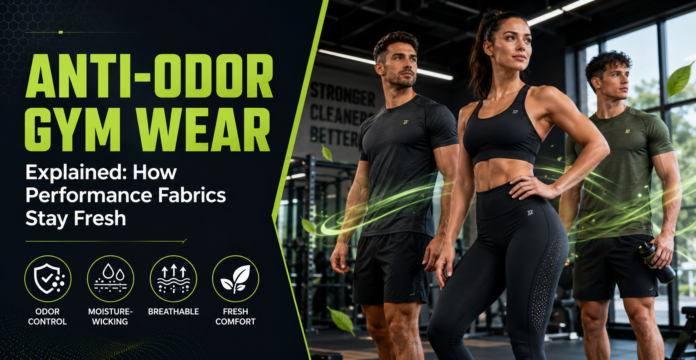
Gym clothes work harder than normal clothes because they deal with sweat, heat, movement, and repeated washing. When workout clothes hold moisture for too long, they can start to smell even after one training session. This is why anti-odor gym wear has become important for people who train often, walk daily, lift weights, run, or spend long hours in active clothing. The main goal is simple: keep the fabric fresher for longer without making the clothing feel heavy, stiff, or uncomfortable. Good anti-odor gym wear does not only cover smell. It helps manage sweat, supports airflow, and reduces the conditions that allow odor-causing bacteria to grow. For beginners, this means fewer bad smells after exercise. For regular athletes, it means more confidence, cleaner-feeling clothing, and better comfort during tough sessions. Fresh gym wear can also help you feel more focused because you are not distracted by damp fabric or body odor.
What Is Anti-Odor Gym Wear?
Anti-odor gym wear is workout clothing made to reduce bad smells caused by sweat and bacteria. Sweat itself is not always the main cause of odor. The smell usually happens when bacteria on the skin and fabric break down sweat, oils, and body residue. Anti-odor gym wear helps slow this process by using breathable fabrics, moisture-wicking yarns, quick-dry construction, and sometimes odor-control finishes. The purpose is not to replace washing. Instead, it helps the clothing stay fresher during and after workouts. This is useful for gym shirts, leggings, shorts, tank tops, compression tops, joggers, and base layers. Anti-odor gym wear is especially helpful for people who do high-sweat workouts, travel after training, or wear gym clothing for long daily routines. The best pieces feel light, dry quickly, and allow air to move through the fabric. When these features work together, the clothing smells cleaner and feels better against the skin.
Why Gym Clothes Start to Smell
Gym clothes start to smell because sweat, skin oils, bacteria, and trapped moisture build up inside the fabric. Some fabrics hold this buildup more than others. For example, thick or poorly ventilated clothing can trap sweat for a long time, giving bacteria more time to grow. Synthetic fabrics can dry fast, but if they are not made properly, they may hold odor in the fibers. Cotton can feel soft, but it often absorbs sweat and stays wet longer during intense training. Anti-odor gym wear is designed to solve these problems by moving sweat away from the skin and helping the fabric dry faster. The smell can also get worse if clothes are left in a gym bag after use. Warm, wet clothing creates the perfect place for odor to develop. This is why fabric choice, fit, washing habits, and drying time all matter. Freshness is not one feature; it is the result of several smart design choices working together.
Best Fabrics for Fresh Performance
The best fabrics for anti-odor gym wear are usually moisture-wicking polyester blends, nylon blends, recycled performance fabrics, merino blends, and fabrics with elastane for stretch. These materials can help move sweat away from the body so it spreads across the fabric surface and dries faster. For people building a training wardrobe, the gym wear collection can be used as a helpful starting point because gym clothing should match both the workout type and the sweat level. Lightweight polyester is often used for cardio because it dries quickly. Nylon is smooth, durable, and comfortable for fitted pieces. Elastane helps the garment stretch without losing shape. Merino wool can naturally manage odor, but it is usually more expensive and often used in performance base layers. The best anti-odor gym wear does not depend on one fabric only. It depends on the right blend, breathable structure, and good finishing.
Sweat-Wicking vs Anti-Odor Technology
Sweat-wicking and anti-odor technology are related, but they are not the same. Sweat-wicking fabric pulls moisture away from the skin and helps it dry faster. Anti-odor gym wear goes one step further by reducing the conditions that create bad smell. A shirt can be sweat-wicking but still smell bad if bacteria and body oils stay trapped in the fibers. A good anti-odor fabric should dry quickly, breathe well, and release sweat residue during washing. Some fabrics use special odor-control treatments that help reduce bacterial growth on the garment. Other fabrics use natural fiber properties or special yarn structures to improve freshness. The best results happen when moisture control and odor control work together. This is why anti-odor gym wear should feel dry during exercise and should not hold strong smells after washing. When choosing gym clothes, do not look only at words like “quick-dry.” Also check fabric weight, stretch, breathability, and how the clothing feels after repeated use.
How Compression Clothing Helps Freshness
Compression clothing can support freshness when it fits correctly and uses breathable fabric. Because compression garments sit close to the body, they must manage sweat very well. If the fabric is too thick or not breathable, it can trap heat and odor. But when made properly, compression pieces help reduce fabric movement, support muscles, and keep sweat moving away from the skin. For example, compression t-shirts can be useful for people who want a close fit during lifting, running, cycling, or functional training. Anti-odor gym wear in compression styles should not feel sticky or overly tight. It should stretch, recover, and allow enough airflow for long sessions. Compression shirts, leggings, and base layers are often worn under other clothing, so odor control becomes even more important. If the base layer stays fresh, the outer layer also feels cleaner. This makes compression a strong option for athletes who train often.
Fit and Airflow Make a Big Difference
Fit is one of the easiest things to ignore, but it can change how fresh your gym clothes feel. Clothing that is too tight may trap heat and sweat. Clothing that is too loose may rub, hold sweat in folds, or feel heavy during movement. Anti-odor gym wear works best when the fit matches the activity. A fitted shirt is good for strength training because it stays in place. A breathable tank top is better for hot gyms and high-sweat workouts, and options like gym tank tops can help improve airflow when the workout needs more ventilation. Shorts should allow leg movement without bunching. Joggers should be flexible but not too thick for indoor workouts. The goal is to let heat escape while keeping the garment comfortable. Even the best fabric can feel bad if the fit is wrong. Good anti-odor gym wear balances shape, stretch, and airflow.
Key Features to Look For in Anti-Odor Gym Wear
When buying anti-odor gym wear, look for features that directly improve freshness, comfort, and durability.
- Moisture-wicking fabric helps pull sweat away from the skin.
- Quick-dry construction helps reduce wet fabric smell.
- Breathable mesh panels improve airflow in hot zones.
- Stretch fabric supports movement without tight pulling.
- Flat seams reduce rubbing during long workouts.
- Lightweight fabric feels cooler during cardio sessions.
- Odor-control finishing helps reduce smell-causing bacteria.
- Good fabric recovery keeps the garment in shape after washing.
- Smooth inner texture feels comfortable against sweaty skin.
- Easy-care fabric releases sweat and oils during normal washing.
These features matter because anti-odor gym wear should perform before, during, and after exercise. A garment may look stylish, but if it traps sweat, smells quickly, or loses shape, it will not be useful for regular training. Always choose gym clothing based on how it handles real movement and sweat, not only how it looks in product photos.
Which Workouts Need Anti-Odor Gym Wear Most?
Anti-odor gym wear is most useful for workouts that create heavy sweat or involve long wearing time. Cardio workouts, running, spinning, HIIT, boxing, and circuit training usually need quick-dry and odor-control fabrics because the body heats up fast. Strength training also benefits from anti-odor clothing, especially when sessions include warm-ups, compound lifts, and rest periods where sweat dries slowly. Yoga and stretching may not always produce heavy sweat, but fitted clothing still needs freshness because the fabric stays close to the skin. Daily gym users need anti-odor gym wear more than occasional users because repeated sweating can build odor inside low-quality fabrics. People who go to work, school, or errands after the gym also benefit because their clothes stay fresher for longer. The best choice depends on the activity. High-sweat workouts need lighter fabrics, while lifting may need stronger stretch and shape retention.
How to Wash Gym Wear So It Stays Fresh
Even the best anti-odor gym wear needs proper washing. After exercise, do not leave sweaty clothes in a closed gym bag for hours. Let them air out or wash them as soon as possible. Use a mild detergent and avoid using too much soap because extra detergent can stay trapped in fabric and hold odor. Fabric softener is not a good choice for most performance clothing because it can block moisture-wicking ability. Wash gym wear in cool or warm water based on the care label. Turn clothes inside out so sweat areas clean better. Dry them fully before storage because damp clothing can smell again quickly. If odor remains after washing, soak the clothing in water with a small amount of white vinegar before washing, but always test first and follow the care label. Good care helps anti-odor gym wear last longer, feel cleaner, and perform better over time.
Common Mistakes When Choosing Gym Clothing
A common mistake is buying gym clothing only because it looks good. Style matters, but performance matters more when sweat is involved. Another mistake is choosing very thick fabric for every workout. Thick clothing can be useful in cold weather, but it may trap heat indoors. Some people also believe all synthetic fabrics smell bad, but this is not always true. A high-quality synthetic blend can make excellent anti-odor gym wear if it is breathable, quick-drying, and easy to wash. Another mistake is wearing cotton for every workout. Cotton can be comfortable for light activity, but it often stays wet during intense training. Wearing the same gym clothes without proper drying can also cause odor buildup. The right choice depends on your body, workout style, climate, and washing routine. Good anti-odor gym wear should make training easier, not create extra discomfort.
Conclusion
Anti-odor gym wear is worth it for anyone who wants workout clothing that stays fresher, feels drier, and performs better during exercise. It is especially useful for people who sweat a lot, train often, or wear gym clothes for more than one short session. The best anti-odor gym wear combines moisture-wicking fabric, breathability, quick drying, stretch, and smart fit. It does not mean you can skip washing, but it does help reduce smell during use and makes the garment easier to keep fresh. For simple workouts, basic breathable clothing may be enough. For intense training, long gym days, and regular fitness routines, anti-odor gym wear is a better choice. In the end, freshness is part of comfort. When your clothes feel clean, dry, and light, you can focus more on training and less on sweat, smell, or discomfort.
FAQs
What is anti-odor gym wear?
Anti-odor gym wear is workout clothing made to reduce bad smells caused by sweat, bacteria, and trapped moisture. It usually uses breathable, moisture-wicking, and quick-dry fabrics to help clothes stay fresher during training.
Is anti-odor gym wear better than normal gym wear?
Yes, anti-odor gym wear is better for people who sweat a lot, train often, or wear gym clothes for long hours. Normal gym wear may be fine for light exercise, but it can smell faster during hard workouts.
Does anti-odor gym wear still need washing?
Yes, anti-odor gym wear still needs washing after use. The fabric helps control smell, but sweat, oils, and bacteria still collect on the clothing. Proper washing keeps the performance features working longer.
Which fabric is best for anti-odor gym wear?
Moisture-wicking polyester blends, nylon blends, merino blends, and stretch performance fabrics are good options. The best fabric depends on the workout, climate, fit, and how well the garment allows airflow.