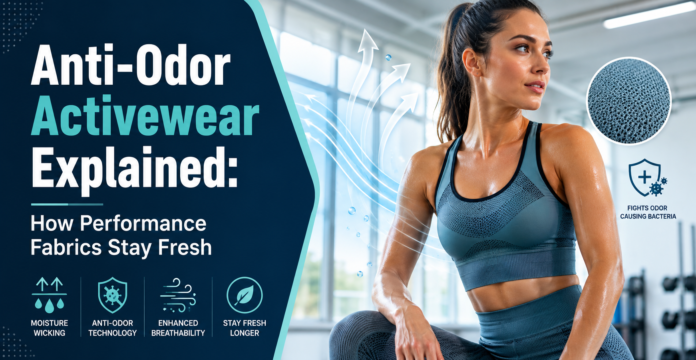
Anti odor activewear is workout clothing made to reduce bad smell during and after exercise. It does not mean the fabric never smells, but it helps control the main causes of odor. When the body sweats, the sweat itself is mostly not the problem. The real smell usually starts when sweat, body oils, dead skin, and bacteria stay trapped in the fabric for too long. Anti odor activewear is designed to slow this process by moving moisture away from the skin, drying faster, and sometimes using odor-control finishes or special yarns. This makes the clothing more useful for gym sessions, running, yoga, sports training, travel, and long daily wear. Good anti odor activewear should feel light, breathable, smooth on the skin, and easy to wash. It should also keep its freshness after many uses, not just after the first few workouts.
Why Workout Clothes Start Smelling
Workout clothes start smelling because sweat and bacteria build up inside the fabric. During exercise, the body produces moisture to cool itself. If that moisture stays trapped, bacteria get more time to grow and create odor. This is why regular cotton shirts can feel heavy, wet, and sour after hard training. Modern activewear is often made to move sweat away from the skin so the fabric can dry faster and feel cleaner. Anti odor activewear works best when the fabric has good moisture control, enough airflow, and a structure that does not hold sweat deeply inside the fibers. Smell can also become worse when clothes are left in a gym bag, washed in cold water without enough cleaning power, or dried slowly in a damp place. The longer sweat stays in the fabric, the harder it becomes to remove odor completely.
How Anti Odor Activewear Works
Anti odor activewear works by attacking odor from more than one side. First, it helps move sweat away from the body so the skin feels drier. Second, it allows moisture to spread across the fabric surface, where it can evaporate more quickly. Third, some fabrics use odor-resistant treatments that help reduce the growth of smell-causing bacteria. Fourth, better fabric construction can stop sweat from sitting in one thick, wet area. This is important because a wet shirt is more likely to smell than a dry one. Anti odor activewear can also use smooth synthetic yarns, merino wool blends, bamboo-based fibers, or treated polyester depending on the purpose of the garment. The main goal is simple: keep the fabric fresher for longer so the wearer feels more comfortable and confident. It is not magic, but good fabric technology can make a clear difference in daily performance.
Anti Odor Activewear and Fabric Choice
Anti odor activewear depends heavily on fabric choice. Polyester is popular because it is light, strong, quick-drying, and good for high-sweat workouts. However, untreated polyester can sometimes hold odor if it is not washed properly. Nylon is smooth, durable, and often used in leggings, sports bras, and compression items. Spandex adds stretch, but too much spandex can reduce airflow if the fabric is too tight or thick. Natural fibers like merino wool can resist odor well because they manage moisture differently and can feel fresh for longer. Some blended fabrics use the strengths of more than one fiber. For example, polyester may provide quick drying, while spandex gives movement and fit. A good fitness apparel fabric should balance sweat control, breathability, softness, stretch, and odor resistance. The best choice depends on the activity, climate, body heat, and how long the clothing will be worn.
Why Breathability Matters for Freshness
Breathability is one of the most important parts of anti odor activewear because air movement helps moisture escape. When a shirt, legging, or sports top traps heat, the body sweats more. More sweat means more moisture for bacteria to feed on. Breathable fabric lets warm air leave and cooler air pass through, which helps the wearer stay comfortable. This matters during gym workouts, cardio, cycling, hiking, team sports, and summer training. A breathable garment should not feel like a plastic cover on the skin. It should allow movement and airflow without becoming too loose or weak. Mesh panels, lightweight knits, vented zones, and moisture-wicking yarns can all improve breathability. Anti odor activewear with poor airflow may still smell even if it has an odor-control finish, because the trapped sweat creates the same problem again. Freshness begins with keeping the body dry, cool, and less overheated.
Key Features of Good Anti Odor Activewear
Good anti odor activewear is easy to identify when you know what to check. It should not only look sporty, but it should also support real movement, sweat control, and daily comfort. The best garments combine several useful features instead of depending on only one fabric claim. Here are the main points to look for:
- Moisture-wicking fabric helps pull sweat away from the skin.
- Quick-dry performance helps stop damp fabric from holding smell.
- Breathable construction allows heat and moisture to escape.
- Smooth seams reduce rubbing during long workouts.
- Stretch recovery helps the garment keep its shape after movement.
- Odor-control treatment can reduce bacteria-related smell.
- Lightweight fabric feels better during warm or intense exercise.
- Easy-care washing helps the clothing stay fresh after repeated use.
These features make anti odor activewear more practical for real people who train, work, travel, or stay active for long hours.
Anti Odor Activewear for Different Workouts
Anti odor activewear should match the type of workout because every activity creates sweat in a different way. Running and cardio need lightweight fabrics that dry fast and do not cling too much. Strength training needs durable fabric with stretch, because the body bends, lifts, and presses through different movements. Yoga needs soft fabric with flexible stretch and comfort against the skin. Gym training needs a balance of sweat control, movement, and shape retention. Swim-related training needs quick-drying fabric that can handle moisture well. Performance training often needs stronger moisture management because the body heats up quickly. Anti odor activewear for daily walking or travel can be softer and less technical, but it still needs breathability. Choosing the wrong fabric can make even a simple workout feel uncomfortable. The right garment should match sweat level, movement level, weather, and how long it will be worn after exercise.
Compression Clothing and Odor Control
Compression clothing sits close to the skin, so odor control becomes even more important. Tight garments can support movement and muscle feel, but they can also trap sweat if the fabric is not breathable. This is why anti odor activewear used in compression pieces must have strong moisture-wicking and quick-dry features. A good compression shirt should feel firm but not suffocating. It should move with the body without holding too much heat. For example, compression t-shirts are useful for training because they stay close to the body and reduce loose fabric movement, but they must also manage sweat properly to stay fresh. If compression fabric is too thick, low-quality, or poorly washed, smell can build up faster. The best compression activewear uses stretch, airflow, and sweat control together. This helps the garment feel cleaner during heavy workouts and more comfortable after training ends.
Washing Tips to Keep Activewear Fresh
Anti odor activewear performs better when it is washed correctly. Even the best fabric can smell bad if sweat stays in the fibers for too long. After training, clothes should be removed from the gym bag as soon as possible. Letting damp clothes sit overnight can make odor stronger and harder to remove. It is better to air them out before washing if they cannot be washed immediately. Use a mild detergent that can clean body oils and sweat without leaving heavy residue. Avoid using too much fabric softener because it can coat performance fibers and reduce moisture-wicking power. Wash similar fabrics together and avoid mixing activewear with rough towels or heavy clothes. Drying is also important. Air drying in a clean, open space can help protect stretch and reduce trapped smell. Proper care keeps anti odor activewear working longer and helps the fabric stay lighter, fresher, and more comfortable.
Common Mistakes That Make Activewear Smell Bad
Many people think their workout clothes smell bad because the fabric is poor, but care habits also matter. One common mistake is throwing sweaty clothing straight into a closed basket or bag. This creates a warm, damp space where odor grows faster. Another mistake is using too much detergent. Extra detergent can stay inside the fabric and trap body oil, which makes the smell return after a short time. Fabric softener is another problem because it can block the tiny spaces that help moisture move through the fabric. Washing only with very cold water may also fail to remove heavy sweat and oil in some cases. Wearing the same garment too many times before washing can make odor harder to remove. Anti odor activewear is made to help with freshness, but it still needs proper cleaning. Good fabric and good care work together, while poor washing habits can ruin even high-quality performance clothing.
Conclusion
Anti odor activewear is worth it for people who sweat during workouts, wear gym clothing for long hours, travel often, or want their clothes to feel fresher after use. It helps reduce smell by managing sweat, improving drying speed, increasing airflow, and sometimes using odor-control fabric technology. It is especially useful for gym shirts, leggings, compression tops, training shorts, yoga clothing, and performance layers. However, anti odor activewear is not a replacement for washing clothes properly. It works best when the garment is made from the right fabric, fits well, breathes properly, and is cleaned after use. The best choice is clothing that feels comfortable first and supports freshness second. When fabric, fit, and care all work together, activewear can stay fresher, last longer, and make workouts feel much better.
FAQs
What is anti odor activewear?
Anti odor activewear is workout clothing designed to reduce bad smell caused by sweat, bacteria, and trapped moisture. It usually uses moisture-wicking fabric, breathable construction, quick-dry performance, or odor-control technology to help the garment stay fresher during and after exercise.
Does anti odor activewear completely stop smell?
No, anti odor activewear does not completely stop smell forever. It helps reduce odor and delays smell buildup, but the clothing still needs proper washing, drying, and care. If sweaty clothes are left in a closed bag, they can still develop odor.
Which fabric is best for anti odor activewear?
The best fabric depends on the workout. Polyester and nylon blends are good for quick drying and performance. Merino wool is naturally better at odor resistance. Blended fabrics with stretch can also work well if they are breathable and moisture-wicking.
How do you wash anti odor activewear?
Wash anti odor activewear soon after use with a mild detergent. Avoid too much detergent and avoid fabric softener because both can leave residue inside performance fibers. Let the clothing dry fully before storing it to prevent trapped smell.