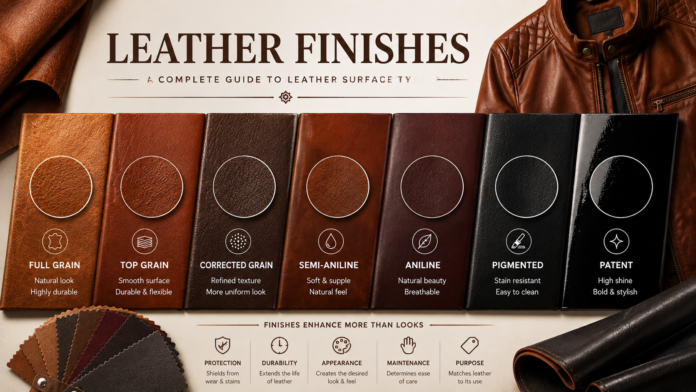
Two leather jackets can be cut from the same grade of hide and still feel, look, and perform completely differently once they leave the tannery. That difference almost always comes down to leather finishes the surface treatments applied after tanning that determine how a hide looks, feels, and holds up over years of use, regardless of how good the underlying leather was to begin with.
Understanding the main types of leather finishes makes it much easier to know what you’re actually buying, whether that’s a personal jacket or a full apparel program for a team. In this guide, we’ll walk through the most common finishes used in leather apparel, how they compare in durability and appearance, and how to choose the right one for your needs.
What Are Leather Finishes?
A finish is the surface treatment applied to tanned leather to add color, protection, texture, or all three. It’s a separate step from tanning and leather grading full grain and top grain hides can both receive different finishes, and the finish applied has just as much impact on the final product as the grade of leather underneath it.
Finishes generally fall along a spectrum, from those that preserve nearly all of the hide’s natural surface to those that fully coat and correct it. Where a leather sits on that spectrum determines almost everything about how it will look on day one and how it will age over the years that follow, and it’s often the single biggest factor buyers overlook when comparing two seemingly similar garments.
Aniline Finish: The Most Natural Option
Aniline is the most minimally processed of the common surface treatments, using transparent dyes that color the hide without hiding its natural grain, pores, or markings. Because there’s nowhere for imperfections to hide, only the highest-quality full grain hides are suitable for an aniline finish.
This natural surface gives aniline leather an exceptionally soft feel and allows it to develop a deep, authentic patina over time. The trade-off is durability without a protective topcoat, aniline leather is more vulnerable to staining and fading, making it better suited to lower-wear apparel than heavy daily use.
Semi-Aniline Finish: A Balance of Beauty and Protection
Semi-aniline leather starts with the same aniline dyeing process but adds a very light protective topcoat and a touch of pigment. This thin layer doesn’t hide the natural grain the way heavier finishes do, but it does add meaningful resistance to stains, scuffs, and fading compared to full aniline leather.
This makes semi-aniline one of the more popular surface treatments for apparel and accessories that need to look natural and premium while still holding up to regular handling, offering a middle ground that many buyers find hard to beat for everyday leather goods.
Pigmented Finish: Built for Durability
Pigmented leather sits at the most protected end of the spectrum. A thicker, opaque coating fully covers the hide’s natural surface, and a uniform grain pattern is often embossed on top to create a consistent, even look across the entire piece.
Because the coating shields the leather from most everyday wear, pigmented finishes are the most durable, stain-resistant, and easiest to clean among the common options. This makes them a practical choice for apparel that needs to withstand frequent handling, though it comes at the cost of the natural texture and character found in aniline or semi-aniline leather.
Nubuck and Suede: Textured Finishes
Not every finish is about protecting or coloring the surface — some are about texture instead. Nubuck is created by lightly sanding the outer (grain) side of a full grain hide to produce a soft, velvety nap, while suede is made the same way but from the inner (flesh) side of the hide, typically from a thinner or lower grade. Because the sanding happens on different sides of the hide, the two materials end up with noticeably different strength and appearance despite the similar surface texture.
Both finishes offer a distinctive soft texture that’s popular in jackets and accessories, but neither holds up as well to moisture or heavy abrasion as smoother finishes, since sanding removes some of the hide’s protective outer layer. Buyers who want the look of a napped finish for apparel that will see regular outdoor use often pair these materials with a protective spray treatment to offset that vulnerability.
Comparing Leather Finishes at a Glance
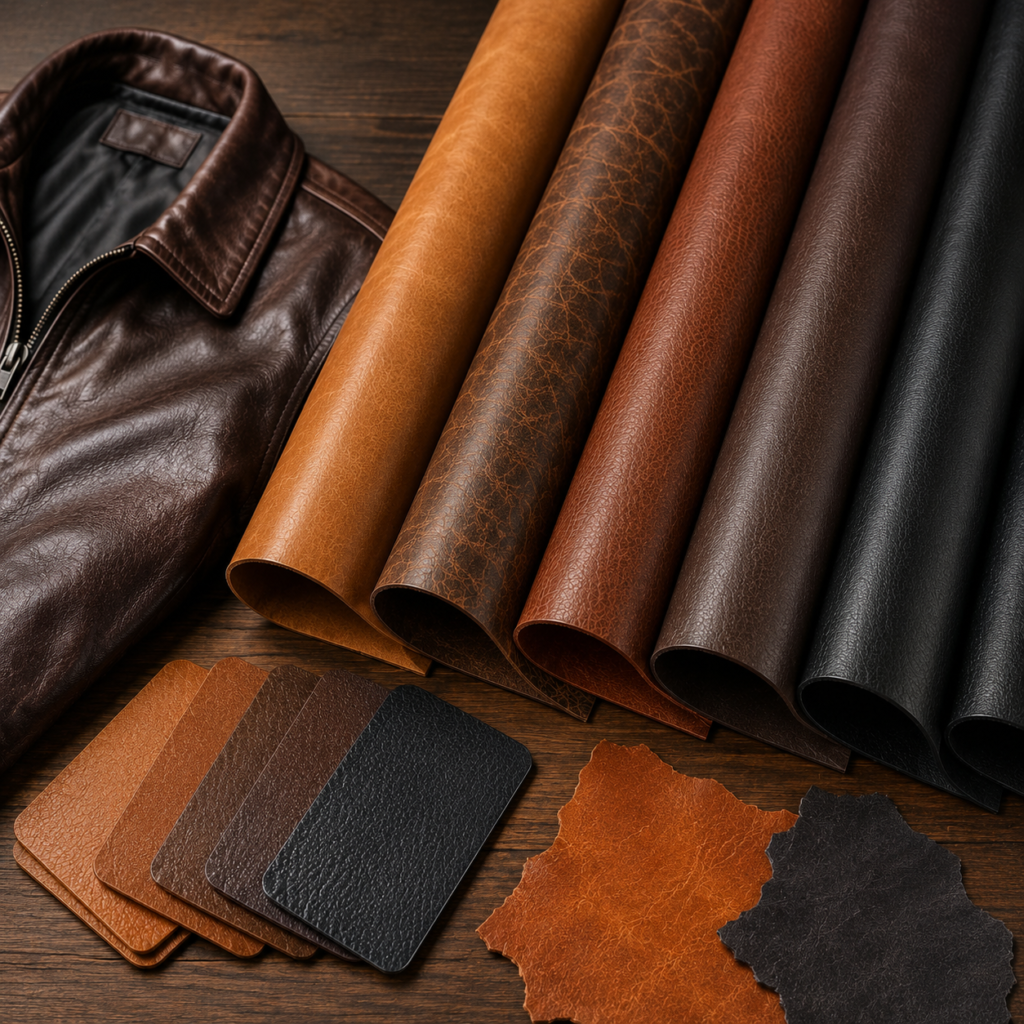
Here’s a quick summary of how the most common surface treatments compare on the qualities that matter most:
- Aniline:Most natural look and feel; least durable and most prone to staining
- Semi-aniline:Balanced natural appearance with added stain and scuff resistance
- Pigmented:Most durable and consistent; least natural texture and patina
- Nubuck:Soft, textured surface from the grain side; moderate durability
- Suede:Soft, textured surface from the flesh side; lower durability and water resistance
Testing Leather Finishes for Durability
Not all finishes are created equal even within the same category, which is why the leather industry relies on standardized testing to measure performance. One of the most widely used tests is ISO 11640, which measures a finish’s color fastness by rubbing the leather with wool felt for a set number of cycles and evaluating how much color transfers or fades onto the felt or changes on the leather itself.
Buyers sourcing leather apparel at scale, particularly for uniforms or workwear that will see heavy daily use, can request rub-fastness results from their supplier to compare finish durability objectively rather than relying on appearance alone. This kind of testing is especially useful when comparing suppliers who may describe their finishes with similar marketing language but very different real-world performance.
Choosing the Right Finish for Industrial and Protective Apparel
For heavy-duty protective apparel, pigmented finishes are generally the practical choice, since their added coating resists the stains, abrasion, and rough handling common across general workwear collections built for daily industrial use. This durability comes without sacrificing much comfort once the leather has been broken in, which is why it remains such a common choice across trades.
In demanding environments like oil and gas, where leather is often layered with flame-resistant materials, a durable pigmented or semi-aniline finish is frequently preferred within oil and gas workwear setups. Pigmented finishes also pair well with weatherproofing treatments, an approach commonly used in waterproof workwear collections that need added resistance to moisture.
Choosing the Right Finish for Corporate and Branded Apparel
For corporate and client-facing apparel, semi-aniline or pigmented finishes tend to work best, since their consistent appearance and stain resistance suit the polished look needed across corporate uniforms worn by an entire team.
Because different roles call for different priorities, from rugged industrial durability to a soft, refined finish, many businesses work with industry-specific work wear suppliers who can match the right finish to the specific demands of a trade or brand.
The Role of Custom Manufacturing in Leather Apparel
As demand grows for well-made leather apparel, more businesses are turning to custom manufacturers who understand how different surface treatments affect durability, appearance, and maintenance, rather than relying on generic off-the-shelf sourcing.
At ECO-JERSEY, we manufacture and supply custom apparel including leather-based workwear and accessories to businesses around the world. Whether a company needs the rugged durability of a pigmented finish for industrial protective gear or the refined look of a semi-aniline finish for corporate uniforms, our team works directly with clients to produce apparel that matches their exact specifications.
Conclusion
Understanding the different types of leather finishes makes it much easier to choose a garment or supplier that actually fits your needs, whether that’s the natural character of aniline leather, the balanced practicality of semi-aniline, or the rugged durability of a pigmented finish. Each finish brings its own trade-offs between appearance and protection, and the right choice ultimately depends on how the apparel will be worn and cared for over its lifetime.
For businesses looking to source reliable leather apparel whether for protective workwear or branded uniforms working with an experienced manufacturer like ECO-JERSEY ensures every garment is built with the right finish for the job.
FAQs
What are the main types of leather finishes?
The main types are aniline, semi-aniline, and pigmented finishes, along with textured finishes like nubuck and suede, each offering a different balance of natural appearance and durability.
What is the difference between aniline and pigmented leather?
Aniline leather has minimal surface treatment and shows the hide’s natural grain, while pigmented leather has a thicker, opaque coating that covers the surface for greater durability and stain resistance.
Which leather finish is the most durable?
Pigmented leather is generally the most durable finish because its protective coating resists stains, fading, and everyday wear better than aniline or semi-aniline finishes.
Is semi-aniline leather a good choice for everyday apparel?
Yes, semi-aniline leather is a popular choice for everyday apparel because it retains much of the natural look and feel of aniline leather while offering added protection against stains and scuffs.