Understanding the different types of leather in clothing will help you choose the right garment for your needs. Whether it’s for rugged durability, everyday comfort or a refined look, understanding leather types can make it easier to find the perfect item. Each type of leather is made from a specific animal hide, with different characteristics such as thickness, grain and performance.
This guide will walk you through the different types of leather used in apparel today. We’ll explain their differences in durability and feel, and help determine which is best for your next leather clothing purchase.
What determines the type and quality of leather?
It is important to know what makes leather unique before comparing different hides. Leather is primarily made of collagen fibers. The density and structure of these fibers varies depending on which animal the leather came from. This is why some hides feel stiff and thick while others are soft and pliable.
The tanning process is also important. Vegetable-tanned hides tend to be firmer, and they develop a rich patina with time. Chrome-tanned hides are typically softer from the beginning and more flexible. These factors, along with the inherent properties of the leather itself, are what separates one type of leather in the finished garment.
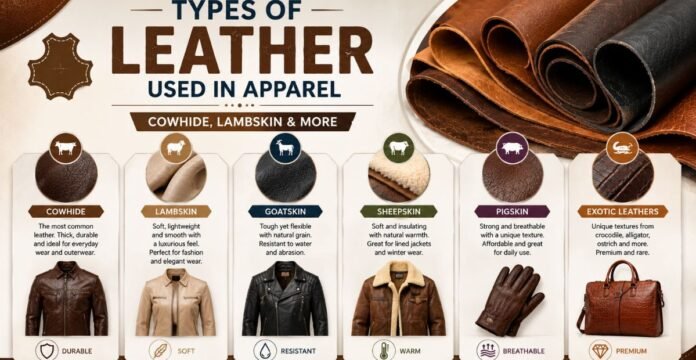
Cowhide is the workhorse of leather apparel
Cowhide leather is widely used around the world and with good reason. It is thick, dense and extremely durable. Measuring between 1.0 mm and 1.4 mm, it has a high resistance to tearing, abrasion and general wear. Cowhide’s durability is why it is used for heavy-duty clothing, rugged jackets and work gloves.
Cowhide is stiffer at first and requires a period of break-in before it can mold to your body. But this trade-off makes cowhide so appealing for those who are looking for a garment with character that will develop a natural patina and bold color over time.
Lambskin: Lightweight and soft, but refined
Lambskin is at the other end of the spectrum. Lambskin is the lightest and softest leather used for apparel. It’s typically 0.5-0.8mm thick with a loosely woven, fine fiber structure, giving it a fabric-like drape. It’s no wonder that lambskin is used in high-end jackets, outerwear and fashion items where comfort and movement are more important than toughness.
The downside is that lambskin can be more susceptible to stretching and tearing. It’s therefore better suited for lighter industrial use than heavy industrial wear.
The Middle Ground of Goatskin
Goatskin is a good compromise between the toughness of cowhide and the softness of lambskin. The natural oils that are found in the skin make it more durable and water resistant. The pebbled texture is not just for aesthetic purposes. It also helps hide minor scratches and scuffs.
It is because of this combination of durability, comfort and style that goatskin has been used for many years in military and aviator jackets. It remains a popular option for clothing that must withstand regular wear without being stiff like cowhide.
Calfskin Sheepskin and Other Common Hides
Besides the three most popular types of hides, other hides are used in clothing. Calfskin is a great choice for jackets and accessories because it has the strength of cowhide with a finer, softer texture. Sheepskin is valued for its natural insulation, and is often processed with the attached wool.
Pigskin and deerskin, although less common, are still used for specialty clothing. Pigskin is chosen for its durability and natural water resistance relative to its lightweight. While exotic leathers are less common for everyday clothing, they can be found in some premium accessories and apparel lines.
Comparing Common Leather Types
Here’s an overview of the main types of leather that are used to make clothing.
- Cowhide:The thickest and most durable cowhide; ideal for rugged jackets and gloves, as well as industrial apparel
- Lambskin:The softest and lightest leather; ideal for fashionable, fitted outerwear that puts comfort first.
- Goatskin:Comfortable and durable; water resistant with a pebbled grain.
- Calfskin:Strong and refined, this is a popular choice for jackets and accessories.
- Sheepskin:A natural, excellent insulation material; used for cold-weather clothing and in shearling-lined apparel
- Deerskin/Pigskin:Lightweight special hides valued for their softness or resistance to water in niche apparel
Leather’s role in industrial and protective apparel
Leather is used for industrial and protective clothing. The cowhide material is used for gloves, jackets, and aprons worn by machine operators and welders. Its natural resistance to heat and abrasion offers real protection on the job. Leather is a popular material in workwear for both manual and industrial trades.
Leather components are often paired with flame-resistant fabric in higher-risk environments, such as oil and gas. This is especially true for roles that require welding or heavy equipment. For outdoor workers, leather is sometimes combined with weatherproof membranes. This approach can be found in waterproof collections that combine leather trims and weather-resistant fabrics.
Leather in Corporate Apparel and Industry Specific Apparel
Leather isn’t just for heavy-duty industrial clothing. It can also be used to create more polished and branded apparel. Leather accents are often used in corporate uniforms, such as jacket trims or belts. This gives the look a refined and professional feel for roles that require clients to interact with them.
Many businesses partner with workwear providers who are able to match the hide and construction of their work wear to the specific demands of each trade.
Sources and sustainability in leather apparel
Many businesses are now looking for leather that is produced by tanneries that have been certified by the Leather Working group (LWG), a non-profit organization which audits tanneries’ environmental practices, such as water usage, energy consumption and chemical management. The audit score of tanneries is rated Gold Silver or Bronze, giving buyers an easy way to compare the environmental performance between suppliers.
LWG certification is a widely accepted benchmark for ethical leather sourcing. It’s also a common question asked by apparel buyers when evaluating their suppliers.
What is the Best Type of Leather to Use for Apparel?
The intended use is the most important factor in choosing between different types of leather for apparel. Cowhide and calfskin tend to be the best choice if durability and long-term use are important. Lambskin and goatskin are better suited if comfort, drape and a lighter feeling matter most.
Consistency is just as important as leather type for businesses that are sourcing leather components or apparel at large scale. When sourcing leather apparel or components at scale, consistency is just as important as the type of leather.
The role of custom manufacturing in leather apparel
Custom manufacturers are increasingly popular as the demand for leather clothing grows. They can provide the best fit to meet their trade, branding and durability needs.
ECO-JERSEY manufactures and supplies custom apparel, including leather-based accessories and workwear to businesses all over the world. Our team will work directly with our clients to create apparel that meets their exact specifications, whether they need rugged components for industrial protective equipment or refined leather accents on corporate uniforms.
Conclusion
Knowing the various types of leather that are used in clothing makes it easier to select a product or supplier that meets your specific needs. Whether you’re looking for the rugged durability of a cowhide or the refined softness and practicality of a lambskin or goatskin. Each hide has its own advantages, and ultimately the best choice depends on the way the clothing will be used and how long the garment needs to last.
If you are looking for reliable leather apparel, whether it is for workwear for protection or uniforms for branding and marketing purposes, working with a manufacturer with experience like ECO JERSEY will ensure that each garment is made with the best material for the task.
FAQs
What are the main types of leather used in apparel?
The most common types are cowhide, lambskin, goatskin, and calfskin, each offering a different balance of durability, softness, and weight suited to different styles of clothing.
What is the most durable type of leather for jackets?
Cowhide is generally the most durable leather used in apparel, thanks to its thickness and dense fiber structure, making it a common choice for rugged jackets, gloves, and protective work clothing.
Is lambskin or cowhide better for a leather jacket?
It depends on the priority: lambskin offers superior softness and comfort with less break-in time, while cowhide offers significantly greater durability and abrasion resistance for heavier use.
What is goatskin leather best used for?
Goatskin is best used for apparel that needs a balance of durability and comfort, such as everyday jackets, since it’s more water-resistant and hard-wearing than lambskin but lighter and more flexible than cowhide.