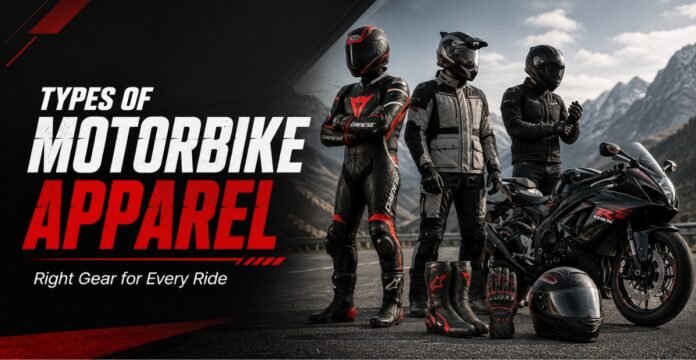
Types of motorbike apparel riding is exciting, but selecting proper gear is just as important as selecting the bike. Motorcycle gear protects riders from the elements, road debris, and potential accidents. Well-designed motorcycle gear also adds comfort for long trips. When focusing on specific features of different motorcycle gear, individuals should analyze the safety and fit of the gear, as well as the weather, and the riding style. City riders, for example, may require gear that is lightweight and flexible, while touring riders may require gear that is built to withstand the elements. Motorcycle riding is different from daily activities, and specialized gear helps riders maintain focus while riding.
Types of Motorbike Apparel You Should Know
The main types of motorbike apparel include jackets, pants, full suits, gloves, boots, base layers, rainwear, and protective armor. Each item has a different job, so riders should not treat all gear as the same. Some types of motorbike apparel focus mainly on impact protection, while others help with comfort or weather control. A useful starting point is to look at a complete range of motorbike apparel and compare how each product is designed for a different part of the body. The best types of motorbike apparel usually work together as a system, giving the rider coverage from the shoulders and back down to the legs, hands, and feet.
Motorcycle Jackets for Upper-Body Protection
Motorcycle jackets are one of the most common types of motorbike apparel because they protect important upper-body areas. A proper riding jacket may use leather, abrasion-resistant textile, mesh, or a mix of materials. Many jackets also include protectors at the shoulders and elbows, while some have space for a back protector. Riders choosing between different types of motorbike apparel should look at ventilation, weather resistance, fit, and protective zones. For warm riding conditions, mesh panels can improve airflow. For cooler or wet weather, thicker textile shells and removable liners can be more practical. Riders can compare different motorcycle jackets while checking whether the jacket fits close enough to keep protective parts in the right place.
Motorcycle Pants for Lower-Body Safety
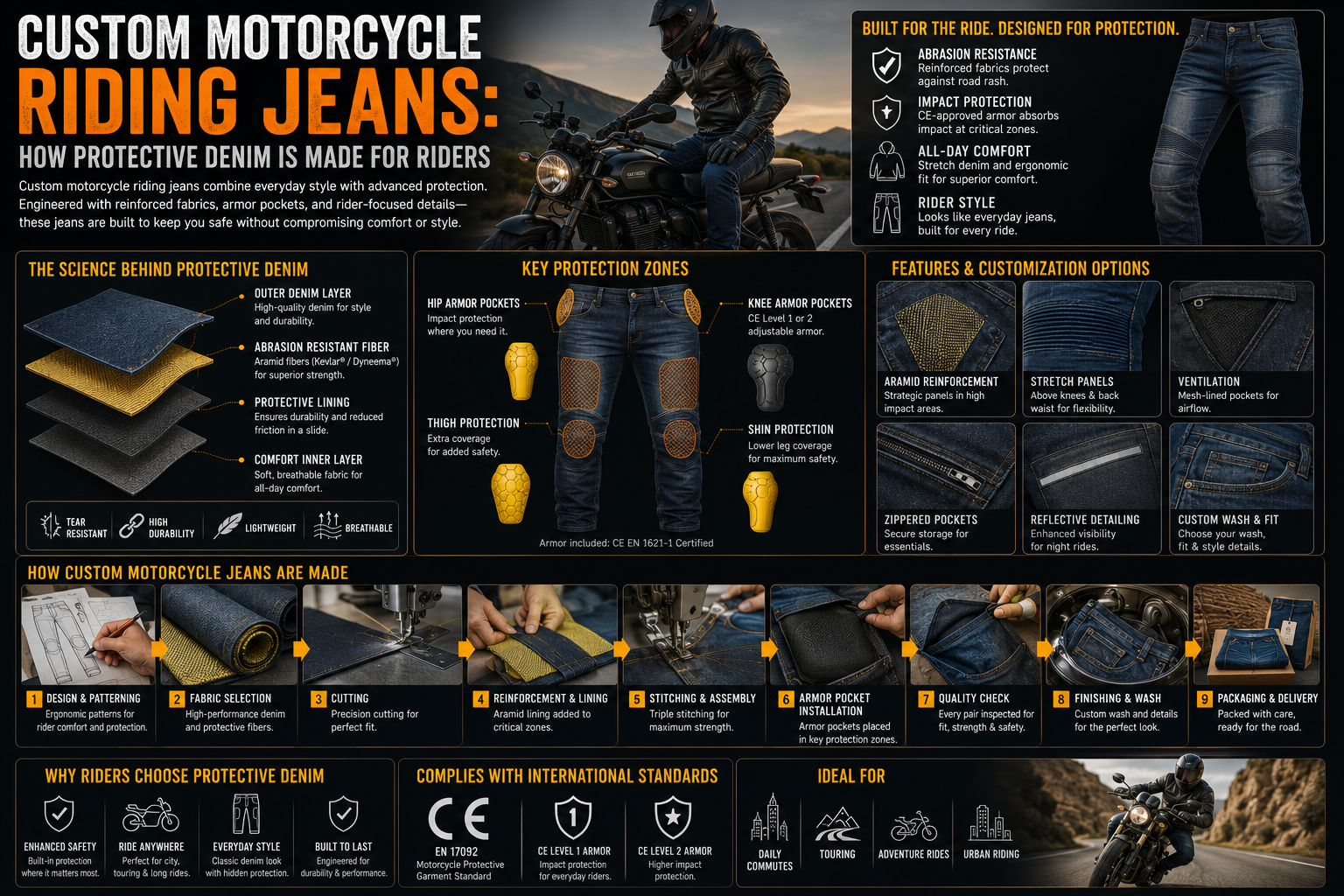
Motorcycle pants are another important part of the main types of motorbike apparel. Normal jeans may feel comfortable, but they are not designed to handle the same sliding and impact risks as purpose-made riding pants. Motorcycle pants can use leather, reinforced denim, textile fabric, or mesh depending on the riding style. Many designs include knee protection and may also cover the hips. When comparing types of motorbike apparel for the lower body, riders should check whether the pants allow easy movement while sitting on the bike. The motorcycle pants category gives a useful view of different construction styles. Good types of motorbike apparel should feel secure without becoming too tight around the knees, waist, or hips.
Full Motorcycle Suits for More Complete Coverage
When it comes to coverage, nothing beats a one-piece riding suit. These suites are made to cover almost the entire body. The tracks and high-speed performance riders prefer the one-piece suits as there are no gaps between jackets and pants. The two piece suits are more convenient for the road and touring as the pants and jackets can be separated. Road suits are mostly designed from leather or high quality fabrics and textiles. The suits also come with armor on the shoulder, elbows, hips, knees and the back. A one-piece suit should fit closely but allow the rider to bend their body and limbs without restriction.
Gloves, Boots, and Smaller Protective Items
Some riders only buy riding jackets and pants but there are other types of motorbike apparel protective apparel that are just as important. Through the jackets and pants, riders can lose contact with the road through wind and vibrations. Protective gloves keep the riders hands safe from contact with the road. Riding boots give support to the feet and ankles, and provide better protection compared to regular shoes. Balaclavas, socks, and thermal layers improve comfort during long or cold rides. These items are small and can be overlooked, but can make a significant difference to the comfort of the rider.
Quick Gear Checklist Before Every Ride
The main types of motorbike apparel can be checked quickly before every ride:
- Jacket: Choose strong material, secure closures, and useful ventilation.
- Pants: Check knee coverage, comfort, and freedom of movement.
- Gloves: Make sure they fit well and cover the wrist.
- Boots: Choose ankle support and a firm sole.
- Armor: Check that protectors sit over the correct body areas.
- Rain layer: Carry waterproof protection when the weather may change.
- Base layer: Use moisture-control fabric for hot or long rides.
- Cold-weather layer: Add insulation when temperatures are low.
- Visibility: Use reflective or bright details when riding in low light.
Hot-Weather and Summer Riding Gear
Motorbike gear for summer riding should strike a balance between hot and protective gear. Airflow around the body is key. Use base layers that wick away moisture, along with pants that have ventilation, and gloves with the same. Mesh jackets are good options as well. Light colored gear can help, but don’t skimp out on protective gear. Clothing should remain thick with abrasion-resistance and secured impact protection. Vents should also be checked for being unblocked in the riding position. Summer gear should be designed with rider protection and ventilation in mind to help gear the rider up for hot traffic and longer rides.
Cold, Rainy, and Changing Weather Gear
Motorcyclists face a challenge when it comes to safety and temperature in cold and wet conditions. A waterproof outer shell combined with insulated liners, thermal base layers, and the right gloves and footwear can make a big difference. The right motorcycle apparel even has removable layers to adapt to temperature changes throughout the day. Therefore, a motorcycle rider should avoid layering to the point that it restricts your movement. Also, you need to ensure that rain doesn’t get in through the neck, cuffs, waist, and boots. The best motorcycle apparel, for unpredictable weather.
Choosing Gear for Commuting, Touring, and Sport Riding
Each style of riding brings about its own need for different types of motorcycle apparel. For example, a daily commuter may favor lightweight textile gear that is easy to put on and take off. Tours may need gear that has waterproofing, storage pockets, and removable liners because they may ride through a variety of weather changes. Sport and track riders focus on a close fit with strong abrasion resistance and advanced impact protection. Flexible movement for different road surfaces may be of concern for adventure riders. The best motorcycle apparel are those that fit the rider for the style of riding they do and provide protection for the riding conditions.
Conclusion
Based on the various categories of motorbike attire, it is possible to create an optimum riding kit that safely, conveniently, and comfortably, as well, addresses rider needs. Protective jackets cover the upper body, pants cover the lower body, and suits and gloves/bottoms cover (protect) additional/vulnerable body sections. Weather layers and base clothes help riders remain comfortable in a variety of weather conditions. Protective clothing does not have to be purchased all at once. Motorcyclists can gradually add to their kit, starting first with the most critical, protective elements. Weather and riding elements accompany appropriate motorbike apparel that fits well and allows for comfortable, unrestricted movement.
FAQs
What are the main types of motorbike apparel?
The main types of motorbike apparel include motorcycle jackets, riding pants, full suits, gloves, boots, base layers, rainwear, and protective armor. Riders usually combine several pieces for better overall protection.
What motorbike apparel should a beginner buy first?
A beginner should first focus on a protective jacket, motorcycle pants, gloves, riding boots, and suitable impact protection. These items cover the body areas that need the most protection during normal road riding.
Is leather or textile motorbike apparel better?
Both can work well. Leather is known for strong abrasion resistance and is common in sport and track riding. Textile gear can provide better ventilation, waterproofing, storage, and flexibility for commuting and touring.