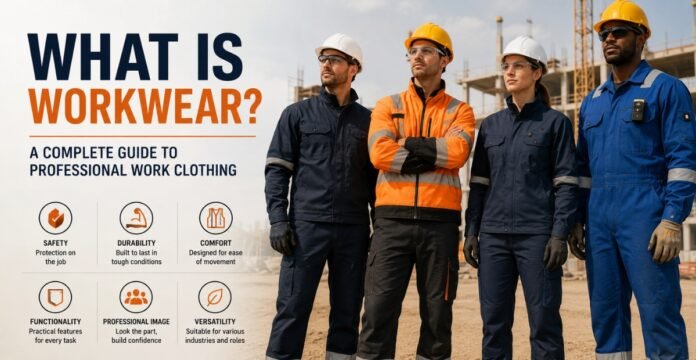
Many people ask “What is workwear?” when they begin a new job that requires special clothes. Workwear means wearing clothes that are made for work instead of just fashion. These clothes enable the worker to remain safe, comfortable, clean, and readied for their daily tasks. A builder, mechanic, warehouse worker, chef, nurse, and office employee can all wear different styles of workwear. The answer to “What is workwear?” is determined by the job, the workplace, the weather, and the possible risks. Clothes designed for work should enable the worker to move freely during work and maintain the strength of the clothes during extended use.
Why Workwear Is Different From Normal Clothing
To fully understand what is workwear, it’s useful to compare it to normal clothing. Everyday clothing is usually chosen for comfort, fashion, and individual preference. In comparison, workwear is chosen for function first. It can include stronger seams, more pockets, knee walls, reflective strips, waterproof layers, and protective fabrics. When people ask what is workwear, it’s also important to remember it is designed for real job functions. The employee may be required to bend, lift, climb, kneel, drive, or stand for long periods of time.
What Is Workwear for Different Jobs?
The meaning of what is workwear changes from one profession to another. Construction workers often need strong trousers, jackets, safety vests, and weather protection. Factory teams may need coveralls, coats, or uniforms that protect their normal clothes from dirt and workplace risks. Office teams may wear shirts, trousers, polo shirts, blazers, or branded uniforms. A complete workwear collection can include clothing for many different duties while keeping comfort, movement, and professional appearance in mind. Therefore, what is workwear cannot be answered by naming one garment. It is a complete clothing system made for a certain worker and job.
What Is Workwear for Workplace Safety?
In consider what is workwear for different jobs, construction workers approximately require work pants and jackets, heavy protective vests, safety shields, and material meant to protect from the elements. Workers in a factory might have to wear coveralls, coats, or a uniform that incorporates protective equipment and that seals off their ordinary clothing from the factory as well as from workplace risk. Workers in an office might require shirts, trousers, polo shirts, blazers, or a branded uniform that incorporates protective equipment. The best complete workwear collection would consist of a wide variety of clothing, tailored to meet the comfort and range of movement of a professional appearance, whilst protecting against the elements.
What Is Workwear in High-Visibility Jobs?
People often ask what is workwear for road, warehouse, airport, railway, and construction teams. In these jobs, visibility can be as important as fabric strength. High-visibility clothing uses bright colors and reflective materials to help workers stand out during daylight, bad weather, or low-light conditions. A suitable hi-vis workwear range may include vests, jackets, trousers, shirts, and coveralls for different working environments. The correct garment depends on the surroundings and the amount of body coverage needed. This is why what is workwear must be answered by studying the real workplace instead of choosing any bright garment that looks protective.
Important Features to Check in Workwear
When learning what is workwear, buyers should check these important points:
- Strong fabric that can handle regular wear.
- A comfortable fit for bending, lifting, and walking.
- Secure pockets that workers can reach easily.
- Reinforced knees, elbows, and other high-wear areas.
- Easy-to-use zips, buttons, snaps, and fasteners.
- Protection against rain, wind, dirt, heat, or low light.
- Suitable sizes for different body shapes.
- Clear washing and care instructions.
- Space for a company logo, name, or worker role.
- A practical design that does not add unnecessary weight.
These checks make the answer to what is workwear easier because they focus on real working needs instead of appearance alone.
What Is Workwear for Oil and Gas Jobs?
Another common question is what is workwear in oil, gas, energy, and industrial workplaces. These environments may include heat, sparks, static electricity, fuel, rough surfaces, machinery, and changing weather. Workers may require coveralls, jackets, trousers, shirts, or layered clothing designed for the risks found at the site. An oil and gas workwear collection helps buyers understand the types of garments used in demanding industrial environments. However, every item should be selected according to the employer’s risk assessment and workplace rules. In this field, what is workwear means clothing that supports protection without making movement or long shifts more difficult.
What Is Workwear for Wet and Cold Weather?
A commonly asked question is what does workwear mean for employees working in environments with wet and cold conditions. More than just thick, single-layer clothing is the answer to this question. An employee may require a comfortable base layer, a warm middle layer, and an outer layer that blocks wind and rain. The outer layer needs to have the ability to regulate the amount of moisture being retained. If the outer layer has no capability to regulate the levels of moisture retained, then an employee/person would feel and experience cold. It is not merely what is workwear for wet conditions that potential customers should be looking at and thinking about. Sealed seams help to protect against rain.
What Is Workwear for Company Image?
Many businesses ask what is workwear because they want their team to look professional and easy to identify. Excellent, branded work shirts, polo shirts, jackets, trousers, aprons, and uniforms help a company showcase their brand. These help company clients pick out the appropriate employee to help them out. Company branded workwear helps professional companies achieve a clear company brand helping customers locate the right employee to help them when they need it the most.
How to Choose the Right Workwear
The best way to answer what is workwear for your team is to start with the job itself. Write down the main tasks, working location, weather, safety risks, washing needs, and number of hours the clothing will be worn. There is no better way to determine what is workwear for your team than to begin with the job itself. Define the main responsibilities, the work environment, the climate, safety risks, where the clothes will be washed, and how many hours the clothes will be worn. After that, one should select the right fabrics.
Conclusion
What is it, precisely, that defines workwear? Professional clothing that is designed and engineered for a particular job to be done. This clothing can positively impact a range of things including: safety, comfort, ease of movement, cleanliness, level of visibility and how the company presents itself. Depending on the profession, the workplace, the climate, and most importantly the level of risk, the answer to what is workwear, in this context, varies. A receptionist does not need the same type of clothing as a mechanic, and a road worker does not need the same type of clothing as a chef. The most appropriate workwear is clothing that is useful, well fitted, durable, comfortable, and easy to maintain and care for.
FAQs
What is the main purpose of workwear?
The main purpose of workwear is to help employees complete their jobs safely and comfortably. It may also protect normal clothing, improve visibility, and create a professional company appearance.
Is workwear the same as personal protective equipment?
No. Some workwear is mainly used for comfort, durability, or company branding. Personal protective equipment is selected to protect workers against specific hazards and must meet the requirements of the workplace.
Which fabric is best for professional work clothing?
The best fabric depends on the job. Cotton can feel soft and breathable, polyester can improve strength and drying speed, while blended fabrics can provide a balance of comfort and durability.