Work in the oil and gas sector presents a variety of occupational health concerns. These include, but are not limited to, extremes of temperature, exposure to the sun and its associated radiation, a variety of weather conditions, and combinations of industrial chemicals and fuels. The protective clothing appropriate for the worksite must be used in addition to the safety workwear to mitigate the adverse effects of these work hazards.
Why Workers Need Special Protective Clothing
Oil fields, drilling areas, refineries, workshops, and fuel-handling sites can have very different dangers. Workers may face flash fire, arc flash, hot surfaces, sharp tools, heavy rain, cold wind, or low light. The types of oil and gas workwear help reduce these risks when the clothing is chosen correctly and used with other safety equipment. Good workwear should cover the body properly, fit without feeling tight, and remain comfortable during long hours. The types of oil and gas workwear should also match the worker’s task, location, weather, and company safety rules. Choosing the wrong clothing can leave important areas unprotected or make daily work harder.
Types of Oil and Gas Workwear Every Buyer Should Know
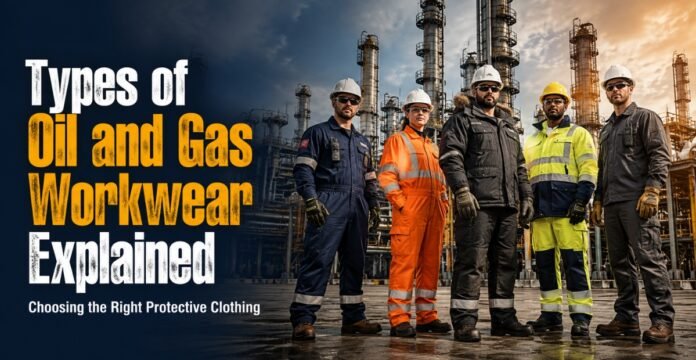
The main types of oil and gas workwear include coveralls, safety jackets, protective pants, high-visibility vests, flame-resistant shirts, waterproof outerwear, and cold-weather layers. Each item has a different purpose. Coveralls give wide body coverage, jackets protect the upper body, pants support active work, and vests make workers easier to see. The types of oil and gas workwear may also include gloves, helmets, safety footwear, eye protection, and face protection, although these items are usually classed as personal protective equipment. A complete workwear range can help buyers compare clothing options before building a full uniform set.
Oil and Gas Safety Coveralls
Coveralls are among the most common types of oil and gas workwear because one garment covers the arms, legs, chest, and back. They are useful for drilling teams, maintenance crews, plant workers, and people who work near possible flame or heat risks. Well-designed oil and gas safety coveralls may include flame-resistant fabric, reflective tape, strong zippers, useful pockets, and reinforced stress areas. The types of oil and gas workwear used for higher-risk tasks should fit close enough to avoid catching on equipment but still allow easy movement. Coveralls should also have the correct protection level for the hazard assessment.
Oil and Gas Safety Jackets
Safety jackets are important types of oil and gas workwear for workers who need upper-body protection in cool, windy, or wet conditions. A jacket can be worn over a shirt or another flame-resistant layer, which makes it useful when the weather changes during a shift. Good oil and gas safety jackets can include insulation, reflective details, a strong outer shell, and practical pockets. The types of oil and gas workwear chosen for cold sites should keep workers warm without becoming too bulky. Buyers should also check whether the jacket works safely with coveralls, harnesses, gloves, and other equipment.
Oil and Gas Safety Pants
Protective pants are lower body protection for technicians, drivers, warehouse employees, and others who don’t always need a full coverall. Oil and gas safety pants should be able to support movement when bending, kneeling, climbing, or walking and not also restricting movement when bending at the knees. Oil and gas safety pants should have durable fabric, reinforced seams, useful pockets, and reflective details to improve daily use. The types of oil and gas workwear that you should be choosing for lower body protection should match the shirt or jacket to prevent any unsafe gaps.
Oil and Gas Safety Vests
Lightweight vests of oil and gas workwear contain a strong reflective feature that incorporates all attributes to help workers stay visible from cars, machines, loading areas, and other work zones having poor visibility. They are worn over all outer clothing such as shirts, jackets, and coveralls. It is designed for workers who need to have greater visibility. A safety vest can be useful for visitors, supervisors, drivers, spotters, and workers who need to have increased visibility. However, the types of oil and gas workwear used near a flame hazard should be used with caution, as a basic vest may not provide any flame resistance.
Quick Checklist for Choosing Oil and Gas Workwear
Use this quick checklist when comparing the types of oil and gas workwear:
- Check the main hazard before choosing any garment.
- Select flame-resistant clothing where heat or flame exposure is possible.
- Add reflective details where vehicles or low light create risk.
- Choose breathable fabric for hot working areas.
- Use insulated layers for cold and windy sites.
- Check pockets, closures, seams, and stress points.
- Make sure the clothing fits every worker correctly.
- Confirm that all layers can be worn together safely.
- Test samples before placing a large order.
- Review the types of oil and gas workwear after job conditions change.
Fabrics and Safety Features That Matter
The fabric makes a difference on how oil and gas workwear feels and performs. Workwear made from flame-resistant materials may protect the wearer if there are chances of a flash fire or arc incident. Canvas or heavy ripstop material may aid in the protection of daily use of clothing. Materials that promote airflow may aid in the comfort of the wearer during long and hot shifts. Finishing a fabric with a water-repellant treatment may assist in keeping wearer of work clothing dry as they work in areas that are wet. Reflective taping on work clothing may assist in increasing the visibility of the wearer of the work clothing during night time work.
Choosing Workwear for Different Jobs and Body Types
Different jobs require different kinds of oil and gas workwear. Full flame-resistant coveralls may be required for a drilling worker, while a drilling supervisor may only need flame-resistant workwear in the form of pants, a jacket and a vest. Workwear with strong seams and closures that provide protection and hold together the workwear during the work activity may be required for maintenance workers. Workwear that offers protection through the use of strong and reinforced pockets may be required for workers that drive.
Conclusion
The right types of oil and gas workwear offer adequate protection to the worker while allowing the worker to carry out demanding work with reduced levels of discomfort. Both individual and collective pieces of workwear (coveralls, jackets, pants, vests, and other layers) have their own purposes and should not be chosen based on appearance or price only. The safer choice is to start based on the job hazard, and then consider the other variables which are fabric, visibility, weather, fit, movement, and other equipment. Companies should review the types of oil and gas workwear because work conditions, tasks, and safety needs can change.
FAQs
What are the main types of oil and gas workwear?
The main types of oil and gas workwear include coveralls, safety jackets, protective pants, high-visibility vests, flame-resistant shirts, and waterproof outerwear. The correct choice depends on the worker’s task and workplace risks.
Why are flame-resistant clothes used in oil and gas work?
Flame-resistant clothing is used where workers may face flash fire, heat, or arc hazards. It is designed to reduce the spread of flames and provide important protection during an accident.
Are safety vests enough for oil and gas workers?
A safety vest mainly improves visibility and does not always provide full flame or body protection. Workers may need to wear it over suitable coveralls, shirts, jackets, or other protective clothing.