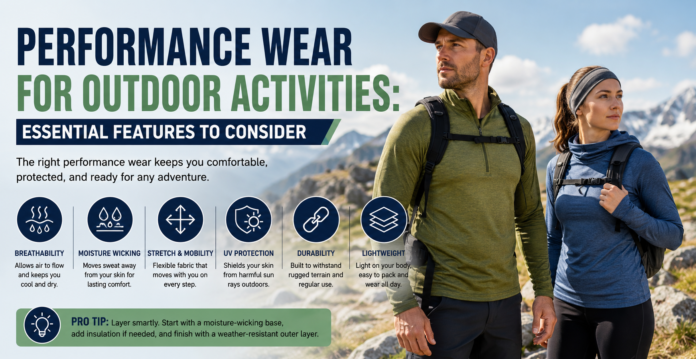
Active outdoor apparel is essential given how quickly the elements can change outdoors. For instance, you may start a walk feeling cool, but as you walk, your body may start to heat up. Factors like wind and the sun, in combination with the body’s own sweat, can all impact your comfort. Even though clothes that you performance wear for outdoor activities day to day may seem fine, when you take them outdoors and into an active situation, they may not stand up. Generally, normal fabrics perform poorly. Bad fabrics also lose their shape, feel sticky and damp, and turn rough, heavy, and cold. When shopping, don’t just rely on your clothing’s style and color.
Performance Wear for Outdoor Activities Basics
Performance wear for outdoor activities starts with clothing that supports real movement and changing outdoor needs. A full category like the performance wear collection can include base layers, tank tops, sweatshirts, active tops, and training pieces. Products for outdoor activities serve unique purposes. Some products are designed to be worn closer to the skin than others. Tank tops are designed to allow air flow. Sweatshirts are designed to trap heat. The best outdoor fit for the weather could require one product, or several. Before purchasing outdoor products, the buyer should consider several different factors of the garment, such as fabric quality, elastic quality, swat control, seams, and comfort.
Fabric Quality for Outdoor Comfort
The quality of fabric is critical to performance wear for outdoor activities. Fabric should feel smooth to the skin and be strong enough for regular use. It should not feel too rough, thin, or heavy. Ideally, performance wear for outdoor activities should support all the activities the consumer needs it for, such as walking, stretching, hiking, traveling, and training. It should also do this without causing irritation. Performance wear fabric should also deal with sweat and movement better than typical, casual clothing. Consumers should pay attention to the hand feel, thickness, texture, and flexibility of the fabric.
Breathability and Sweat Control
During movement, the body generates heat. Performance wear for outdoor activities must be breathable to handle this. If heat and moisture get trapped by the fabric, the wearer will feel sticky and uncomfortable. Light, breathable fabrics allow for airflow to reduce the amount of heat trapped. Drafting fabrics can help get moisture off the skin so that the fabric feels lightweight during the activity. performance wear for outdoor activities like this is useful for walking, hiking, and outdoor training. Activity does not stop when the body is covered. The outer layer should be able to handle the activities the wearer does outdoors so that the wearer remains comfortable throughout the day.
Base Layers for Cooler Outdoor Conditions
Base layers are important in performance wear for outdoor activities because they sit closest to the skin. A product like a ski base layer should provide comfort, flexibility, and warmth without feeling bulky. First, look for layers made from lightweight fabrics with lots of stretch. These base layers are perfect for cool weather and can even create a comfortable first layer underneath jackets, and sweatshirts. Make sure the base layers you choose fit snug against your body to hold them in place, but don’t fit too tight to restrict movement. Because base layers will touch your skin directly, look for base layers with smooth seams. A good base layer supports outdoor comfort from the start of the outfit.
Stretch and Easy Movement
Stretch is critically important for performance wear for outdoor activities that is designed for outdoor activities. Outdoor activities are not limited to walking. Consider climbing stairs, bending down, carrying bags, walking on uneven surfaces, stretching, etc. Clothing designed for such activities should not restrict movement. Pulling around the shoulders, chest, waist, or hips is not ideal. Stretch recovery is important as well. Recovery is the fabric’s ability to return to it’s previous un-stretched state. If the stretching of fabric becomes permanent, the garments are likely to look old quickly. Quality outdoor performance wear for outdoor activities should accommodate movement and return to the previous state. This design consideration helps the garments look and feel new and clean.
Tank Tops for Warm Weather and Layering
Tank tops can be useful in performance wear for outdoor activities, especially in warm weather or as part of a layered outfit. A product like tank tops for women can support airflow, shoulder movement, and casual outdoor comfort. The armholes should be smooth and non-friction causing during walking and training. The fabric should be breathable for warm conditions and flexible for movement. Tank tops can also fit under sweatshirts, jackets, or overshirts for changing weather. A quality tank top should be lightweight, clean, and easily worn.
Durability and Seam Strength
Durability is one of the most important factors when assessing an outdoor clothing item. Unlike clothing designed for indoor use, clothing designed for outdoor use is made to be routinely used in high friction, high movement situations. Going outdoors to walk, and/or hike, and sit on the ground, and carry bags causes clothing to rub and be subjected to stress during use, and be routinely washed. Garments need to have strong seams to help to avoid damage along the shoulders, sides, hems, armholes, cuffs, and necklines. The stitching should be rough enough to be reliable, and stay comfortable. Potential buyers need to check for loose threads and unseemly lines before purchasing.
Simple One-Line Outdoor Checks
These checks make performance wear for outdoor activities easier to compare before buying or approving production.
- Check fabric because outdoor clothing should feel smooth and strong.
- Check breathability because movement creates heat and sweat.
- Check stretch because outdoor activity needs easy movement.
- Check recovery because garments should return to shape.
- Check seams because outdoor wear needs durability.
- Check layering because weather can change quickly.
- Check care needs because performance clothing is washed often.
These one-line checks help buyers understand outdoor performance clothing without difficult fabric words.
Warm Layers and Everyday Outdoor Use
Layering is important for outdoor apparel since the weather can change unexpectedly in the outdoors. A hoodie can provide insulation during the chilly early hours, or the long walks and movements outdoors. A product like a camo sweatshirt can work as a practical layer when buyers need comfort, coverage, and easy styling. A good warm layer should not feel too bulky. It should allow arm movement and should fit over lighter base pieces. Cuffs, hems, stitching, and fabric softness all matter. Outdoor layers should support both comfort and durability.
Final Guide Before Choosing Outdoor Performance Wear
Wearing the right clothing for the right weather and activity is the best advice for selecting outdoor performance apparel. Buyers should look at fabric quality, breathability, sweat wicking, stretch recovery, comfort of layering, seam strength, fit, and care. Outdoor performance apparel should stand the test of looking good in product photography and should fulfill its purpose of being used outdoors in walking, traveling, training, and layering for colder weather. Since customers are buying performance apparel for outdoor activities online, clarifying these attributes will instill the needed confidence. Creating an outdoor performance apparel guide will improve product pages.
FAQs
What is performance wear for outdoor activities?
Performance wear for outdoor activities is active clothing made for comfort, movement, breathability, and durability outside.
What fabric is best for outdoor performance wear?
Good fabric should feel breathable, flexible, smooth, strong, and comfortable for long wear.
Why is layering important outdoors?
Layering helps adjust comfort when weather, temperature, and activity level change.
How can outdoor performance wear last longer?
Wash gently, avoid high heat, air dry, and store garments fully dry.