Performance wear must account for movement and sweating in a way that typical designs do not. Clothing that accounts for daily wear along with workouts must look and feel good, but also support comfort and performance while accommodating elements. Bad fabric can become sticky and heavy and poor seams can break and bad fit can restrict. Performance wear must support comfort and durability and must account the same design elements for casual wear. Real quality performance wear carefully designs the elements of Fabric, Fit, and Stitching for Cares and Stretch.
Performance Wear Features Basics
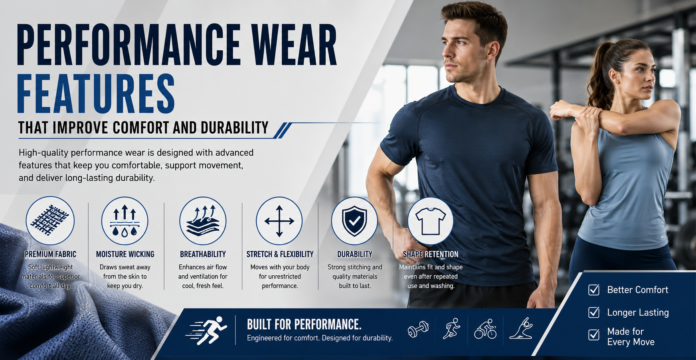
Performance wear features include the fabric and construction details that make active garments more useful. A full category like the performance wear collection can include base layers, tank tops, sweatshirts, tops, and training pieces. Regardless of the purpose of a product, the main quality points are the same. Breathability, flexibility, and smoothness are the most desirable qualities of garments. They should feel strong and should move with the body as well as hold their shape after being washed. Performance garments should not feel fragile, and should not be uncomfortable. They should be able to withstand the real use and the daily wear and tear.
Fabric Quality and Soft Feel
Performance wear must be made from high-quality fabric. Comfort hinges on fabric quality. Skin contact should feel pleasant. Fabric should have a reasonable level of durability. performance wear features generally sees a high frequency of use, so fabric should be tough. Fabric should also be strong and of a good thickness. A performance wear features item should keep its shape. Fabric should be flexible and also soft. Consider the fabric’s hand feel, texture, weight, and stretch. It is a misconception that high quality fabric is thick and heavy. Comfortable fabric should be strong and should keep its shape during daily and workout wear.
Breathability and Sweat Control
Breathability is a great feature of activewear because most clothes made for physical activity can endure heat and sweat. Fabrics that let air pass through and help with the release of heat, and help control sweat, keep the user comfortable during the different possible uses of the fabric. Fabrics that trap moisture can make activewear feel heavy and stick during activity. Breathability also is a characteristic of lightweight and tough fabrics. The best performance clothing helps the user feel fresh.
Base Layers for Body Comfort
Base layers are an important example of performance wear features because they sit close to the skin. A product like a ski base layer should support warmth, movement, and comfort without feeling bulky. Because these garments are usually worn beneath layers, they have special needs. The seams have to be flat, the fabric should have memory to maintain elasticity, and it should be thin. To not add bulk, the fit should be perfect as well. Base layer garments shouldn’t be heavy, and shouldn’t cause friction or bunch while moving. A customer should consider the fabric, fit, stretch and softness of the layer when buying base layers.
Stretch and Shape Recovery
There’s good reason why stretch is a design principle in most performance wear features. They body can’t be one dimensional. Design must consider flexibility in most functions whether it’s traveling, training, walking, or any other outdoor functionality. Therefore, the design also needs to carry flexibility and strength. Stretch is important but so is shape retention. Shape retention refers to the ability of a garment to return to its original dimensions after being stretched. Garments with poor shape retention become permanently deformed and baggy. Unlike most everyday garments, performance wear has both stretch and shape retention. Shape retention of performance garments along with stretch and recovery ensures that the garments maintain their intended shape even after multiple launderings.
Tank Tops for Movement and Airflow
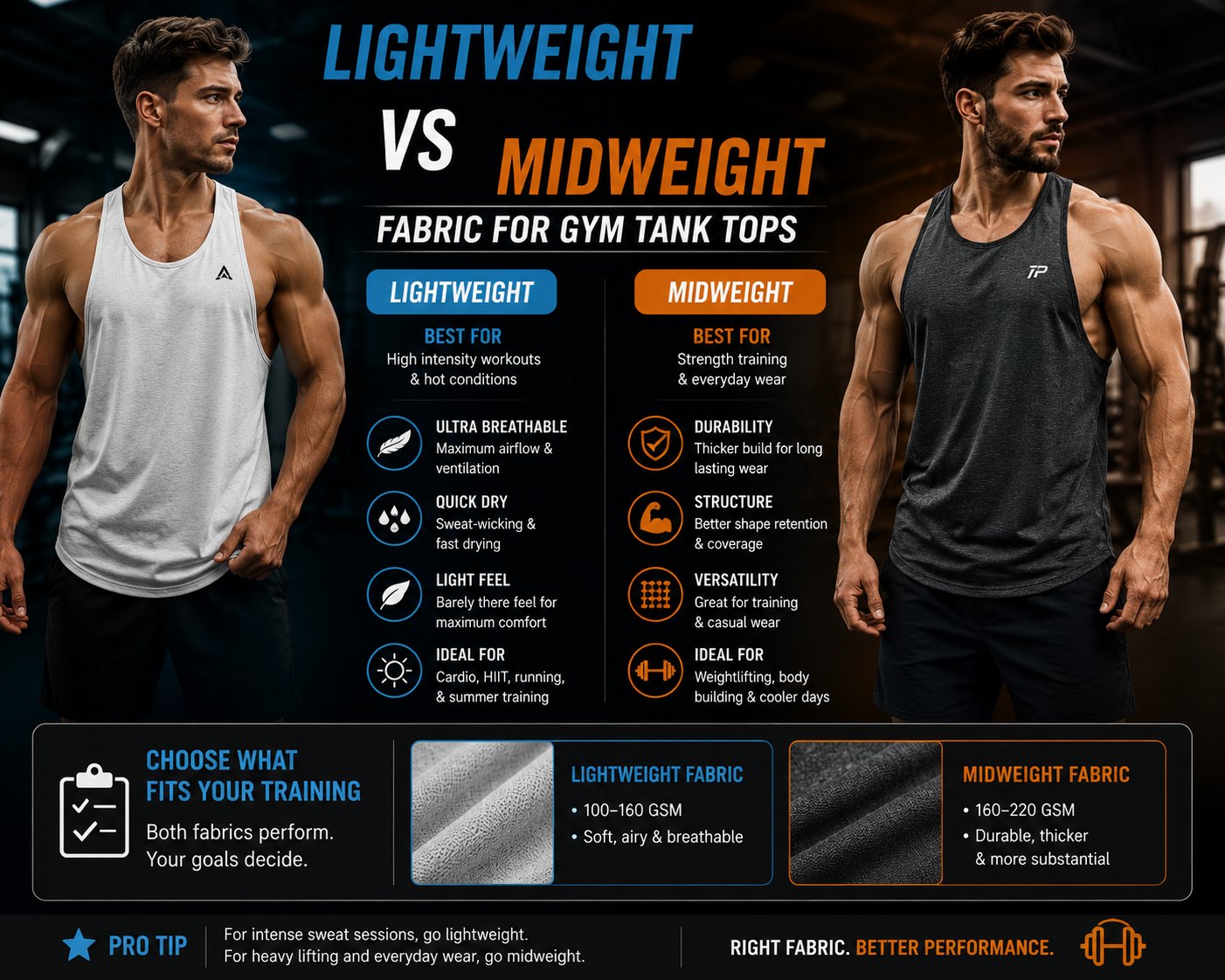
Tank tops show many important performance wear features because they need both comfort and movement freedom. A product like tank tops for women should allow easy shoulder movement and good airflow. There should be no irritation in the armholes. Do not want neck crinkle after washing. Let’s keep it soft and washable. During the heat, don’t want to feel tight or stiff. Fabric should be perfectly fit, neither loose or tight. Perfectly constructed tank tops make a great addition to outfits and layering pieces, plus can be used for walks and training, layering tank tops with styling active pieces.
Stitching and Seam Durability
Stitching impacts the strength of activewear. Seams are stressed with the intended use of performance wear features, as well as the typical washing, drying, and layering performance wear undergoes. Bad seams lead to seams splitting at the shoulders, sides, hems, armholes, cuffs, and waists. Irregular seams that are rough and scratchy become even more irritating when the clothing is worn up against the skin. A high quality performance wear garment will have seam stitching that is straight and secure. The consumer should look for loose ends, poorly stitched seams, and the seams that with the most load.
Simple One-Line Feature Checks
These checks make performance wear features easier to compare before buying or approving production.
- Check fabric because performance wear should feel smooth and strong.
- Check breathability because active use creates heat and sweat.
- Check stretch because movement needs flexibility.
- Check recovery because garments should return to shape.
- Check seams because weak stitching can fail during activity.
- Check fit because comfort depends on proper body balance.
- Check care needs because performance clothing is washed often.
These one-line checks help buyers understand performance wear quality without difficult textile words.
Layering, Warmth, and Everyday Use
Layered clothing can adapt to different activities and settings. This makes it ideal as part of a performance wear features ensemble. Performance wear customers tend to use the clothing in various settings. It is common to have different base layers (including tank tops) and sweatshirts worn alone or layered.A product like a camo sweatshirt can work as a warm layer for casual active styling, outdoor movement, travel, and daily comfort. Layering pieces should feel comfortable without becoming bulky. They should also have durable seams, clean cuffs, and fabric that keeps shape. Good layering helps performance wear move from training to everyday life.
Final Guide to Comfort and Durability
Comfort, flexibility, and durability are the three main characteristics of your ideal performance wear features. It’s soft, breathable, and quickly dries. Look for apparel with seams that won’t pull apart, a good fit, and that can easily be layered or packaged. Performance wear should look good even after being worn while traveling or during your daily routine. If something is going to be that multi-functional, it should improve the way you prep for a performance. Not everyone wants to wear the same fit, and customers should be shown the difference between performance wear. One of the reasons that customers rely on certain brands is that those brands explain the unique characteristics of the clothing.
FAQs
What are performance wear features?
Performance wear features are fabric, fit, and construction details that improve comfort, movement, and durability.
Why is breathability important?
Breathability helps reduce trapped heat and keeps clothing more comfortable during activity.
What makes performance wear durable?
Strong fabric, clean stitching, stretch recovery, and proper care improve durability.
How should buyers choose performance wear?
Buyers should check fabric feel, stretch, breathability, seams, fit, and care instructions.