
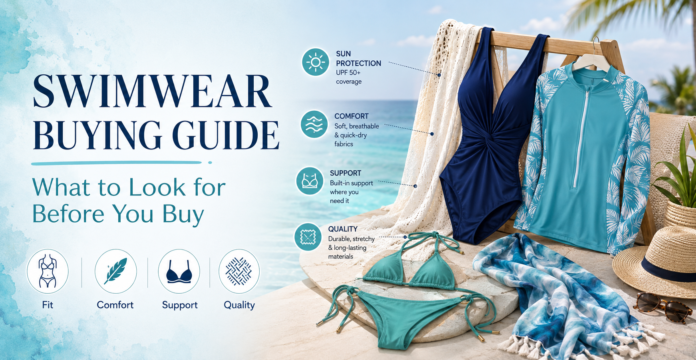
Buying swimwear sounds simple, but the wrong choice can feel uncomfortable very quickly. A swimsuit is not only about color or style. It also needs to fit your body, support movement, stay secure in water, dry properly, and match the place where you plan to wear it. This swimwear buying guide helps you understand what really matters before you spend money. Some people need swimwear for beach holidays, some need it for swimming practice, some want modest coverage, and some want a stylish poolside outfit. A good swimsuit should make you feel relaxed, covered, and confident. It should not pull, slip, rub, or feel too tight when wet. This swimwear buying guide is written in simple English so even a young reader can understand the main points. Before buying, always think about your use, your body comfort, fabric quality, coverage level, and how long you want the swimwear to last.
Swimwear Buying Guide: Start With Your Main Use
The first step in any swimwear buying guide is knowing where and how you will wear the swimwear. A swimsuit for casual beach sitting is different from one used for swimming laps, water sports, surfing, or family pool days. If you are mostly relaxing, style and comfort may be your top needs. If you are swimming often, you need stronger fabric, better stretch, secure straps, and a fit that stays in place. A swimsuit used for active movement should not become loose after a few wears. A swimsuit for holidays should be easy to pack, quick to dry, and comfortable for long hours. This swimwear buying guide also reminds you that one person may need more than one type of swimwear. For example, you may need a modest swimsuit for family use and another sporty option for exercise. When you know your main use first, every other choice becomes easier and smarter.
Check Fabric Quality and Stretch Before Style
Fabric is one of the most important things in this swimwear buying guide because swimwear must handle water, sunlight, salt, chlorine, and movement. Good swimwear fabric usually has stretch, recovery, smooth touch, and enough thickness to feel secure. Stretch means the fabric can move with your body. Recovery means it can return to shape after stretching. Poor swimwear may look nice at first, but it can become loose, thin, or faded after a few uses. When choosing swimwear, check whether the fabric feels soft but firm. It should not feel weak, rough, or too see-through. If you want to compare different swimwear options, the swimwear collection can help you understand how different styles may serve different needs. This swimwear buying guide recommends choosing fabric quality before choosing only color, because strong fabric keeps the swimsuit useful for longer.
Choose the Right Fit for Comfort and Movement
Fit is the part of a swimwear buying guide that many buyers ignore until it is too late. Swimwear should feel close to the body, but it should not feel painful or tight. If it is too loose, it may move around in water. If it is too tight, it may dig into the skin and make walking, sitting, or swimming uncomfortable. The best fit lets you bend, stretch, walk, and swim without feeling worried. Straps should stay on the shoulders. Waistbands should sit properly. Leg openings should not cut into the skin. Chest areas should feel supported without pulling. A simple test is to move your arms, bend slightly, and sit down before deciding. This swimwear buying guide suggests avoiding a size only because it looks good on a model. Your body comfort matters more than the size label. A swimsuit that fits well will always look better than one that only follows a trend.
Think About Coverage and Confidence
Coverage means how much of the body the swimwear covers, and it is a major part of this swimwear buying guide. Some people like minimal swimwear, while others feel better with fuller coverage. Both choices are fine if they match your comfort, activity, and personal style. More coverage can help you feel secure during family trips, beach walking, water sports, or public swimming. Less coverage may be preferred for tanning, fashion, or relaxed beachwear. The best choice is the one that lets you move without adjusting your swimsuit again and again. Coverage should also match your environment. For example, a private pool, public beach, hotel resort, and sports swimming area may all feel different. This swimwear buying guide does not say one style is better for everyone. It simply says your swimwear should match your confidence level. If you feel uncomfortable before leaving home, you may not enjoy wearing it outside.
Look for Support in the Right Areas
Support is important because swimwear gets heavier and moves differently when wet. This swimwear buying guide suggests checking support around the chest, shoulders, waist, and hips. For women, supportive cups, wide straps, secure stitching, and a stable underband can make a big difference. For men, waistband strength, lining, and secure shape can improve comfort. People who swim actively need more support than people who only sit by the pool. If you want more body coverage with a secure design, modest swimwear can be a practical choice for people who want comfort, confidence, and better coverage in one outfit. Support should feel natural, not stiff. A swimsuit should hold the body comfortably without making movement difficult. This swimwear buying guide recommends checking support before buying because once the swimwear becomes wet, weak support becomes much more noticeable.
Pick a Style That Matches Your Body and Routine
Style is not only about looking fashionable. In this swimwear buying guide, style means choosing a design that works with your body, routine, and comfort level. One-piece swimsuits can feel secure and simple. Two-piece swimsuits can be easier to mix, match, and adjust. Tankinis give more coverage than many two-piece styles while still feeling flexible. Skirted swimwear can give extra lower-body coverage. Sporty swimwear is better for active swimming, while fashion swimwear is better for relaxed use. A good style should not make you feel nervous when walking, bending, or entering the water. It should support the way you actually live. This swimwear buying guide recommends choosing a style you will wear often, not only one that looks good in a photo. If a swimsuit matches your body and daily use, it becomes more valuable because you will feel comfortable wearing it many times.
Understand Different Swimwear Options Before Choosing
A helpful swimwear buying guide should explain that different swimwear types are made for different people. A one-piece swimsuit is often simple, secure, and easy to wear. A bikini gives more freedom and a lighter feel. A tankini offers a middle option because it gives coverage while keeping a two-piece structure. Skirted swimwear can help people who want extra style and coverage around the hips and thighs. Rash guards and swim shirts can help with sun coverage and active use. For buyers who want more coverage than a bikini but more flexibility than a one-piece, tankinis for women can be a smart middle choice. This swimwear buying guide says you should not choose swimwear only because it is popular. Choose it because it solves your comfort needs. The right style should make swimming, walking, and relaxing easier.
Key Points to Check Before Buying Swimwear
This swimwear buying guide becomes easier when you remember a few simple points before checkout.
- Check the fabric stretch and make sure it returns to shape.
- Choose a size that feels secure but not painful.
- Pick coverage that makes you feel confident.
- Look for support in the chest, waist, hips, and straps.
- Choose quick-dry fabric if you will wear it for long hours.
- Avoid swimwear that feels thin, rough, or see-through.
- Select colors and prints that you can wear more than once.
- Think about chlorine, salt water, and sun exposure.
- Buy swimwear that matches your real use, not only the latest trend.
- Read product details before buying, especially fabric and fit notes.
These points make this swimwear buying guide practical because they help you judge swimwear before you regret the purchase.
Do Not Ignore Comfort After the Swim
Many people only think about how swimwear feels before entering the water, but this swimwear buying guide also focuses on comfort after swimming. A swimsuit that feels fine when dry may feel heavy, sticky, or irritating when wet. Good swimwear should dry reasonably fast and should not rub the skin after you leave the water. If you are spending a full day at the beach, water park, or pool, post-swim comfort becomes very important. A swimsuit should not stay cold and heavy for too long. It should also not lose shape after drying. Check the lining, seams, and waistband because these areas can cause discomfort after swimming. This swimwear buying guide recommends thinking about the full wearing time, not only the first five minutes. The best swimwear feels good while swimming, walking, sitting, drying, and changing afterward.
Conclusion
The best swimwear is the one that fits your body, supports your movement, matches your coverage needs, and feels comfortable before and after swimming. This swimwear buying guide is not about forcing one style on everyone. It is about helping you make a smart choice before buying. Start with your main use, then check fabric, fit, support, coverage, style, and drying comfort. Do not buy swimwear only because it looks trendy online. A swimsuit should make you feel calm, secure, and ready to enjoy the water. If you are buying for regular swimming, choose stronger and more supportive fabric. If you are buying for holidays, choose something comfortable and easy to wear for long hours. In the end, a good swimwear buying guide helps you avoid waste, save money, and choose swimwear that you will actually enjoy wearing again and again.
FAQs
What is the most important thing in a swimwear buying guide?
The most important thing is fit. Swimwear should feel secure, comfortable, and easy to move in. If the fit is wrong, even good fabric or a stylish design will not feel comfortable.
How do I know if swimwear fabric is good?
Good swimwear fabric should stretch, return to shape, feel smooth, and not become see-through when stretched. It should also handle water, sunlight, and movement without losing shape quickly.
Should swimwear be tight or loose?
Swimwear should be close-fitting but not painful. It should stay in place in water without digging into your skin. A balanced fit is best for comfort and confidence.
How many swimsuits should I own?
Most people need at least two swimsuits if they swim often. One can dry while the other is ready to wear. Different styles also help for different uses, such as swimming, beach trips, or modest coverage.


