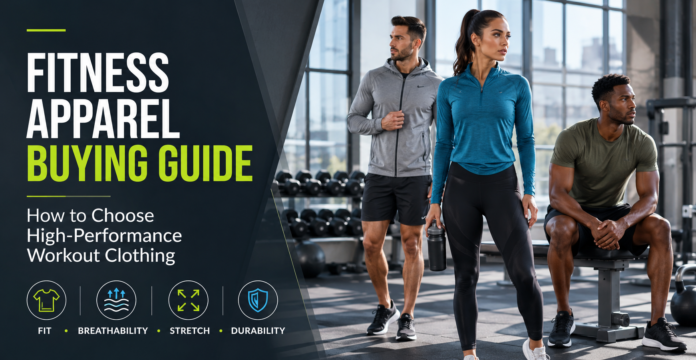
A good fitness apparel buying guide should begin with one simple question: what activity will you use the clothing for? Workout clothing is not just about looking sporty. It must support your body while you move, sweat, stretch, lift, run, or train. A person doing light gym exercises may need soft and breathable clothes, while someone doing strength training may need stronger seams and better stretch. A runner may need lightweight fabric, while a person doing yoga may need flexible clothing that does not pull or twist. This fitness apparel buying guide helps you choose clothes by purpose instead of only choosing by color or style. When your clothing matches your workout, you feel more comfortable and focused. Good fitness apparel should move with your body, dry faster than normal casual clothing, and stay comfortable during long sessions. The right choice can also reduce irritation, overheating, and fabric sagging. This is why buying workout clothing should be based on comfort, movement, fabric, fit, and durability.
Choose the Right Fitness Apparel Category
The first real step in this fitness apparel buying guide is choosing the correct category for your training needs. Fitness clothing includes tops, stringers, tees, joggers, leggings, shorts, hoodies, compression wear, and layering pieces. If you want general gym clothing, start with the main fitness apparel collection because it gives you a broader idea of what types of workout clothes are available. A beginner should not buy everything at once. Start with a breathable top, flexible bottom, and one extra layer if you train in cooler weather. People who lift weights often prefer sleeveless tops or relaxed tees because the shoulders need free movement. People doing cardio may prefer lightweight shirts that do not hold too much sweat. People training outdoors may need activewear that balances airflow, sun comfort, and body coverage. A smart fitness apparel buying guide always recommends choosing clothing by activity first, then by fabric, then by fit.
Understand Fabric Before You Buy
Fabric is the heart of any fitness apparel buying guide because it decides how the clothing feels during real movement. Cotton is soft and natural, but it can hold sweat and feel heavy during intense workouts. Polyester is lightweight, dries faster, and is often used in performance wear. Nylon is smooth and strong, so it works well for active clothing that needs durability. Spandex or elastane gives stretch, which helps the garment move with your body. Blended fabrics are common because one fabric alone may not give all benefits. For example, a cotton-polyester blend may feel soft but also dry faster than 100% cotton. A polyester-spandex blend may support movement and shape retention. When buying fitness clothing, touch the fabric if possible and check whether it feels too thick, too rough, or too loose. A proper fitness apparel buying guide should remind you that expensive clothing is not always better. The best fabric is the one that suits your workout, climate, and comfort level.
Fitness Apparel Buying Guide for Fit and Movement
This fitness apparel buying guide must also focus on fit because even the best fabric can feel bad if the size is wrong. Workout clothing should not be so tight that it blocks movement, but it should not be so loose that it gets in the way. A good gym shirt should allow the shoulders, chest, and arms to move freely. Joggers or pants should bend easily at the knees and hips. Leggings should stay in place without sliding down. A hoodie should give enough room for layering but should not feel bulky during warm-up exercises. When trying fitness apparel, move your arms, squat, bend, and stretch before deciding. This shows whether the garment supports real movement. A fit that looks good while standing may not work during training. A proper fitness apparel buying guide should always suggest movement testing because gym clothing is made for action, not only for photos. Comfort during motion matters more than a perfect mirror look.
Pick Tops That Match Training Intensity
Workout tops should be selected according to how hard you train and how much airflow you need. A person doing heavy lifting may like open-arm designs because they allow shoulder movement and help the body cool down. For this reason, graphics stringers can be useful for gym training where freedom of movement and ventilation matter. A person doing light workouts may prefer soft tees with more coverage. For cardio, choose a top that feels light and does not stick too much when wet. For outdoor training, a slightly more covered top may help protect the skin and reduce direct sun exposure. This fitness apparel buying guide recommends checking the armhole, shoulder seam, neck shape, and fabric weight before buying tops. A good fitness top should not rub under the arms or pull around the chest. It should also keep its shape after washing. The best workout top is one that feels easy from the first warm-up to the final stretch.
Select Bottoms for Comfort, Stretch, and Control
Fitness bottoms include joggers, leggings, shorts, track pants, and training pants. The right bottom depends on your workout style. If you lift weights, you need enough stretch for squats, lunges, and leg presses. If you run or do cardio, you need lightweight fabric that does not feel heavy after sweating. If you do yoga or stretching, the waistband should stay in place without rolling. Joggers are often a good middle choice because they give comfort, coverage, and easy movement. A strong fitnessapparel buying guide should also tell buyers to check the crotch seam, waistband, ankle shape, and pocket placement. Poorly placed pockets can bounce during movement. Weak seams can tear during deep bends. Very thick fabric can feel hot, while very thin fabric may not feel secure. The goal is balance. Good fitness bottoms should feel stable, soft, flexible, and breathable. This fitness apparel buying guide helps you avoid bottoms that look stylish but fail during real training.
Check Breathability and Sweat Control
Breathability means how well air can pass through the clothing and help your body stay cooler. Sweat control means how well the fabric handles moisture during exercise. These two things are very important in any fitness apparel buying guide because discomfort often starts when clothes become wet, sticky, or heavy. Breathable clothing helps air move around the body. Moisture-managing fabric helps sweat spread and dry faster. This does not mean you will never sweat. It means the clothing can help you feel less trapped in sweat. For hot weather or indoor gyms, lighter fabric is usually better. For cold weather, you may need breathable layers that keep warmth but do not overheat the body. Avoid very thick clothing for high-intensity sessions unless it is made for warm-up or outdoor use. A useful fitness apparel buying guide should always explain that breathability, drying speed, and fabric weight work together. When these are balanced, workout clothing feels much better during long training sessions.
Know When Compression Clothing Is Helpful
Compression clothing fits close to the body and gives a supported feel during training. It is often used in gym workouts, running, cycling, and recovery-style outfits. Compression tops may help reduce fabric movement and give a secure fit under layers. For upper-body training or fitted workout looks, compression t-shirts can be a practical option when you want stretch, support, and a close-to-body feel. However, compression is not needed for every workout. Some people feel better in relaxed clothing, especially during casual gym sessions or hot weather. This fitness apparel buying guide suggests using compression when you want a firm fit, less loose fabric, and better body-hugging movement. But the clothing should never feel painful or block breathing. If compression apparel leaves deep marks or feels too tight, the size may be wrong. A proper fitness apparel buying guide should make this clear: compression should support movement, not fight against the body.
Quick Buying Checklist Before You Order
A simple checklist can make this fitness apparel buying guide easier to follow before you buy anything online or in-store. Check the fabric first and make sure it matches your workout. Check the fit and confirm that your arms, legs, shoulders, and waist can move easily. Check the seams because strong stitching helps the garment last longer. Check the waistband because it should stay secure without digging into the skin. Check breathability because hot and sweaty clothing can ruin a workout. Check stretch because fitness clothing should bend with your body. Check drying speed if you train hard or sweat a lot. Check pockets only if you need them for keys, phone, or small items. Check care instructions because workout clothes should be easy to wash and reuse. Check the activity purpose because every garment should solve a real training need. This fitness apparel buying guide works best when you use this checklist before every purchase instead of buying only because the item looks good.
- Choose breathable fabric for hot or intense workouts.
- Choose stretch fabric for lifting, yoga, and full-body movement.
- Choose secure waistbands for running, squats, and active training.
- Choose strong seams if you train often.
- Choose lightweight tops for cardio and high-sweat sessions.
- Choose compression only when you want a close and supported fit.
- Choose relaxed fits when comfort and airflow matter more.
- Choose easy-care fabrics for regular washing.
Balance Style With Real Performance
Style matters because workout clothing should make you feel confident, but performance should come first. Many people buy gym clothing because it looks good on a model, but real use is different. A shirt may look sharp but feel rough under the arms. Pants may look modern but feel tight when you squat. A hoodie may look premium but feel too heavy during warm-up. This fitness apparel buying guide suggests choosing style only after comfort, fit, and fabric are right. Good fitness clothing can still look clean, modern, and professional without losing function. Neutral colors are easy to match, while bold colors and graphics can give a stronger gym look. The best option depends on your personal style and workout routine. A strong fitness apparel buying guide does not tell everyone to dress the same way. It helps you choose clothing that supports your training and also matches your confidence. When style and performance work together, you are more likely to enjoy wearing the clothing again.
Conclusion
The final advice in this fitness apparel buying guide is simple: buy fitness apparel that helps your body move, breathe, stretch, and stay comfortable. Do not choose workout clothing only because it looks trendy. Choose it because it supports your training. A high-performance workout outfit should feel good during warm-up, hard exercise, and cool-down. It should not distract you, rub your skin, trap too much heat, or lose shape after a few washes. Think about your main workout first, then choose fabric, fit, stretch, breathability, and durability. If you are a beginner, start with a few useful pieces instead of buying too many items at once. If you train often, invest in stronger fabrics and better stitching. This fitness apparel buying guide can help you make smarter choices for gym, cardio, outdoor training, stretching, and daily active use. The best fitness clothing is not always the most expensive. It is the clothing that works hard with you every time you train.
FAQs
What is the most important thing in a fitness apparel buying guide?
The most important thing in a fitness apparel buyingguide is choosing clothing based on your workout type. Fabric, fit, stretch, and breathability should match how you train.
Is tight fitness apparel better than loose fitness apparel?
Tight fitness apparel is not always better. Compression clothing can feel supportive, but relaxed clothing may be better for airflow, comfort, and casual workouts.
Which fabric is best for high-performance workout clothing?
Polyester-spandex and nylon-spandex blends are popular for high-performance workout clothing because they offer stretch, durability, and faster drying than normal cotton.
How many workout outfits should a beginner buy?
A beginner can start with two or three workout outfits. Choose breathable tops, flexible bottoms, and one extra layer if you train in cold weather or outdoors.